Newsletters




This article was originally written for Türkiye Today’s weekly newsletter, Saturday's Wrap-up, in its May 9, 2026, issue. Please make sure you subscribe to the newsletter by clicking here.
The political atmosphere in Ankara these days is sluggish. With the elections still on a distant horizon, Erdogan is yet to pivot into election mood, leaving the domestic agenda largely dominated by international affairs.
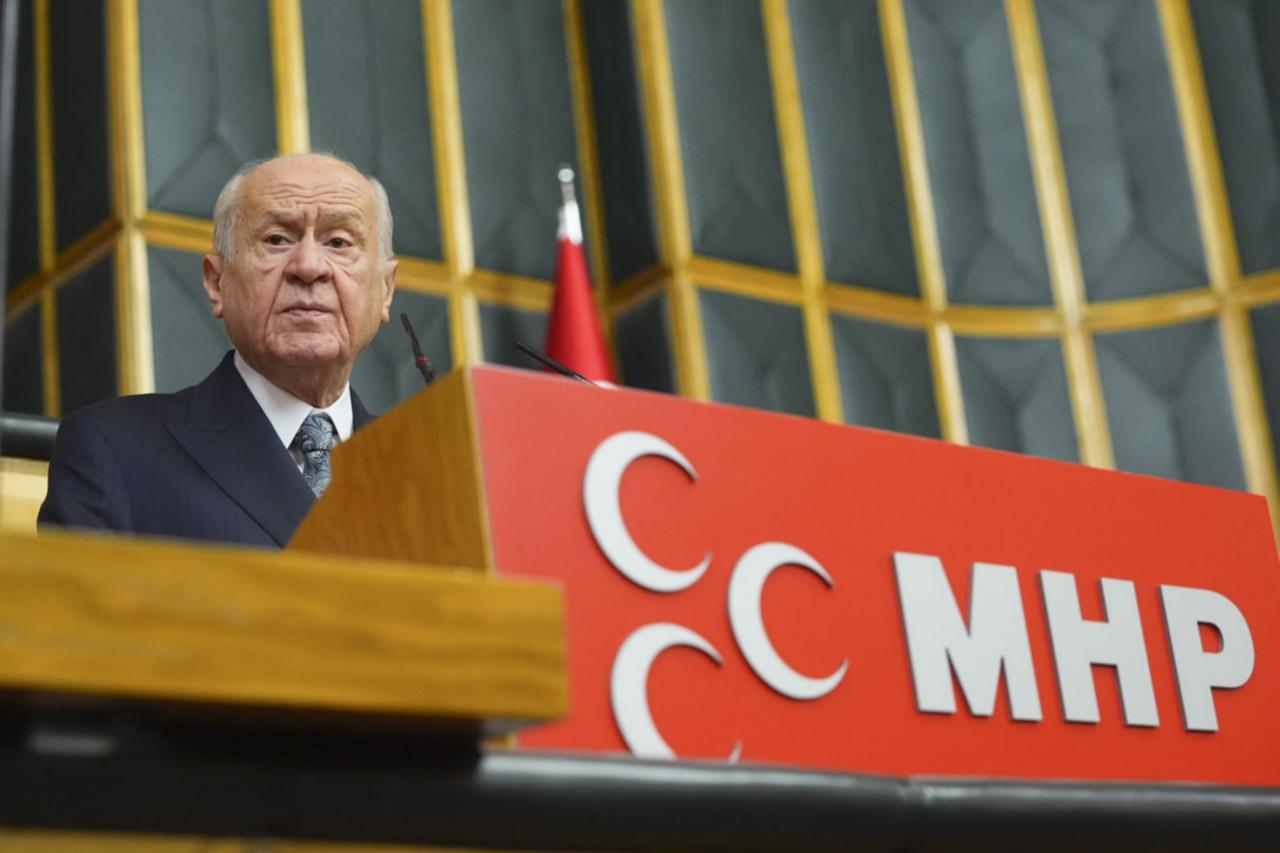
However, there is one figure capable of instantly electrifying the mood, dominating the talk show and getting you out of boredom: Devlet Bahceli. As the leader of the third largest party, Bahceli wields a unique form of political gravity; he possesses a raw, effective power that can shift the national discourse overnight.
When Nationalist Movement Party (MHP) leader Bahceli stood up on Oct. 22, 2024, and "imagined" PKK’s ringleader Abdullah Ocalan addressing the Turkish Parliament, it felt like a glitch in the political matrix. For the leader of the nationalist movement to suggest the Turkish Parliament as a platform for the PKK’s dissolution was revolutionary—a total break from decades of "security-first" rhetoric.
He was the flag bearer of such rhetoric for decades.
Yet, for those observing the tectonic plates of the state, it was also expected. As the architect of nationalist red lines, Bahceli is perhaps the only figure who can provide the "nationalist cover" required for such a radical pivot. Security was one of vital reasons in his call in 2024 as he said outside powers, especially Israel, would try to exploit Türkiye’s weak spots, one of which he refers to was the Kurdish issue, that harmed Türkiye’s political and economic progress for decades.
By proposing a "Peace Coordinatorship" and a formal "status" for Ocalan this week, he is moving from abstract imagination to concrete administration. He isn’t just testing the waters anymore; he’s trying to build the bridge. This is one of the moments where you can observe Türkiye’s imperial past. It was almost a normal thing to give the status of “pasha” to a rebel leader who, having challenged the state, came to terms with the Sublime Port in the mid-fight. The point was to avoid bloodshed, and material loss. Yet, with Türkiye’s nation state fabric, this sounds so out of touch, and unrealistic.
According to Hurriyet’s seasoned Ankara correspondent Hande Firat, Bahceli’s newfound boldness is born out of a strategic frustration with the slow pace of progress. As the state waits for PKK to fully disarm, and the terrorist organization waits for the state to initiate legal reforms, Bahceli is highly concerned that it could turn the situation into a “trust issue". He fears the stalemate could lead to a complete standstill in Türkiye’s peace process.
Firat suggests that this is far more than Bahceli's personal initiative; it is a "state project" aimed at insulating Türkiye from the volatility of a fragmenting Middle East.
Bahceli is acting as a "state architect," clearing the path for the government by taking the most controversial steps himself. By bringing the issue into the legal and parliamentary sphere, he aims to strip external actors of their leverage over the Kurdish issue. Essentially, Firat sees this as a calculated "closing of the domestic front" to prepare for much larger regional storms. As you may have guessed, “domestic front” refers to resolving internal conflicts and rifts that Türkiye must address in case of a bigger regional conflict that could involve the country.
While the political elite in Ankara are busy drafting organizational charts for peace, the Turkish public remains remarkably wary. The data from December 2025 was a cold shower for many: surveys showed that public trust in this peace initiative remained at a low ebb. The trauma of the past 40 years is not easily overwritten by a legislative proposal.
Seasoned columnist Abdulkadir Selvi, who has excellent contacts within the governing AK Party, writing on the current state of domestic politics, highlights a precarious balancing act for the People's Alliance.
The core nationalist-conservative electorate remains fiercely loyal to President Erdogan’s broader vision for a "Century of Türkiye." They are willing to trust the leader's ultimate destination. There is a profound rejection of the methodology. While the public wants the conflict to end, the idea of granting "status" to Ocalan or allowing him any form of political presence is a bridge too far for many.
Bahceli has played his hand. He has moved from a shocking speech in 2024 to a demand for a formal "Peace Coordinatorship" in 2026. Everybody’s hope is that institutionalizing the process would eventually drag public opinion along with it.
But as we look at the gap between the revolutionary moves in Ankara and the skepticism in the tea houses of Anatolia, one has to wonder: Is the public actually convinced? Or is this "stability axis" being built on a foundation that the average voter simply isn't ready to support?


 Set as preferred source
 Set as preferred source


 7 min read