Newsletters


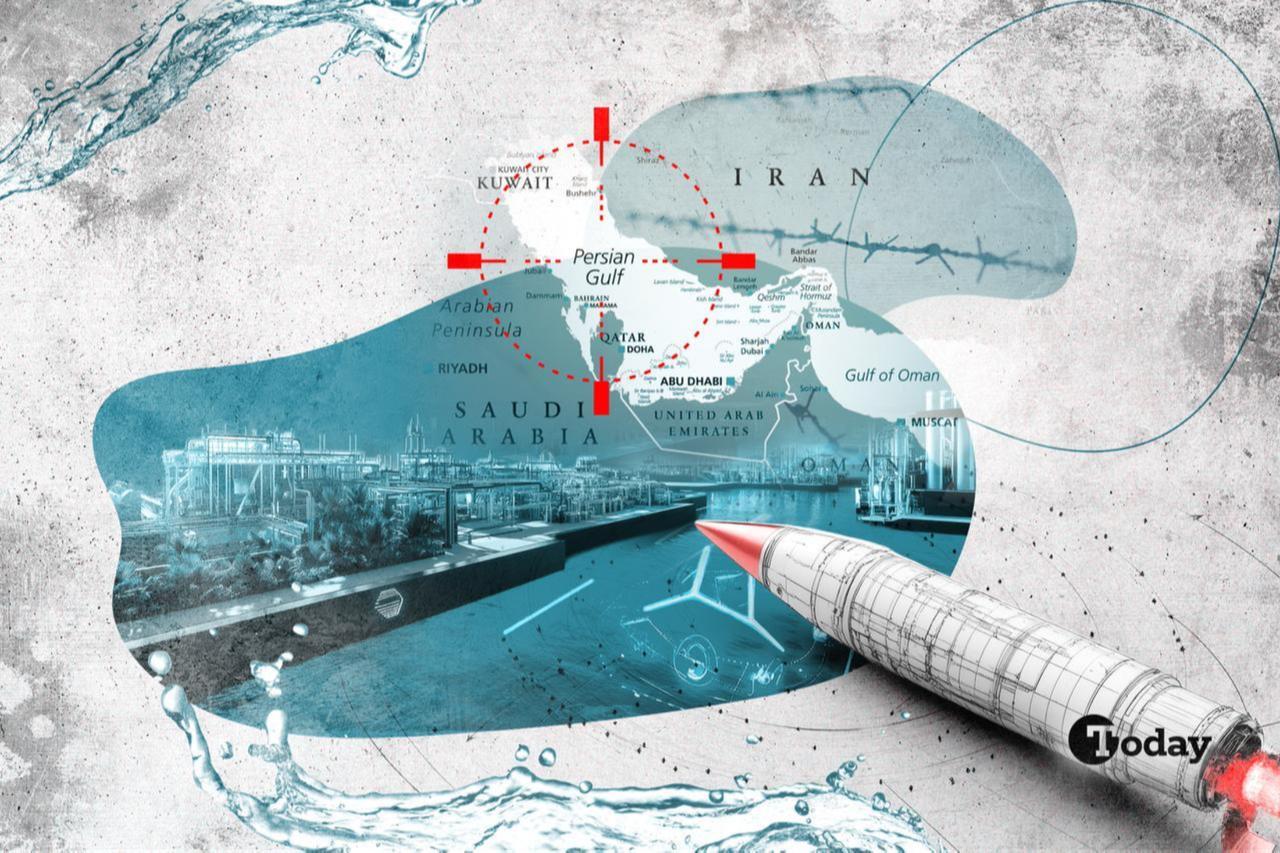


More than two months after the initiation of the American and Israeli campaign against Iran on Feb. 28—and a month into the fragile ceasefire that followed—the six Gulf Cooperation Council (GCC) states have absorbed the highest costs of a war they did not seek and actively tried to prevent.
By the time the Pakistan-mediated talks produced a two-week truce on April 7, attacks on Gulf territory had outpaced those on Israel by close to six to one. More than four thousand Iranian missiles and drones struck the GCC states between the war’s opening salvo and the ceasefire. Military bases, national defense assets, and critical civilian infrastructure—energy facilities, airports, ports, desalination plants, hotels, and residential neighborhoods—were hit.
The war’s final hours produced its single most devastating attack on any Gulf energy infrastructure. An Iranian attack on April 8 struck Saudi Arabia’s Petroline pipeline, the very route built to bypass Hormuz, along with facilities in the UAE, Kuwait, and Qatar.
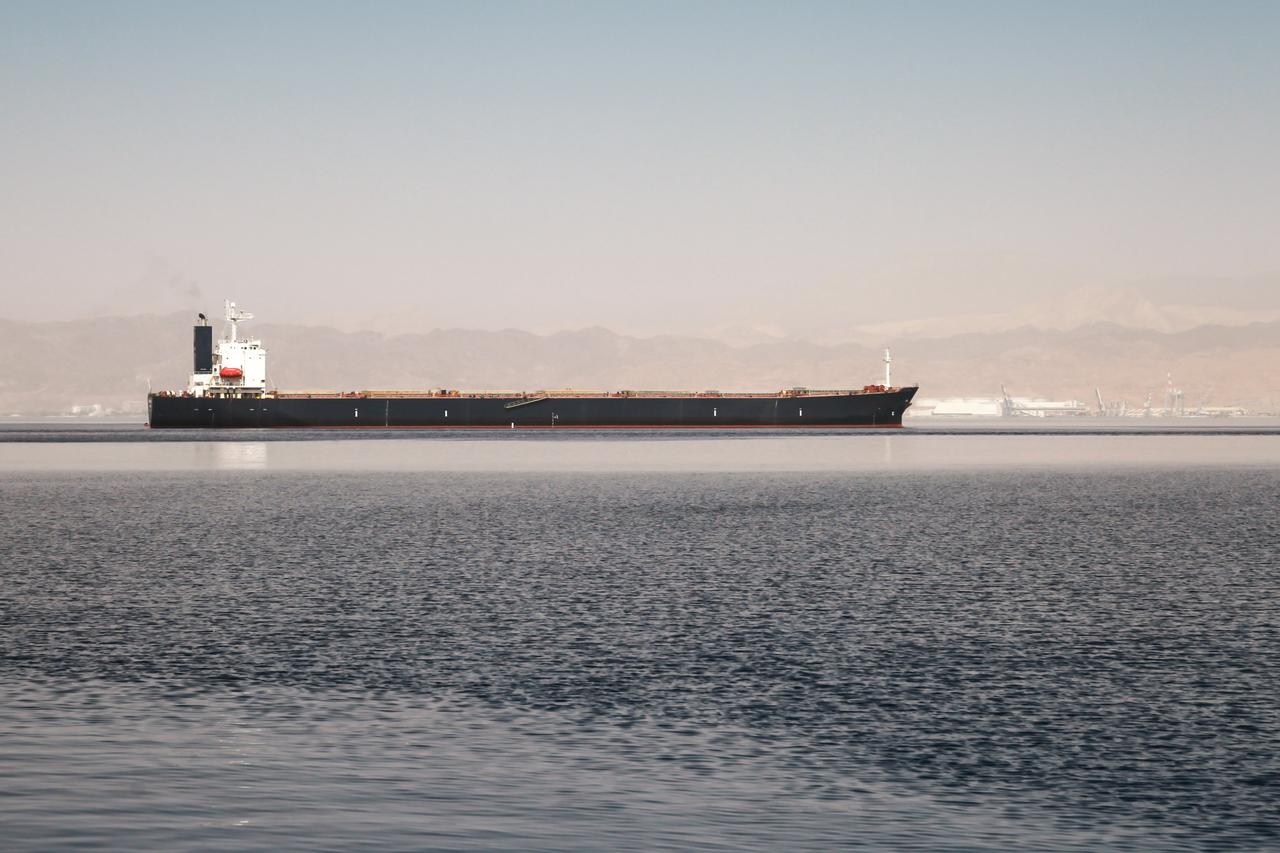
The Strait of Hormuz remains, in practical terms, closed. Iran has not delivered the reopening it agreed to, and yet, remarkably, not a single GCC state has retaliated against Iran or fired a shot in anger. On April 13, the United States imposed a naval counter-blockade on Iranian ports. Three US aircraft carriers are now stationed in the region for the first time since 2003.
This restraint shown by GCC stateshas been a deliberate choice aimed at preventing escalation and entrapment, especially as the three involved parties (US, Israel, and Iran) have sought to draw the GCC into the heart of the conflict. The GCC decision not to switch to the offensive option deserves acknowledgment. By refraining from offensive operations thus far, Gulf leaders have successfully prevented their nations from transitioning from collateral victims to primary targets. They have done an excellent job of intercepting the majority of incoming projectiles and have worked to maintain daily life in their countries despite the war's intensity.
A notable moment of collective purpose was Bahrain's submission of U.N. Security Council Resolution 2817 on behalf of all six states, which condemned Iranian aggression while refusing to endorse the war. However, while this restraint is commendable, it is merely a posture, not a comprehensive policy.
The Gulf’s conduct, both throughout the fighting and into the brittle ceasefire that has followed, has been characterized by five significant mistakes—not structural shortcomings, but choices made or avoided in the critical weeks surrounding this war. Each of these choices has narrowed the Gulf’s options, and each was avoidable.
In the month preceding Feb. 28, as the United States built up its military posture and diplomatic channels between Washington and Tehran frayed, the GCC had a narrow but real window to shape the strategic environment. It did not use it. Had the six states collectively communicated to all three parties that any attack on any GCC state’s territory—by any actor, for any reason—would trigger specific, predetermined consequences, the calculus of at least one belligerent might have shifted.
Iran might have calculated that targeting Gulf civilian infrastructure would unite the region against it rather than fracture it. Washington might have also factored the vulnerability of its Gulf partners more seriously into its operational planning, rather than treating them as geography to be managed or collateral damage to be ignored.
Instead, the GCC entered the war with no pre-established red lines communicated to anyone. No shared contingency plans for the precise scenario that unfolded. No integrated command-and-control architecture independent of American systems that would allow for a coordinated response if those systems were degraded. No pooled interceptor stockpiles to sustain a collective defense against the kind of saturation attacks Iran launched from day one.
The GCC’s Joint Defense Agreement of 2000 holds that an attack on one member constitutes an attack on all, but when all six members were struck simultaneously for the first time in the Council’s history, the agreement produced statements, not action. Collective defense coordination was operationally non-existent beyond the public statement. The absence of declared red lines sent an unmistakable signal to all three belligerents that the GCC states could be hit without triggering a collective response. Each party accepted that invitation on its own terms—and Iran took it furthest.
The April 8 attack on Saudi Arabia’s Petroline pipeline, timed to within hours of the ceasefire announcement, was a deliberate demonstration that even alternative export corridors built to bypass Hormuz remain within Iranian range, and that no red line yet exists that would impose a collective price for crossing one.
The truce phase has produced no remedy. No announcement of new red lines, no integrated air-defense architecture, no pooled interceptor stockpiles, and no shared contingency plan for the now near-certain prospect that the ceasefire collapses. The Joint Defense Agreement remains, today as on Feb. 28, a document the Council has chosen not to operationalize.
The GCC’s most consequential wartime shortcoming is political.
The inability to articulate, clearly and collectively, that the GCC states did not want the war, worked hard to avoid it, and are supporting no party in it, was observable. This is a statement of fact, not a diplomatic gamble. Instead, each state worked independently of the other and had different issues to address and goals to achieve based on its own priorities and interests. Additionally, some GCC countries seemed to be more vulnerable than others due to their geographic settings. Some states assumed they were safer than others or that their resilience was higher than the rest. This asymmetry created a political vacuum that each belligerent filled to the Gulf’s detriment.
Iran has been framing the Gulf states as willing hosts of American aggression, providing a deceiving narrative for its aggression against the GCC states and continued strikes on civilian and energy infrastructure. Tehran’s narrative conveniently ignored that the GCC states had nothing to do with the war. They had, in fact, worked hard to prevent it.
It also erases years of Gulf diplomacy—the Saudi-Iranian rapprochement brokered by China in 2023, Qatar’s sustained mediation, and Oman’s shuttle diplomacy. But the GCC has offered no organized counter-narrative to debunk that of Iran's, at least on the public level. Meanwhile, Washington and Tel Aviv have consistently been trying to frame the Gulf States as aligned partners, if not in the Operation Epic Fury itself, then in the overall interests of neutralizing Iran’s threat.
The lack of a clear, direct, and collective GCC stance did not buy distance from the conflict. It bought narrative captivity—a condition in which all three warring parties defined the Gulf’s position for it. The ceasefire has, if anything, deepened that captivity rather than resolved it. The GCC General Secretariat’s April 9 statement welcomed the truce, but it stopped well short of articulating a unified post-war political position.

In the age of cognitive warfare, the GCC’s communications failure may prove as strategically damaging as its defense gaps. Throughout the fighting, and now into the truce, the Gulf states have failed to mount a sustained, coordinated media campaign to defend their position or challenge the narratives that all three belligerents are constructing at the Gulf’s expense.
Iran’s propaganda and information machine has been aggressive and deliberate. Tehran frames every strike on the GCC states as a defensive response. No concrete evidence was given to establish that the military bases were used against Iran. On the contrary, the overwhelming majority of the Iranian missiles and drones hit critical and civilian infrastructure, collapsing the distinction between GCC states on the one hand, and the U.S. and Israel on the other.
This narrative ignores that Gulf states refused airspace access for strikes on Iran, opposed the war through every available diplomatic channel, and invested years in engagement with Tehran. But without a proactive Gulf counter-narrative delivered at scale, Iran’s framing, disinformation, and claims about the GCC states have gained traction, particularly among audiences predisposed to anti-Western interpretations of the conflict and who are extremely vulnerable to such propaganda.
The American and Israeli information strategy is more subtle but equally corrosive.
Washington and Tel Aviv have consistently promoted disinformation on the position of the GCC states to frame it as aligned with the U.S.-Israeli war against Iran while downplaying Gulf objections to the war itself, creating the impression of a willing coalition rather than a group of states trapped by the two sides. In some cases, it was claimed that some GCC states already participated in the war against Iran. This framing came from several distinguished U.S. newspapers. Ironically, while these disinformation campaigns were meant to serve the interests of the U.S. and Israel, they reinforced the Iranian narrative, creating a vicious circle that devastated the Gulf’s diplomatic position and endangered the GCC states.
Although Saudi Arabia, the United Arab Emirates, and Qatar responded to inaccurate claims by the U.S.-Israeli media outlets, the GCC response has been reactive, limited, and largely ineffective. A professional, well-resourced GCC strategic communications operation—one that amplified the Gulf’s pre-war diplomatic record, and systematically challenged disinformation from all three parties—could have shaped international opinion decisively in the Gulf’s favor. That operation does not exist, and its absence is not a structural legacy. It is a wartime failure now bleeding directly into the post-war information environment.
Perhaps the most puzzling aspect of the GCC states’ wartime conduct is the vast gap between the leverage it holds and the leverage it has deployed. The six GCC states collectively produce roughly 20% of global oil. The collective economy of the GCC states is around $2.3 trillion, and they manage around U.S. $5 trillion in assets. Moreover, they maintain significant economic relationships with China, the single-largest consumer of Gulf energy and the broker of the 2023 Saudi-Iranian rapprochement.
Two months into a war that has devastated their economies, paralyzed their expatriate labor forces, shredded their reputations as global business hubs, and drawn down their missile defense inventories at unsustainable rates, the GCC has leveraged none of this. No coordinated diplomatic initiative offering a negotiated off-ramp that addresses the concerns of all parties. No formal request to China—which has every incentive to see Hormuz reopened and Gulf energy flowing again—to exert pressure on both Tehran and Washington.
This situation has turned the GCC’s cautious posture into paralysis, a failure to translate restraint into agency. The clearest evidence of that paralysis is now structural. Despite repeated entreaties, the GCC has secured no seat at the Islamabad talks shaping the post-war order. Negotiations covering the future of the nuclear file, sanctions relief, the disposition of the Iranian-aligned armed groups, and the status of the Strait are proceeding without formal Gulf participation, even though the outcomes will define the Gulf’s economic and security environment for years. Iran has reportedly raised the question of compensation from Gulf states with mediators, bargaining over their resources at a table from which they are absent.
Most striking, on April 8, President Trump publicly floated the idea of a joint U.S.–Iran venture to operate a tolling system in the Strait of Hormuz: an arrangement that would, if realized, monetize Iranian leverage over the very waterway through which roughly 20% of global oil moves, with no structural Gulf veto.
The final wartime failure ties the others together. When the missiles started flying, the GCC did not respond as a bloc. It responded as six individual states under separate attack. Each country activated its own air defenses. Each issued its own statements. Each conducted its own backchannel communications with Tehran, Washington, and other capitals. Each managed its own domestic narrative.
This fragmentation was not inevitable. It was the predictable result of a bloc that has always preferred bilateral relationships with external actors over pooled sovereignty among its members. These different strategic dispositions are real, but a genuine collective framework would accommodate them rather than be paralyzed by them. NATO’s members disagree profoundly on threat perceptions and strategy, but the alliance functions because it has invested in shared infrastructure, interoperable systems, and decision-making procedures that produce collective action even when political preferences diverge.
The GCC has none of this.
Its response to the most severe simultaneous attack in its 45-year history was national, ad hoc, and largely reactive. Iran’s strategy of targeting all six states was designed to fragment the Gulf’s response, and it succeeded because it is far easier for Iran to ignore, and the United States to dismiss, individual Gulf states than a unified bloc. The ceasefire phase has converted that fragmentation from a wartime improvisation into a publicly visible structural split.
The GCC’s fragmentation is not merely an organizational inconvenience. It is a gift to every party that benefits from Gulf weakness. On April 24, with the truce already brittle, Israeli Defense Minister Israel Katz publicly declared that Israel was “prepared to resume the war” and was awaiting a Washington greenlight to return Iran “to the Stone Age.” Should that day come, the bloc will face the second wave even more divided than it faced the first.
The GCC’s restraint has been real and costly, and it has prevented a catastrophic regional escalation. But restraint without strategy is just endurance, which means absorbing punishment while waiting for others to determine your fate. The five fatal failures outlined above are not inherited conditions. They are choices made, or more precisely, choices not made, in the specific context of this war. The question is not whether the GCC can act. It is whether it will act before the truce collapses and the familiar temptation to defer, divide, and depend takes the bloc into the next round even more exposed than it entered this one.


 Set as preferred source
 Set as preferred source


 7 min read