Newsletters





Every time a Turkish fighter jet, maritime patrol aircraft or UAV flies through a disputed stretch of the Aegean, Athens describes it as another violation of Greek airspace. A red line drawn between salt and supremacy.
Greek media often goes a step further, presenting such flights as violations of country's sovereignty.
But behind those headlines lies a legal dispute that is rarely explained.
At the heart of it is Greece’s claim to 10 nautical miles of national airspace despite maintaining territorial waters of six nautical miles in the Aegean. Türkiye does not recognize the additional four-mile zone as Greek sovereign airspace and regards it as international airspace.
That distinction changes the nature of the debate.
According to Türkiye’s official take, the limit of a state’s national airspace is tied to the limit of its territorial waters. Ankara therefore argues that Greece’s treatment of the zone between six and 10 nautical miles as national airspace rests on no legally defensible ground.
Claiming every Turkish flight through that zone as a “violation” therefore does not amount to a determination of legal fact. From Ankara’s perspective, Greece is instead trying to normalize a maximalist claim that Türkiye does not recognize through practices on the ground and political discourse.
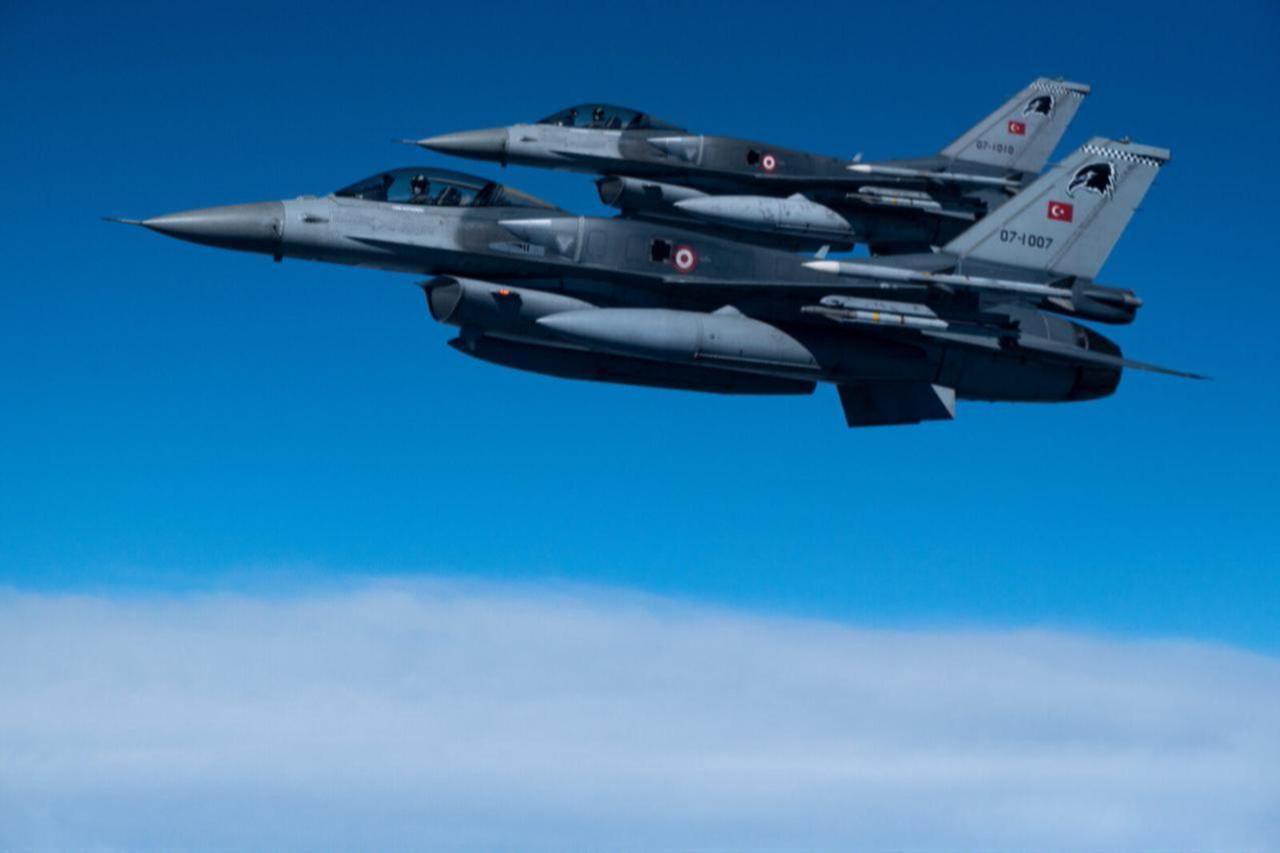

The historical background of the dispute rests on Greece setting the breadth of its national airspace at 10 nautical miles for aviation through a decree dated Sept. 6, 1931.
Greek territorial waters measured three nautical miles at the time. Athens extended them to six nautical miles in 1936 yet maintained its 10-mile airspace claim.
A four-nautical-mile gap thus emerged between Greece’s territorial waters and its claimed national airspace, and Türkiye’s objection rests on that discrepancy.
The legal framework set out by the Chicago Convention matters here.
Article 1 of the 1944 convention recognizes the complete and exclusive sovereignty of states over the airspace above their territory. Article 2 links the concept of “territory” to the land areas under a state’s sovereignty and the territorial waters adjacent to them.
The Turkish Foreign Ministry states clearly that Greece’s 10-nautical-mile claim is incompatible with international law and that the zone between six and 10 nautical miles forms part of international airspace.
The problem in Greece’s approach surfaces precisely here: Athens presents its own unilateral practice as an indisputable boundary under international law.
One question should therefore come first when reading statements such as “Turkish aircraft violated Greek airspace”: Which airspace is being referred to?
If the zone in question lies outside Greece’s six-nautical-mile territorial waters but within its unilateral 10-mile airspace claim, no Greek area of sovereignty recognized by Türkiye exists there.
For Ankara, the claim forms part of a wider effort to alter the existing status quo in Greece’s favor.
Presenting every flight as a fresh violation also pushes the contested nature of the legal dispute into the background while seeking international acceptance for Athens’ own maximalist thesis.
The second significant dimension of the debate is the Athens Flight Information Region, or FIR.
Greece assumed responsibility for the FIR over the Aegean through regional air navigation meetings held under the International Civil Aviation Organization in 1950, 1952, and 1958.
A FIR, however, is a zone of technical responsibility concerning the provision of air traffic services. Its purpose is to ensure that international civil aviation operates safely.
The Turkish Foreign Ministry makes clear that FIR arrangements entail technical responsibility while leaving the status of international airspace unchanged.
International airspace within the boundaries of the Athens FIR therefore does not become Greek sovereign airspace merely because Greece coordinates air traffic services there.
Athens, however, uses its FIR responsibility to request flight plans from Turkish state aircraft operating in international airspace and records the absence of such plans as a “FIR violation.”
Article 3 of the Chicago Convention, meanwhile, treats state aircraft as a separate category.
Military activities carried out in international airspace are not regarded by Türkiye as flights requiring another state’s permission so long as they do not enter that state’s sovereign airspace.
Ankara has long rejected Greece’s request for flight plans from Turkish military aircraft in such areas.
 2 min read
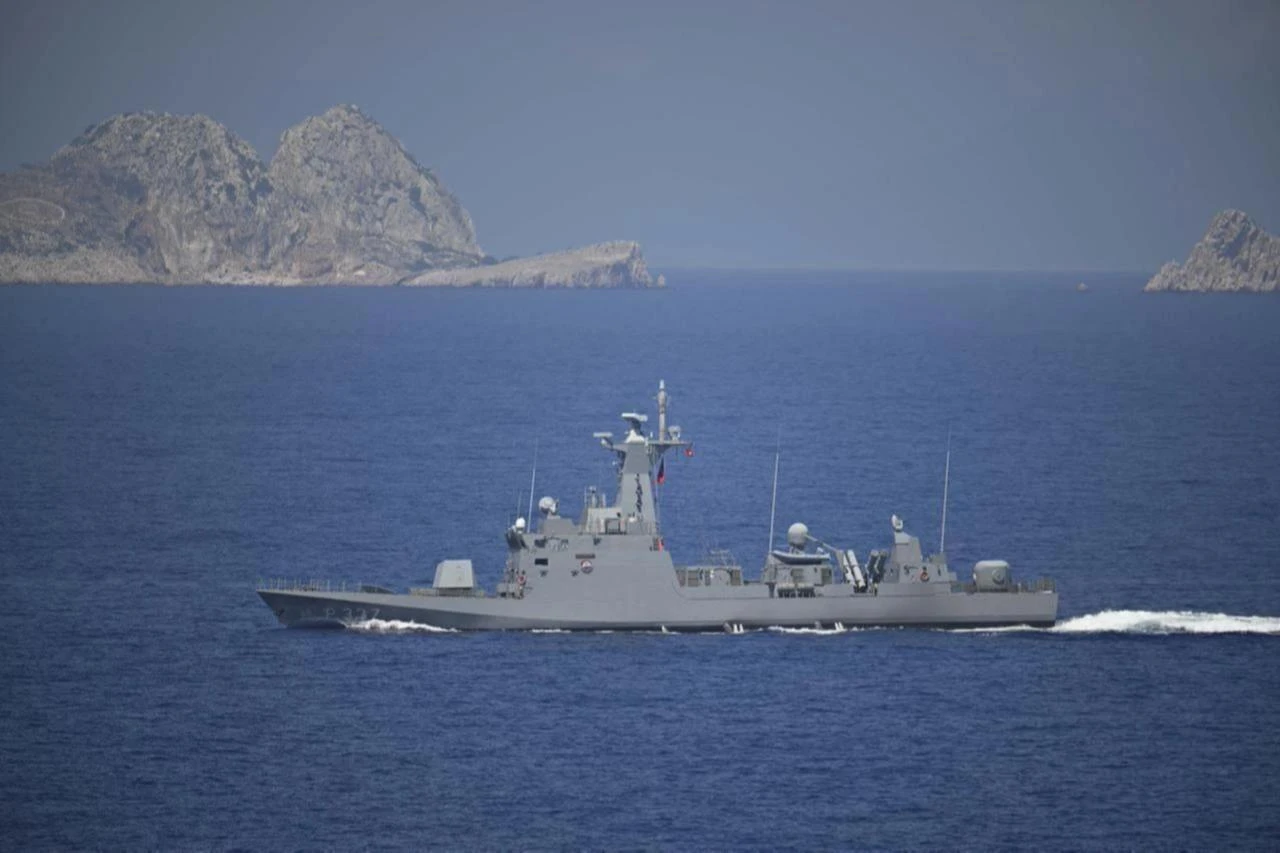
Greece’s use of the terms “FIR violation” and “airspace violation” side by side is therefore significant. The two concepts differ in legal character, and FIR responsibility does not confer sovereignty.
The Greek Foreign Ministry itself acknowledges in official statements that the Athens FIR concerns jurisdiction rather than sovereignty.
That distinction often disappears in Greek media coverage.
A technical claim that “a Turkish aircraft violated the Athens FIR” can quickly become “a Turkish aircraft violated Greek airspace" before the incident is framed as a “provocation” or “challenge to Greek sovereignty.”
Athens’ broader objective becomes visible here: turning FIR responsibility into something resembling sovereign authority and presenting the contested 10-mile airspace claim as an indisputable boundary.
Greece’s recent violation discourse should therefore not be viewed as a series of isolated incidents. They are reflections in the air of Athens’ broader maximalist approach in the Aegean.
Repeatedly framing the dispute through a narrative of Turkish violations and Greek victimhood does little to resolve the underlying legal disagreement.
If genuine stability is sought in the Aegean, one distinction has to come first: FIR responsibility is not sovereignty; the zone between six and 10 nautical miles is regarded by Türkiye as international airspace, and Greece’s unilateral 10-mile claim is not recognized by Ankara.
Facing the legal problems raised by its maximalist claims, rather than recycling the “Turkish violations” narrative, would give both countries a more constructive path toward normalizing relations.


 Set as preferred source
 Set as preferred source



 1 min read