Newsletters




This article was originally written for Türkiye Today’s weekly newsletter, Saturday's Wrap-up, in its August 29, 2026, issue. Please make sure you subscribe to the newsletter by clicking here.
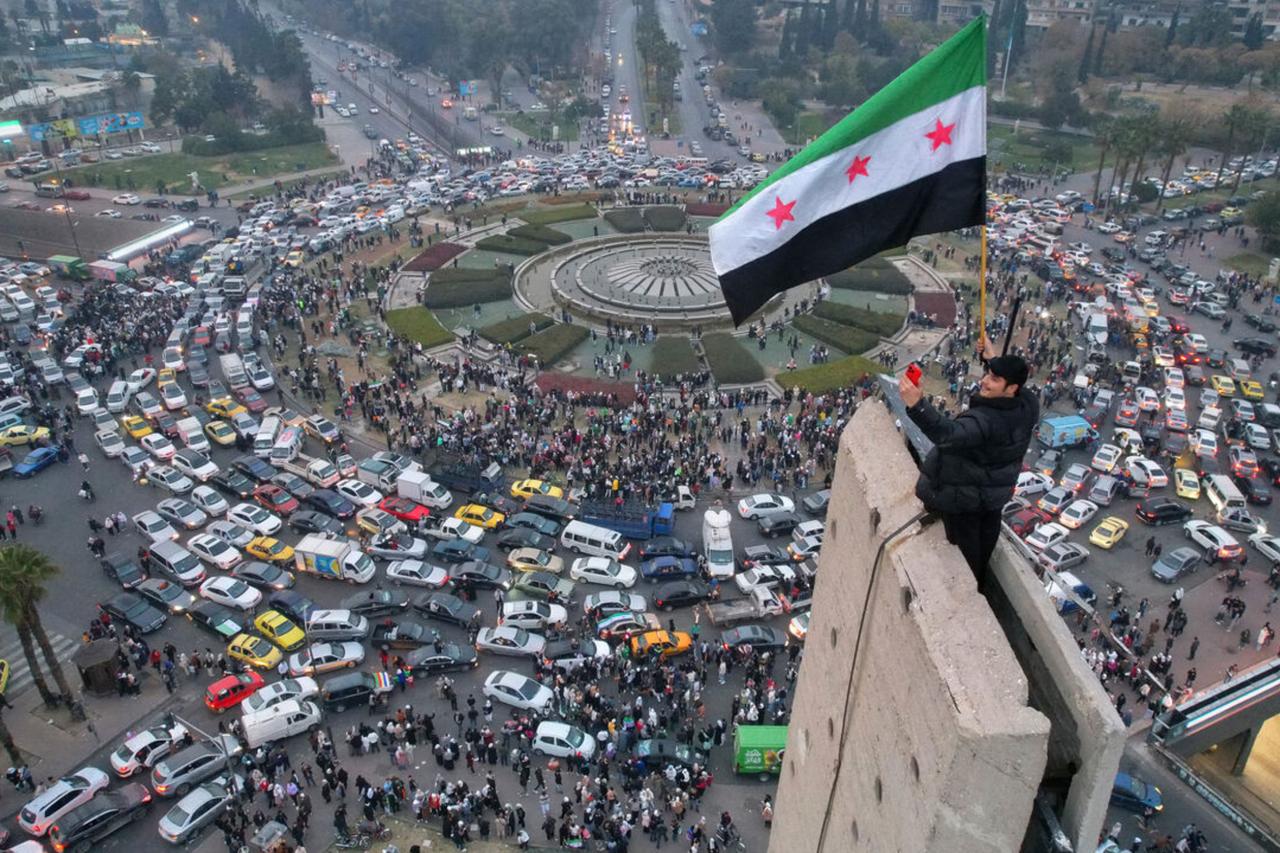
If you did not know where you were while wandering the streets of Damascus, you would quickly understand that this very country suffered a major civil war not so long ago. The signs are etched into the city’s daily life, visible to anyone with eyes to see them.
Police uniforms are disjointed, rarely unified and mostly unironed. Many people walking the streets carry a distinct pallor, a physical toll of years of hardship and rationing. Some old men lost their eyes not because of shelling, but because they did not receive timely medical care. You sadly witness how a war is palpable in every part of life. The backs of the very old taxis are often held together with thick strips of duct tape, a makeshift resilience that mirrors the city itself. And then there are the patrols: groups of tough-looking men with long beards moving through the city center, a stark visual reminder of the shifting power dynamics and the complex security apparatus that now governs the Syrian capital.
I arrived in Damascus shortly after Israel’s recent airstrikes in Idlib on Aug. 18, stepping into a city caught in a fragile, almost surreal state of transition.
For many on the ground, the current reality feels disorienting. One local I spoke with described the period since Bashar Assad’s fall simply: "It is too good to be true."
Few were expecting the current leadership under Ahmad al-Sharaa to take such a pragmatic approach. He has instituted a rule that actively tries to be inclusive in its management, navigating a deeply fractured society. A prime example is his appointment of a Christian female minister, a move that angered his own conservative base but sent a clear message to both domestic minorities and the international community.
Sharaa’s calculus appears to be heavily economic and deeply defensive. He desperately wants to open his country to international markets. The underlying belief in Damascus is that attracting major foreign businesses and investments is the most viable short-term shield against Israel's aggressiveness. If the world is invested in Syria’s rebuilding, the thinking goes, the geopolitical cost of bombing it becomes significantly higher. You don't want to bomb a country where Visa and Mastercard are operational.
This economic push is mirrored by a desperate desire for normalcy and a return of visitors. At major tourist landmarks, such as the breathtaking Umayyad Mosque, the tourism police will quickly approach you to ask if you need anything. They do not have much to do yet. There are only a handful of tourists, among them some passionate Western orientalists who fell in love with Asmahan, booza and mother-of-pearl inlay, wandering the ancient courtyards. But the authorities want to make absolutely sure that those few are comfortable, happy, and ready to tell the world that Damascus is open.
Yet, the realities of Syria’s dark past remain stark at its edges. It takes a mere 10 minutes to cross the Syrian border from Jordan. But the journey back? That took me five grueling hours, plagued by intense inspections, security protocols, and endless waiting. The world is not quite ready to let its guard down.
Despite the hurdles, the infrastructure inside the capital is slowly getting better.
I remember playing backgammon one night with a Syrian friend in Damascus just a week after Assad’s fall. At that time, the city was running on a meager two hours of electricity a day. We played under solar lights until they went out; with no candles left, we had to go to sleep. There was nothing else to do. Being left out of a simple, daily joy like finishing a game of backgammon with a friend is a quiet killer of the human spirit.
Today, the lights stay on longer. The rhythm of the night is returning. But that lingering sentiment, that everything is "too good to be true," is deeply tied to a collective fear of external forces. People are immensely wary of figures like Israeli Prime Minister Benjamin Netanyahu. The prevailing sentiment on the streets of Damascus is that he is a leader who has entered into a perpetual cycle of violence, a man who knows nothing but how to hit. The recent airstrikes in Idlib only validated those anxieties, proving that Syria’s internal peace is still entirely vulnerable to the region's broader wars.
While eyes were drawn to the skies over Idlib, the ground was shifting fundamentally in the north. Türkiye remained notably silent following the Israeli attacks. Yet, beneath that silence, monumental developments took place that will reshape the region's future.
First, Syria’s terrorism designation was officially removed, a massive diplomatic step toward the very international reintegration Sharaa is banking on.
Second, and perhaps more astonishingly, the Syrian Democratic Forces (SDF) announced their dissolution, agreeing to full integration into the Damascus government. After years of functioning as a de facto autonomous military force backed by the U.S., the declaration of "mission complete" and their disarmament remove one of Türkiye’s primary security threats and reunifies a massive swath of Syrian territory under the central government.
Netanyahu can keep on betting on airstrikes for an election win, while Türkiye and Syria continue to make long-term strategic gains.
Damascus today is a city of duct-taped taxis and under-employed tourism police, of returning electricity and lingering trauma. It is a city holding its breath, hoping that pragmatic politics and new alliances can finally close the door on an era of ruin.


 Set as preferred source
 Set as preferred source


 7 min read