Newsletters


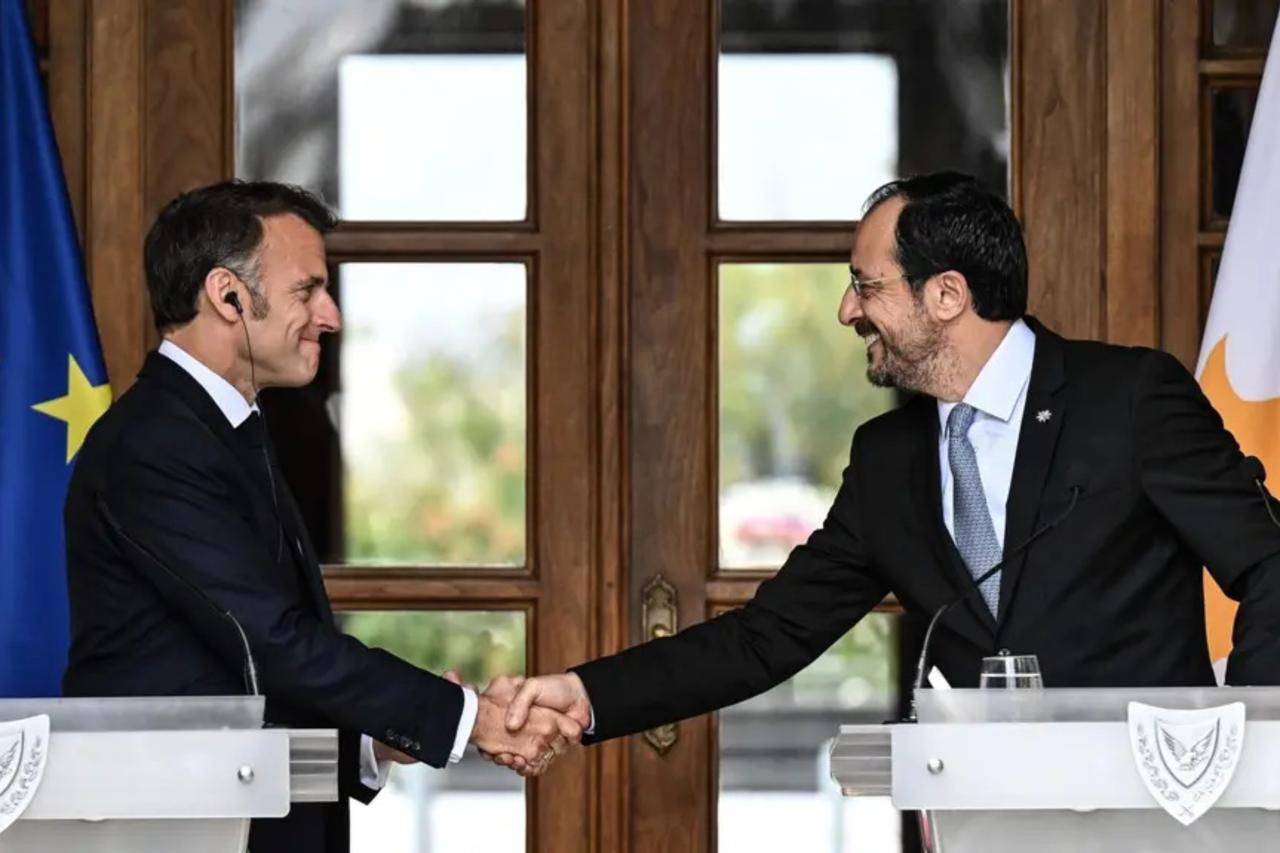


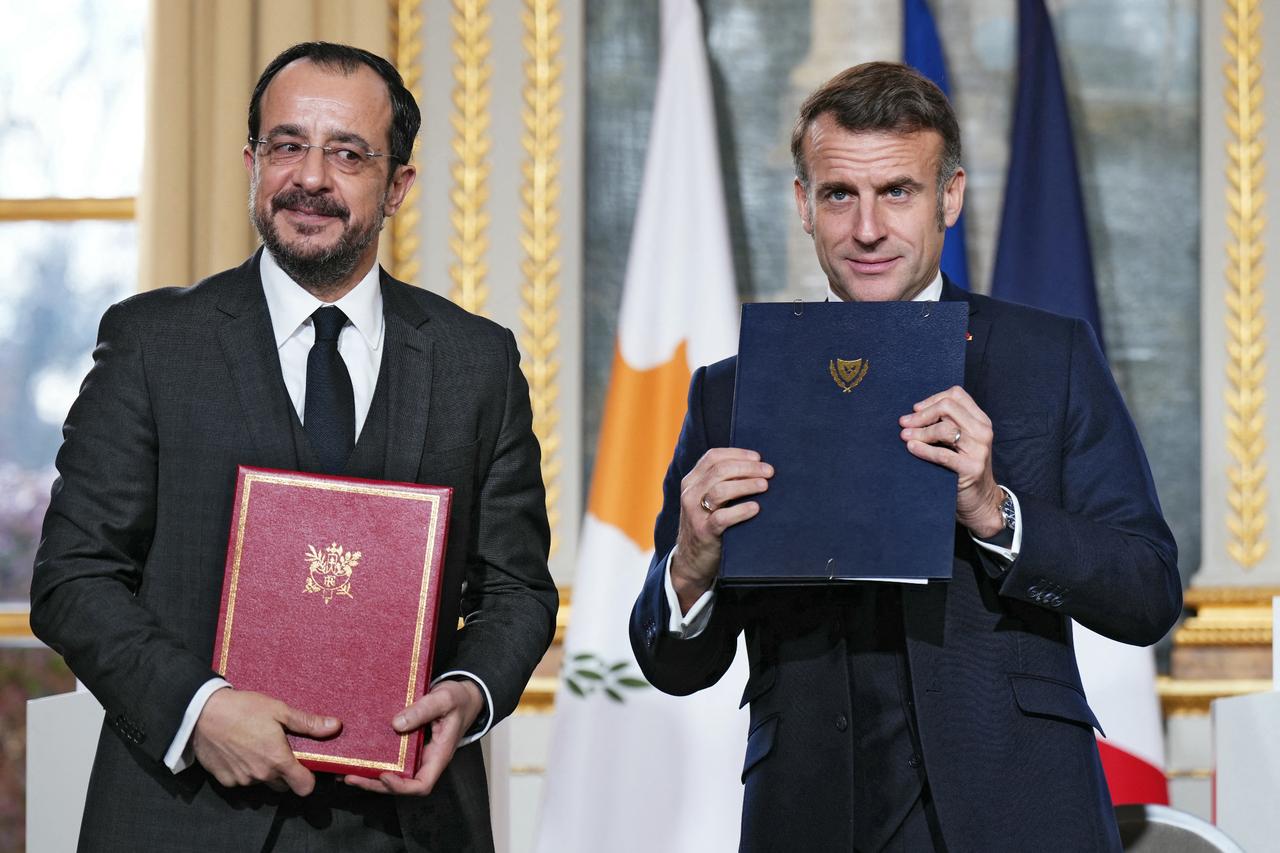
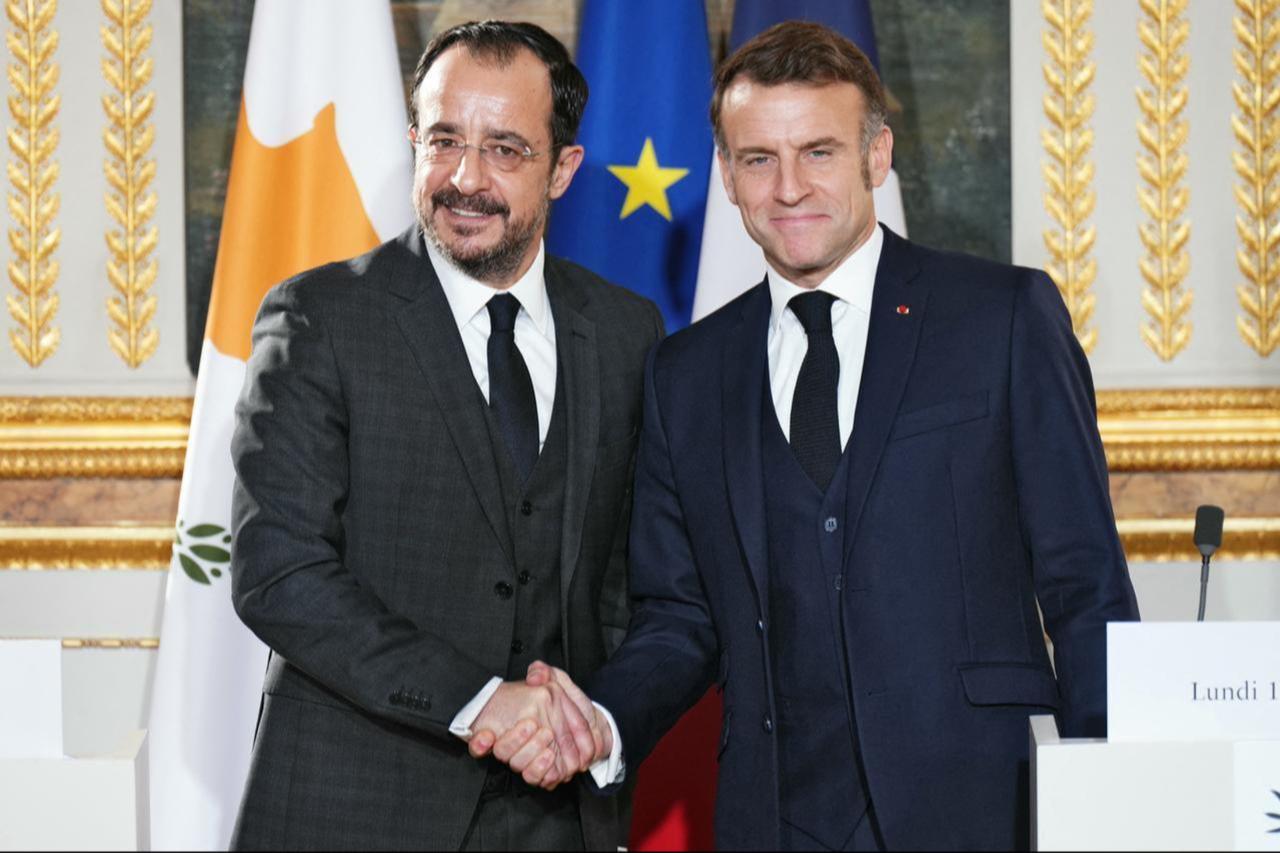
The Status of Forces Agreement (SOFA) signed between France and the Greek Cypriot Administration (GCA) and entered into force on June 8 represents a new reality in the Eastern Mediterranean.
Born out of the diplomatic groundwork laid during French President Emmanuel Macron's April 2026 visit to Nicosia, the document grants French military forces direct access to bases, ports, and strategic infrastructure on GCA territory, while also encompassing military technology transfers, joint exercise mechanisms, and regular strategic consultation platforms.
The agreement was signed in Nicosia on the sidelines of the European Union defense ministers' informal meeting by GCA Defense Minister Vassilis Palmas and French Defense Minister Catherine Vautrin.
The symbolic choice of venue for the signing ceremony is equally striking. Holding the ceremony under a European roof is a transparent attempt to lend the agreement the appearance of multilateral legitimacy.
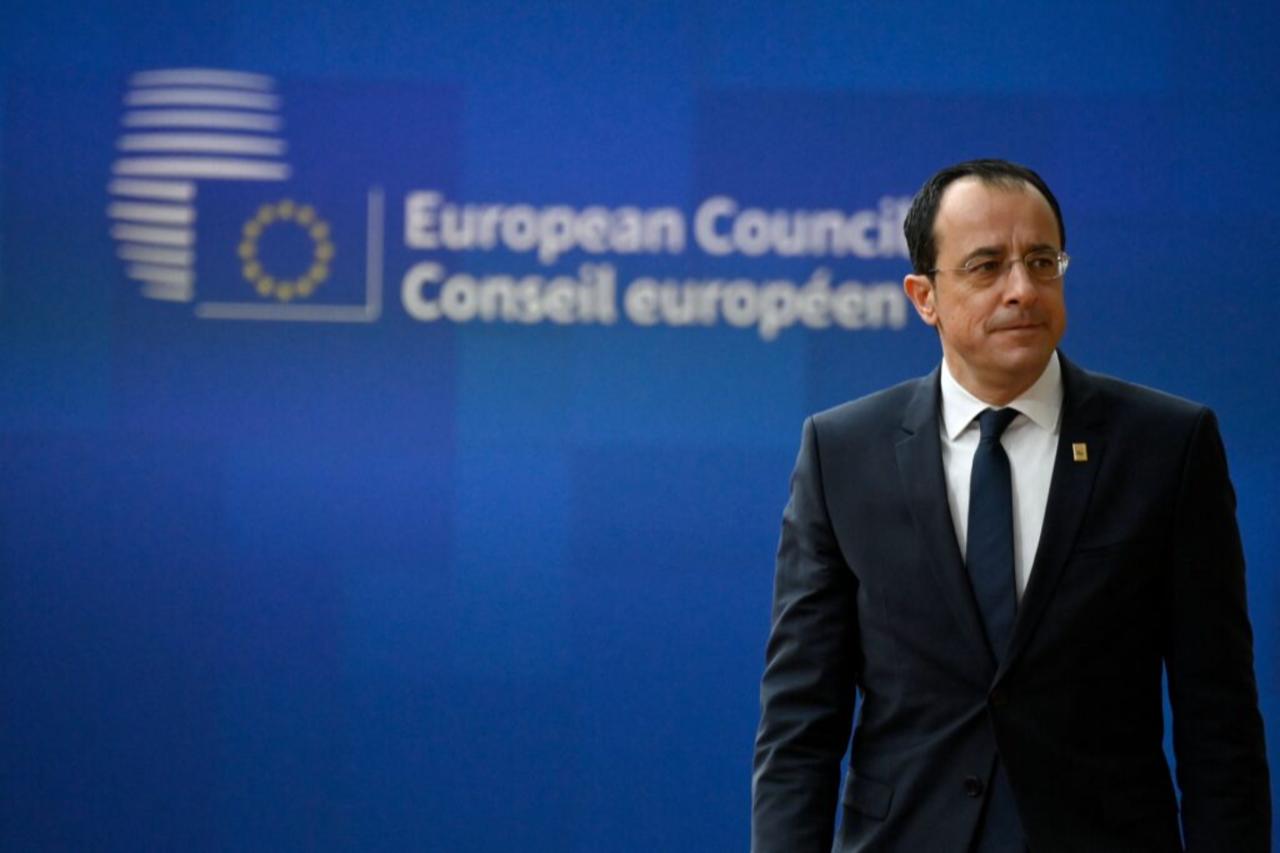
Greek Cypriot leader Nikos Christodoulides has framed this as “a contribution to Europe's strategic autonomy.” The formulation may sound politically appealing, but it is legally hollow and serves primarily to obscure the real intent.
The statement issued on the same day by the Republic of Türkiye's Ministry of National Defense made the position unambiguous: “The agreement signed between France, which holds no guarantor status in Cyprus, and the GCA, aimed at unilaterally altering the delicate balances on the Island while disregarding the will and sovereign equal rights of Turkish Cypriots, is contrary to the 1960 Cyprus Treaties and international law. We once again remind that any military alliance that disregards the delicate balances in the region and targets the rights and interests of Türkiye and the Turkish Republic of Northern Cyprus (TRNC) has no chance of success against Türkiye.”
The ministry's statement is a concise articulation of concrete legal realities.
Strong and simultaneous reactions from the TRNC were not long in coming. TRNC Prime Minister Unal Ustel declared the agreement “a deeply misguided step that ignores the existing realities on the Island of Cyprus, the fundamental principles of international law, and the balances that must be carefully preserved in the region.”
TRNC Foreign Minister Tahsin Ertugruloglu formally announced that the agreement is “null and void for the TRNC and the Turkish Cypriot people.” The episode demonstrated that Ankara and Nicosia are in full alignment.
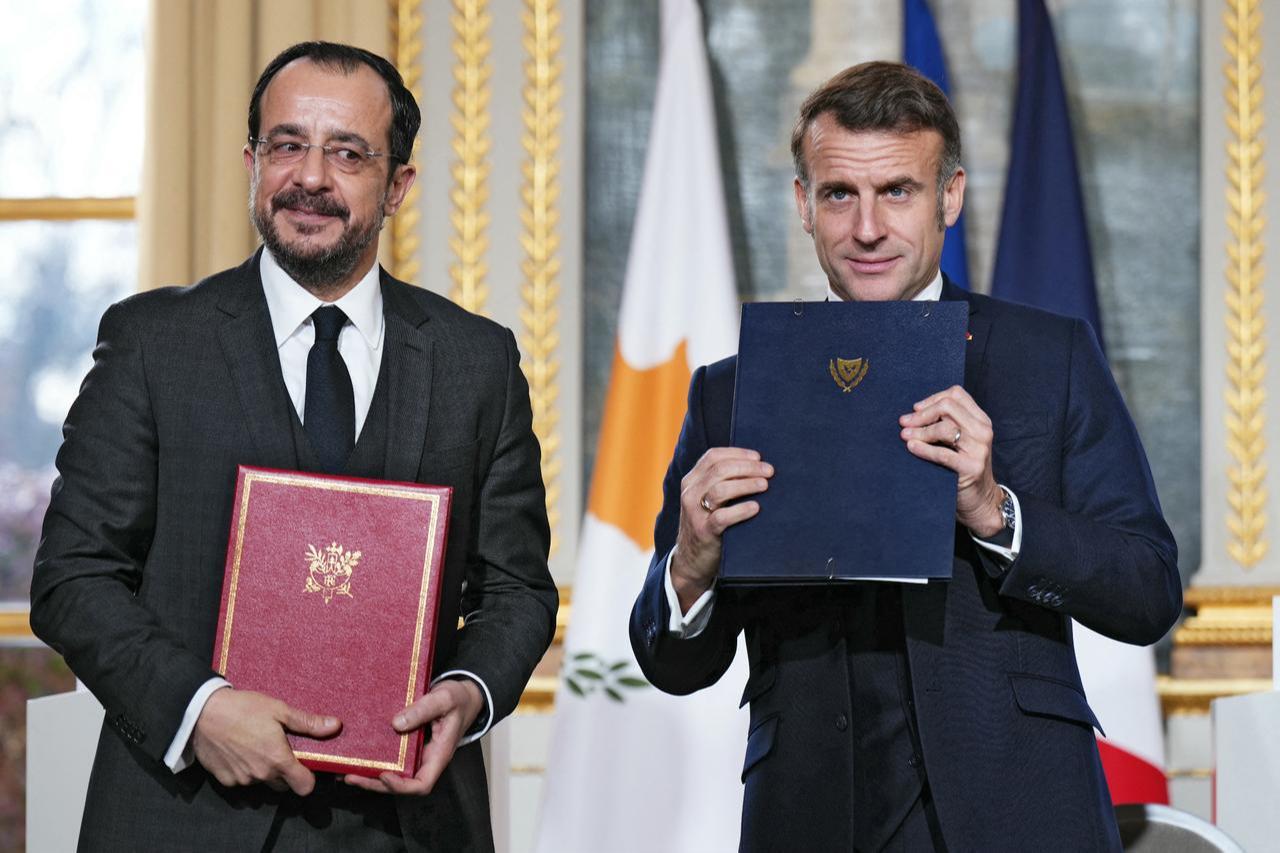

The founding of the Republic of Cyprus rests on three complementary instruments produced by the London and Zurich negotiations: the Treaty of Guarantee, the Treaty of Alliance, and the Treaty of Establishment.
These documents were registered in 1960 by U.N. Security Council Resolution 186 and became an integral part of international law.
Article 1 of the Treaty of Guarantee safeguards Cyprus's independence, territorial integrity, and security, while Article 2 explicitly grants Türkiye, Greece, and the United Kingdom guarantor status along with the obligation and the right to intervene to preserve the island's constitutional order. Article 3 expressly prohibits Cyprus from entering into any political or military union with any other state.
The 1960 Treaty of Alliance established strict quotas for Greek and Turkish contingents on the island (950 and 650 troops respectively) and left no legal basis for any foreign military presence beyond those figures.
The United Kingdom maintains its presence at the Akrotiri and Dhekelia Sovereign Base Areas, a de facto reality accepted by even the Greek Cypriot side since 1960.
France has no status, role, or standing as a party to any of these treaties.
The French state is neither a guarantor power nor does it hold any treaty-based right of presence on the island. It also doesn't possess the authority to carve out a bilateral path outside the mechanisms established by the 1960 framework.
As Prime Minister Ustel noted, “France has no historical, geographical, or political connection to the Island of Cyprus.”
Under international law, a state seeking to acquire the right of military presence on another state's territory requires either a treaty basis or a legitimate self-defense necessity. Neither condition is present here.
Christodoulides's argument of “EU strategic autonomy” also warrants a direct response: EU membership does not exempt states from their pre-existing treaty obligations.
The established case law of the European Court of Justice is clear on this point.
The GCA remains a party to the 1960 treaties, and those instruments remain in force under international law.
The EU umbrella cannot furnish a functional legal argument to legitimize an unlawful act.
Foreign Minister Ertugruloglu's assessment is precisely apt here. “These and similar steps taken by the Greek Cypriot administration are fundamentally aimed at obtaining military gains and advantages under the guise of humanitarian purposes.”
The staging of the signing ceremony within the framework of an EU defense ministers' meeting is the most concrete example of this veiled approach.
Prime Minister Ustel further noted that ever since Christodoulides took office, he has been taking systematic steps to turn Greek Cyprus into a deployment hub for foreign military elements. This assessment is well-founded.
The defense cooperation dialogues conducted with Israel, France, and various EU member states before the SOFA demonstrate that the Greek Cypriot side has been pursuing a consistent strategic preference.
The SOFA is therefore the product of a long-planned process.
To assess this step solely as a dimension of the Cyprus problem is to render invisible France's structural strategy in the Eastern Mediterranean.
Paris has been pursuing the institutionalization of its military weight in the region for at least a decade.
The 2020 confrontation between French and Turkish frigates during the EU arms embargo monitoring operation (IRINI) in the Mediterranean demonstrated how tangibly the deep-seated rivalry between the two countries can manifest.
France's 2021 defense partnership agreement with Greece and the subsequent Rafale sales form a triangle that, together with the SOFA concluded with the GCA, constitutes a coherent whole.
It is no coincidence that French Defense Minister Vautrin stated at the signing ceremony that Cyprus holds "a critical position in the Eastern Mediterranean for EU security.”
France intends to transform Greek Cyprus into a logistical bridgehead for Middle East and East Africa operations.
Access to the ports of Larnaca and Limassol, combined with operational rights at the Andreas Papandreou Air Base in Paphos, completes the infrastructure for this intent.
The defense industry cooperation clause embedded in the SOFA will function as a mechanism intertwining this relationship with economic interests as well. Following the signing, Palmas characterized France as GCA’s “strategic partner,” which serves as a formal declaration of the relationship’s permanence.
This carries a strategic dimension that cannot be dismissed from the perspective of Türkiye and the TRNC. Taken to strengthen Greek Cyprus' diplomatic hand in Eastern Mediterranean maritime jurisdiction negotiations, the move is calculated to provide the Greek Cypriot side with an implicit security umbrella.
Consequently, this shifts the dynamics of the Cyprus negotiations while directly influencing discussions on exclusive economic zones and continental shelf delimitation.
However, the principle of sovereign equality of Turkish Cypriots cannot be extinguished by any military deployment; this right is grounded in treaty law and has been won and preserved at the negotiating table.
The response of Türkiye and the TRNC must be multilayered.
On the legal track, the consultation mechanisms provided for by the 1960 Treaty of Guarantee should be kept active through both U.K. and U.N. channels, and it must be placed on record that the agreement has met with objection in international forums.
U.N. Security Council Resolutions 541 and 550 affirm the legitimate political existence of Turkish Cypriots, and Ankara must keep references to these texts at the center of its diplomatic agenda.
The point raised by Foreign Minister Ertugruloglu also carries a critical operational direction in this context: “The developments once again underscore the importance of Türkiye's active and effective guarantorship and make it imperative to deepen cooperation in the field of defense.”
Accelerating concrete steps to enhance the TRNC's tangible visibility on the international stage is an indispensable component of this multilayered response.
While maintaining diplomatic pressure on Paris, Ankara must also activate the mechanisms that will make France see the true cost of this investment.
In conclusion, the France-GCA SOFA is a political fait accompli dressed in legal clothing.
The 1960 treaty order remains binding international law in full force today.
As long as Türkiye operates its guarantor position actively and with resolve, the said alliance genuinely has no chance of success.
The essential challenge is to make this resolve visible through the concrete mechanisms of law and tangible steps on the ground.
The signing of the agreement within the framework of an EU meeting shows how calculated the Greek Cypriot side has been, both in form and substance.
As a counterpart to that calculation, the response of Türkiye and the TRNC must at least be equally resolute and multi-dimensional.


 Set as preferred source
 Set as preferred source


 1 min read
 1 min read