Newsletters





The European Commission announced that it has appointed Executive Vice-President Raffaele Fitto as its special representative for Cyprus.
The appointment came at the recommendation of the Greek Cypriot Administration, and it took place in a process where the Turkish Cypriot side was never consulted or even informed at any stage.
The European Union, which for more than 50 years has claimed to play the role of a neutral mediator on this issue, once again proved that it has become a party at the institutional level.
A resolution to the Cyprus issue is already being pursued under the auspices of the United Nations, within the framework of international law.
The Secretary-General's Personal Envoy Maria Angela Holguin Cuellar holds the only legitimate mediating position, one that carries the obligation to maintain equal contact with both sides on the island.
Although Fitto's appointment was presented in the official statement with an emphasis on "close cooperation" with Holguin Cuellar, the mechanism itself adds a new and unnecessary layer to the process.
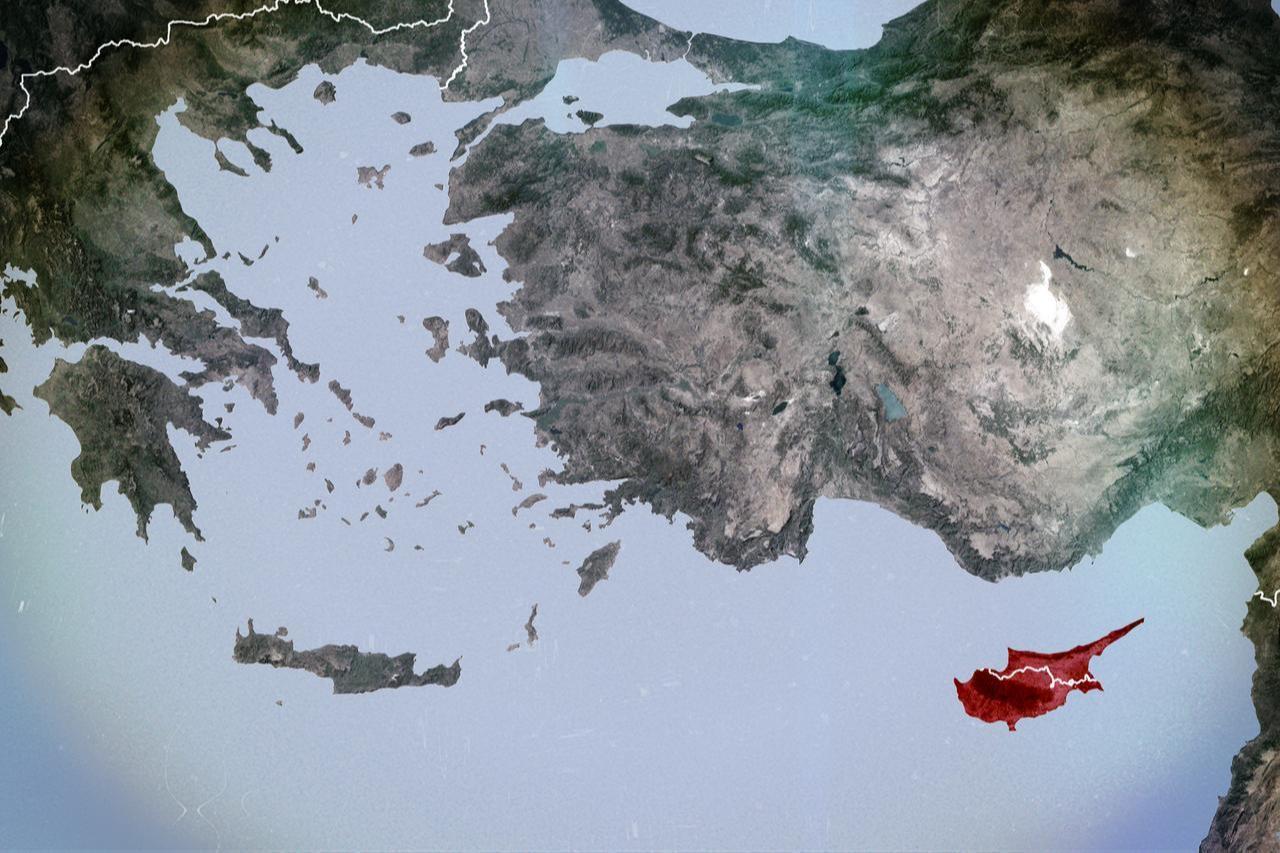

The Cyprus issue is one of the rare international disputes that has been framed since 1964 by U.N. Security Council resolutions and carried out through a good offices mission.
The only legitimate ground for the process is the U.N.-led negotiation format, in which the parties are represented on equal footing and the guarantor states also sit at the table. The functioning of this format rests, to a large extent, on the trust placed in the mediator's neutrality.
With the European Commission appointing its own special representative, two separate tracks now emerge on the ground: the official negotiation process run by the U.N., and a parallel diplomatic track shaped by the EU according to its own interests.
Looking at Fitto's current mandate, his responsibilities appear limited to the implementation of the Green Line Regulation and the goal of "Cyprus' reunification."
Yet the core parameter of the negotiations conducted under the U.N. framework is the model of sovereign equality and cooperation between two states, one that the Turkish Cypriot side has insisted on since Crans-Montana in 2017.
The Commission's choice of the term "reunification" in the appointment text shows that Brussels has already reached a conclusion about the basis for negotiations.
For an actor who is supposedly acting as a mediator to predetermine the final formula of the process runs against the basic principle of mediation.
Furthermore, the U.N.'s own representative is already active on the ground. The entry of a second representative will create confusion over interlocutors among the parties and will blur the question of which official channel is responsible for contact with guarantor Türkiye and the TRNC.
Numerous examples in the history of diplomacy show that parallel mediation mechanisms tend not to speed up a process but instead pull the parties further apart.
Similar multi-actor intervention models in the Balkans and the Middle East are known to have produced no results, and instead weakened accountability by dispersing responsibility for the process.
 1 min read

The most contested dimension of Fitto's appointment lies in how the process was conducted.
The appointment was made at the recommendation of the Greek Cypriot side, while the Turkish Cypriot side was not consulted in any way.
Setting aside the Turkish Cypriot side's demand for recognition under international law since 1983, even its de facto status as an equal party on the island was disregarded in this process.
The principle of "equal access to decision-making on the process for both sides," the most basic requirement of sovereign equality, was violated at the very first step of the appointment.
In fact, the roots of this situation go back to 2004. While the Greek Cypriot side rejected the Annan Plan, drafted by then U.N. Secretary-General Kofi Annan, in the referendum, the Turkish Cypriot side voted in favor of it.
Despite this, the EU admitted the Greek Cypriot Administration, which represents only the southern part of the island, as a full member of the union and formally maintained its isolation of the Turkish Cypriot people.
In the 22 years since, Brussels' institutional position has not changed.
On the contrary, the veto power the Greek Cypriot Administration gained through EU membership has left the union's Cyprus policy almost entirely steered by the Greek Cypriots.
The Greek Cypriot side's role as the recommending authority in Fitto's appointment process was the clearest sign of this structural imbalance.
For an official who is to act as the EU's special representative to have secured the approval of only one side before even taking up the post sets a precedent that will undermine the legitimacy of every step taken going forward.
For the Turkish Cypriot side, accepting an interlocutor appointed without consultation as a legitimate mediator would mean giving up the demand for sovereign equality.
This is why the TRNC Ministry of Foreign Affairs' statement that the step is "null and void" is a response expected on both legal and political grounds for the sake of consistency.
Ultimately, Fitto's appointment does not redefine Brussels' position on the Cyprus issue. It places the one-sided approach it has pursued for years into an institutional framework.
A lasting resolution can only take shape once both sides on the island are recognized under equal international status and the existing restrictions are lifted.
If the EU wants to take on a genuine mediating role, it must first reexamine its own institutional bias.
Otherwise, every new step it takes will amount to nothing more than a further deepening of distrust.


 Set as preferred source
 Set as preferred source




 1 min read