Newsletters


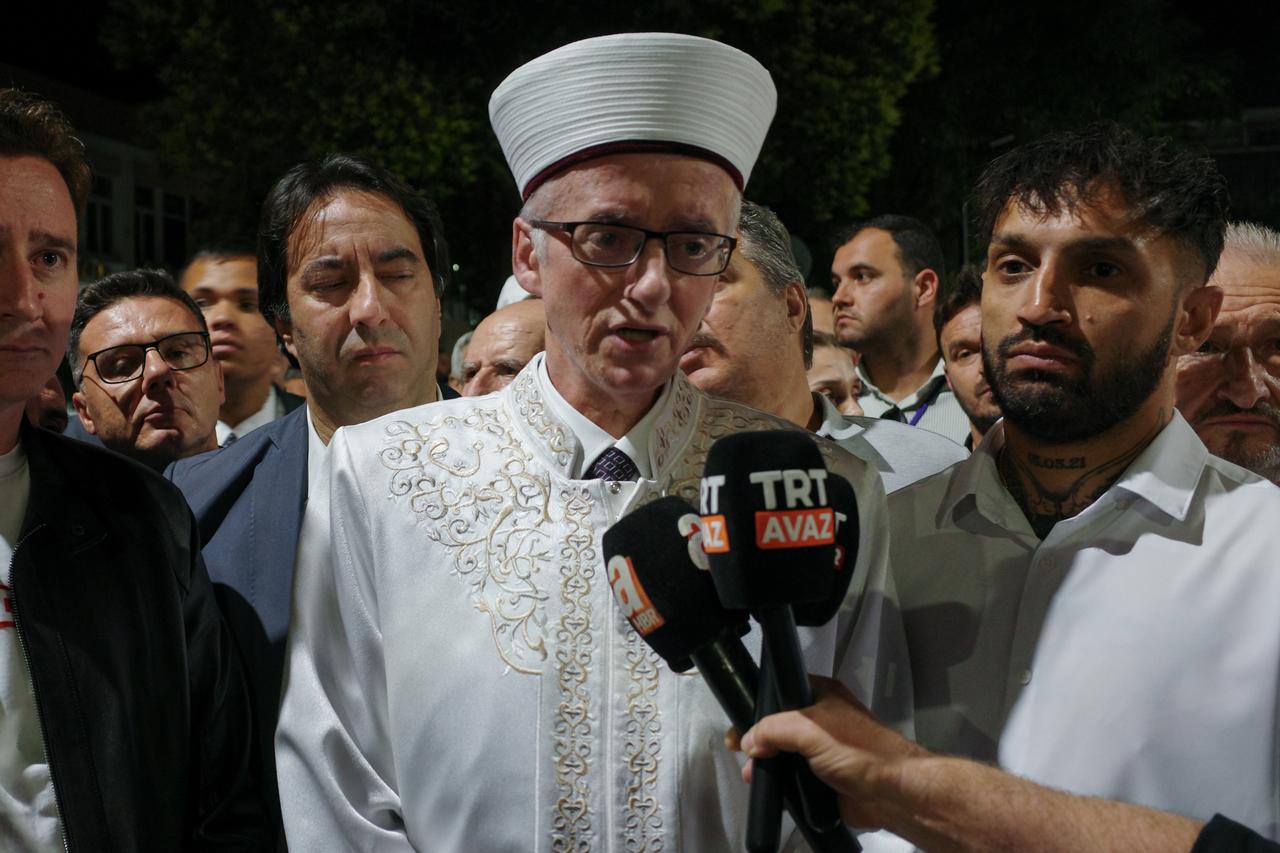


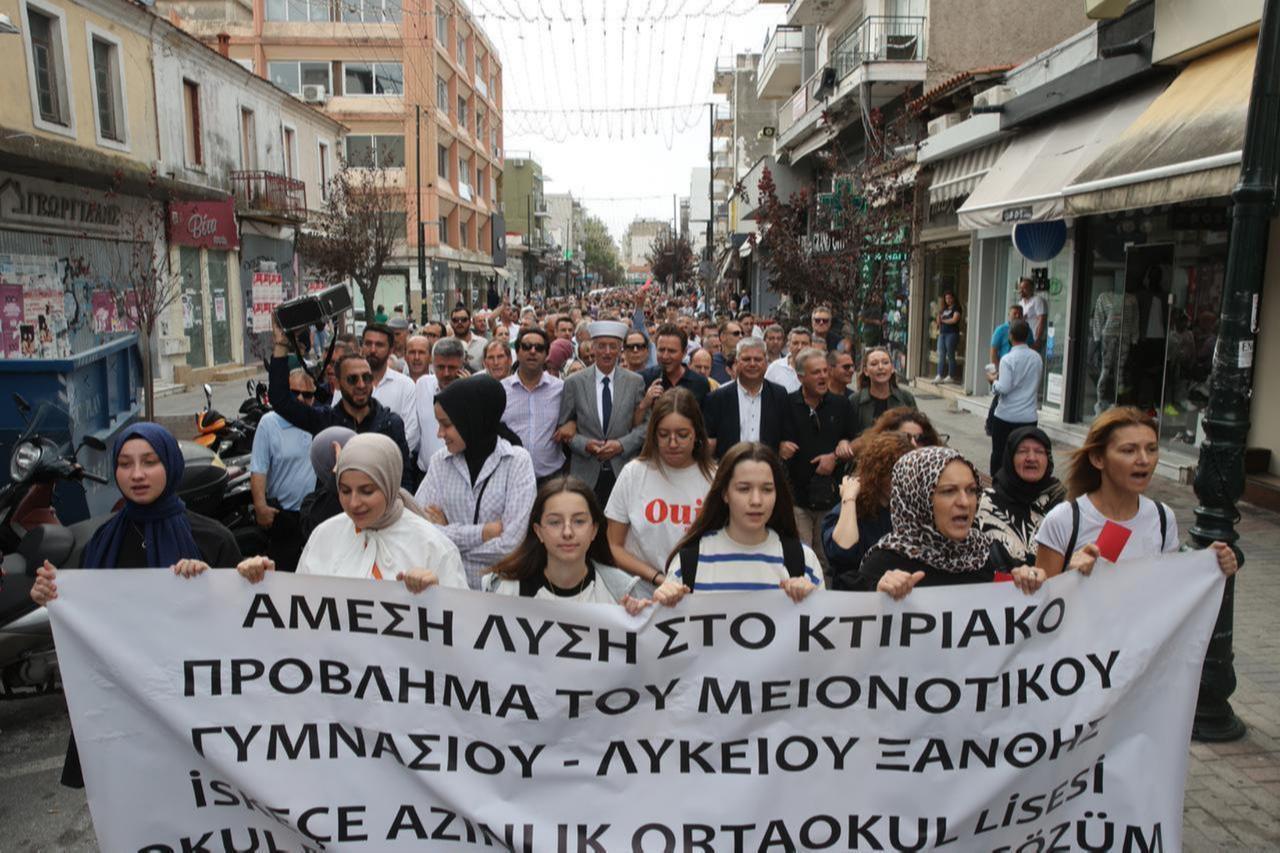
The Iskece Single-Member Criminal Court in Western Thrace announced its verdict on the evening of June 18, 2026, in the case opened against four members of the Turkish minority. The case stems from incidents that occurred during the Friday prayer at the Cinar Mosque in Iskece on Oct. 11, 2024.
Defendants Huseyin Baltaci (former head of the Western Thrace Minority Higher Education Graduates Association), journalist Ozan Ahmetoglu (former head of the Iskece Turkish Union), Bahri Belco (deputy chairman of the DEB Party) and Murat Kose (chairman of the Cinar Mosque Board of Trustees) were each sentenced to 17 months in prison on two counts, because they had resisted a provocation attempt by state-appointed muftis.
Although the sentences can be converted into fines, the defense said the ruling will be taken to the appeals court and, if necessary, to the European Court of Human Rights.
The single-session hearing, which lasted 14 hours, once again demonstrated how critical a point the struggle for minority rights has reached.

The Western Thrace Turkish Minority's right to freely elect its religious leaders predates the 1923 Treaty of Lausanne.
Article 11 of the Treaty of Athens, signed between the Ottoman State and Greece in 1913, granted Muslim communities within Greek borders the right to elect their muftis through the community itself.
This provision was transferred into domestic law through Greek Law No. 2345 of 1920, which established the procedure whereby muftis were elected by the Muslim minority from a list of candidates approved by the Ministry of Religious Affairs and the regional governor.
Articles 37 to 45 of the Treaty of Lausanne placed the existing order under the protection of international law by guaranteeing the religious and cultural autonomy of minorities.
Articles 40 and 45 of the treaty explicitly recognized the minority's authority to administer its own religious institutions and determine its religious leaders.
The mufti institution was not limited to religious duties; it also held decision-making authority over family law matters such as marriage, inheritance and divorce, placing it at the center of communal life.
This order functioned in practice until 1985.
Following the death of Gumulcine Mufti Huseyin Mustafa Efendi, Greek authorities made their first direct appointment without consulting the minority, effectively abandoning the traditional election procedure.
In response, the minority elected Mehmet Emin Aga as Iskece Mufti and Ibrahim Serif as Gumulcine Mufti in 1990 on its own initiative.
The Greek government's response was harsh.
A decree issued in 1991 repealed Law No. 2345, turning state appointment of muftis into a permanent system, while the elected muftis were, over time, brought before courts on charges of unlawfully assuming the title of public official.
The 20-month prison sentence handed to Mehmet Emin Aga by the Lamia Criminal Court in 1997 remains one of the best-known examples of this process. The subsequent application to the European Court of Human Rights concluded against Greece in 2000, resulting in a compensation ruling.
Another significant legal development came through a series of rulings issued by the Greek Council of State between 2000 and 2003.
In these rulings, the Council of State acknowledged that the 1913 Treaty of Athens recognizes the minority's autonomy and collective rights. However, it simultaneously held that the 1923 Treaty of Lausanne narrowed this autonomy, effectively annulling the procedure for electing muftis.
This contradictory line of jurisprudence deepened legal uncertainty through judicial means, widening rather than closing the gap in interpretation between the parties.
Even the rulings of the European Court of Human Rights failed to produce a lasting change in practice; despite being found at fault on the international stage, the Greek government continued its policy toward the muftis.
Law No. 3536, enacted in 2007, restructured the procedure for appointing religious officials, stipulating that appointments would be made by a five-member committee designated by the Ministry of National Education and Religious Affairs after consulting the mufti.
However, since the principle of the mufti's post being determined directly by the state was preserved, the core of the problem remained unchanged.
Another point worth noting from a legal standpoint is that Greece did not actually interfere with the mufti election procedure until 1985, tacitly accepting this practice for decades.
The position later adopted, which rejects the right to election altogether, is inconsistent with the principle of estoppel in international law, which bars a party from making claims that contradict its own prior conduct.
Furthermore, Athens' preference to define the minority as a religious rather than an ethnic group carries more the character of a political choice than a legal necessity.
By pointing to the absence of the word Turkish in the treaty text, Greece has sought to narrow the scope of the community's collective identity and religious autonomy.
When assessed in this context, Greece's position that the Treaty of Lausanne leaves no room for interpretation reflects a political stance rather than legal certainty. It remains a claim open to refutation by historical practice.
Alongside religious autonomy, the management of foundation properties constitutes another facet of the same problem.
Following the 1967 military junta, boards appointed by the state took over the administration of foundation assets in Iskece and Gumulcine. This arrangement has continued unchanged to this day.
The use of appointed administrators to manage foundation properties, which financially sustain the minority's religious and educational institutions, expands the scope of the mufti crisis. It transforms a dispute over religious representation into a struggle for complete institutional autonomy.
The tension at Cinar Mosque should therefore not be read as an isolated incident, but as the visible face of a broader struggle for autonomy spanning the religious, legal and financial spheres.
 2 min read
The Cinar Mosque case marks a threshold that turned an abstract legal debate into a concrete social tension.
The congregation's resistance to the state-appointed muftis inside the mosque expressed a discontent that had been building for years. Since 1990, the minority has continued to recognize its own elected muftis as the legitimate religious authority, refusing to accept state-appointed officials in that position.
The 17-month prison sentences handed down by the court, even though suspended and converted into fines, show that an approach effectively criminalizing the minority's religious preference persists.
A similar pattern of conduct had repeated itself before the Cinar Mosque case.
A case was opened against Ahmet Mete, who served as the elected mufti of Iskece, on the grounds that he had led funeral prayers for a second time after the state-appointed mufti had already done so.
When Mete passed away, President Recep Tayyip Erdogan issued a condolence message, a sign that the matter was being closely followed in Ankara.
In previous years, the decision to close four Turkish primary schools in the Thrace region had likewise drawn a sharp reaction from Ankara.
The Cinar Mosque case, as a continuation of this pattern, once again demonstrated that even the minority's everyday religious practices can be made subject to legal sanction.
At this point, it is worth addressing where the matter stands in Turkish-Greek relations.
Under the principle of reciprocity arising from Article 45 of the Treaty of Lausanne, Ankara bears responsibility for closely monitoring the rights of the Turkish minority in Western Thrace. This responsibility is directly linked to the rights granted to the Greek Orthodox community in Istanbul.
Athens, for its part, tends to reduce the mufti institution from a religious leadership post to a state-controlled bureaucratic office.
Notably, the foreign ministries of both countries issued post-verdict statements that each invoked Lausanne.
This shows that both sides view the treaty as a primary source of legitimacy, even as their interpretations of it continue to diverge.
Greece's new regulatory proposals—such as creating a 33-member advisory board to evaluate mufti candidates—merely bureaucratize the crisis rather than resolve it. Because final appointment authority rests with the state and concludes via presidential decree, the process remains entirely removed from the principle of democratic election.
The importance of the matter becomes clearer when the region's demographic picture is considered.
The Turkish minority, which comprised roughly two-thirds of the region's population in 1923, has shrunk to around 150,000 people today, representing a far smaller share of the overall population.
For the community concentrated in Gumulcine, Iskece and Dedeagac, the mufti institution has become a symbol of both religious representation and the preservation of Turkish identity.
As a result, the state's insistence on retaining appointment authority is perceived by the minority not as a simple administrative preference but as an issue intertwined with the recognition of identity itself.
Within this framework, the Cinar Mosque case ceases to be a mere criminal proceeding and becomes a case in which the minority's collective identity and religious autonomy are being tested.
The fact that even the rulings of the European Court of Human Rights and the jurisprudence of the Greek Council of State have failed to produce lasting change in practice shows that the problem rests on political will rather than legal grounds.
While Türkiye's keeping of the issue on the international agenda matters for protecting minority rights, Greece's narrow interpretation of the Treaty of Lausanne continues to complicate trust-building between the two countries.
The gap between the European Union's discourse on fundamental rights and a member state's minority policy is also reopened for debate in this context. Freedom of religion and the right to organize, after all, are counted among the bloc's founding values. The extent to which actual practice in Western Thrace aligns with these values continues to be questioned.
Another element of the issue's international dimension can be observed in applications made to the Parliamentary Assembly of the Council of Europe and the United Nations' human rights mechanisms.
Minority organizations keep the mufti crisis on the agenda through periodic reports as a way of reminding Greece of its international obligations. However, the fact that these efforts have not translated into concrete sanctions creates a cycle that reinforces the problem's lack of resolution.
Ultimately, Athens' continued approach of reducing the mufti institution to a bureaucratic post will do nothing but deepen the trust gap between the Muslim Turkish minority and the state.
Ankara's determined pursuit of the matter, along with the international community's attentiveness to the issue, will be decisive for the Turks of Western Thrace to actually see their rights arising from Lausanne put into practice.


 Set as preferred source
 Set as preferred source




 1 min read