Newsletters


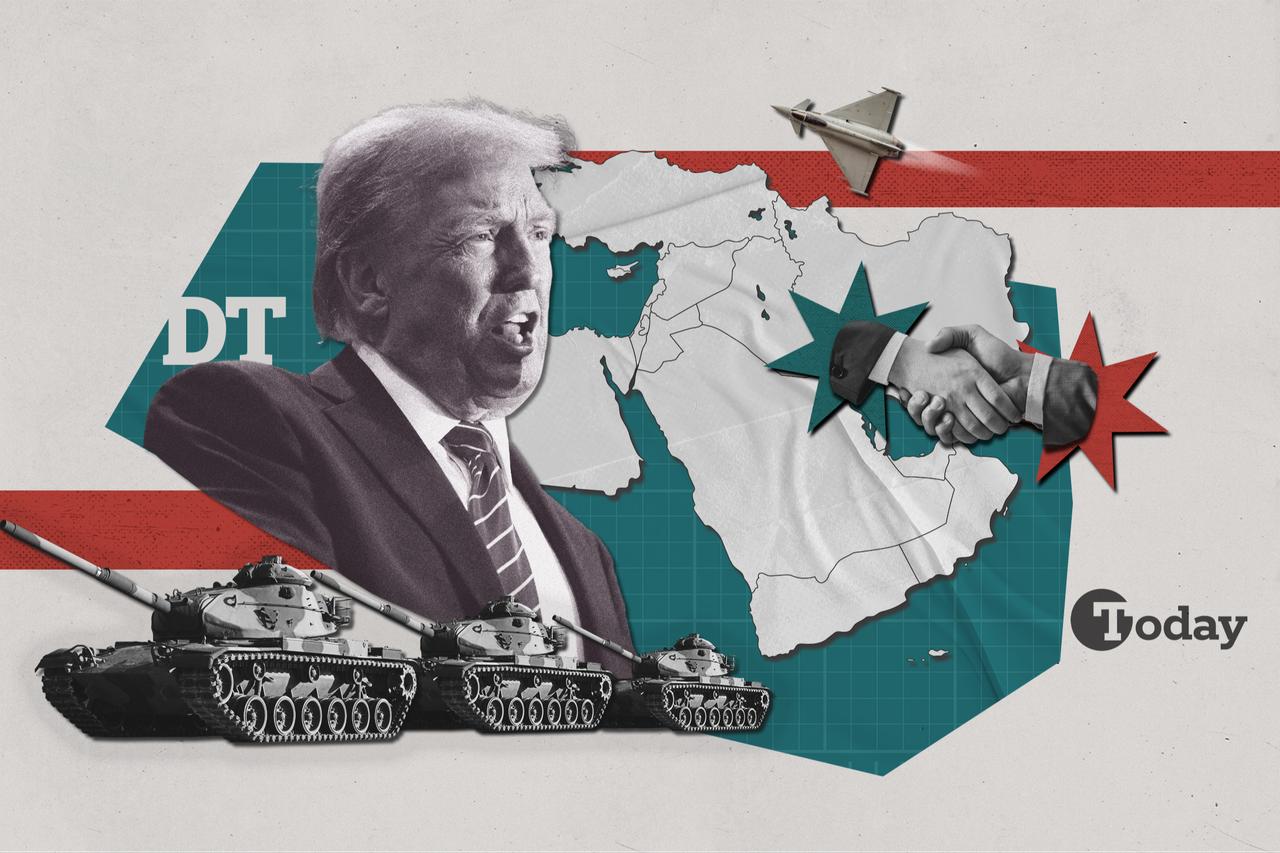


The U.S. National Security Strategy (NSS) shows how justified emerging middle powers like Türkiye are in pursuing independent policies.
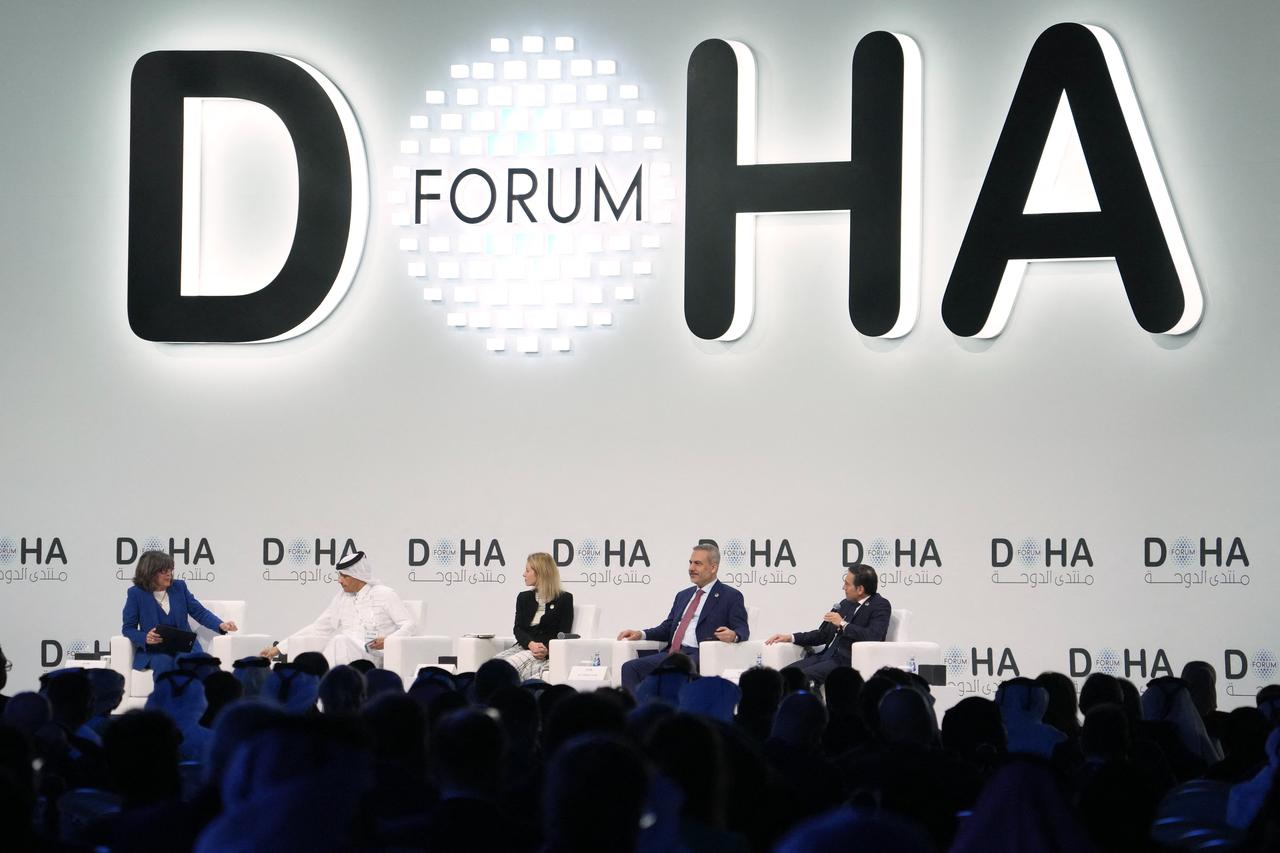
As U.S. Ambassador to NATO, Matthew Whitaker stated at the Doha Forum, the NSS is actually a representation of the policies that guided the Trump administration during the past year: focusing on the Western Hemisphere, on the homeland, and on the Indo-Pacific, while expecting European allies to step up and assume greater responsibility for Europe’s conventional defense.
It was made very clear in the NSS that neither Europe nor the Middle East occupies the priority on the U.S. agenda as they once did.
The fact that this document was personally presented by President Trump during the Trump administration in 2017 is proof that it was an important document for the administration.
As former NSC Senior Director for Strategic Assessments, Victoria Coates, one of the 2017 NSS contributors, also emphasized, this document needs to be taken “seriously.”
Since the first Trump administration, we have observed U.S. partners preparing for a U.S. retrenchment. In Europe, President Macron led the push for strategic autonomy, while traditional U.S. partners in the Middle East began pursuing increasingly independent and diversified foreign policies.
In this context, the EU remained well behind the Middle East. Although the war in Ukraine shook EU countries and pushed them to strengthen their defenses within NATO, they largely produced rhetoric rather than practical policy initiatives.
It’s only after the second Trump administration took office that Europe began to act. They started planning how to ensure security without U.S. involvement through measures such as reinstating military conscription and developing initiatives such as the ReArmEurope Plan and Security Action for Europe—SAFE—instruments to undertake extensive defense spending through common procurement projects.
Yet, it will take a long time for these measures to fully materialize.
In the Middle East, a more proactive approach has emerged. Following the 2019 attack on Saudi Aramco’s oil processing facilities in Abqaiq/Khurais by Iran and/or Iran-backed militias, GCC states—led by Saudi Arabia—realized, in the words of Aziz Alghashian, Adjunct Professor at Naif University for Security Sciences, that they cannot “outsource their security.”
The recent Israeli strike on Qatar further validated this point. According to Alghashian, the NSS’s approach to the Middle East requires that “the regional countries should take more agency and build a regional security architecture based on their priorities.”
Saudi Arabia and the UAE’s significant investments in indigenous defense industries, joint production initiatives with countries like Türkiye, and the growing arms trade of all GCC countries with China, Russia, South Korea and European states aim to reduce reliance on a single supplier and overcome U.S. Congressional restrictions.
Similarly, regional states have adopted hedging strategies between the U.S. and China to secure political autonomy, engaging in agreements and partnerships where the U.S. was not involved.
Notable examples include the 2023 Saudi Arabia–Iran normalization mediated by China, Saudi–Iraq defense and security cooperation, improved UAE–Iran relations, and expansion of U.S.-initiated air defense and early-warning data sharing among Saudi Arabia, the UAE, Bahrain, and Qatar.
As a result, the rising middle powers of the Middle East maintain engagement with the U.S. while increasingly understanding what they can and cannot expect from Washington. Consequently, they are simultaneously improving self-sufficiency and diversifying security partnerships.
The NSS paints a rosy picture of the Middle East, citing the apparent weakening of Iran, a potential Gaza peace deal, the decline of Hamas, and relative stabilization in Syria as evidence that conflict risk is not as severe anymore as it appears.
This approach signals indeed a shift toward a deal-based order in regions that are no longer a U.S. priority. Washington will pursue cooperation aligned with commercial gains and economic interests; security is no longer the number one agenda item.
However, the reality of the region is starkly different. The Middle East remains prone to new conflicts at any time. As David Schenker, the Assistant Secretary of State for Near Eastern Affairs during the first Trump administration, highlighted, “The military gains have not yet been translated into political gains.” Gaza, Syria, Yemen, and Lebanon remain conflict-prone, and although Iran’s nuclear capabilities may have diminished, it continues to pose a persistent threat.

The U.S. stepping back from its regional responsibilities and shifting toward a more transactional, economically oriented relationship with the Middle East has revived discussions on regional defense cooperation.
In particular, at the Arab League–Organization of Islamic Cooperation Joint Extraordinary Summit held after Israel’s attacks targeting Hamas officials in Doha in September 2025, Egypt revived its old proposal for a NATO-style Arab force.
Similar formations were attempted twice in the past and discussed again in 2015 when Houthi forces captured much of Yemen. In 2017, during President Trump’s Gulf tour, Saudi Arabia proposed a similar initiative under the name Middle East Strategic Alliance (MESA).
At that time, the proposed Arab Force—intended primarily as an anti-Iran coalition under the Arab League—failed due to disagreements over headquarters, command structure, divisions regarding the Qatar blockade, and relations with Iran and Israel, as well as continuing conflicts in Syria, Yemen and Libya.
Under Egypt’s renewed proposal, with headquarters in Cairo, the suggested participants include Egypt, Jordan, and six GCC countries. Cairo proposes rotating the command position among the members, starting with an Egyptian command.
Although since the previous proposal, the Qatar blockade has ended, GCC countries have improved relations with Iran, intra-GCC ties have stabilized, Syria’s regime has changed, and Libya’s conflict has paused, establishing such a force would take many years.
The creation of a NATO-supported force among regional countries within NATO’s Southern Neighborhood (SN) partnership can be advanced as a potential solution.
NATO’s renewed focus on the SN in 2025, the establishment of a permanent NATO Liaison Office in Amman, and expanded political–military cooperation under the SN Action Plan aim to enhance dialogue and cooperation with partners from the Middle East and North Africa. This is particularly relevant as threats emanating from the Sahel and the Gulf also affect Euro-Atlantic security.
Coordinating the Arab Force within the SN framework would strengthen the regional security architecture already developed under initiatives like the Istanbul Cooperation Initiative and the Mediterranean Dialogue.
It would provide access to NATO standards in command, logistics, cyber defense, maritime security, and air and missile defense, and enhance institutional legitimacy for this force. It would also reduce interoperability issues among Arab militaries with differing systems, creating more effective responses to security challenges linking Europe and the Middle East.
Such a solution offers a significant strategic opportunity for Türkiye, not directly mentioned in a potential Arab Force. As the region’s only NATO member, Türkiye’s bridge role between the Arab world and NATO would be institutionally strengthened.
Türkiye would be positioned not as an external actor seeking dominance, but as a key intermediary between NATO and the Arab world. Even without formal membership, Türkiye could contribute structurally in areas such as training, intelligence sharing, cybersecurity, air defense coordination, and peacekeeping operations.
Türkiye has already developed robust bilateral defense relations with many countries in the GCC. Having a strategic partnership with Qatar, Türkiye maintains a military base in the country.
It has also launched robust defense trade and joint production projects with Saudi Arabia and the UAE—indeed, in the 2020–2024 period, Türkiye became the largest arms provider to the UAE, which, like Kuwait, became a key buyer of Bayraktar TB2 drones; Saudi Arabia’s purchase of Akinci UCAVs marked a record deal for Turkish defense exports.
The signing of a defense industry procurement protocol between the governments of Kuwait and Türkiye in 2024 formalized their defense industry relations.
The participation of Saudi armed forces in the Türkiye-hosted EFES exercises with land, naval, and marine special units and F-15 fighter jets, as well as their participation in the Türkiye-led NATO naval exercise Nusret 2025, exemplifies potential cooperation between an Arab force established under the SN coordination.
Nusret 2025 strengthened interoperability between the Turkish Navy and counterparts from 44 countries, including SN partners Morocco, Egypt, Saudi Arabia, UAE, Bahrain, and Kuwait.
The Istanbul Cooperation Initiative, launched at the 2004 NATO Istanbul Summit, and broader SN cooperation should be further strengthened and expanded at the 2026 NATO Ankara Summit.
NOTE: The experts whose names were mentioned in this article were panelists at the Atlantic Council panel “U.S. Strategy in the Middle East: Sorting Through Grand Statements and Policy”, moderated by Jonathan Panikoff, Director of the Atlantic Council’s Scowcroft Middle East Security Initiative, held on December 7, 2025, at the Doha Forum.


 Set as preferred source
 Set as preferred source


 2 min read

 1 min read