Newsletters


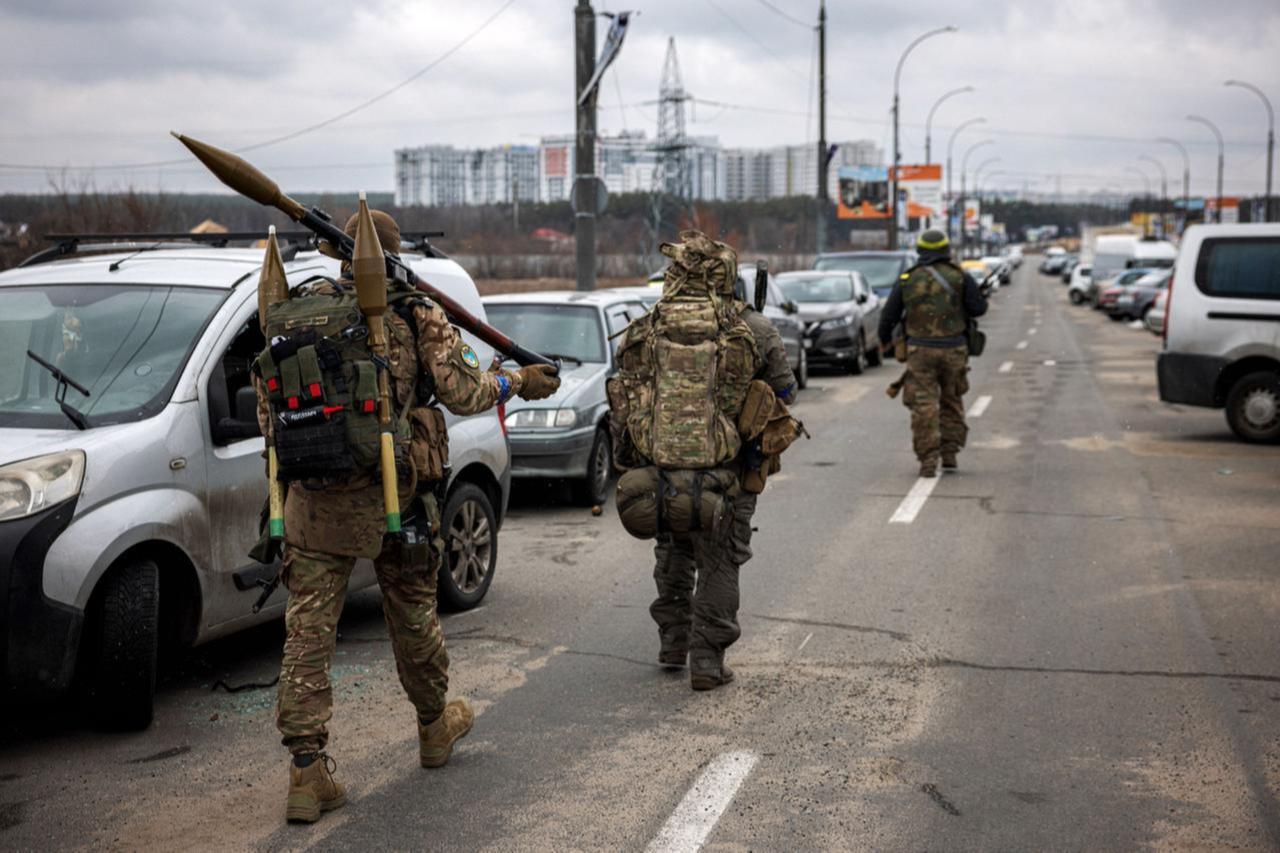


Russia’s invasion of Ukraine has entered its fourth year, expanding both on the battlefield and across increasingly tangled diplomatic arenas. With combined deaths and injuries now exceeding 1 million, neither side shows signs of exhaustion. Moscow and Kyiv continue to invest heavily in military technology, doctrine and ammunition, underlining that the war is far from frozen.
Trump’s envoy Steve Witkoff has held multiple meetings with Vladimir Putin, alongside intensive phone diplomacy and numerous delegation talks. Yet, attacks on Kyiv have intensified, fighting in eastern Ukraine continues to shift tactically, and Russia still occupies roughly a fifth of Ukrainian territory while demanding more under the banner of peace.
The Trump administration now appears to be projecting a more balanced posture, moving away from the early impression that it was seeking to break Kyiv’s resistance, partly under the influence of Marco Rubio and a greater willingness to listen to European concerns.
Even so, Europeans see this shift as falling well short of a policy of sustained pressure on Russia, and still describe the U.S. administration’s view of Ukraine as that of a partner rather than a full-fledged ally.
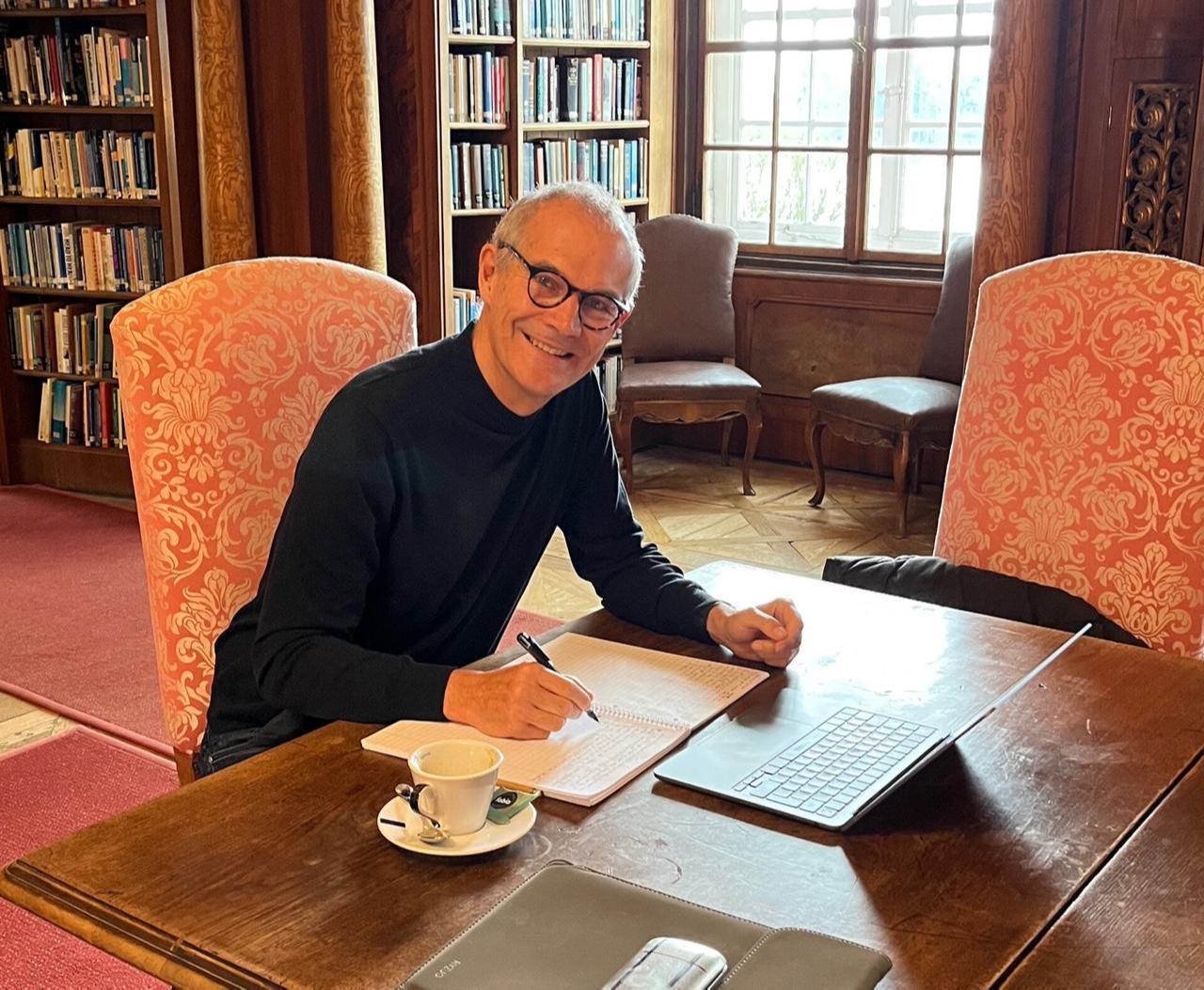
As Europe adjusts to a potentially reduced U.S. role, London stands out as one of Kyiv’s firmest supporters. To assess where the peace effort now stands and how it is viewed from Europe, I spoke with Ambassador Leigh Turner, a former British diplomat who served as Consul General in Istanbul and later as the U.K.’s ambassador to Ukraine, and the author of "Lessons in Diplomacy: Politics, Power and Parties."

In Türkiye and in parts of the wider international debate, Britain is often criticized for leaning too heavily on military pressure while diplomacy was allegedly underused in the early phase of the war.
That critique frequently centers on the 2022 Istanbul talks and the claim that then-prime minister Boris Johnson discouraged Ukraine from signing a possible agreement, a point that has been debated at times in Western commentary and has also become one of the Kremlin’s recurring narratives, still widely amplified.
Responding to claims about the Istanbul talks, he says: “I have seen no evidence to support the idea that Boris Johnson, when prime minister, somehow influenced the 2022 Istanbul talks to prevent a settlement.”
Absent proof, he adds, “I will be happy to be corrected if evidence emerges,” but the suggestion that a British prime minister was “secretly pulling strings behind the scenes” in Istanbul “sounds fanciful.”
It also, he says, would “grossly overstate the influence of Boris Johnson.”
The appeal of the Istanbul narrative, in his view, is political, but it misplaces agency.
Turner also reflects on why the Istanbul narrative continues to surface. In his view, this fits what he describes in his book Lessons in Diplomacy as a “reverse conspiracy theory,” where people, “naturally fearing chaos and malign actors,” turn their attention away from the perpetrators of an atrocity such as the invasion of Ukraine and instead ask “what did we do wrong?”
He argues that Johnson’s domestic political baggage reinforces this tendency, noting that “many people don’t like Boris Johnson for his support for the absurd own-goal that is Brexit.”
As a result, Turner says, the idea that Johnson or the U.K. did something foolish that blocked an early peace deal becomes appealing. Yet his conclusion remains the same.

Beyond the immediate Istanbul debate, Turner frames the dispute in a longer arc of U.K.–Russia relations. “During the 1990s, including when I was posted in Moscow from 1992-95, the U.K. consistently sought to support Russian economic growth and political development,” he says.
But, he adds, “since the Russian poisoning of Alexander Litvinenko in London in 2006, bilateral relations between the U.K. and Russia have struggled.”
Turner points to a brief effort to ease tensions, noting that “in December 2017, Foreign Secretary Johnson visited Moscow in an attempted reset.” But he notes that the relationship soon lurched into a deeper crisis.
“In March 2018, Russia attempted to poison (former Russian military intelligence officer) Sergei Skripal in Salisbury, leading to the death of a British citizen,” a case that shocked the U.K. and in which concrete evidence later emerged identifying officers of the GRU military intelligence agency as responsible for carrying out the attack.
Alongside that, Turner stresses continuity in Britain’s approach to Ukraine. “Since 1991, the U.K. has consistently supported the development of Ukraine,” he says, including through the period “2008–2012 when I served as British ambassador in Kyiv.”
He also points back to 2014, describing Russia’s “invasion and occupation” of eastern Ukraine and Crimea, “the latter leading to the widespread mistreatment of Crimean Tatars,” as part of the same trajectory that culminated in the full-scale invasion.
In that context, Turner argues the central constraint on diplomacy has been Moscow’s posture, not London’s.
“Ever since Russia’s 2022 full-scale invasion, Moscow has stuck consistently to maximalist demands” and has given “no indication that it is interested in peace,” he says.
“It’s Russia who has resisted a peace deal or even a ceasefire throughout.”
Finally, on how long U.K. support might last, Turner points to a formal signal of intent. “In January 2025, the U.K. and Ukraine signed a ‘One Hundred Year Partnership Agreement’,” he notes, an indication that London sees its backing of Kyiv as strategic and long-term, rather than contingent on the reputational battles around individual diplomatic moments such as Istanbul.
Donald Trump’s return to the White House has shaken European confidence in U.S. leadership and, by extension, the assumptions that have underpinned transatlantic security for decades. In London, as elsewhere, concern has grown that Washington could become an unreliable partner on Ukraine.
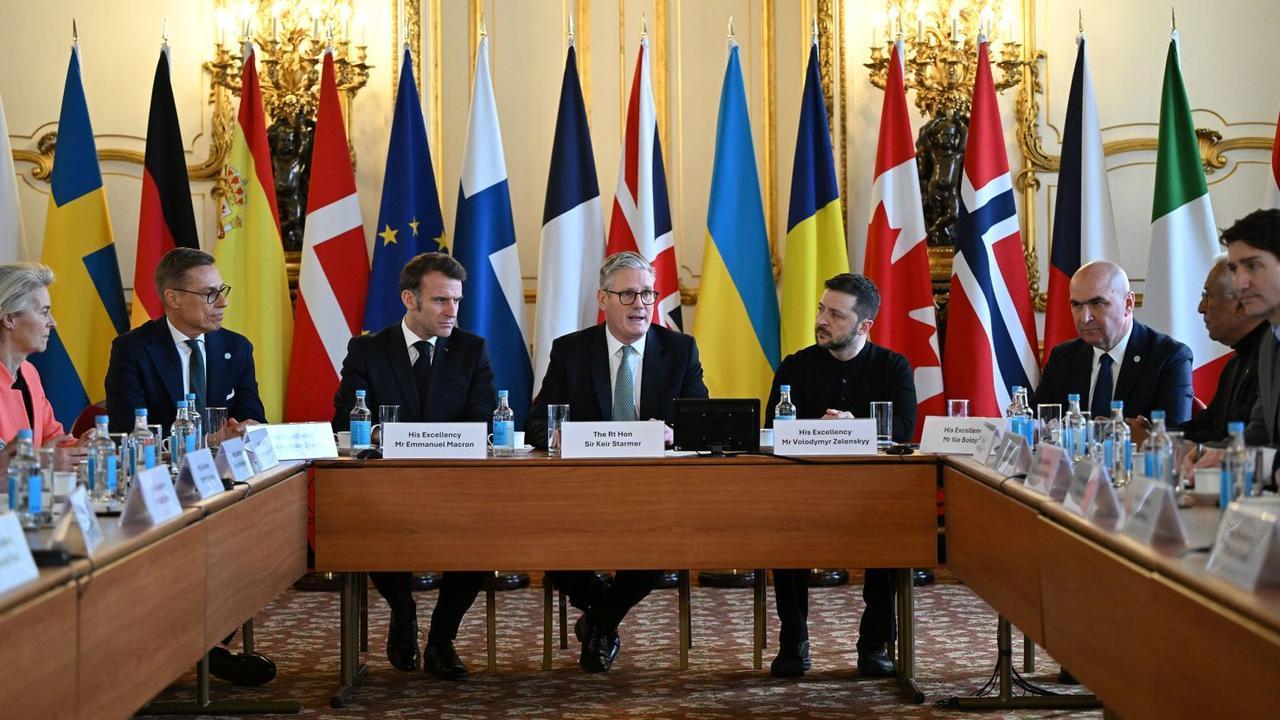
Britain and France have co-led the “coalition of the willing,” unveiled in London, as a European mechanism to sustain support for Ukraine and to prepare security planning for a post-ceasefire scenario.
Leigh Turner frames the “coalition of the willing” primarily as an effort to make any future settlement credible through deterrence. The aim, he says, is “to increase the chances of reaching a peace deal in Ukraine by providing meaningful security guarantees to back up any such deal.”
For Turner, history explains the urgency. He points to prior agreements that failed to restrain Moscow, arguing that “Ukraine quite reasonably wants dependable security guarantees for any future peace deal.”
Turner also stresses that Washington under Trump has drawn clear limits.
“President Trump has consistently said he will not put ‘boots on the ground’ in Ukraine to support any peace deal,” he notes, while simultaneously “calling on European nations both to do more to secure their own security, and to support Ukraine.”
In that context, he argues, it is “logical” for the U.K. and France to assemble a European-led framework and move into “detailed logistical and military preparations.”
But Turner is sceptical of claims that a deal is nearly done. “Although there has been talk of a peace deal being ‘95%’ agreed, I have seen no evidence to suggest that this is meaningful,” he says.
“We remain a long way from a peace deal.”
In his view, the unresolved questions are not cosmetic but foundational. “Territorial questions … have not been addressed,” he argues, and nor have the operational details of security guarantees, including “which troops would enforce a peace deal, from where, how, with what rules of engagement, and the exact role of the U.S.”
Russia’s stance, he adds, is a major constraint on any European reassurance concept.
“Russia … has said it will not accept NATO troops on the ground in Ukraine to secure any peace deal.” Turner notes that this “would presumably include Turkish troops, were Türkiye to contribute forces.”
Ultimately, he argues, “what Russia accepts will depend on the situation on the ground when any peace deal comes.” If Russia continues to advance, “President Putin will feel less pressure to make concessions” than if Ukraine regains ground.
From Turner’s perspective, the wider European dilemma is how to navigate U.S. impatience for a deal without sliding into a settlement that locks in Russian gains and incentivises future aggression.
He warns of the risks if Washington compromises on the underlying principle of territorial integrity, because that could “encourage Russia to attack its neighbours again in future” and signal to other states that they can “invade their neighbours and integrate their territory” without lasting consequence.
Turner notes that these debates also have a political and symbolic dimension.
“Symbols matter. They matter,” he says, because visible gestures of support signal resolve under pressure.
He points to specific examples, arguing that the “umbrella moment” sent a powerful signal of Turkish support for Ukraine, and that King Charles’s decision to receive President Zelenskyy at Sandringham after his difficult exchange with Donald Trump carried its own message.
At the same time, Turner is blunt about the constraints leaders face in dealing with Washington. “No country wishes unnecessarily to provoke President Trump,” he says, noting that the U.S. president “has consistently shown that he appreciates respect and praise.”
For Turner, there is “no inconsistency” between maintaining workable ties with the U.S. president and reinforcing Ukraine publicly, and he describes Türkiye’s posture as “an interesting model” of combining mediation with tangible support.
He said this creates a delicate balancing act, but not an inherent contradiction. “There is no inconsistency between trying to stay on the right side of the U.S. president and trying to support Ukraine,” he argues.
In that context, the former British ambassador singles out Ankara’s posture as instructive. “Türkiye’s own response, where it has sought to act as an intermediary while also supporting Ukraine militarily through investment and military support, is an interesting model,” he adds, suggesting that combining mediation with tangible backing may become an increasingly relevant template as the transatlantic relationship grows more strained.
Turner is clear about what, in his view, would most quickly end the war. “The best way to end the Russia–Ukraine war swiftly would be for the U.S. to commit wholeheartedly to supporting Ukraine,” he says.
Enhanced military and economic support, combined with “maximum sanctions on Russia,” could shift the balance decisively and lead Russian forces to withdraw. But he sees little sign Washington is prepared to take that path.
Instead, he says, the United States has urged Europe to do more while signalling reluctance to escalate, leaving European backers of Ukraine needing to sustain support “without US support if necessary.”
From a purely material standpoint, he believes Europe should be capable of doing so. “Looking at the combined economic and military power of Europe compared with Russia’s relatively weak conventional armed forces and small economy, Europe should have the strength, in theory,” he says. The real obstacle, in his view, is political rather than strategic.
Turner adds that Europe could, in theory, sustain Ukraine without the United States, but only if leaders win the political argument at home. “To do that will require a huge political campaign to explain to European voters why supporting Ukraine is existential for their security.”
While “most Europeans broadly support Ukraine,” he says, persuading them to “sacrifice higher spending on, for example, schools and hospitals” in order to provide concrete support demands “top-class political leadership.”
As he puts it, “it is happening to some extent in Germany, Poland and the Baltic nations,” but “less so in countries such as France, the U.K. or Spain.”
In that sense, Turner views the emerging “coalition of the willing” as a political framework whose value lies in making the case that preventing a Russian victory in Ukraine is “essential to the security of Europe,” including countries beyond the EU, and ultimately to that of the United States.


 Set as preferred source
 Set as preferred source



 4 min read