Newsletters


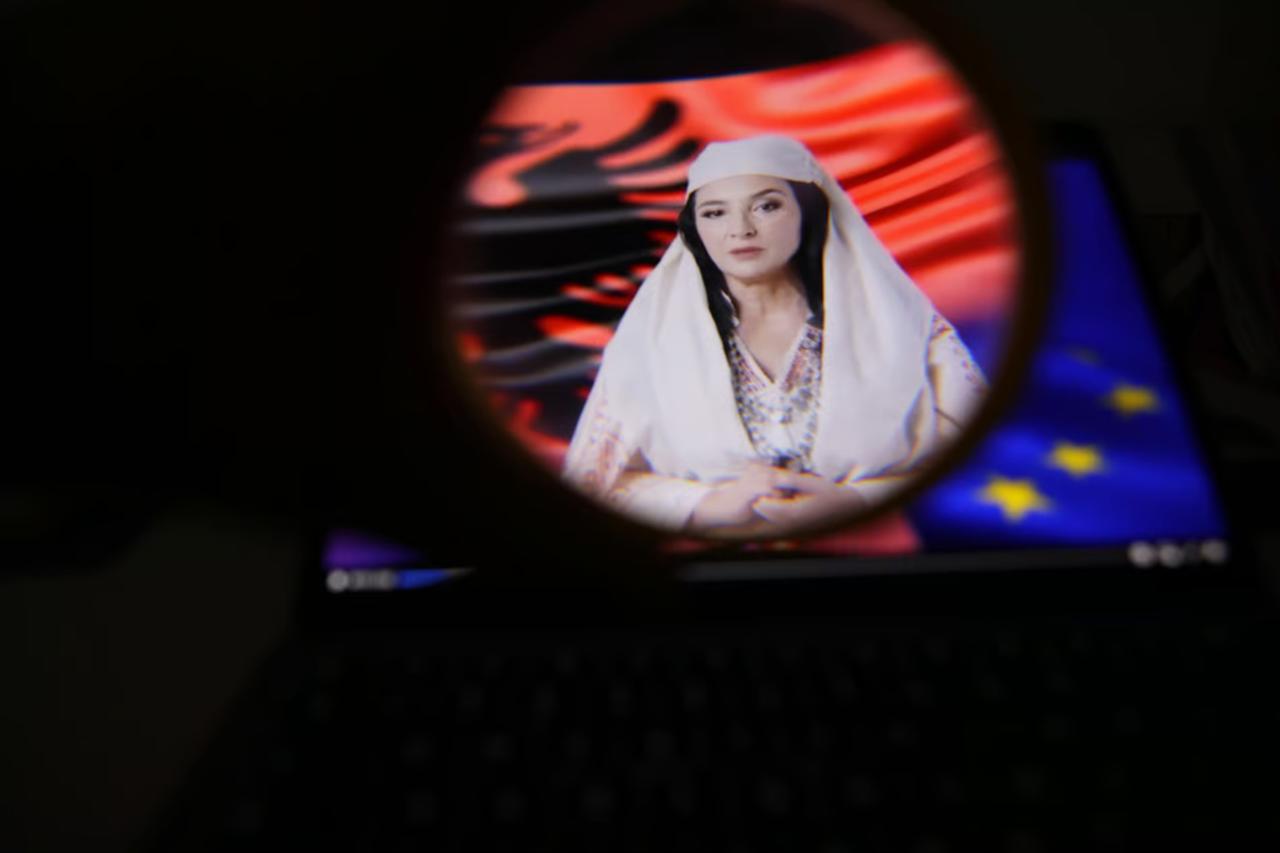


Albanian actress Anila Bisha has launched a legal battle against her country's government over the unauthorized use of her face and voice for an AI "minister" named Diella, accusing authorities of exploiting her identity without consent.
The 57-year-old, a well-known figure in Albanian entertainment, filed a petition with the administrative court earlier this week seeking the suspension of her image's use in the government's AI system. "It's an exploitation of my identity and my personal data," Bisha told AFP on Wednesday.
Prime Minister Edi Rama unveiled Diella — whose name means "sun" in Albanian — in September as an AI system tasked with overseeing a new public tenders portfolio. Rama promoted the initiative as a way to make public procurement "corruption-free," granting the system the title of "minister" responsible for all decisions relating to tender processes.
The announcement drew criticism from opposition figures and experts who raised concerns about the system's accountability and transparency.
A computer-generated video featuring Diella was presented to parliament, showing a woman dressed in traditional Albanian attire who assured lawmakers she was "not here to replace people."
 1 min read
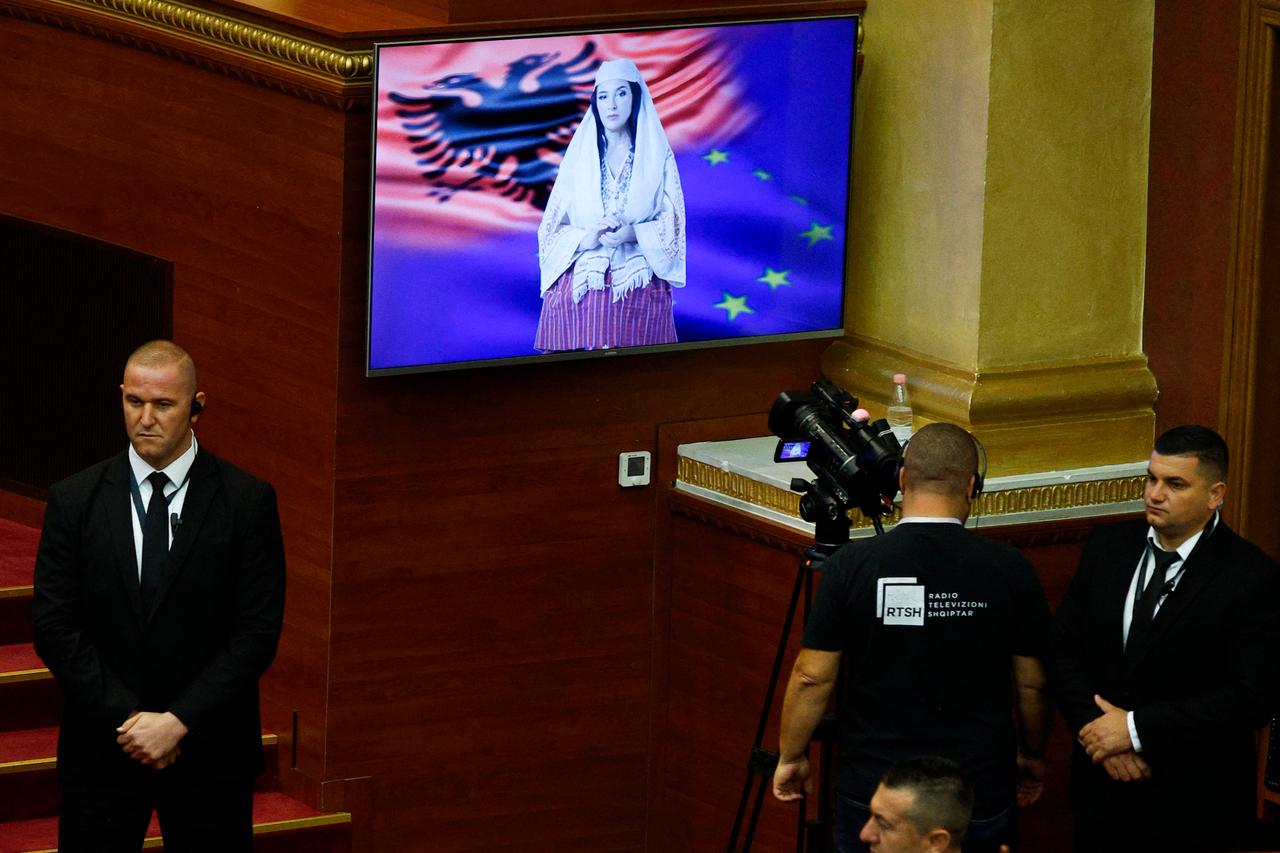
According to Bisha, her involvement began under far more limited terms. She had signed a contract authorizing the use of her image through the end of 2025 to represent a virtual assistant on an online government services portal, a scope she says was dramatically exceeded when the government elevated Diella to ministerial status.
Bisha also discovered that the National Agency for Information Society, the body that developed the AI system, had filed a patent on her image and voice without informing her. She says the patent has directly affected her ability to work.
Despite attempts to resolve the matter through direct communication with government authorities, Bisha said she received no reply. The absence of any response ultimately pushed her to pursue the case in court.
Albania, a Western Balkan nation and European Union candidate country, has in recent years sought to modernize its public administration through digital reforms. The use of AI in governance, however, remains a largely untested and contested frontier across Europe, raising fundamental questions about democratic oversight, data rights, and the legal boundaries of artificial intelligence in public decision-making.


 Set as preferred source
 Set as preferred source



 1 min read