Newsletters


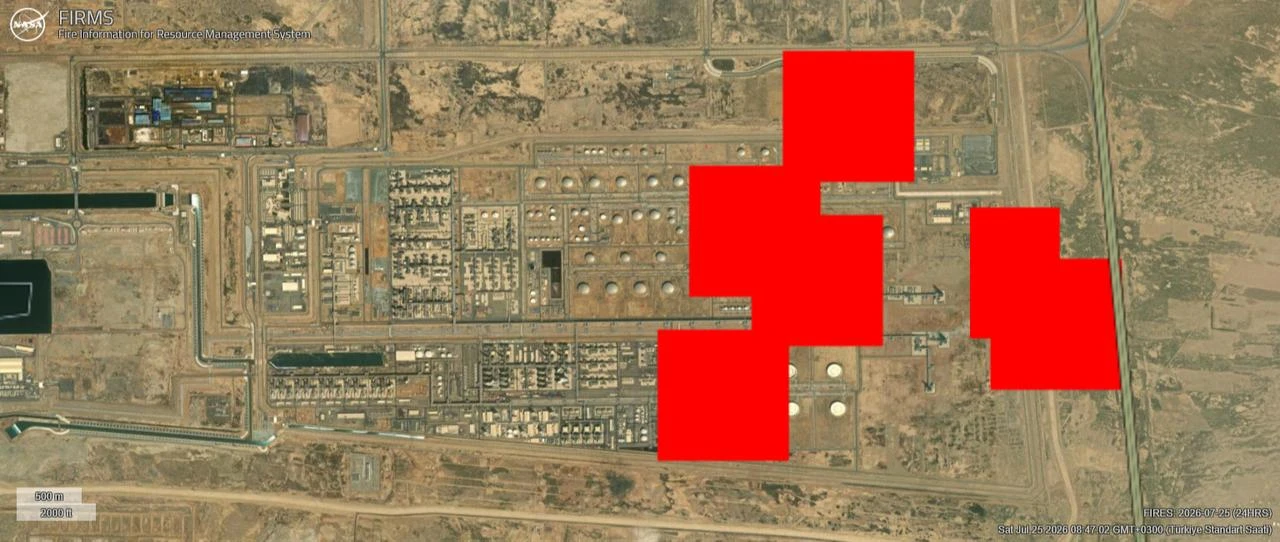
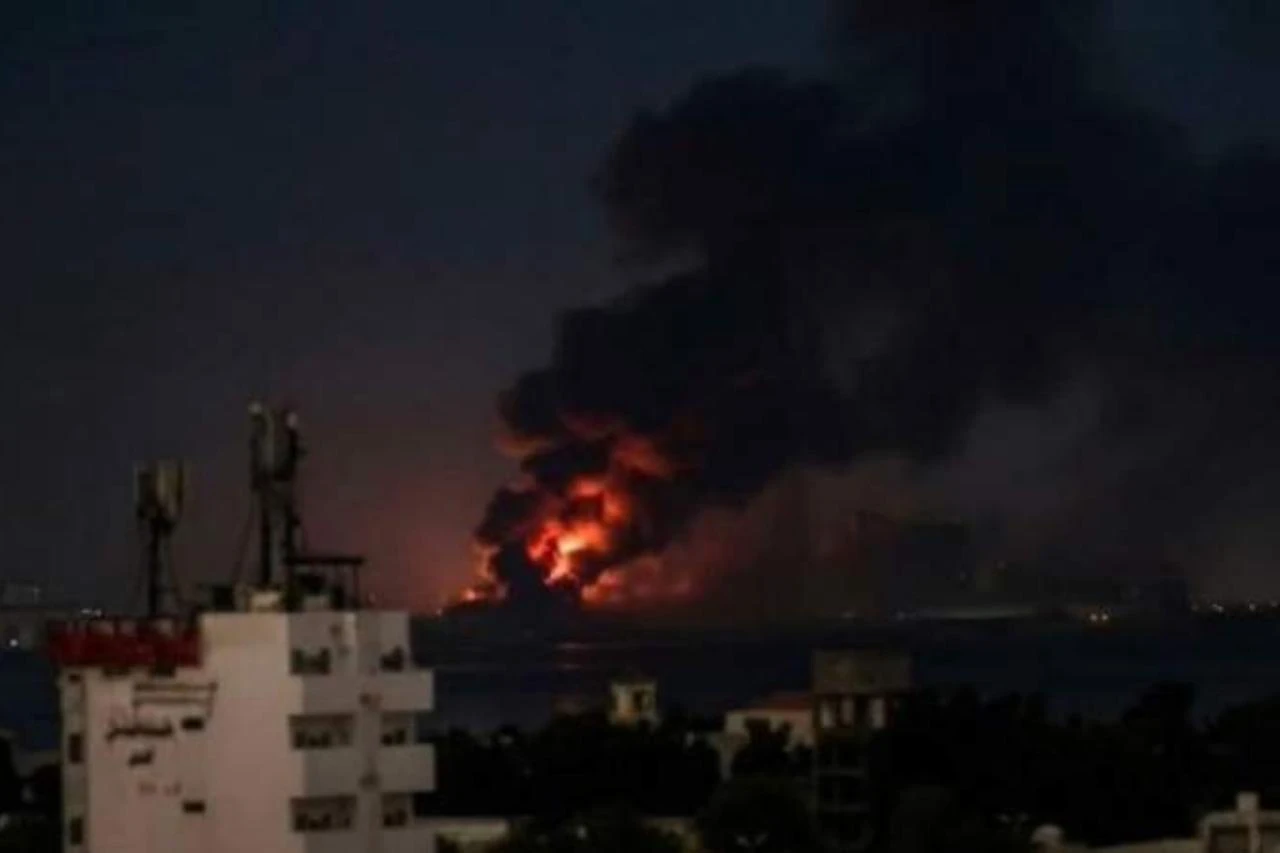
A fire was reported at the Saudi Aramco refinery in Jazan on Saturday following what social media reports and satellite fire-detection data described as a Houthi ballistic missile and drone attack.
Fighting between Saudi Arabia and Yemen's Houthi movement intensified into a new front of the wider regional conflict.
According to social media reports and imagery, thick plumes of smoke were seen rising from the Saudi Aramco Jazan oil refinery, with multiple fire hotspots detected by NASA's FIRMS/VIIRS satellite monitoring system at the site.
These reports described the fires as following Houthi missile and drone attacks, said to have been launched in retaliation for Royal Saudi Air Force (RSAF) strikes on the Yemeni port city of Hodeidah.

Yemen's Houthi group said it struck "sensitive" Saudi Aramco-affiliated facilities in Jizan and Yanbu with dozens of ballistic and cruise missiles and drones, in what it called retaliation for Saudi airstrikes on the port city of Hodeidah and Kamaran Island.
"The first targeted sensitive Aramco-affiliated facilities in Jizan with dozens of ballistic missiles and drones. And the second operation targeted sensitive Aramco-affiliated facilities in Yanbu with a number of ballistic and cruise missiles and drones," the Houthi-run Yemeni Armed Forces said in a statement dated July 25 and carried by the group's Saba news agency.
Military spokesman Yahya Saree posted the announcement on X, saying the operations "achieved their objectives successfully by the grace of Allah."
The group said the strikes came "in response to this blatant and criminal aggression"—Saudi airstrikes it said hit the city and port of Hodeidah and Kamaran Island overnight, causing "material and incorporeal damage."
The statement claimed Yemeni air defenses engaged "a formation of enemy aircraft" that it said violated Yemeni airspace.
The group affirmed that its declared naval blockade of Saudi Arabia "remains in effect," casting it as a response to what it called a 12-year Saudi blockade of Yemen.
"We will not hesitate to expand our operations and escalate our actions based on developments in the coming hours and days, within the equation of a blockade for a blockade and an escalation for an escalation," the statement said.
Saudi Arabia's Civil Defense issued warnings early Saturday for residents of Yanbu governorate and Jazan province about "a potential danger," without specifying the nature of the threat.
The warnings were lifted shortly afterward, with Civil Defense announcing the danger had passed in both areas. There were no immediate reports of casualties or damage.
At least five explosions were reported in Jazan according to regional media, with commercial flights to the area diverting or entering holding patterns.
The Houthis' Ansarollah media said on Telegram early Saturday that a "Yemeni missile strike" had sparked fires in Jazan, according to Agence France-Presse (AFP).
The Saudi-led coalition said late Friday it had launched what it called a "proportionate military response" against legitimate Houthi military targets in Yemen's western Hodeidah province, after the Houthis targeted commercial vessels in the Red Sea.
The coalition said Hodeidah Port itself was not targeted and that all Yemeni ports remain open to maritime traffic.
A Yemeni security source told Agence France-Presse (AFP) that a naval base in Hodeidah and a military camp on Kamaran Island were among the Saudi targets.
The Houthis' al-Masirah television channel said two people were wounded, a worker in Hodeidah and a woman on Kamaran Island, and that a telecommunications building in Hodeidah was hit.
Coalition spokesperson Maj. Gen. Turki al-Malki said in a statement, "The terrorist Houthi militia has undertaken a reckless and cowardly act by targeting commercial vessels in the Red Sea... The coalition has executed a firm, resolute, and proportionate military response while preserving the capabilities of the brotherly people of Yemen. The targets focused solely on legitimate military targets that the terrorist Houthi militia uses to threaten commercial vessels in the Red Sea."
Malki said Hodeidah Port, Ras Isa and Salif remain open and operational for commercial shipping, food, fuel and construction materials, while accusing the Houthis of continuing to block flight operations to Sanaa International Airport.
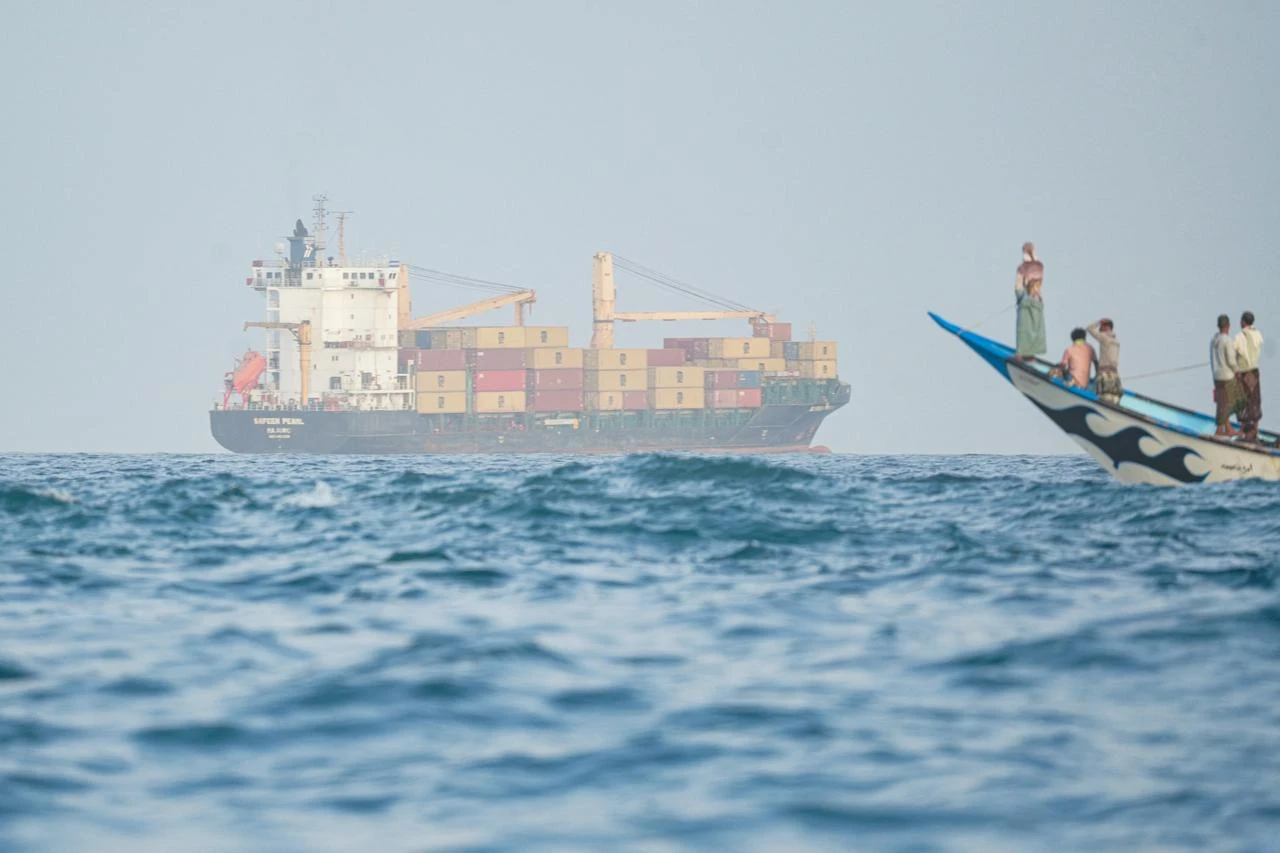
Tensions escalated after the Houthis announced Monday a ban on maritime navigation to Saudi Arabia and warned they would target vessels "belonging to (the) Saudi enemy" that did not comply.
The Saudi-owned vessel NCC MASA was targeted while transiting the Red Sea on Friday, according to the Saudi Press Agency, citing a Transport General Authority spokesperson, who said the vessel suffered only minor hull damage and continued its voyage after the safety of the crew and ship was confirmed.
The official described continued targeting of commercial vessels as a violation of international law and maritime safety norms.
No responsible party was officially identified for that specific attack.
Yemen's internationally recognized government said Saturday it would not allow its territory to be used to threaten neighboring countries or international maritime security, condemning the Houthi attack on the commercial vessel as "a new act of terrorism."
The government accused the Houthis of using the Red Sea and Bab el-Mandeb Strait "to serve Iran's regional agenda and strengthen Tehran's negotiating position," and called on the international community to cut off the group's funding and weapons sources.
The flare-up marks a new front in the broader war that has engulfed the region since U.S.-Israeli strikes on Iran in February, compounding Iran's parallel blockade of the Strait of Hormuz, Saudi Arabia's only other maritime export route.
Kpler shipping data cited by AFP showed that in April and May, all of Saudi Arabia's seaborne crude exports departed from its Red Sea port of Yanbu, representing 92% of seaborne crude exports in June and 78% so far in July, underscoring the Red Sea route's importance to Saudi oil exports.
Houthis have been at war with Yemen's government since 2014, in a conflict that has killed hundreds of thousands of people. The current exchange of fire threatens a 2022 truce that has largely held despite its formal expiration.


 Set as preferred source
 Set as preferred source


 1 min read
 1 min read