Newsletters


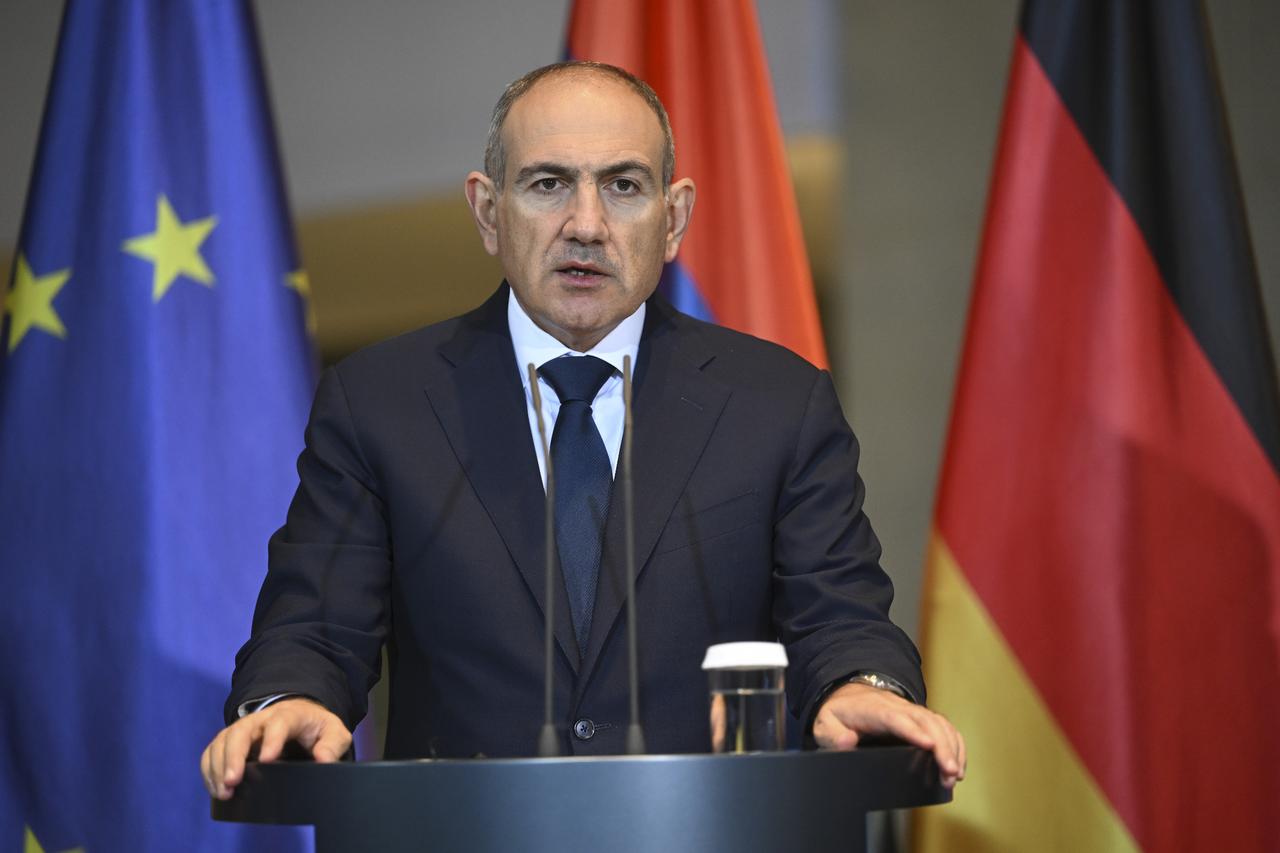


Armenian Prime Minister Nikol Pashinian said the planned TRIPP connectivity project and the opening of transport links between Armenia and Türkiye have the full potential to become major components of the Middle Corridor, as he outlined regional developments during a speech in Berlin.
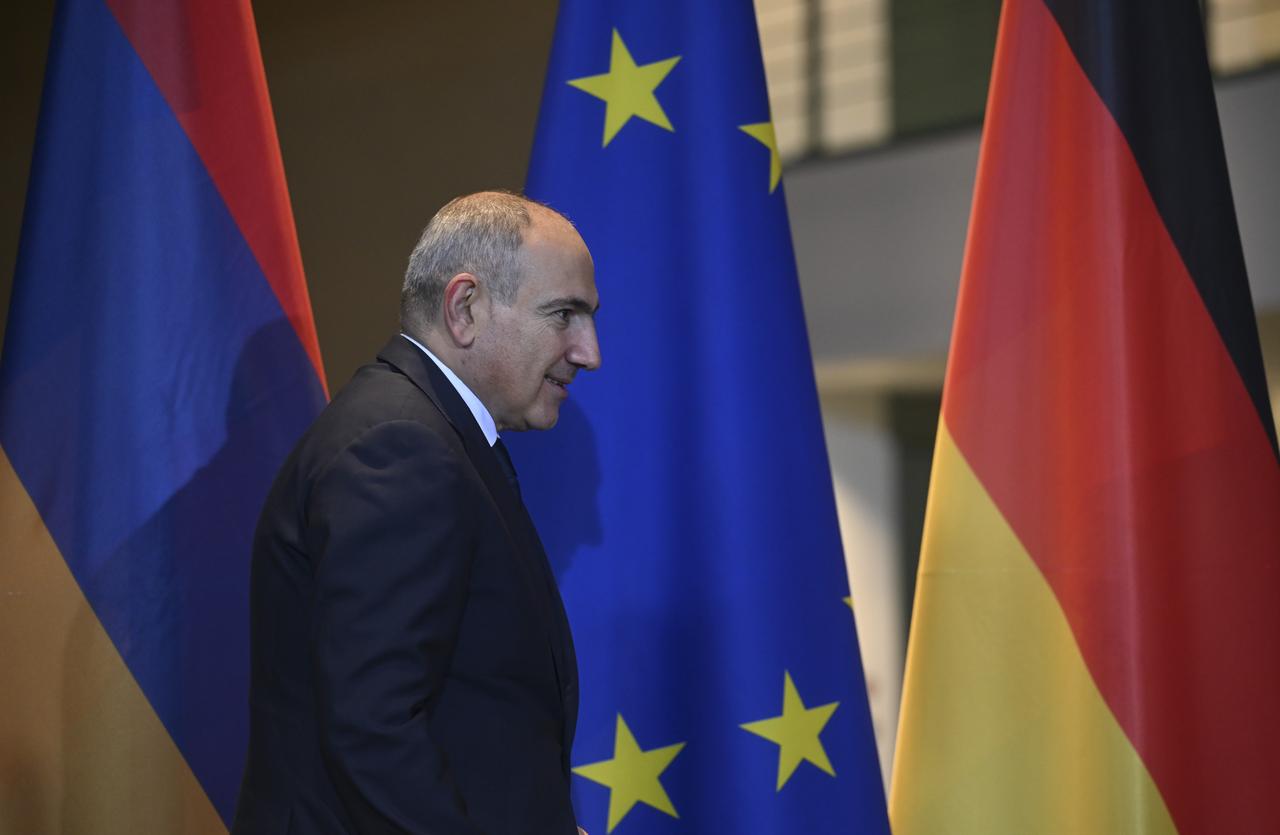
Pashinian addressed the German Council on Foreign Affairs as part of his official visit to Germany, where he discussed peace efforts with Azerbaijan, regional connectivity plans, and Armenia’s moves toward deeper integration with the European Union.
Pashinian reiterated that a Joint Declaration was signed in Washington on Aug. 8 by Armenia and Azerbaijan, witnessed by U.S. President Donald Trump, marking what he described as the establishment of peace between the two countries.
He said the declaration commits both sides to close the chapter of enmity and to reject “any attempt of revenge.”
According to Pashinian, foreign ministers of both countries initialed the agreed text of the future peace agreement.
One of the breakthroughs, he noted, was the agreement to open transportation links based on mutual sovereignty and jurisdiction.
This includes unimpeded connectivity between Azerbaijan’s main territory and the Nakhchivan Autonomous Republic through Armenia, along with reciprocal benefits for Armenian transit routes.
Pashinian announced ongoing negotiations with U.S. counterparts on the “Trump Route for International Peace and Prosperity” (TRIPP Route), under which an Armenian-American joint venture, “TRIPP Company,” will develop railway, road, energy pipeline and fiber optic infrastructure.
He said construction could begin next year.

Pashinian stated that both the TRIPP Route project and the opening of communication links between Armenia and Türkiye “have full potential to become an important component of the Middle Corridor,” connecting Europe, the South Caucasus and Central Asia.
He highlighted a positive development already underway: Azerbaijan’s lifting of restrictions on the transit of goods to Armenia. Grain from Kazakhstan has been transported to Armenia via Azerbaijan and Georgia for the first time since Armenia’s independence.
Armenia, he added, is “ready both politically and technically” to allow transit of goods between Türkiye and Azerbaijan across its territory.
Pashinyan noted intensified contacts with Türkiye in recent years, including exchanges between himself and President Recep Tayyip Erdogan, foreign ministers, special representatives and related ministries.
He said that despite the absence of formal diplomatic relations, “very active negotiations and relations” are ongoing.
Pashinian expressed hope that Türkiye will “make the long-awaited political decision” to open its border with Armenia and establish diplomatic ties.
He said normalization with Türkiye, peace with Azerbaijan, and improved relations with Georgia, Iran and Russia together could position the South Caucasus as a major transit hub along both north–south and east–west routes.

Pashinyan highlighted Armenia’s progress on EU integration, including the passage of a law launching the country’s formal process of accession to the European Union.
He said Armenia aims to meet EU standards through democratic reforms, rule of law and institutional alignment.
Even if membership is not achieved, compliance with EU norms would be a strategic achievement, he added.
He announced the recent adoption of the “Strategic Agenda of the Armenia–EU Partnership” and the launch of a Visa Liberalization Dialogue with the EU, with a visa-free regime becoming possible upon meeting required benchmarks.
Following his speech, Pashinyan joined a panel discussion titled “Armenia’s Vision for Peace Institutionalization, Regional Connectivity, and EU Integration,” where he expanded on diplomatic, economic and infrastructure developments in the region.


 Set as preferred source
 Set as preferred source


 6 min read