Newsletters


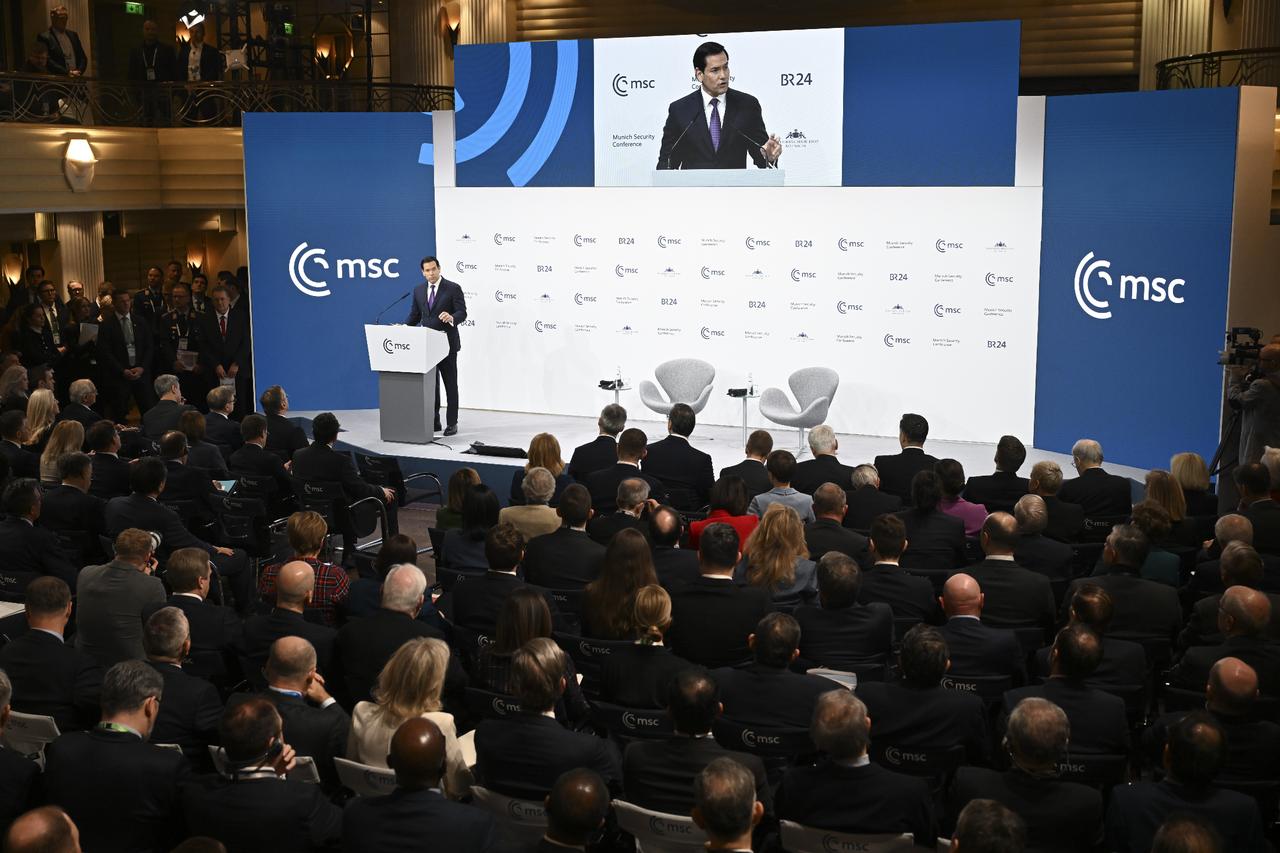


Asia-Pacific and Western officials discussed shared security challenges connecting Europe and the Indo-Pacific at the Munich Security Conference on Saturday, emphasizing cooperation, deterrence and burden-sharing.
The discussions brought together Japanese Foreign Minister Toshimitsu Motegi, Dutch Foreign Minister David van Weel, Australian Defense Minister Richard Marles, New Zealand Defense Minister Judith Collins and U.S. Under Secretary of Defense for Policy Elbridge Colby.

Motegi outlined three key concerns: growing turbulence in the international order, the linked security of the Euro-Atlantic and the Indo-Pacific, and cooperation as the cornerstone of Japan’s alliance with the U.S. and Tokyo’s responsibility to deter and repel aggression.
“Going forward, Japan will contribute to the stability and peace of the international society,” he said.
Motegi also expressed concern over “the advancement of cooperation among China, Russia, and North Korea and its impact on regional security,” adding that Japan will continue to monitor the situation closely.
Van Weel highlighted similarities between Europe and the Indo-Pacific in areas including defense and the economy.
“If you look at cyberspace, if you look at hybrid threats, then we are all in the same arena, and we're all facing the same enemies there. If you look at the economic arena, our dependencies and our need to diversify, or the export control measures that we're being hit with, those are all the same,” he said.
“We live in one world. We need friends in this very turbulent world,” he added.
Marles said global relations are increasingly power-centered and stressed the importance of burden-sharing, saying Canberra aims to be a “better ally” to Washington.
He pointed to what he described as “the biggest conventional military buildup we've seen in the world since the end of the Second World War, being undertaken by China, but being done so without strategic reassurance.”
“From an Australian point of view, we are very much about working with the U.S. and other partners like Japan to try and put forward deterrence within the Indo-Pacific so that we can maintain peace, stability, and prosperity; a free and open Indo-Pacific,” he said.
Collins described the world as “a very dangerous place at the moment,” urging greater collective awareness.
“We'll have to understand that we can't just keep thinking that we can go on as we have, without significant improvements,” she said.
“I would say to you, think about us too, because what happens to us is going to affect you just as what happens to you affects us,” she added.
Colby emphasized the interconnected nature of global affairs.
"It's better to keep, to keep jaw-jawing, rather than war-warring, even if there's a crisis or conflict in one or more theaters," he said.


 Set as preferred source
 Set as preferred source


 1 min read
 1 min read