Newsletters


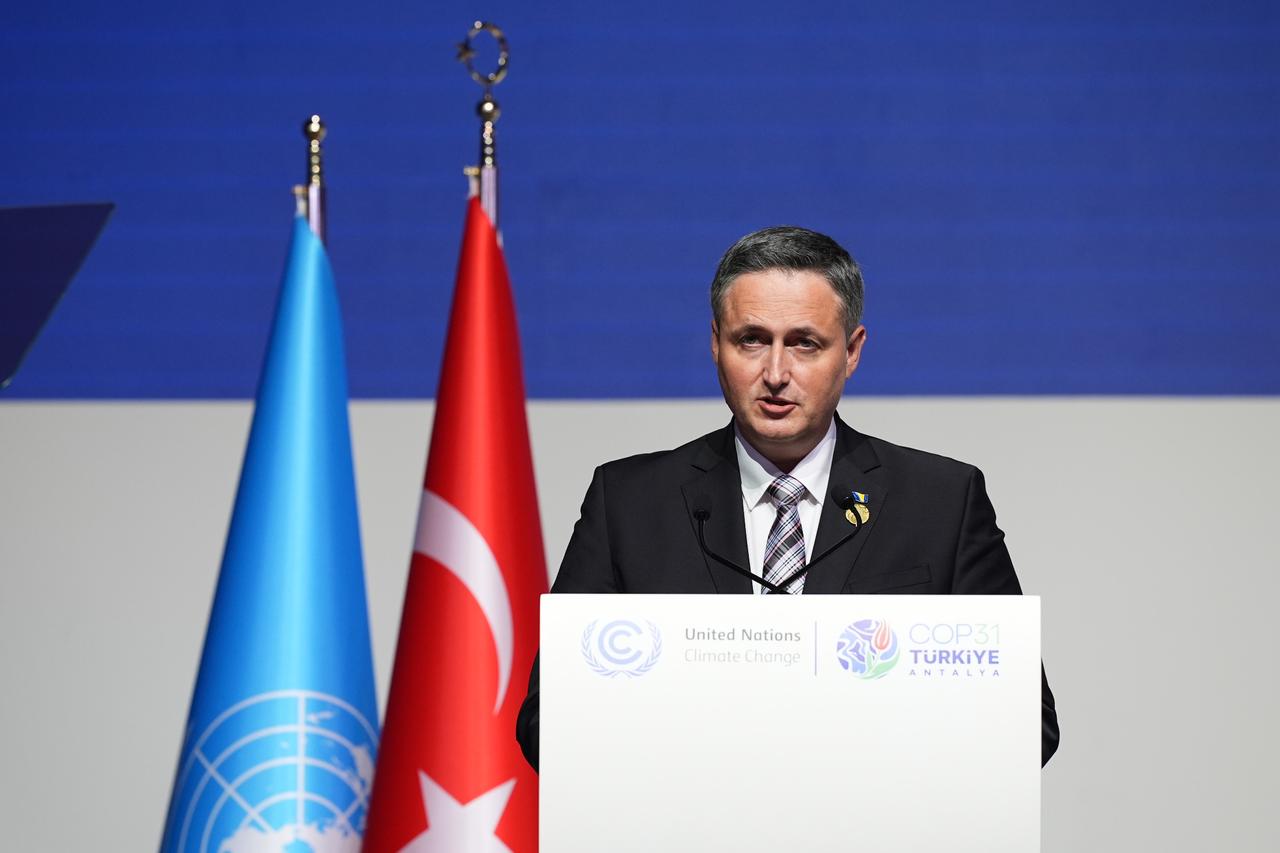


Montenegro and Bosnia and Herzegovina called for stronger environmental protection, a fair energy transition and greater responsibility toward future generations Wednesday at the COP31 United Nations Climate Change Conference in Antalya, Türkiye.
Addressing world leaders at the summit, Montenegrin President Jakov Milatovic outlined four priorities for his country's green transition, while Denis Becirovic, chairman of Bosnia and Herzegovina's tripartite presidency, warned against sacrificing long-term environmental security for short-term economic interests.
Both leaders emphasized the need to translate climate commitments into concrete policies that protect communities and support sustainable development.
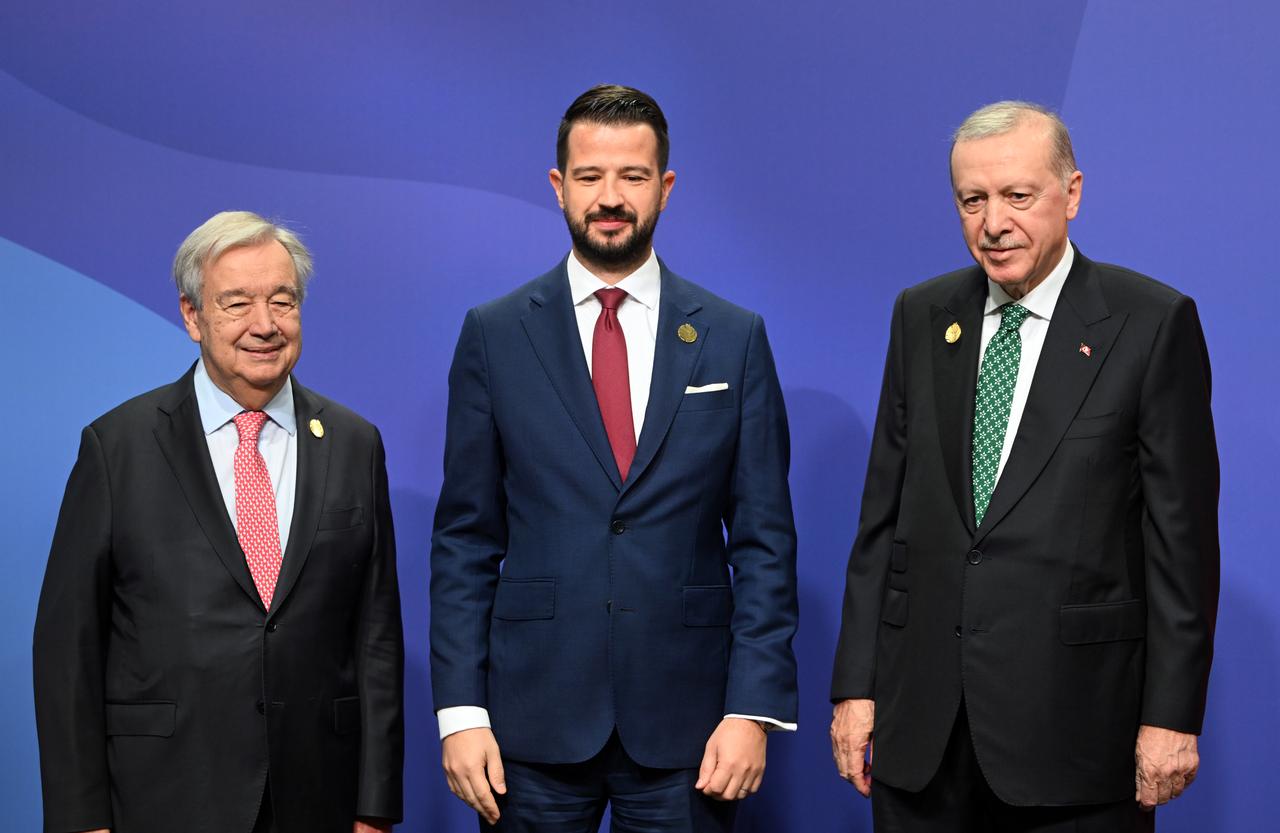

Milatovic reaffirmed Montenegro's ambition to become the European Union's 28th member state by 2028, emphasizing that environmental protection was central to the country's resilience and European future.
“Today, we are called upon to prove that this promise can guide our decisions as well as our development,” he said.
The Montenegrin president identified strengthening nature protection as his country's first priority, particularly through the establishment of the Natura 2000 European network of protected areas.
His second priority focused on ensuring a just energy transition by reducing Montenegro's dependence on coal and accelerating investments in solar and wind energy, alongside the sustainable use of hydropower.
Milatovic said the objective was a transition that was “economically realistic and socially fair.”
The third priority centered on strengthening climate resilience against increasingly severe environmental threats, including floods, wildfires, droughts and risks to coastal areas.
Montenegro has committed to reducing net greenhouse gas emissions by at least 55% by 2030 and 60% by 2035.
The fourth priority, which Milatovic described as “Ecological State 2.0,” includes 20 proposals designed to integrate environmental protection into everyday life.
The measures include free access to national parks, stronger protection of coastlines and rivers, and the promotion of sustainable tourism.
They also seek to improve wildfire prevention, strengthen accountability for polluters and introduce preventive protections for future Natura 2000 sites.

Becirovic, meanwhile, urged world leaders to treat climate action as a matter of justice between generations rather than merely an issue of international agreements, financing or technological solutions.
“We have no moral right to build our own prosperity on the insecurity of future generations. We have no right to turn the short-term interest of the present into long-term burdens for the future,” he said.
The Bosnian presidency chairman warned that prioritizing immediate economic gains over environmental sustainability would impose lasting costs on future generations.
“Short-term profit and irresponsible populist policies must not prevail over the long-term interests of humanity,” he said.
Becirovic also criticized governments that believe action against climate change can be postponed, arguing that such an approach transfers responsibility for today's decisions to future generations.
“This way of thinking is wrong. Power without responsibility is dangerous,” he said.
He emphasized that responsibility toward future generations should become a guiding principle of international climate action.
Bosnia and Herzegovina is developing an integrated National Energy and Climate Plan, with objectives including decarbonizing its energy sector by 2030, establishing longer-term targets through 2050 and achieving carbon neutrality through an efficient energy transition.
 1 min read
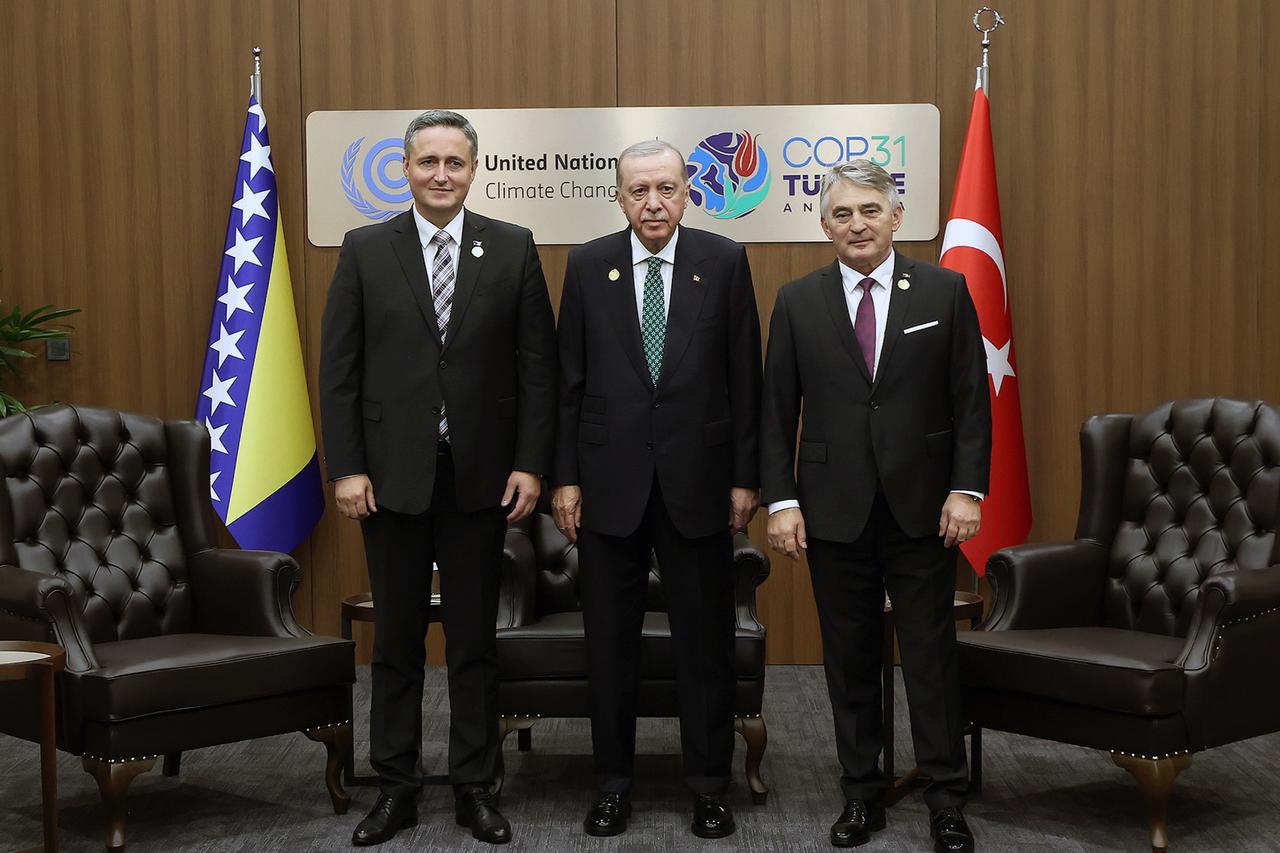
Separately, Turkish President Recep Tayyip Erdogan met Becirovic and Bosnian presidency member Zeljko Komsic in Antalya on Wednesday, where they were attending the COP31 leaders' summit.
The meeting focused on bilateral relations and regional and international developments, according to Türkiye's Communications Directorate.
Erdogan said Türkiye valued its friendship with all three constituent peoples of Bosnia and Herzegovina and would continue supporting the country's territorial integrity, sovereignty and constitutional order.
He also reaffirmed Ankara's support for the European Union-led Althea mission in Bosnia and Herzegovina.
The Turkish president emphasized Türkiye's commitment to expanding cooperation with Bosnia and Herzegovina in several areas, particularly trade and investment.


 Set as preferred source
 Set as preferred source



 1 min read