Newsletters


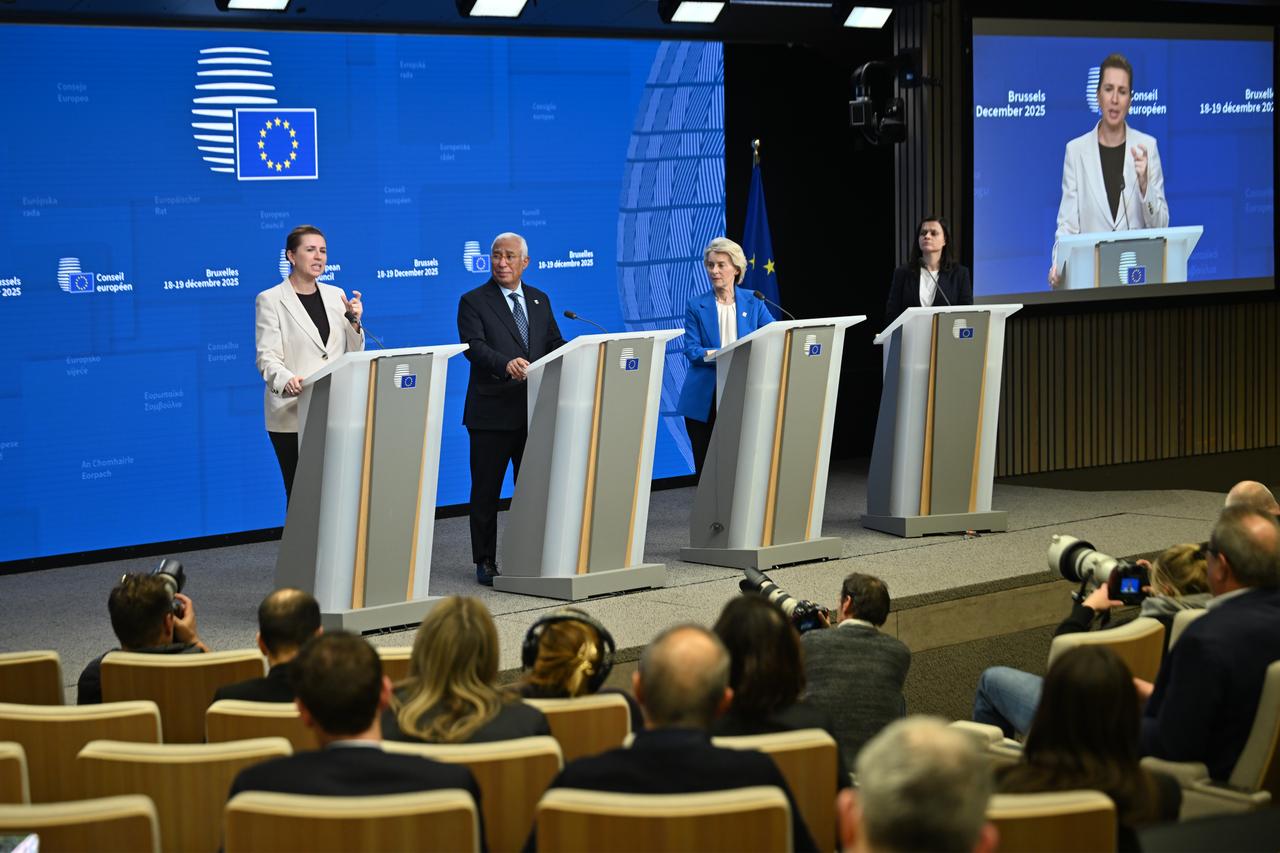


European Union leaders agreed early Friday to provide Ukraine with a €90 billion ($105 billion) loan to cover looming budget shortfalls but failed to reach consensus on directly using frozen Russian assets to finance the support.
The overnight deal, struck after marathon summit talks in Brussels, offers Kyiv a crucial financial lifeline as U.S. President Donald Trump presses for a rapid settlement to end Russia’s nearly four-year war against Ukraine.
“Today’s decision will provide Ukraine with the necessary means to defend itself and to support the Ukrainian people,” European Council President Antonio Costa, who chaired the summit, said.
European Commission President Ursula von der Leyen said member states agreed to raise €90 billion through E.U. borrowing on capital markets for 2026 and 2027. However, leaders did not agree to deploy roughly €200 billion in Russian central bank assets frozen in the E.U.
“My guess is we would not have had the courage or the political momentum to permanently immobilize Russian assets,” von der Leyen said.
She noted that until last week the asset freeze had to be renewed every six months, leaving it vulnerable to a single veto.
“Every six months, there was a threat that just one member state not agreeing to the sanctions anymore. The rollover of the sanctions, the immobilized Russian assets would have been gone,” she said.
Von der Leyen said the assets are now secured under a new framework that requires a qualified majority to reverse the freeze. Still, leaders stopped short of using the funds to finance Ukraine directly.
Instead, the E.U. agreed on borrowing backed by unused budget capacity, paired with a conditional repayment mechanism.
“Ukraine has only to pay back the loans if Russia pays reparations. If this is not the case, Ukraine does not have to pay back the loans,” von der Leyen said.


The plan to tap frozen Russian assets fell apart after Belgium, where most of the assets are held through financial services firm Euroclear, demanded guarantees that liability would be shared among member states. Other countries balked at the risks.
Belgian Prime Minister Bart De Wever said the asset proposal was too dangerous.
“This whole business was so risky, so dangerous, and raised so many questions — it was like a sinking ship, like the Titanic,” he told reporters. “The die are cast now — and everyone is relieved.”
German Chancellor Friedrich Merz, who had pushed strongly for using the assets, said the loan decision nonetheless “sends a clear signal” to Russian President Vladimir Putin.
Using joint E.U. borrowing required unanimity among the bloc’s 27 countries. Skeptical states including Hungary, Slovakia and the Czech Republic were granted exemptions to avoid blocking the deal.
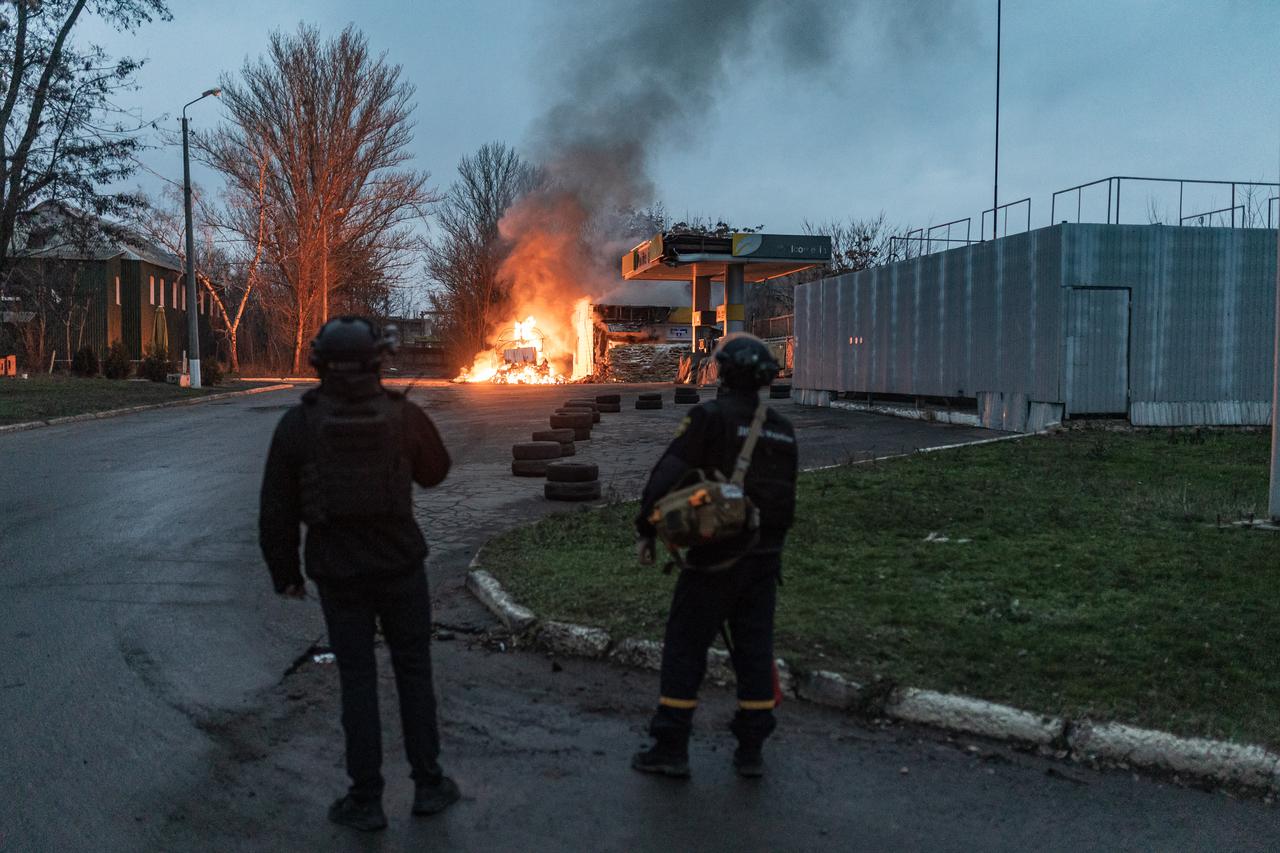
Ukrainian President Volodymyr Zelenskyy welcomed the agreement, calling it “significant support that truly strengthens our resilience.”
“It is important that Russian assets remain immobilized and that Ukraine has received a financial security guarantee for the coming years,” he wrote on X. “Thank you for the result and for unity. Together, we are defending the future of our continent.”
By contrast, Kremlin economic envoy Kirill Dmitriev welcomed the failure to use Russian assets.
“For the time being, the law and common sense have won a victory,” he wrote on Telegram, praising what he called the rejection of an “illegitimate” move.
The E.U. estimates Ukraine needs an additional €135 billion ($159 billion) to stay afloat over the next two years, with a funding gap expected to emerge as early as April.
Zelensky told E.U. leaders earlier this week that using Russian assets was the right approach.
“Russian assets must be used to defend against Russian aggression and rebuild what was destroyed by Russian attacks. It’s moral. It’s fair. It’s legal,” he said.
While Kyiv had hoped for a stronger step on the assets, securing financing through E.U. borrowing still eases immediate pressure and may strengthen its position in any talks to end the war.
 1 min read
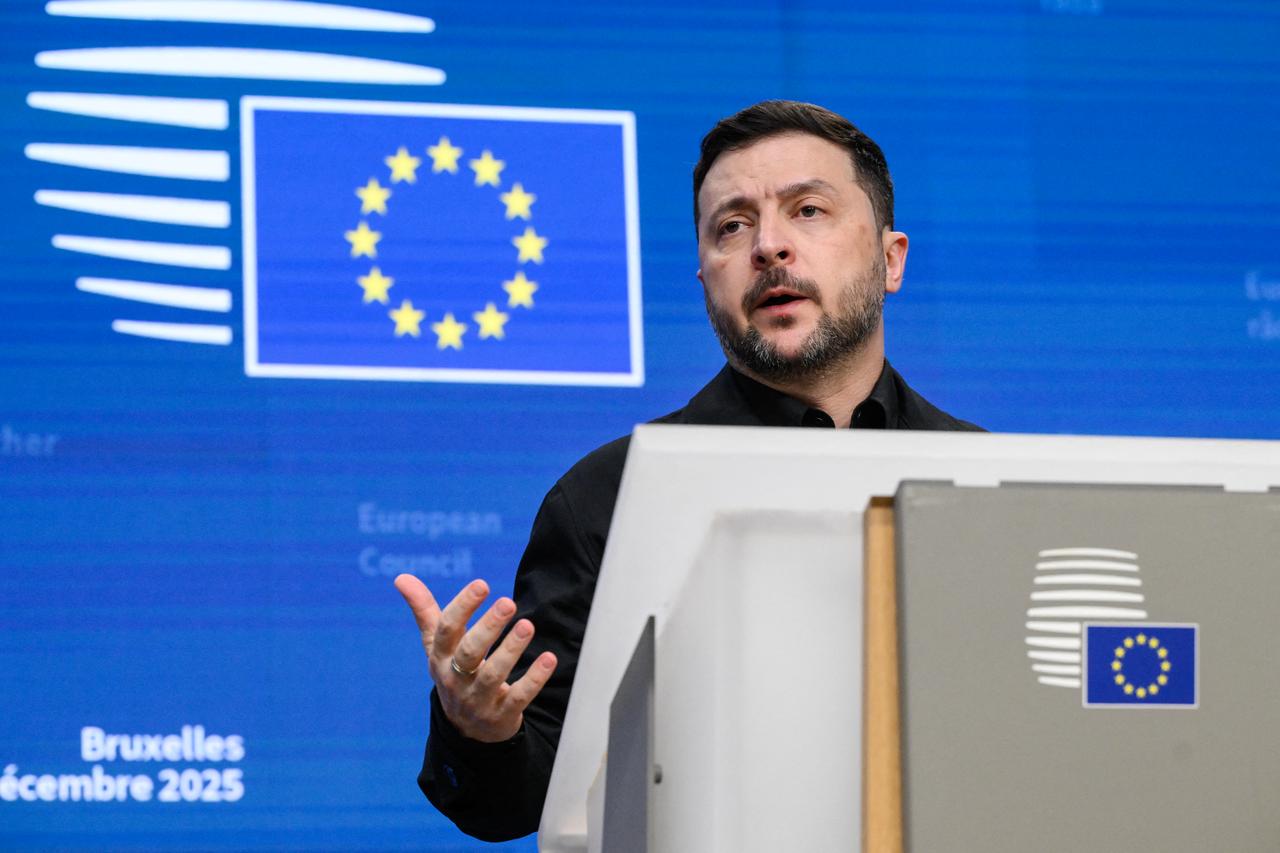
The summit unfolded as Washington advanced its own diplomatic track. The United States has largely sidelined Europe from negotiations, prompting calls for a more assertive E.U. role.
French President Emmanuel Macron said Europeans should begin engaging Moscow directly.
“I believe that it’s in our interest as Europeans and Ukrainians to find the right framework to re-engage this discussion,” Macron said, adding that such efforts should begin “in coming weeks.”
Zelenskyy said Ukrainian and U.S. delegations are scheduled to hold talks Friday and Saturday in the United States, seeking clarity on security guarantees.
“What will the United States of America do if Russia comes again with aggression?” he asked. “How will these security guarantees work?”
Trump, meanwhile, reiterated pressure on Kyiv to move quickly toward a deal, saying he hopes Ukraine “moves quickly” to reach an agreement.


 Set as preferred source
 Set as preferred source


 1 min read