Newsletters





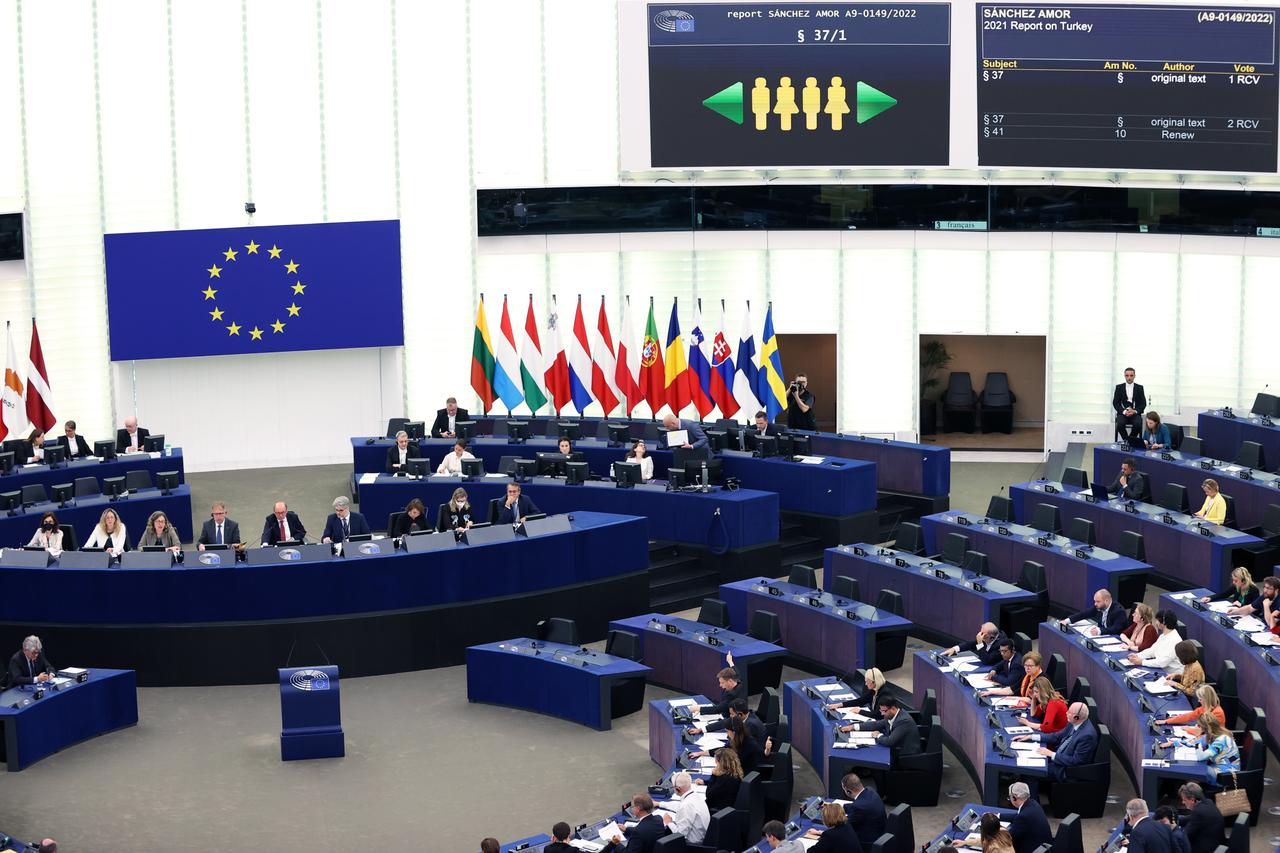
The European Parliament approved an overhaul of EU rules on Wednesday requiring third-country nationals ordered to leave the bloc to depart immediately or within a set deadline, while allowing member states to send some returnees to designated centers in non-EU countries.
Lawmakers adopted the proposal by 418 votes to 218, with 30 abstentions, following a provisional agreement reached with the EU Council on June 1.
The new framework is intended to accelerate return procedures and strengthen cooperation between EU member states and countries outside the bloc.
“After almost 20 years of standstill, Europe finally has them,” Dutch lawmaker Malik Azmani, the Parliament’s rapporteur on the regulation, said.
“Return is the final piece in Europe’s migration system, and I’m hugely proud it’s now in place.”

Under the new rules, a return decision issued by national authorities will require the individual concerned to leave the member state immediately or within a specified period.
People subject to return orders will also be required to cooperate with national authorities during the process.
The legislation states that return measures must comply with fundamental rights, international law, the principle of non-refoulement, and the prohibition of collective expulsions.
Non-refoulement prevents authorities from returning individuals to countries where they could face persecution or serious harm.
National authorities will be allowed to take investigative steps to support return procedures, including searches of individuals, homes and personal belongings.
Such measures will require judicial or administrative authorization and must follow applicable legal safeguards.
Member states will be permitted to detain individuals subject to return decisions on a case-by-case basis.
Detention may be used when authorities identify a risk of absconding, a failure to cooperate, or a security concern.
An administrative or judicial order will be required before detention can be imposed.
The detention period may last up to 24 months, with an additional six-month extension permitted in specific circumstances.
Authorities will also be able to use alternatives to detention.
These may include electronic monitoring, financial guarantees or requirements for individuals to remain at designated locations.

The legislation permits member states to establish or use so-called return hubs in third countries that agree to receive people ordered to leave the EU.
Unaccompanied minors may not be transferred to such facilities.
Agreements involving return hubs must comply with international law and human rights standards.
Before implementing an arrangement, a member state will be required to notify the European Commission and other EU countries.
The rules are intended to create a common system for returns across the bloc while maintaining legal protections and oversight.
The proposal will establish obligations for people facing return, expand the tools available to national authorities and allow closer cooperation with non-EU countries.


 Set as preferred source
 Set as preferred source


 2 min read
 1 min read