Newsletters


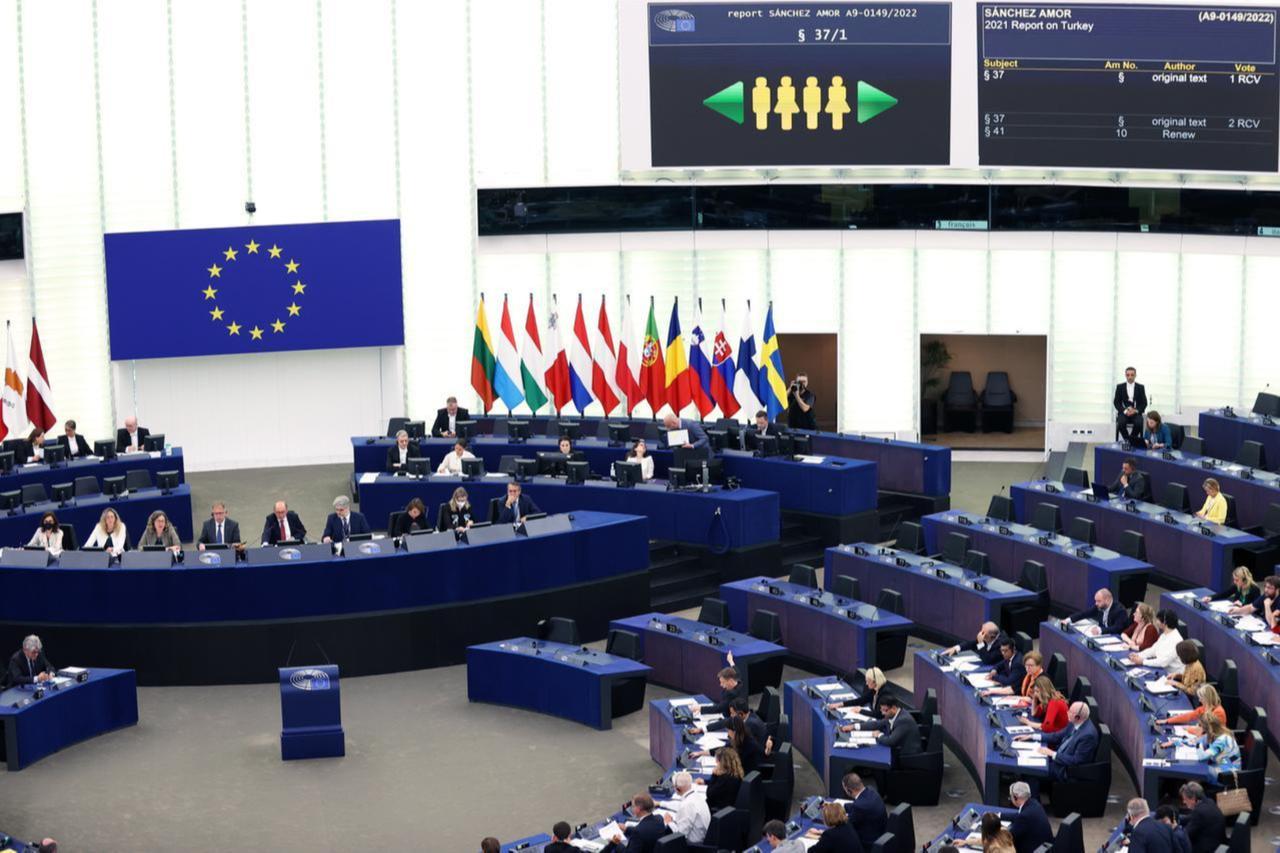


The European Parliament approved sweeping new migration rules that would allow EU member states to deport rejected asylum seekers to detention facilities outside the bloc, passing the Return Regulation by 418 votes to 218 on Thursday with 30 abstentions.
The vote drew applause and cheers from right-wing and far-right lawmakers and cries of "shame on you" from the left. The text still requires formal approval from all 27 member governments before taking effect. The vote came less than a week after the EU's Pact on Migration and Asylum entered into force on June 12, establishing a common migration framework across the bloc for the first time.
European Commissioner for Internal Affairs and Migration Magnus Brunner called the result "an important step towards bringing our European house in order."
The legislation centers on so-called return hubs, facilities in non-EU countries where rejected asylum seekers could be transferred while awaiting deportation. Unlike existing rules, which generally require migrants to be returned to their country of origin or a country with which they have a personal connection, the new regulation removes that requirement. Migrants could be sent to countries where they have never lived and with which they have no personal links.
Agreements to establish hubs may only be concluded with countries that uphold human rights, international law and the principle of non-refoulement.
Unaccompanied minors are excluded from transfers; families with children are not. Migrants who fail to cooperate with authorities or are deemed security risks could be detained for up to 24 months, with longer periods possible in some cases.
The European Commission first proposed the regulation in March 2025. According to Eurostat, only around 29 percent of people ordered to leave the EU are ultimately returned, a gap officials describe as a structural weakness in the bloc's enforcement system.


Despite the legislative agreement, no country has officially agreed to host a return hub. Greece, Germany, Austria, Denmark and the Netherlands are among the member states that have begun exploring partnerships with third countries.
Greek Prime Minister Kyriakos Mitsotakis said this week his government aimed to conclude the first agreements in 2026, with hubs operational by 2027. German Interior Minister Alexander Dobrindt said Berlin hoped to reach at least one deal before year's end.
Media reports have linked Rwanda, Tunisia, Mauritania, Egypt, Uganda, Kenya, Uzbekistan, Ethiopia and Montenegro to preliminary discussions, though none has been confirmed.
Italy's migrant processing centers in Albania, widely seen as a prototype for the broader European approach, have faced repeated legal and operational challenges since their launch.
Britain's Rwanda deportation scheme was abandoned after years of court battles and hundreds of millions of dollars in expenditure without becoming fully operational.
Amnesty International said the law vastly expands detention, falls short of international legal standards and that return hubs "carry grave risks of rights violations."
Silvia Carta of the Platform for International Cooperation on Undocumented Migrants said the regulation "does not say how cases of rights violations should be dealt with" and makes no specific reference to fundamental rights, raising questions about oversight.
UN human rights chief Volker Turk said Monday that the "dehumanization of migrants and refugees, including in the UK, US, and many EU countries, is appalling, often leading also to the denial of their rights."
Supporters countered that the rules include safeguards and are long overdue. Dutch MEP Malik Azmani, the regulation's rapporteur, said the vote delivered "effective, realistic return measures" for people with no legal right to remain in the EU.


 Set as preferred source
 Set as preferred source


 1 min read



 1 min read