Newsletters


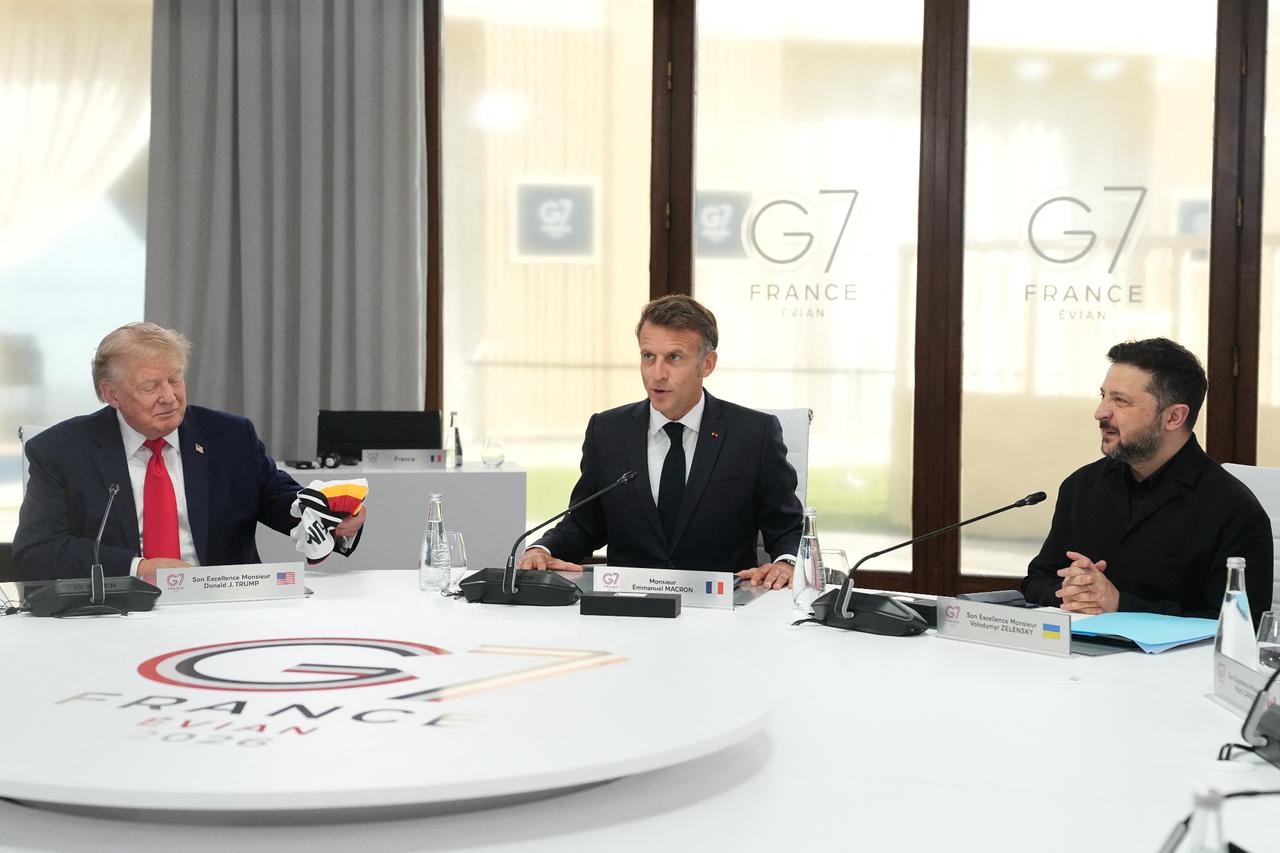


The leaders of the G7 intensified pressure on Russia and discussed stronger support for Ukraine on Tuesday as Ukrainian President Volodymyr Zelenskyy joined a special summit session in Evian-les-Bains, France, following another deadly wave of Russian strikes.
British Prime Minister Keir Starmer announced 70 new sanctions measures targeting Russia’s shadow fleet, military procurement networks and financial channels used to evade existing restrictions.
The U.K. also unveiled a £210 million, or $282 million, export finance agreement to supply enriched uranium for Ukraine’s nuclear power plants, which Starmer’s office said would help power the country for the next two years.
“Working with our G7 allies, we will continue to increase the pressure on Putin and his circle of collaborators until Russia’s war machine is brought to a halt and peace returns to our continent,” Starmer said.
The G7 talks followed Russian missile and drone attacks early Monday that killed at least 11 people across Ukraine and caused a fire at an important Orthodox monastery in Kyiv.
Zelenskyy called for a “decisive and substantive” response from the G7 following the strikes.
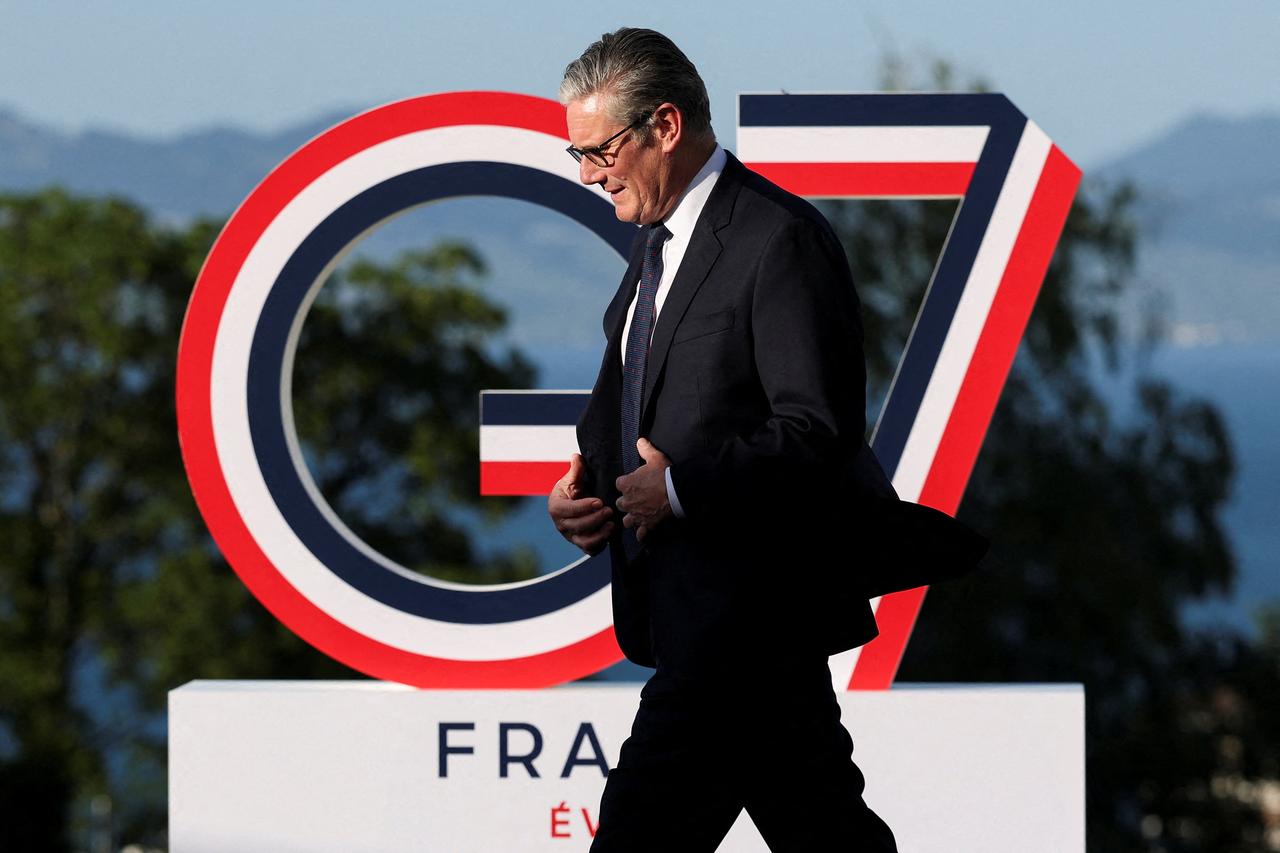

The British government said the new measures would target Russia’s illicit shadow fleet, military procurement supply chains and financial networks supporting sanctions evasion.
More than 20 oil tankers were included in the sanctions targeting vessels used by Russia to transport energy and other assets under different flags.
The U.K. said it had also become the first G7 country to sanction several liquefied natural gas (LNG) vessels recently acquired by Russia to serve an Arctic LNG project that was already under sanctions.
Starmer’s office said the actions would “choke Russia’s war effort across multiple fronts.”
The British prime minister was expected to urge the G7 leaders to go further collectively to help Ukraine secure what he described as a just and lasting peace.
Denouncing Russia’s latest attacks as “barbaric,” Starmer said Britain was increasing pressure by restricting the revenue used to finance Moscow’s war and supporting Ukraine’s energy needs.
The enriched uranium agreement will allow U.K.-based Urenco to supply fuel to Ukraine’s state nuclear energy producer, Energoatom.
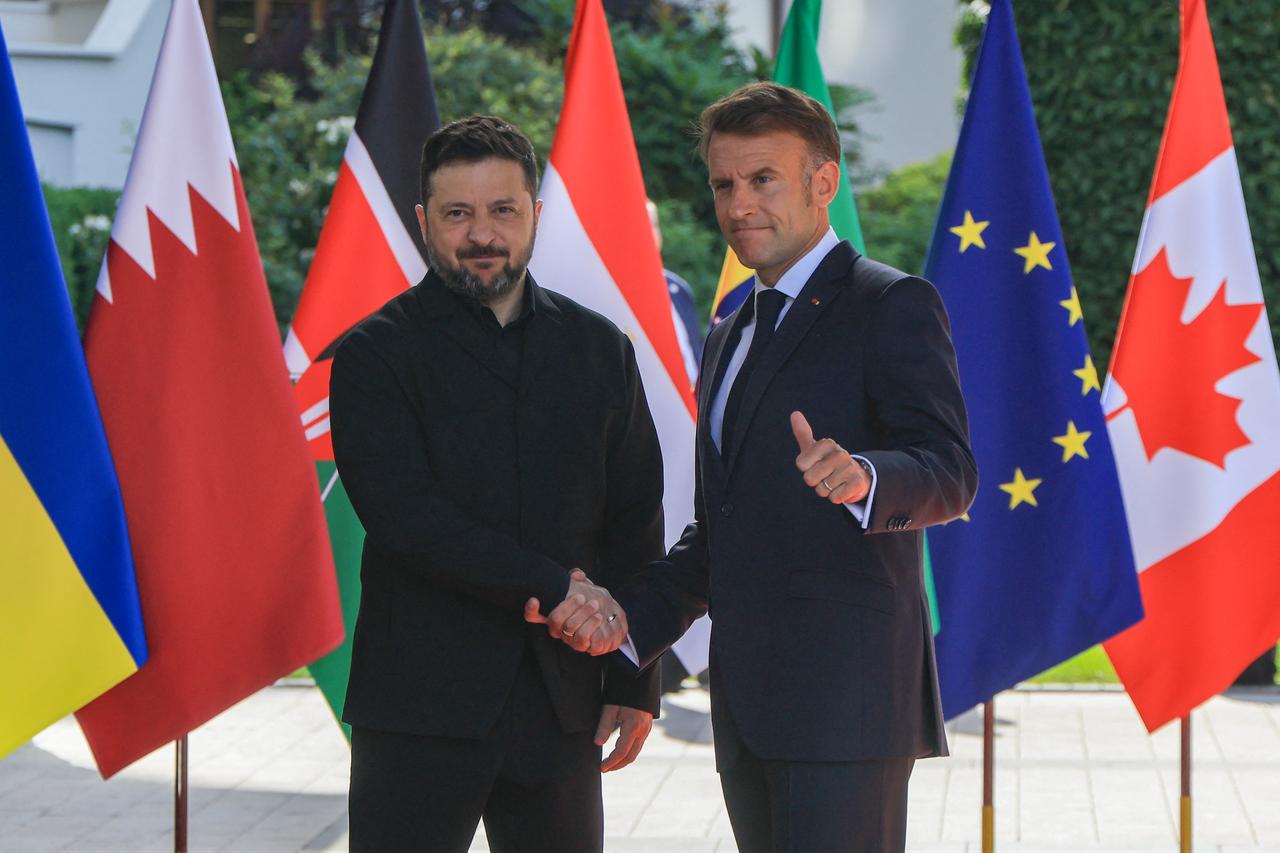
Zelenskyy attended the special G7 session alongside U.S. President Donald Trump and other leaders from the group’s seven member countries.
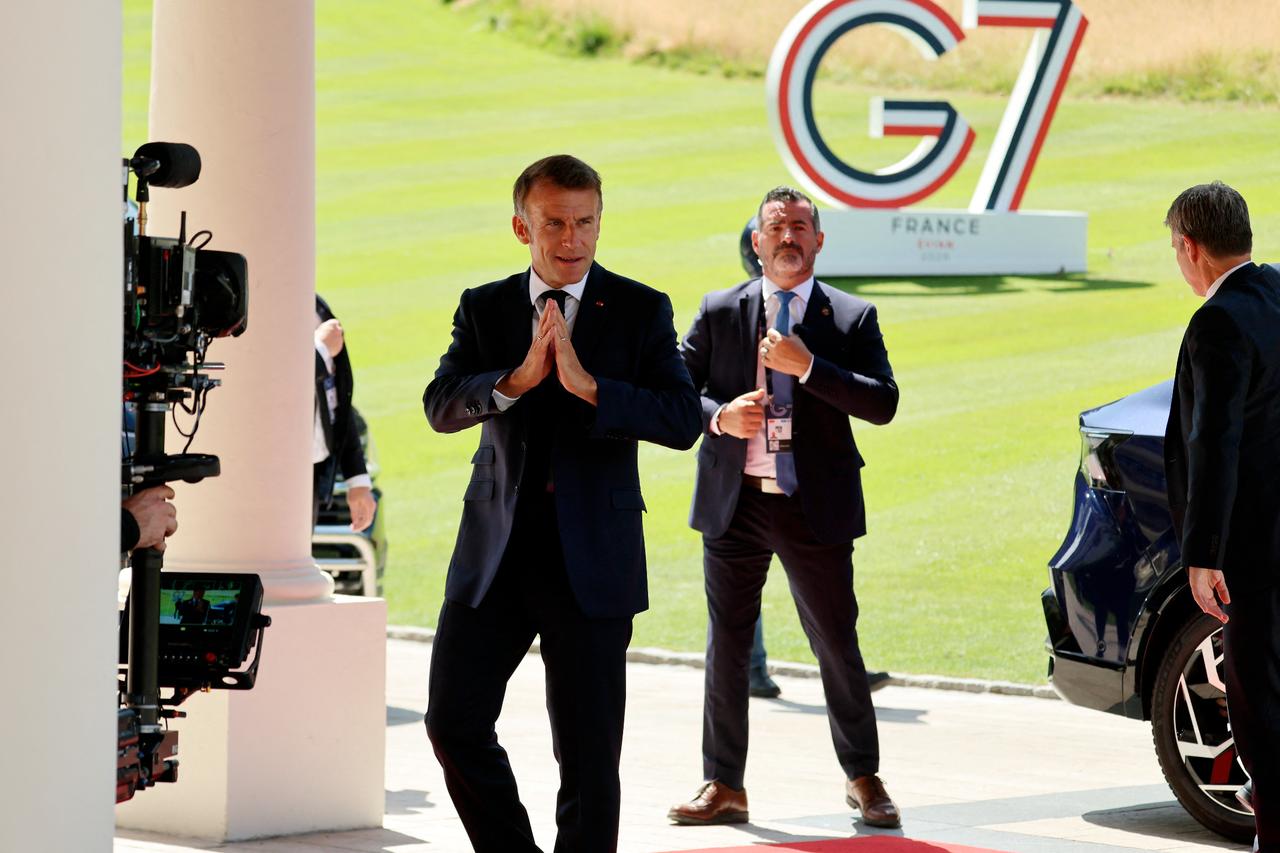
French President Emmanuel Macron welcomed the Ukrainian leader as European governments sought to maintain pressure on Russia and avoid forcing Kyiv into concessions to Moscow.
Zelenskyy said Monday that he had proposed meeting Russian President Vladimir Putin during the G7 summit, but Moscow was “not ready” for such talks.
He also said he had suggested to Trump that a meeting with Putin could take place in the U.S., arguing that the Russian leader might find that proposal more difficult to reject.
Trump said after speaking by phone with both Zelenskyy and Putin that progress might be possible.
“Maybe we can do something,” Trump said as he arrived at the summit.
“They’re both open to it,” he added, describing the calls as “two very good conversations” without providing further details.
The Ukraine session took place as some analysts said recent battlefield developments had improved Kyiv’s position and urged Western governments not to reduce their support.
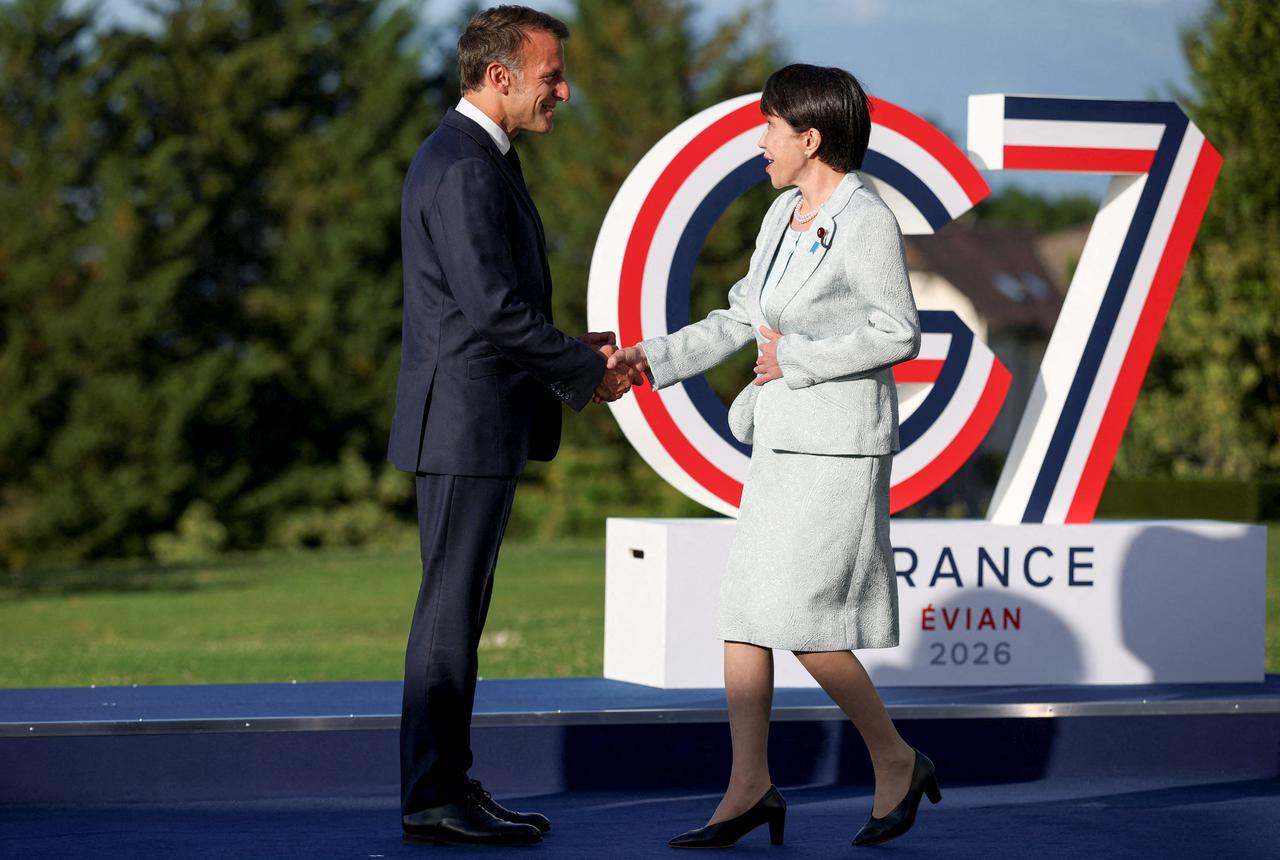
The summit’s second day also included preparations for a session on Iran and the reopening of the Strait of Hormuz.
Trump said the waterway would be fully open from Friday, although he said efforts were still underway to ensure it had been cleared of mines.
Japan said it had not decided whether its Self-Defense Forces would participate in operations supporting the resumption of commercial shipping.
“At this point, no decision has been made regarding the dispatch of the Self-Defense Forces,” Japanese Defense Minister Shinjiro Koizumi said.
Japan joined a statement by European countries saying they were prepared for a defensive and independent mission to reassure commercial vessels and conduct mine-clearance operations, subject to each country’s constitutional requirements.
Japan’s constitution limits the use of military force to self-defense.
Koizumi said Tokyo would consult closely with the U.S. and other countries and assess possible measures under international and domestic law.
Japan’s Maritime Self-Defense Force has 16 vessels capable of mine-clearance operations and participated in such missions after the 1991 Gulf War ceasefire.
Japanese Prime Minister Sanae Takaichi welcomed the memorandum of understanding between the U.S. and Iran, describing it as an important step toward reducing tensions in the Middle East.
She urged the G7 leaders to ensure that the agreement was fully implemented, that safe navigation resumed through the Strait of Hormuz and that a final arrangement prevented Iran from obtaining nuclear weapons.
Takaichi also called for ships stranded in the Gulf to be allowed to move quickly and said the safety and welfare of their crews should be treated as a priority.
Drawing on the disruption caused by the Hormuz crisis, she proposed a joint G7 stockpiling initiative for critical minerals.
The plan would seek to strengthen reserves, improve supply chain resilience and diversify sources through cooperation with partner countries.
Takaichi said resource-rich nations should receive support through international financial institutions.
She also reaffirmed Japan’s support for the complete denuclearization of North Korea and raised concerns about Pyongyang’s nuclear and missile programs, military buildup and alleged cryptocurrency theft.
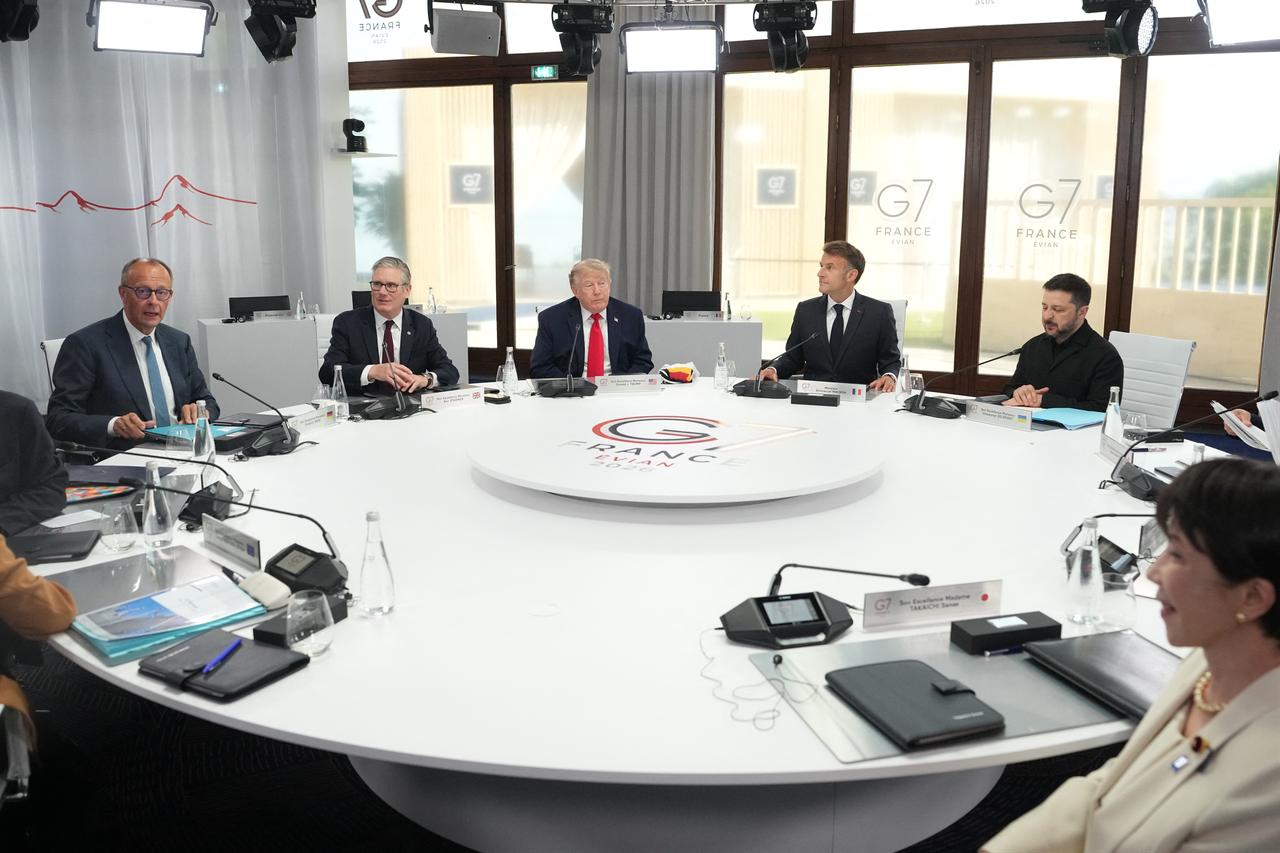
The Ukraine session launched the second day of the three-day summit hosted by Macron.
Leaders from Britain, Canada, France, Germany, Italy, Japan and the U.S. attended, along with invited partners.
Egyptian President Abdel Fattah al-Sisi, Qatar’s emir and the president of the United Arab Emirates were expected to join a special session on Iran later Tuesday.
Leaders were expected to question Trump about the U.S.-Iran agreement to end the Middle East war and reopen the Strait of Hormuz.
Trump gave a cool response to a proposed British-French mission to secure commercial passage through the waterway, saying the U.S. did not need “much help.”
Brazilian President Luiz Inacio Lula da Silva and Indian Prime Minister Narendra Modi were also among the leaders attending the expanded summit.


 Set as preferred source
 Set as preferred source


 2 min read
 1 min read