Newsletters


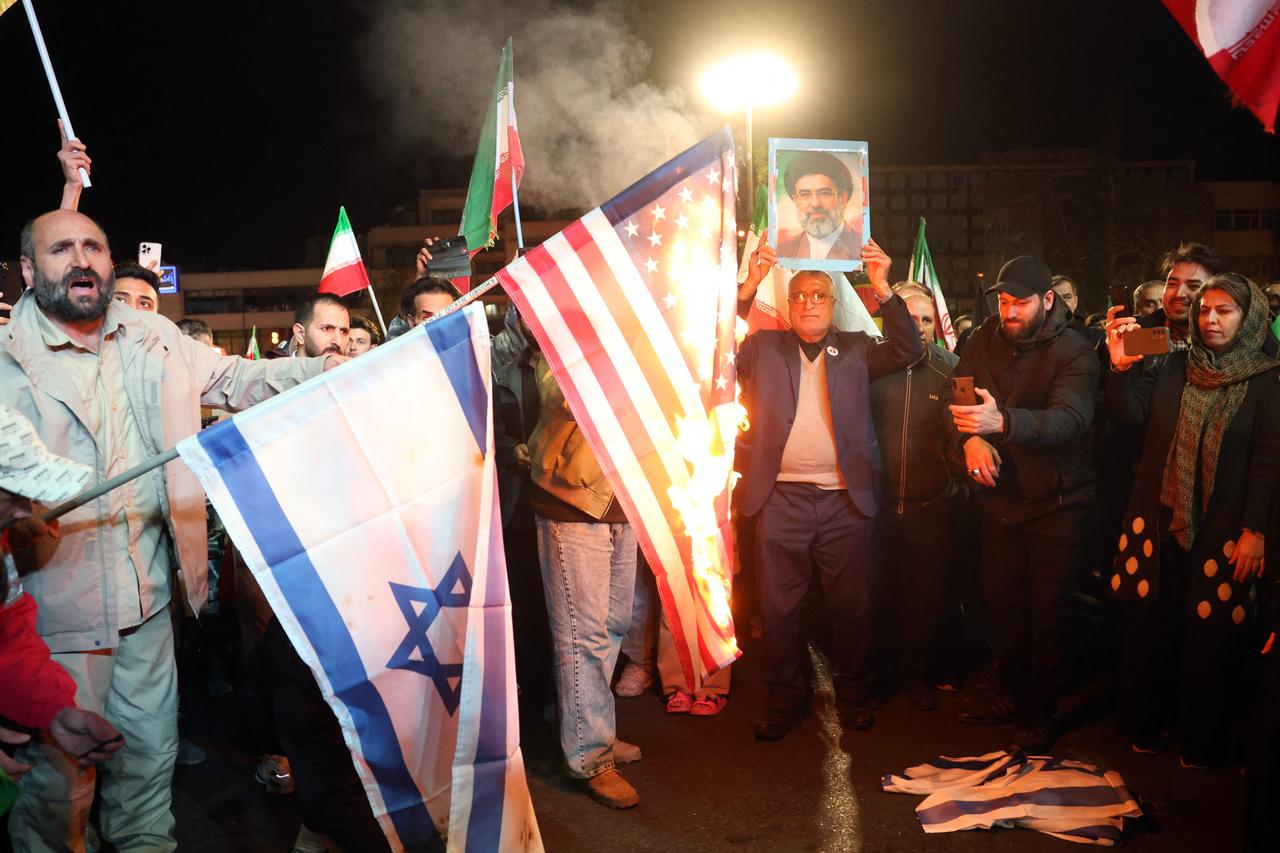


Oman welcomed a newly announced two-week ceasefire between the U.S. and Iran, urging international leaders to leverage the pause to end the war "at its roots" through diplomacy.
In a statement, Oman's Foreign Ministry welcomed the U.S.-Iranian ceasefire and praised Pakistan for its mediation efforts in helping bring about the 14-day cessation of hostilities. Oman said more work was needed to find solutions capable of ending the crisis permanently and stopping hostile acts in the region.
The truce also drew reactions from countries across Europe, Asia, Africa and the Middle East, as well as from international organizations and political figures in Israel, with many welcoming the pause while stressing that negotiations and further diplomatic efforts would be needed to secure a durable end to the war.
Oman said it welcomed the announcement of the U.S.-Iran ceasefire but stressed that hard work remained to permanently end hostilities.
The Gulf state's Foreign Ministry thanked Pakistan for its efforts in brokering the agreement.
"The Sultanate of Oman affirms the importance of intensifying efforts now to find solutions capable of ending the crisis at its roots and achieving a permanent cessation of the state of war and hostile acts in the region," the statement said.
In another statement, Oman said it welcomed the U.S.-Iranian ceasefire agreement and praised Pakistan's mediation efforts to bring about the 14-day cessation of hostilities.
Oman had served as a key mediator before the war in Muscat and in Geneva.
Iran had previously said it was drafting a protocol with Oman to oversee traffic in the Strait of Hormuz after the war.
Mahmoud Ali Youssouf, chairperson of the African Union Commission, said the ceasefire between the United States, Israel and Iran presented a critical opportunity to ease the suffering of populations affected directly and indirectly by the war.
He said the agreement reflected commendable leadership and a shared commitment to de-escalation, which the union had consistently called for.
Youssouf added that diplomacy guided by the United Nations Charter remains the only viable path to resolving international crises.
German Chancellor Friedrich Merz said he supported the ceasefire and said the goal now must be to end the war.
He said negotiations must protect Iran's civilians, ensure security in the region and avert a global energy crisis.
In another statement, Merz said Germany welcomed the two-week ceasefire between Iran and the United States.
He also thanked Pakistan for its role in mediating the truce and said the aim in the coming days should be to negotiate a lasting end to the war through diplomatic channels.
New Zealand Prime Minister Christopher Luxon said the ceasefire news was "incredibly encouraging" after weeks of destabilizing conflict.
Speaking in Wellington, Luxon said the events of the previous six weeks had been deeply concerning for the world and said all countries wanted to see an end to the Middle East conflict.
He said the conflict was affecting every country in the world, including New Zealand.
Earlier, New Zealand Foreign Minister Winston Peters said on X that his country welcomed the effort to end the war, while noting that significant important work remained.
Israeli opposition leader Yair Lapid criticized Israeli Prime Minister Benjamin Netanyahu over the two-week ceasefire between the United States, Iran and Israel.
In a post on X, Lapid called the agreement a political disaster and said Israel was not even at the table when decisions were made concerning what he described as the core of the country's national security.
Lapid said the military had done everything asked of it and the public had shown resilience, but said Netanyahu had failed politically and strategically and had failed to meet the goals he set.
Lapid and other opposition leaders in Israel have expressed support for the war against Iran while criticizing its management.
British Prime Minister Keir Starmer said the ceasefire would bring a moment of relief to the region and the world, but said it must be turned into a lasting agreement.
Starmer traveled to the Gulf on Wednesday to support the ceasefire and wider efforts to end the U.S.-Israeli war on Iran.
He said that together with partners, efforts must continue to support and sustain the ceasefire, turn it into a lasting agreement and reopen the Strait of Hormuz.
The U.K. has been involved in international efforts to restore freedom of navigation through the strait and had hosted diplomatic and military meetings in the previous week to work on a post-conflict security plan for the waterway.
Starmer was also due to hold talks with regional leaders and meet British troops based in the region on a trip that had been planned before the ceasefire was announced.
Ukraine welcomed the ceasefire agreed between the United States and Iran, along with the unblocking of the Strait of Hormuz.
Foreign Minister Andrii Sybiha said on X that American decisiveness works and called for similar action to force Moscow to cease fire and end its war against Ukraine.
In his statement, Sybiha also welcomed Pakistan's mediation efforts.
Iraq's Foreign Ministry said it valued the ceasefire as a development that could help reduce tensions, increase the chances for de-escalation and reinforce security and stability in the region.
Australian Prime Minister Anthony Albanese described the ceasefire announcement as positive news.
He said he hoped it would lead to a permanent de-escalation and an end to the conflict.
Albanese also criticized Trump's earlier rhetoric, saying the potential damage to civilian infrastructure in Iran was an extraordinary statement to make.
Egypt called the ceasefire a positive step toward de-escalation and the containment of regional tensions.
Japan's chief cabinet secretary Minoru Kihara said the most important thing now was genuine de-escalation, including ensuring safe passage through the Strait of Hormuz.
United Nations Secretary-General Antonio Guterres called on all parties to comply with their obligations and abide by the terms of the agreement, according to a statement from his spokesperson.
EU foreign policy chief Kaja Kallas said the U.S.-Iran ceasefire agreement was a step back from the brink after weeks of escalation.
She said it created a much-needed opportunity to tone down threats, stop missiles, restart shipping and create space for diplomacy toward a lasting agreement.
Kallas also said the Strait of Hormuz must be open for passage again.
She said she had spoken with Pakistan's foreign minister and thanked him for helping secure the initial deal.
Kallas said the door to mediation must remain open because the underlying causes of the war remain unresolved, and said the EU stood ready to support those efforts and remained in contact with partners in the region.
She also said she would discuss the issue in Saudi Arabia.
Jan Egeland, secretary general of the Norwegian Refugee Council, said the two-week ceasefire would allow assistance to be scaled up for millions of refugees and displaced people in Iran.
He called for more funding for humanitarian operations.
He said only limited funding had come from Scandinavian countries and questioned how there could be billions available for war but no funding for war victims.
French President Emmanuel Macron welcomed the ceasefire between the United States and Iran, calling the agreement a very good thing.
He said France expected the ceasefire to be fully respected throughout the region in the coming days and weeks and said it should allow negotiations to take place.
Macron also said France wanted the ceasefire to fully include Lebanon.
China said it welcomed the ceasefire between the United States and Iran after the two countries agreed to a two-week pause in hostilities shortly before a deadline set by U.S. President Donald Trump.
Foreign Ministry spokeswoman Mao Ning said China welcomed relevant parties announcing that they had reached a ceasefire agreement and said Beijing would continue working toward restoring peace in the Middle East.
Spanish Prime Minister Pedro Sanchez welcomed the announcement of the two-week ceasefire between the United States and Iran, but criticized the administration in Washington, without naming it directly, for having initiated the hostilities.
"The Spanish government will not applaud those who set the world on fire just because they turn up with a bucket," Sanchez wrote on X.
He said ceasefires were always welcome news, but added that "momentary relief must not make us forget the chaos, the destruction and the lives lost."
Sanchez also called for "diplomacy, international law and PEACE" to prevail.
The report said Sanchez has become one of the most vocal Western leaders criticizing what he described as an illegal and reckless war, and said Spain had closed its airspace to U.S. planes involved in the strikes and barred them from using jointly operated military bases in southern Spain.


 Set as preferred source
 Set as preferred source


 2 min read
 1 min read