Newsletters





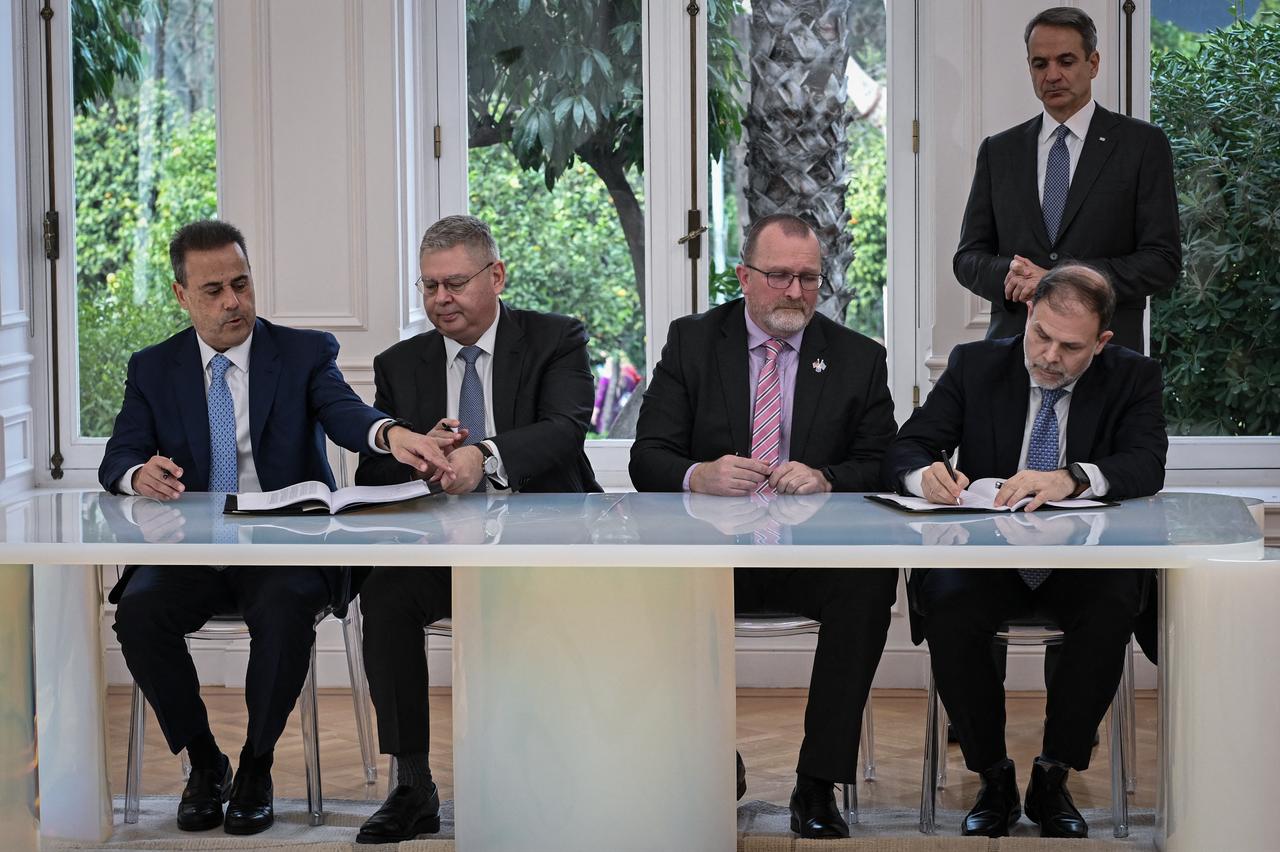
Greece on Monday signed exclusive lease agreements with the Chevron-Helleniq Energy consortium to conduct hydrocarbon exploration in maritime areas south of the Peloponnese Peninsula and the island of Crete.
Greek government spokesperson Pavlos Marinakis said at a weekly press briefing that, with the participation of Prime Minister Kyriakos Mitsotakis, the Greek state signed an agreement granting the consortium rights to explore and exploit hydrocarbons in the designated offshore areas.
The deal doubles the amount of Greek maritime acreage available for exploration and marks the second agreement in recent months involving a U.S. energy major, as the European Union seeks to phase out Russian energy supplies and the United States aims to help replace them.
In November, Exxon Mobil joined Energean and Helleniq to explore for natural gas in another offshore block in western Greece.

Marinakis said the first exploratory drilling is expected to begin in June in “Block 2,” describing it as one of two major natural gas exploration activities planned in Greece after a gap of about 40 years.
However, the lease contracts must still be approved by the Greek parliament before the Chevron-led consortium can begin seismic research later this year. Greece has said the consortium has up to five years to identify potentially recoverable deposits, and any test drilling would not take place before 2030-2032.
The signing ceremony was held at the Maximos Mansion in the presence of Mitsotakis, according to Greek media reports. The Greek state was represented by Environment and Energy Minister Stavros Papastavrou and Aristofanis Stefatos, CEO of the Helleniq Hydrocarbons and Energy Resources Management Company.
“Greece is making a leap in the energy sector,” Mitsotakis said ahead of the ceremony, noting that the four blocks expected to be explored cover a large area.
“The historic decision to stop dependence on Russian gas gives our country an opportunity. Greece has the infrastructure ready. The Vertical Corridor will be a very good alternative to Russia's natural gas,” he added.
Under the agreement, Chevron will lead gas exploration in four deep-sea blocks south of the Peloponnese Peninsula and Crete, covering about 47,000 square kilometers, or 18,147 square miles. The deal follows an international tender won last year by Chevron and Helleniq Energy, Greece’s largest oil refiner.
Greece has no domestic natural gas production and relies on imports for power generation and household consumption. The country renewed its push for offshore gas exploration following the 2022 energy price shock triggered by Russia’s invasion of Ukraine.
While the European Union continues to expand renewable energy capacity to cut greenhouse gas emissions, it has acknowledged the need for natural gas as a transition fuel to stabilize electricity grids when wind and solar power are unavailable.


 Set as preferred source
 Set as preferred source


 2 min read

 1 min read