Newsletters


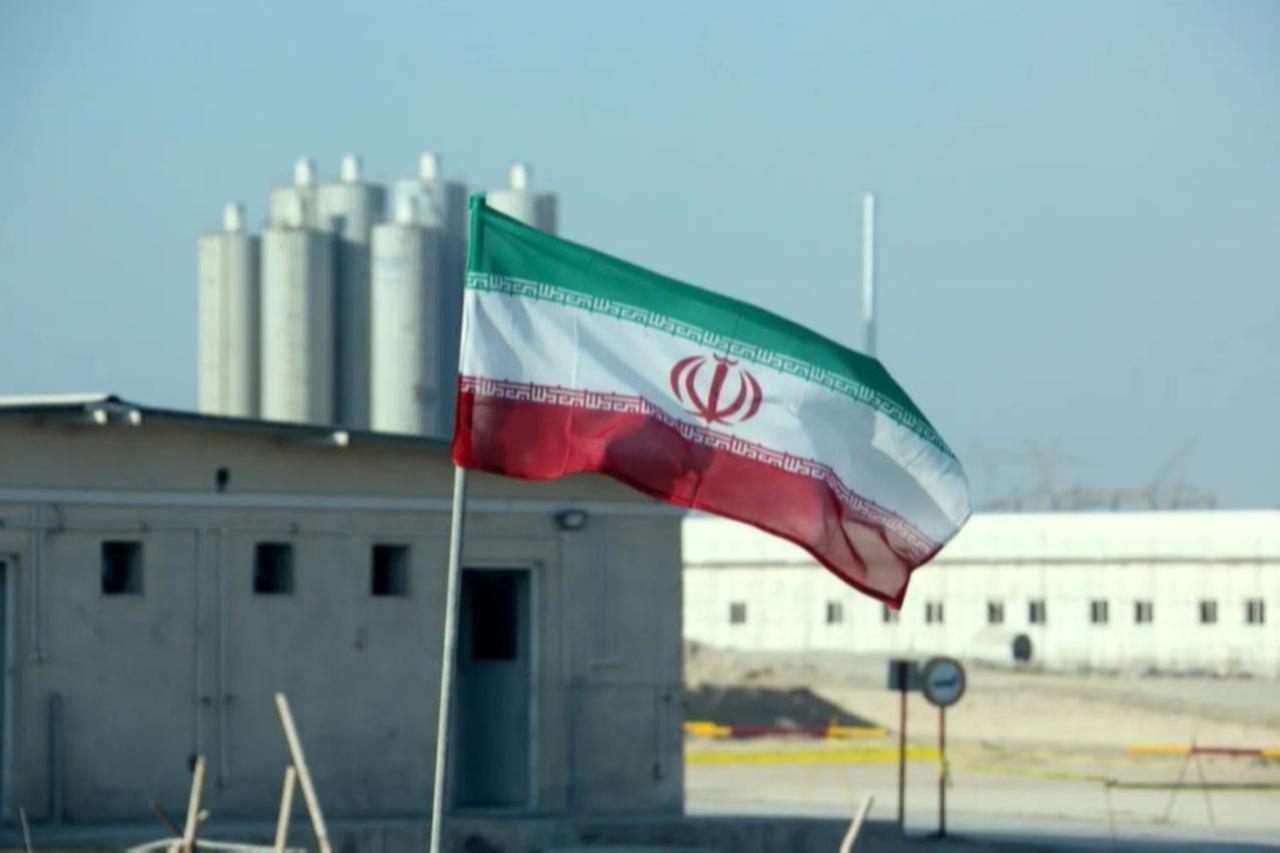


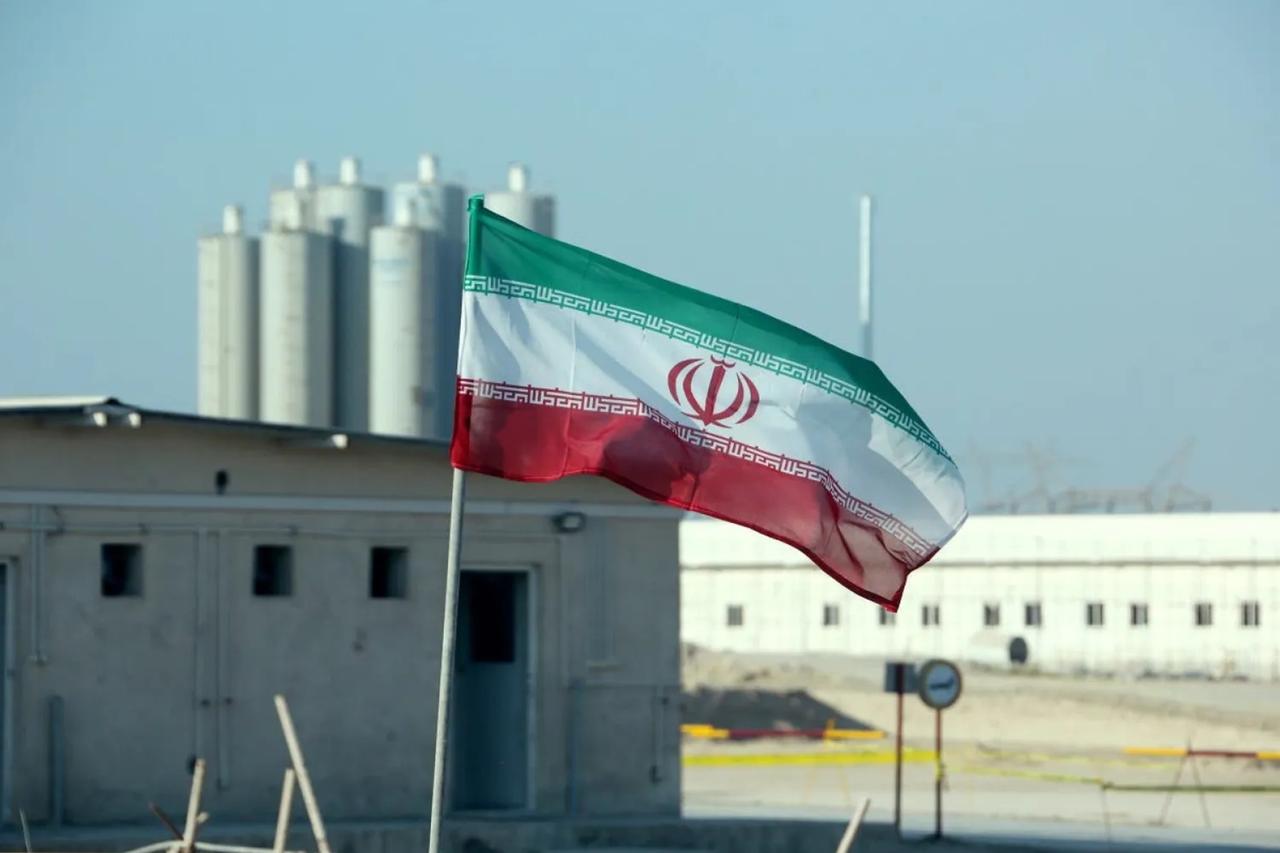
A projectile struck and destroyed a structure within the grounds of Iran's Bushehr Nuclear Power Plant on Tuesday evening, the International Atomic Energy Agency confirmed on Wednesday, marking the first known hit on the country's only operational nuclear facility since U.S.-Israeli military operations against Iran began on Feb. 28.
The IAEA said it had been informed by Tehran that the projectile hit a structure located 350 meters from the Bushehr reactor. While no damage to the reactor itself or injuries to staff were reported, IAEA Director General Rafael Grossi condemned the incident in stark terms: "Any attack at or near nuclear power plants violates the seven indispensable pillars related to ensuring nuclear safety and security during an armed conflict and should never take place."
Russia's state nuclear corporation Rosatom, which built and continues to maintain the facility, provided further detail. Rosatom CEO Alexei Likhachev said the strike hit an area adjacent to the plant's metrology service building, in close proximity to the operating power unit, at 3:11 p.m. GMT. He confirmed no casualties among Rosatom personnel and said radiation levels at the site remained normal.
The incident has intensified concerns about the safety of a nuclear installation that sits on the shores of the Persian Gulf, where a radiation leak could pose an existential threat to neighboring Gulf Arab states that depend on desalination plants for their water supply.
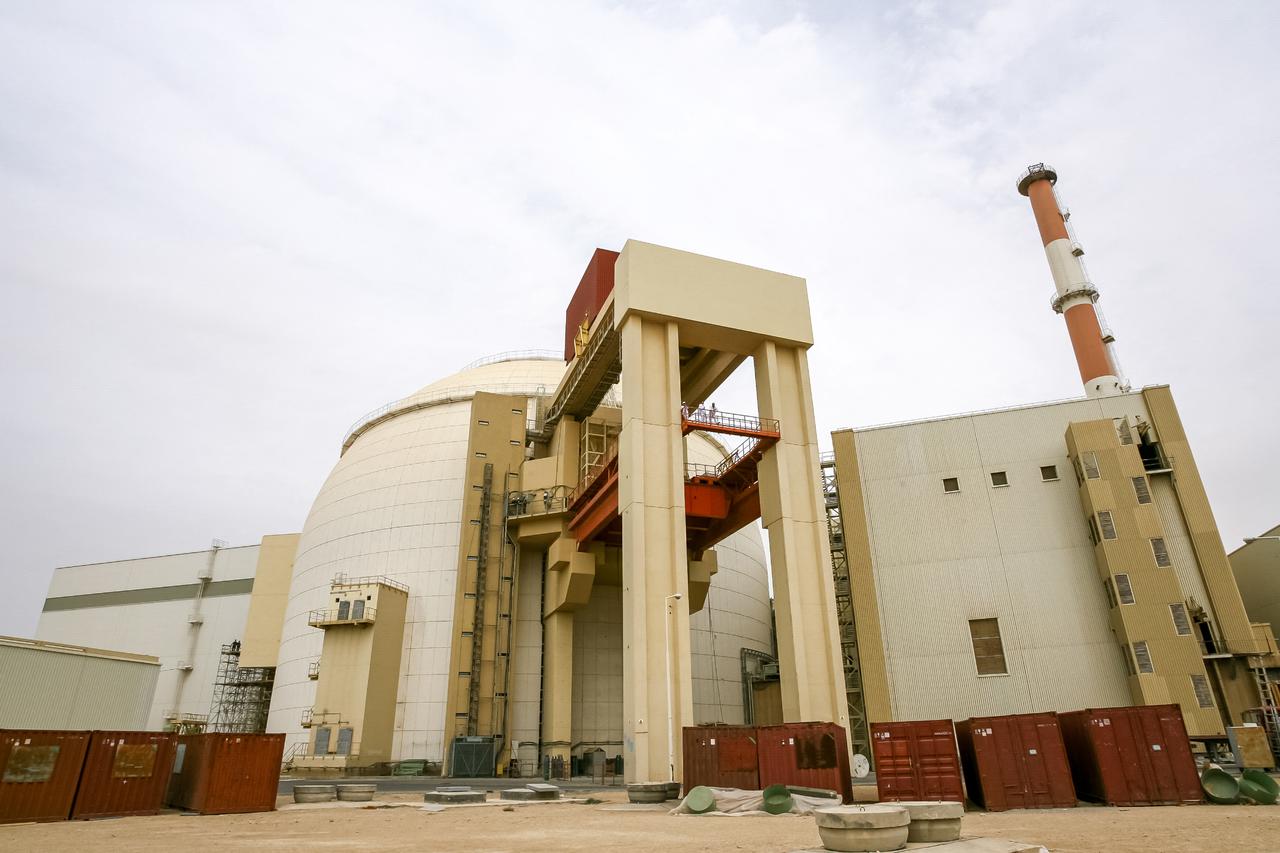

Moscow's response was immediate and pointed. Russian Foreign Ministry spokesperson Maria Zakharova called it an "irresponsible and utterly unacceptable missile strike on the inner perimeter" of the plant. Russia had already lodged a formal protest with Israel in recent days, delivered through its embassy in Tel Aviv, after earlier strikes landed close to residential areas housing Russian experts who help operate the facility.
According to political sources cited by the Israeli newspaper Maariv, Russia stressed that the location of its personnel had been communicated to Israel in advance. Russian officials told their Israeli counterparts that repeated strikes near Russian experts were unacceptable, demanding that precautionary measures be taken.
Likhachev said approximately 480 Rosatom employees remain at the site after two rounds of evacuations, with preparations now underway for a third. In earlier statements, he had put the figure of Russian personnel across Iran at roughly 639. The head of Rosatom warned that the reactor operates at full capacity, containing 72 tons of fuel and an additional 210 tons of spent fuel, calling any strike on such a facility a potential "regional-scale disaster."
The Bushehr plant, located 17 kilometers southeast of the city of Bushehr along the Persian Gulf coast, carries a history as turbulent as the region itself. The facility was originally conceived by Shah Mohammad Reza Pahlavi, who envisioned a network of nuclear power plants to free Iran from dependence on its oil reserves for electricity generation. German firm Kraftwerk Union, a joint venture of Siemens and AEG-Telefunken, began construction in 1975 under a contract worth up to $6 billion.
The 1979 Islamic Revolution halted the project, and German contractors withdrew after completing roughly half the work, citing overdue payments of $450 million. Iraq then bombed the partially built facility during the Iran-Iraq War, further damaging the site. After years of stagnation, Tehran signed a deal with Russia in 1995 to finish the plant, though sustained Western diplomatic pressure on Moscow delayed completion for more than a decade.
The 1,000-megawatt plant was finally connected to Iran's national grid in September 2011, initially generating 60 megawatts before scaling up to near full capacity by April 2012. Iran assumed operational control in September 2013. The facility contributes roughly 1 to 2 percent of the country's electricity.
In November 2014, Iran and Russia signed an agreement to build two additional reactors at Bushehr, with construction formally beginning in March 2017. By November 2025, Rosatom chief Likhachev reported that some 3,000 specialists, including 700 Russians, were working on the expansion. That work has now been suspended due to the ongoing strikes.
 1 min read
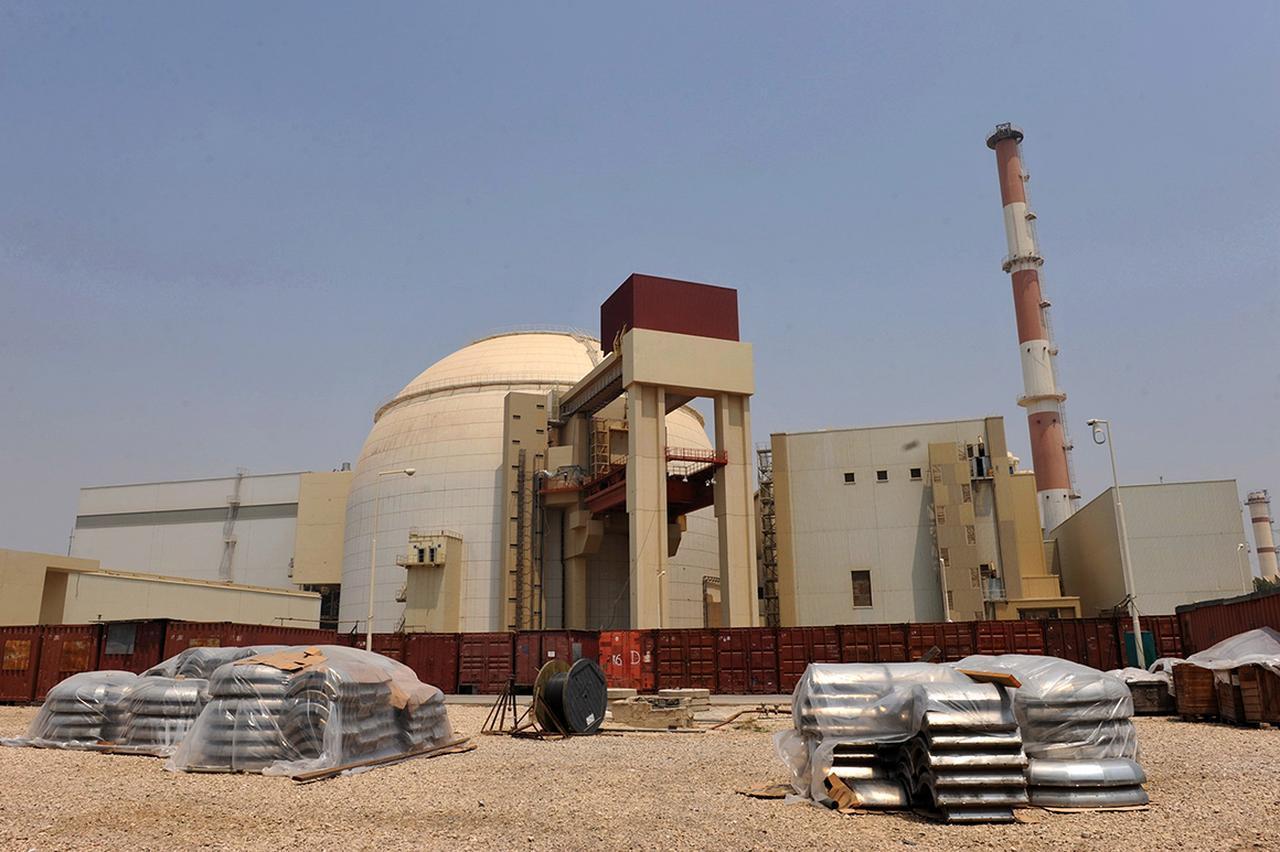
Tuesday's strike was not the first time military operations have crept close to Bushehr. Since the U.S.-Israeli campaign against Iran began in late February 2026, multiple strikes have been reported in the Bushehr region, including attacks on nearby military targets and Iran's major South Pars gas processing infrastructure in Asaluyeh, within the same province.
On March 3, Likhachev had acknowledged that the situation at the plant was "complex but under control," noting that explosions at a distance had caused minor effects such as broken windows. On March 10, he said contact with Iran's nuclear industry leadership had been "completely lost," with officials not responding to phone calls or emails.
The pattern stands in contrast to the 12-day war between Israel and Iran in June 2025, dubbed Operation Rising Lion, during which Bushehr was deliberately left untouched. During that conflict, the presence of more than 200 Russian technicians at the plant was widely seen as a deterrent. At the time, Russian President Vladimir Putin confirmed at the St. Petersburg International Economic Forum that Russia's engineers were helping build two new reactors at Bushehr, with 250 specialists on site. "We are in constant dialogue with our Iranian partners. Our specialists are working in Bushehr, 250 people are there. We are not leaving there. This is support," Putin said in response to a question from Anadolu Agency Director General Serdar Karagoz.
Putin also indicated during the June 2025 conflict that Russia had reached an understanding with Israel's leadership regarding the safety of Russian personnel, an assurance that now appears to have eroded.


 Set as preferred source
 Set as preferred source


 1 min read