Newsletters


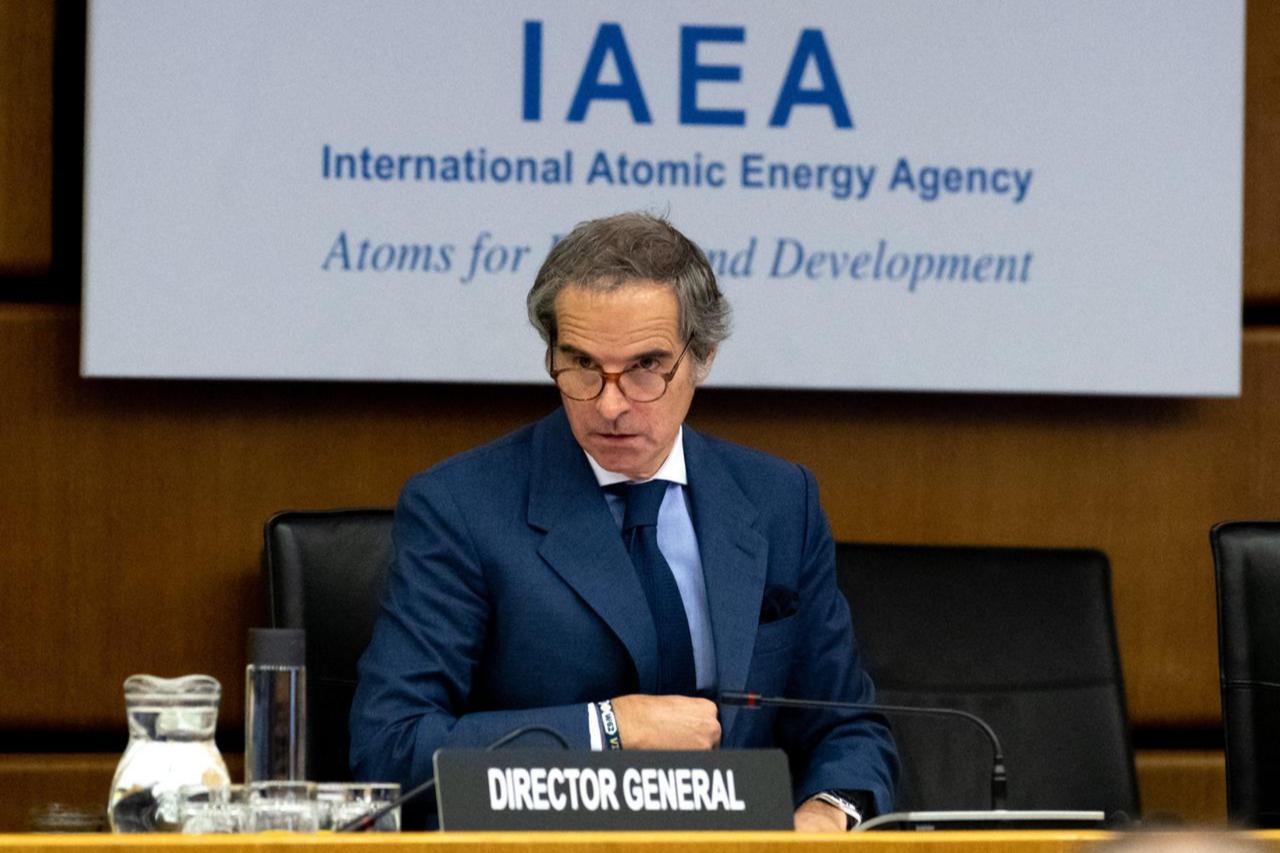


The U.N. nuclear watchdog aims to return to Syria to inspect a facility damaged during the country’s 13-year civil war, but unrest in the SDF/YPG-occupied areas has delayed the mission, the agency’s chief said.
Rafael Grossi, director-general of the International Atomic Energy Agency (IAEA), said the agency is seeking to resume inspections at the Al-Kibar site in Syria’s Deir ez-Zor region.
The facility was “very likely” a nuclear reactor built with assistance from North Korea before being destroyed in an Israeli airstrike in 2007, according to a 2011 IAEA assessment.
The agency began inspections there in 2008, but they were halted in 2011 after the outbreak of Syria’s civil war.
Under Syria’s new government, the IAEA resumed work at the site in 2024.
However, Grossi said recent inspections have been limited amid advances by government forces into areas held by the SDF.
“We are aiming to return to Deir ez-Zor as soon as we can,” Grossi told Al-Monitor on the sidelines of the World Economic Forum in Davos, Switzerland.
He said clarifying the status of nuclear material would allow the agency to remove Syria from the list of countries requiring special consideration.
Grossi said renewed tensions and sporadic clashes have affected the agency’s ability to conduct planned inspections, adding that work would resume once the situation stabilizes.

Syria has been governed by President Ahmad al-Sharaa since December 2024, following the ouster of longtime leader Bashar al-Assad.
Under Assad, Syria endured a civil war from 2011 to 2024 that caused an estimated $216 billion in infrastructure damage, according to the World Bank.
Grossi said that during a visit to Damascus in June, Syrian authorities granted the IAEA access to former nuclear sites, including Al-Kibar.
Samples taken in 2025 confirmed traces of uranium originating from human activity, according to an agency report.
He said the IAEA expects to address concerns about past nuclear activity within months, with cooperation from Syrian authorities.
Damascus and the SDF agreed to a temporary ceasefire on Jan. 20, while U.S. officials are mediating talks on integrating the group into the Syrian Army.
Grossi said progress on these negotiations would be critical for the agency to fully resume work at Al-Kibar and other former nuclear sites.
“So as soon as the situation calms down a bit, we are going to return,” Grossi said.
Grossi said the IAEA is also closely monitoring Iran, though Tehran has banned inspectors since a 12-day war with Israel and the United States in June, during which U.S. jets bombed nuclear facilities at Fordow, Natanz and Isfahan.
He said the agency remains in contact with Iranian Foreign Minister Abbas Araghchi and is seeking to resume inspections. Grossi was scheduled to meet Araghchi in Davos, but the appearance was canceled following a crackdown on protests in Iran.
Grossi said Iran has legal obligations to allow inspections, though he acknowledged the sensitivity of the situation after the war.
He said nuclear material likely remains at damaged sites and that the agency must determine how much is present compared to prewar levels.
Before the conflict, the IAEA reported that Iran held 408 kilograms of uranium enriched to 60%.
Grossi said the agency has no indication that Tehran is currently developing nuclear weapons, but stressed that inspections are essential to restoring confidence and trust.


 Set as preferred source
 Set as preferred source


 1 min read
 1 min read