Newsletters


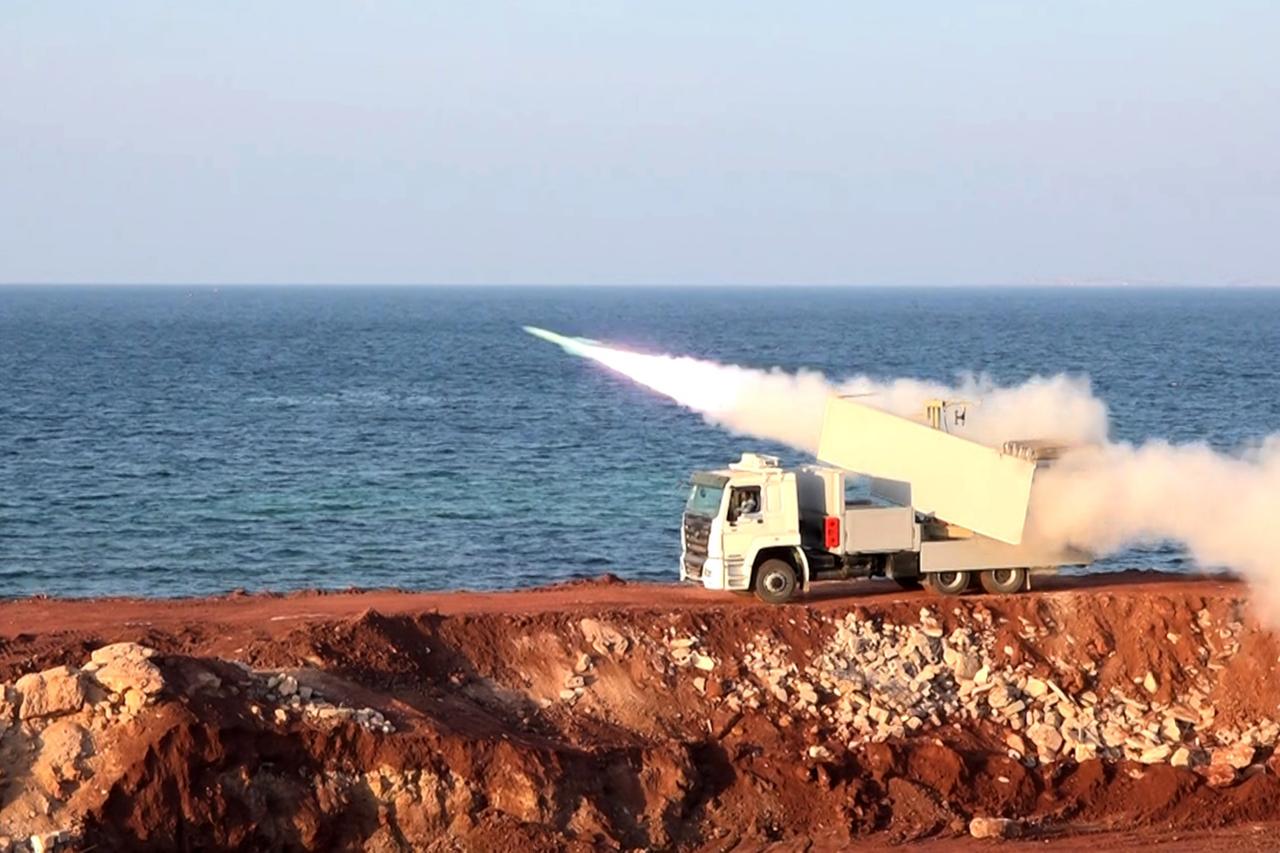


Iran will close parts of the strategic Strait of Hormuz for “safety” measures during military drills conducted by the Islamic Revolutionary Guard Corps (IRGC), state television reported Tuesday.
“Parts of the Strait of Hormuz will be closed in order to respect the principles of safety and navigation,” a state TV journalist said while reporting from a site near the drills, which began Monday.
It was not immediately clear how long the partial closure would remain in effect.
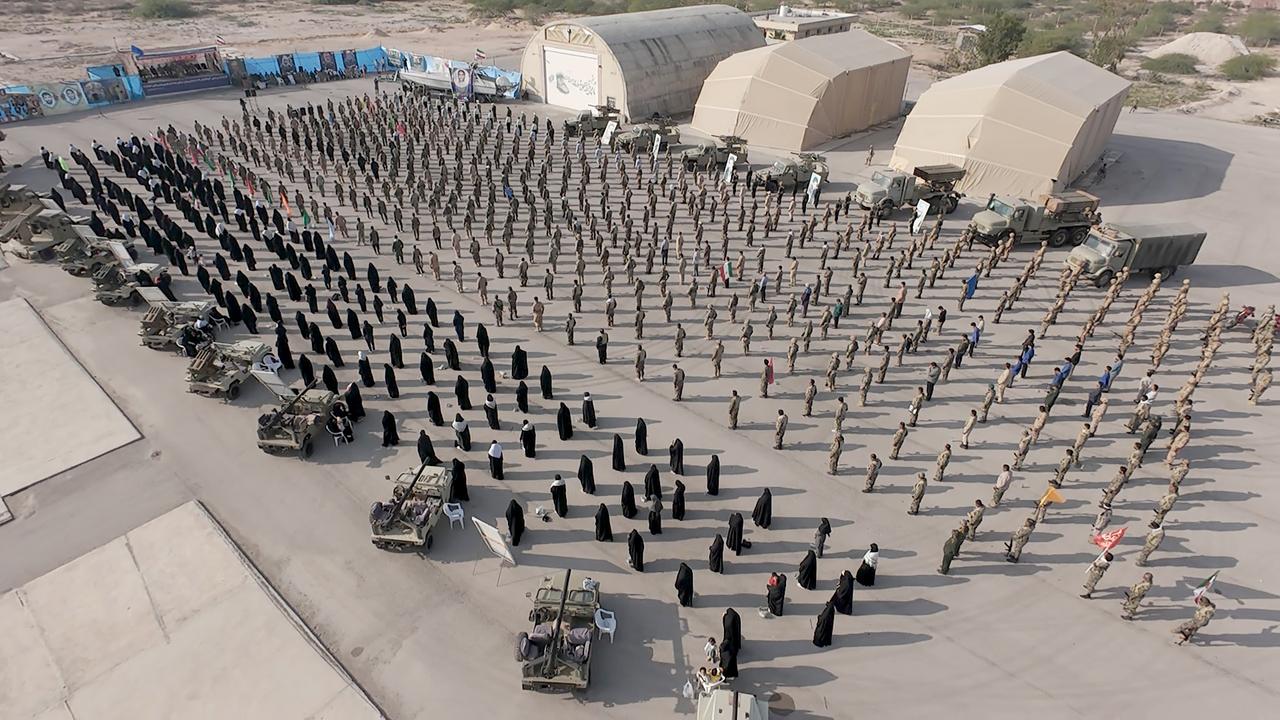

Iran’s top naval commander said Monday that the IRGC maintains “full 24-hour intelligence dominance” over the Strait of Hormuz.
IRGC Navy Chief Rear Adm. Alireza Tangsiri made the remarks hours after the launch of the military exercise in the strait, one of the world’s most critical maritime choke points linking the Persian Gulf and the Gulf of Oman.
The IRGC Navy’s public relations department described the drills as “combined, live and purpose-driven.”
Iranian state media quoted Tangsiri as saying that IRGC surveillance in the strait is “comprehensive at surface, aerial and even sub-surface levels.”
This intelligence, he said, ensures the “safe passage of vessels” through the strait, adding that more than 80 oil tankers and container ships transit the waterway daily, accounting for a significant share of global maritime trade.
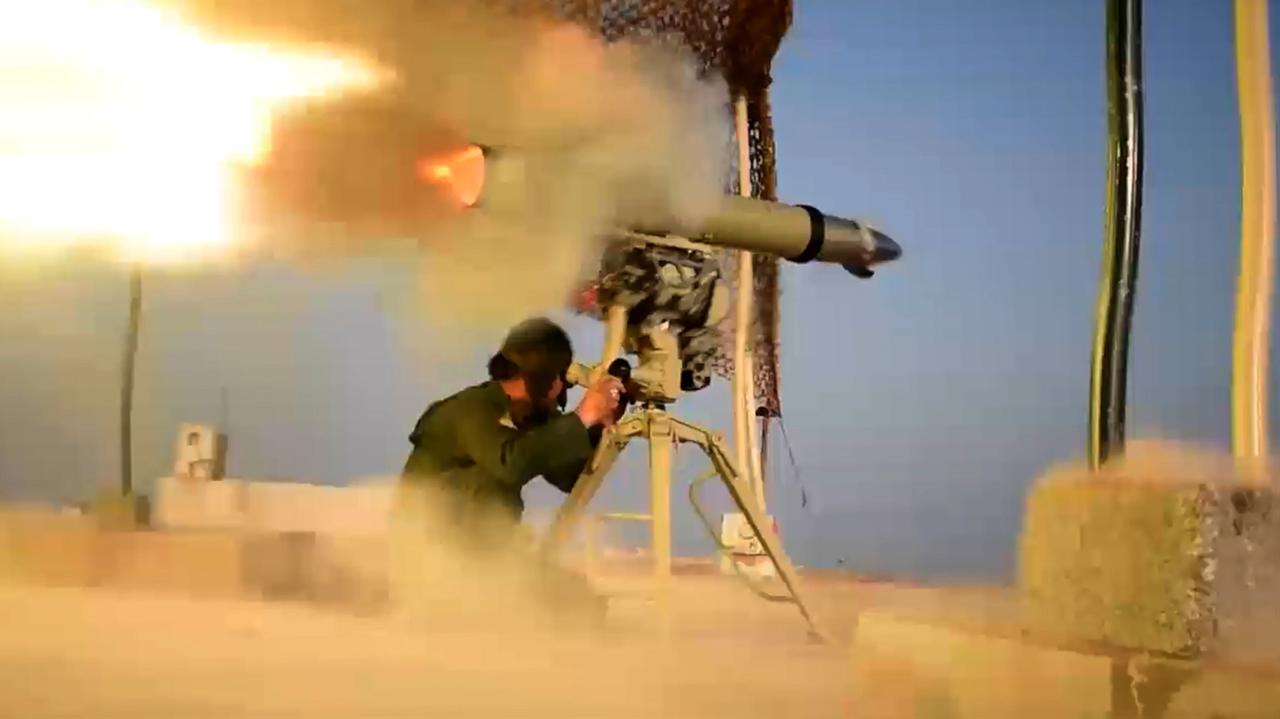
Tangsiri said the exercises are being conducted in both the Persian Gulf and the Strait of Hormuz, describing islands in the two waterways as “impregnable fortresses.”
He said defending these islands and the entire Persian Gulf and Strait of Hormuz “is the responsibility of the IRGC Navy,” which conducts “routine annual exercises to ensure security” in the region.
The drills, he added, are part of the IRGC Navy’s annual program, with their distinctiveness stemming from the “tactical maneuvers and equipment being employed,” some of which have not yet been publicly unveiled.
Tangsiri said a “rapid and decisive response” by IRGC operational units to maritime security threats lies at the “core of the drills.”
He also said IRGC rapid-response units regularly train to intervene, inspect or seize “unauthorized vessels” in the Strait of Hormuz and the Persian Gulf.
Earlier Monday, the IRGC announced that an exercise titled “Smart Control of the Strait of Hormuz” is being held under the field supervision of IRGC Commander-in-Chief Maj. Gen. Mohammad Pakpour.
According to the statement, the drills aim to assess operational readiness of IRGC Navy units, test security plans and scenarios for reciprocal military action in response to potential threats, and evaluate Iran’s geopolitical advantages in the Persian Gulf and the Sea of Oman.
The drills come amid heightened tensions between Iran and the United States following the deployment of U.S. aircraft carriers and bombers to the Persian Gulf region.
On Friday, U.S. President Donald Trump announced that a second U.S. aircraft carrier would be sent to the Middle East. The USS Abraham Lincoln and a fleet of destroyers are already stationed in the region.
Despite the rising tensions, Tehran and Washington are scheduled to hold another round of indirect nuclear negotiations in Geneva on Tuesday under Omani mediation.
Indirect nuclear talks resumed in Muscat earlier this month, nearly eight months after negotiations were suspended following an Israeli attack on Iran that triggered a 12-day war.


 Set as preferred source
 Set as preferred source


 1 min read
 1 min read