Newsletters


U.S. President Donald Trump used his appearance at the G7 summit on Tuesday to deliver his latest comments on the U.S.-Iran deal, the Lebanon standoff, and his relationship with Israeli Prime Minister Benjamin Netanyahu.
He warned that "all hell will rain down" on Tehran if it pursues a nuclear weapon, dismissing the $300 billion reconstruction fund as a "ridiculous rumor." He also said Netanyahu "has to be more responsible with respect to Lebanon."
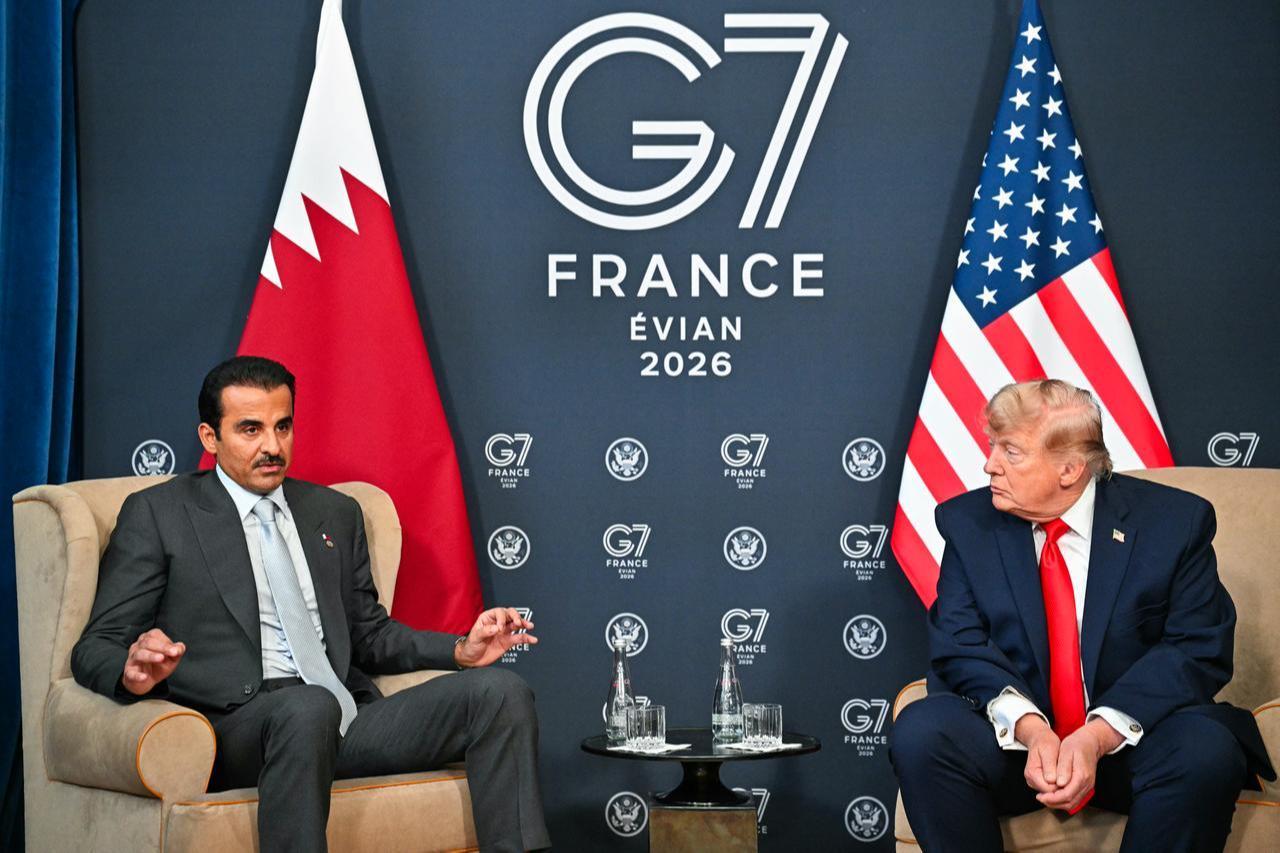
Speaking to reporters alongside Qatari Emir Sheikh Tamim bin Hamad al-Thani, who praised Trump's leadership at "a critical time for the Middle East," Trump confirmed the deal was moving to its second stage, which he predicted to be "actually easier" than the first.
"We have our deal done with Iran, and it should be successful. It goes to a second stage, which I think would be actually easier," Trump stated.
"The only thing that really matters to me is Iran will never have a nuclear weapon, and it says it loud and clear. They're not going to develop it, they're not going to buy it, they're not going to do anything with it. And if they do, they suffer unbelievable consequences; all hell will rain down," he added.

Trump pushed back sharply against reports that the Memorandum of Understanding (MoU) included a U.S. commitment to a $300 billion fund for Iran's reconstruction.
Senior U.S. officials had told reporters on Monday that the MoU contained a clause on such a fund, to be financed by Gulf nations.
"We are not investing any money in Iran, by the way. That rumor got out there yesterday, it was ridiculous. We have no obligation to invest any money in Iran," Trump said, repeating the denial twice during the bilateral meeting with the Qatari emir.
He acknowledged the U.S. retained the option to invest "if I want to do something," but was emphatic that no commitment existed.
Vice President JD Vance had separately confirmed the MoU as a document of approximately one and a half pages and "very general" in nature, with technical talks on Iran's nuclear program, financial relief, and Hormuz protocols expected to begin this week.
On the uranium stockpile believed to be buried under collapsed nuclear facilities hit by U.S. and Israeli strikes, Trump said the U.S. intended to recover it, saying, "We're going to go get it. But to go get it, it's a big deal because they say only China and us have the equipment where you can even get it. The whole mountain is collapsed on top. We have cameras on it."
He acknowledged the material might not be practically valuable at this stage but said, "I think psychologically, we want to get it."
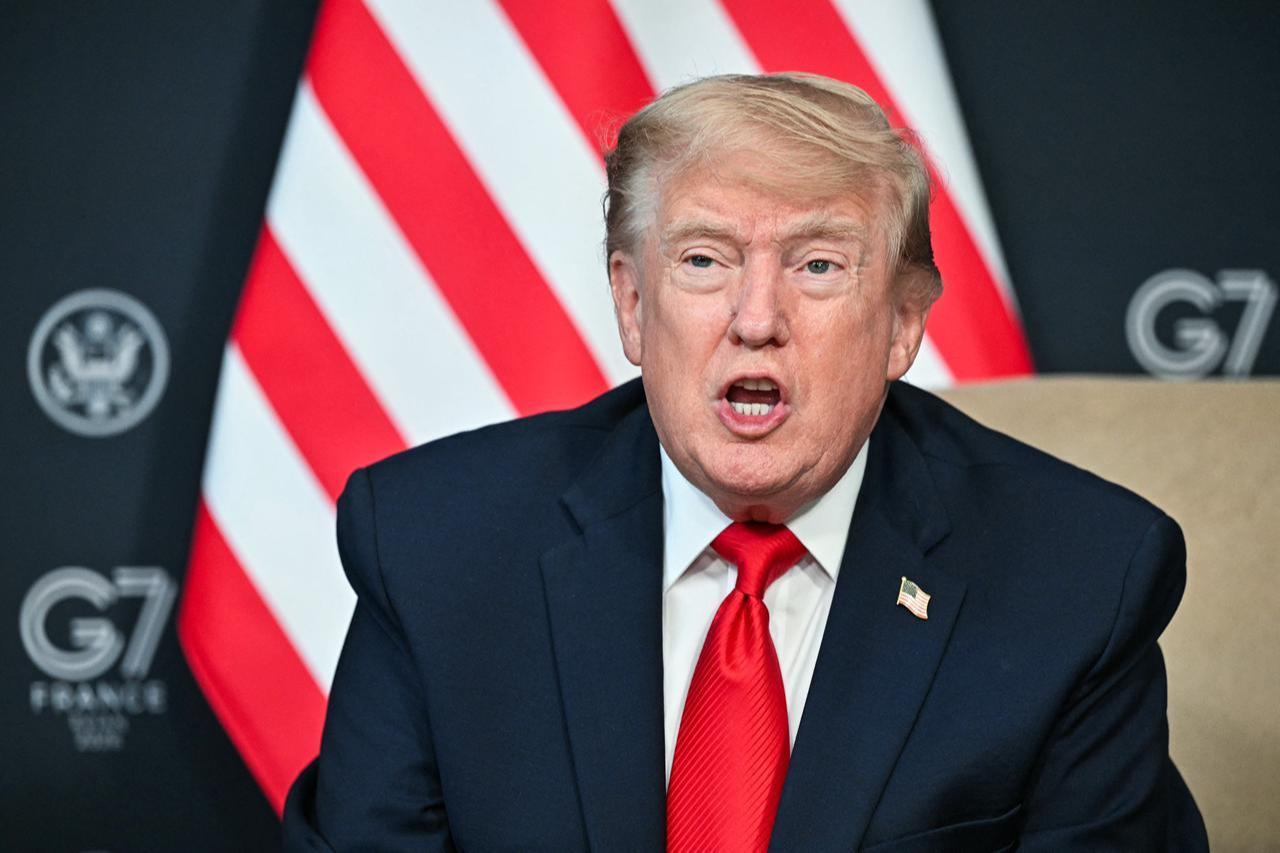
Trump struck his most pointed tone yet regarding Netanyahu, stopping just short of expressing frustration while making clear that Israeli actions in Lebanon had complicated his diplomacy.
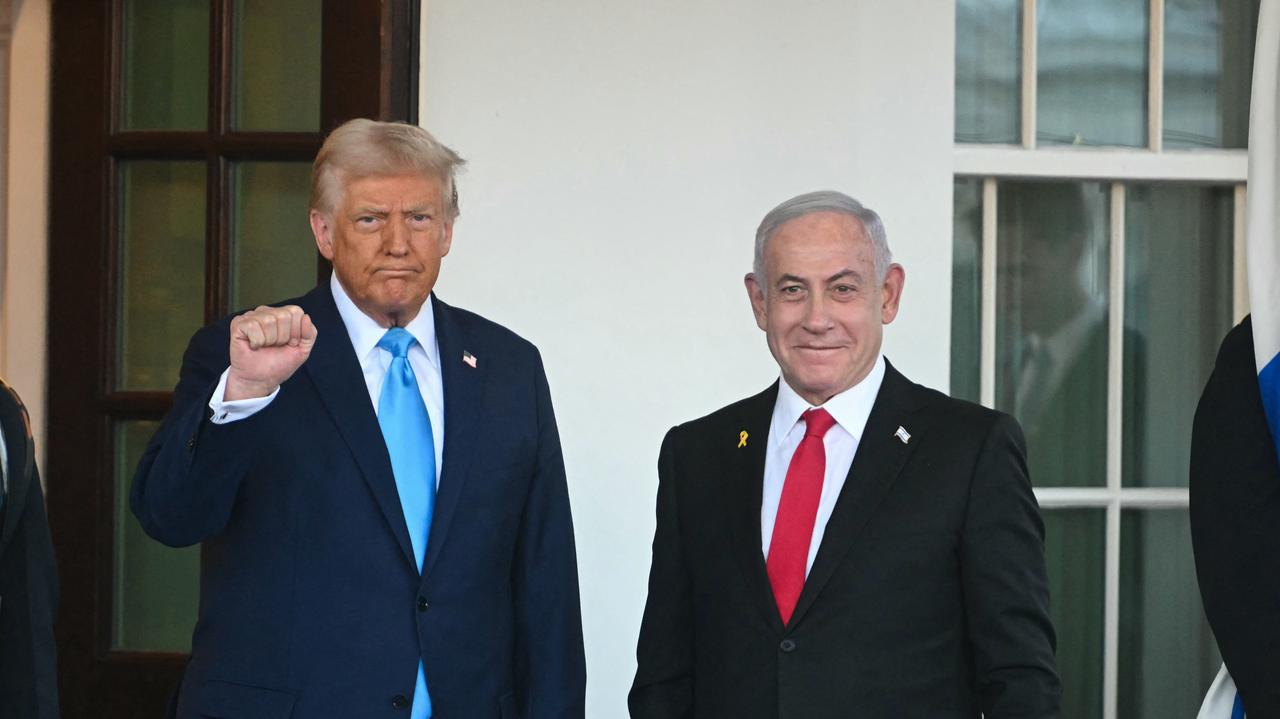
"Without the United States, there would be no Israel. Without me, there would be no Israel, because no other president was willing to do what I did. I've had a great relationship with Bibi, but now Bibi has to be more responsible with respect to Lebanon," Trump said. He added that he was "not happy with the way Israel has handled themselves with Lebanon and with Hezbollah" and that they "should have been able to deal with them faster."
On an Israeli airstrike against Beirut's Dahiyeh suburb conducted hours before the deal was announced on Sunday, which nearly derailed the negotiations, Trump said: "I didn't like that he did an attack. That was too much."
He added: "Israel's fighting Hezbollah too long and too many people are being killed. You don't have to knock down an apartment house every time you're looking for somebody, because there are a lot of people in those apartment houses and they're not all Hezbollah."
He suggested Syria as an alternative solution to Hezbollah: "I suggest to Israel to let Syria take care of Hezbollah, to be honest with you, I think they do a better job."
He called Israel's Lebanon war "the minor war" and the Iran conflict "the big one," saying: "I consider that a little pinprick out there that constantly rears its head."
Netanyahu, responding separately on Monday, acknowledged the differences. "There are cases in which President Trump and I do not see eye to eye," he said.
"I am responsible for Israel's security interests, and it needs to be done wisely," Netanyahu said.
Trump addressed several other dimensions of his Iran policy. He denied that regime change had been a U.S. objective despite acknowledging that several senior Iranian leaders had been killed during the conflict.
"I don't believe in regime change. I've watched regime changes for years, they never work," he said.
He had, however, told Iranians at the start of the war to "take over your government."
He described the 2015 Obama-era Joint Comprehensive Plan of Action (JCPOA) as "a road to a nuclear weapon" and "the dumbest deal I've ever seen other than NAFTA," saying Iran would have had a nuclear weapon "five years ago" had he not withdrawn from it during his first term.
Trump said he wanted Iran to become "a normal country" and indicated that the second phase of talks would determine whether that was achievable.
The Qatar emir closed by expressing confidence: "With this momentum, if we continue like that, Mr. President, we can do great in the region."


 Set as preferred source
 Set as preferred source


 6 min read