Newsletters


Iran is "begging" the United States for a deal but keeps breaking or changing every agreement it makes, U.S. Secretary of State Marco Rubio said Thursday, summarizing U.S. President Donald Trump's approach to Tehran in stark terms: "The president's policy is 'a head for an eye.'"
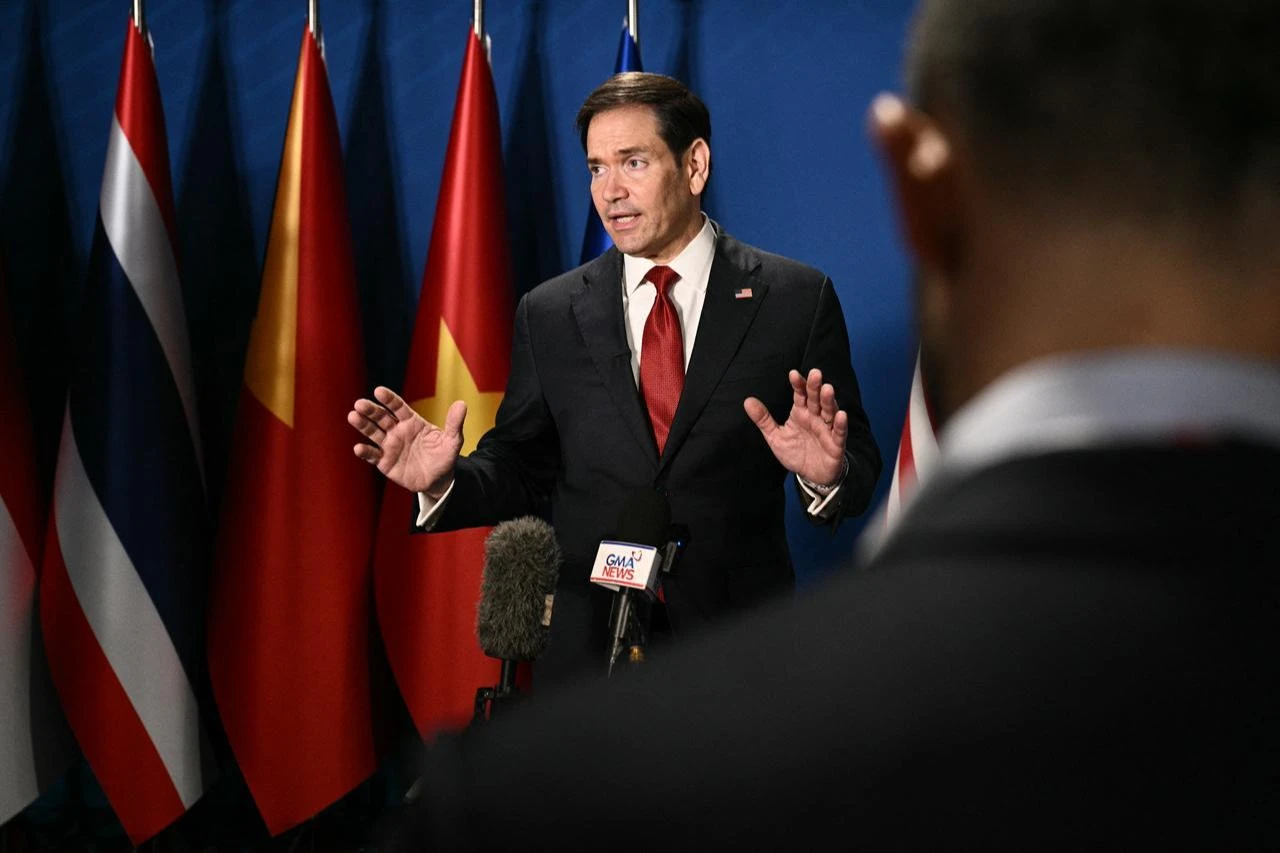
Speaking on the sidelines of the Association of Southeast Asian Nations (ASEAN) foreign ministers' meeting in Manila, Rubio also said Yemen's Houthi rebels had been "suckered" by Iran into attacking Saudi tankers in the Red Sea.
Meanwhile, Tehran's Foreign Ministry branded Trump's threat to bomb bridges and power plants "manifestly unlawful and criminal" and warned U.S. troops against obeying such orders.
Rubio was asked about Trump's threat to "bomb and destroy" a bridge or power plant every time Iran targets a ship in the Strait of Hormuz, and about Iranian Foreign Minister Abbas Araghchi's recent description of Iran's defense doctrine as "an eye for an eye."
"The president's policy is 'a head for an eye.' I mean, honestly, that's what it's going to be," Rubio told reporters.
"Iran is begging us, both directly and indirectly: 'Let's do a deal. Let's talk. Let's talk,'" Rubio said.
"The problem with Iran is every time they make a deal, the people who are in charge there, they either break it, or they want to change it. So it looks like they're not ready to make a deal, so they're going to continue to pay a price," he added.
"Every night the price gets higher and higher and higher," he said.
"Right now, apparently, they haven't come to their senses, and so the president doesn't see a lot of utility in responding to their overtures at this point, because frankly, Iran is clearly not ready to make a deal, at least, not one they're willing to live by," the top U.S. diplomat noted.
Rubio said Iran's defense industrial infrastructure has been "flattened," with launch ramps and radars lost nightly and billions of dollars in damage to a "disastrous" economy.
"There's no country left to send messages to," he said of Tehran's outreach through third countries. Asked whether Washington seeks regime change in Iran, Rubio replied: "We want to denuclearize Iran."
Asked about further U.S. escalation, he said: "That's the president's decision to make."

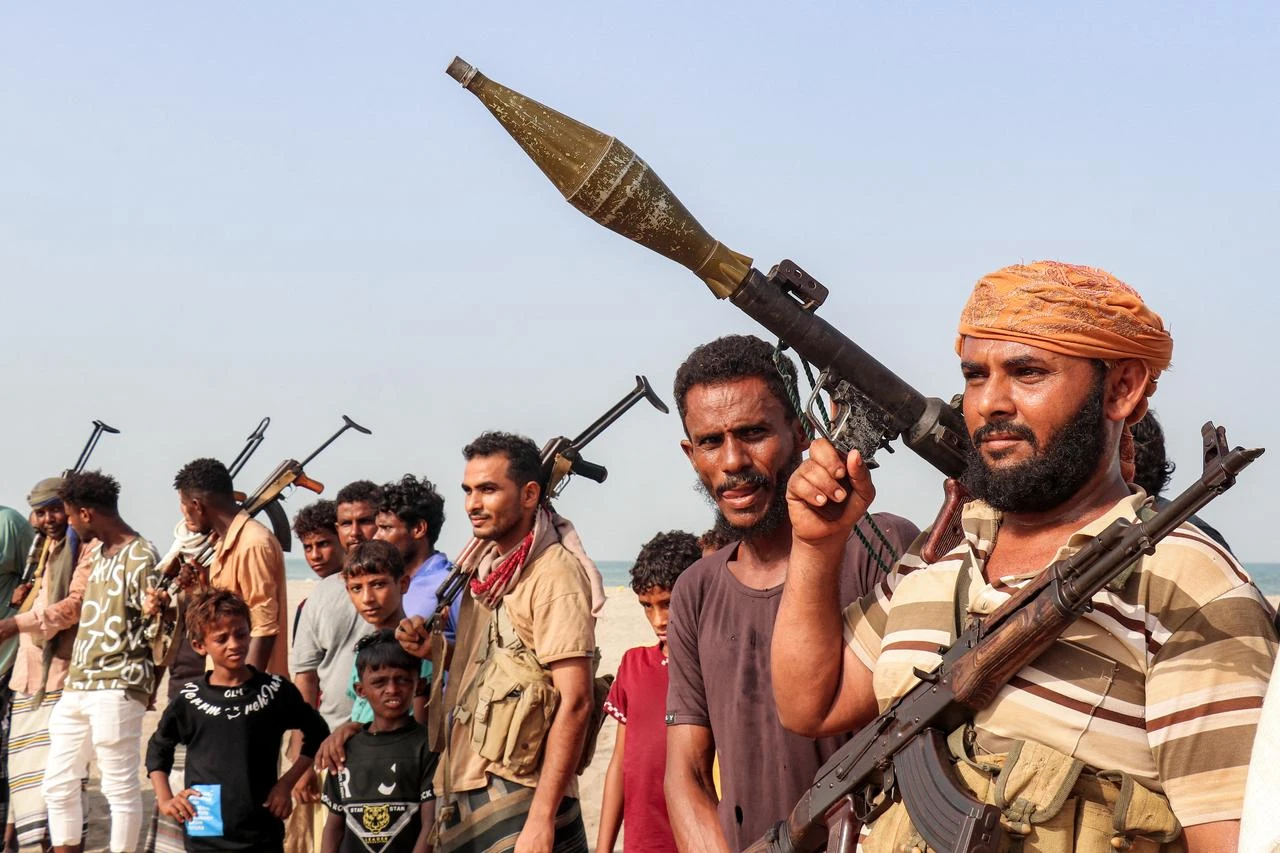
Rubio addressed the Houthis' attack on two Saudi oil tankers in the Red Sea on Wednesday, marking the group's first strike on Saudi vessels since announcing a blockade against Saudi ports for allegedly violating their shipping restrictions.
"The Houthis largely were smart and stayed out of all this throughout the conflict, but they now apparently have gotten themselves suckered into this, going after Saudi Arabia and its ships," Rubio said.
"I hope they will de-escalate, because I think the Houthis, frankly, got snookered into this thing by the Iranians," he added.
"They should stay out of it, and they should stop. We'll see what happens there. Obviously, it's not a positive development," he said.
U.S. officials have said Iran wants to use the Houthis to open a new front in the Red Sea and pressure a second critical oil shipping route, with commercial vessels already diverting to avoid the Bab el-Mandeb Strait.
Iran's Foreign Ministry spokesman Esmaeil Baghaei responded to Trump's infrastructure threats by invoking both international humanitarian law and U.S. domestic law, directly addressing American service members.
"A policy that calls for the destruction of bridges and power plants is manifestly unlawful and criminal. It constitutes reprisal and collective punishment," Baghaei wrote on X, saying both are prohibited as war crimes under international humanitarian law and the U.S. War Crimes Act, with no statute of limitations.
Citing superior orders "does not absolve the perpetrators of criminal liability," he said, adding that the Uniform Code of Military Justice and the Pentagon's Law of War Manual make clear that service members have "both a legal and moral duty to refuse manifestly unlawful orders."
"The U.S. ruling establishment intends to sacrifice whatever remains of international humanitarian law and the foundations of human ethics and civilization to its insatiable appetite for war and slaughter," Baghaei said.
"Iran stands firm and resolute against lawlessness and the flouting of the law," he concluded.
Rubio also rejected concerns that the newly signed U.S.-Saudi civil nuclear agreement could fuel proliferation.
"Any agreement that we're going to make with any country in the world on civil nuclear energy is going to be one that will have safeguards in place to ensure that it can't be turned into a weapons program," he said, adding, "Saudi Arabia seeks to have a peaceful, civil nuclear program," and noting a similar deal with the United Arab Emirates (UAE).
Rubio repeated U.S. claims that Iran intended to double its stockpile to build a nuclear weapon, praising Trump for doing what "other presidents should have done earlier" and saying the world is a "safer place" for confronting Iran despite short-term global disruptions.
The exchange of fire between Iran and the U.S. has continued despite a Pakistani-mediated Memorandum of Understanding (MoU) signed last month to end the war that began in late February, with tensions reigniting over the Strait of Hormuz.


 Set as preferred source
 Set as preferred source



 3 min read