Newsletters


The Iranian military announced Friday that its navy fired missile and drone warning shots toward two U.S. destroyers operating in the Sea of Oman.
It claimed the American vessels subsequently withdrew toward the Indian Ocean, marking the latest escalation between the two nations despite a ceasefire remaining nominally in place.
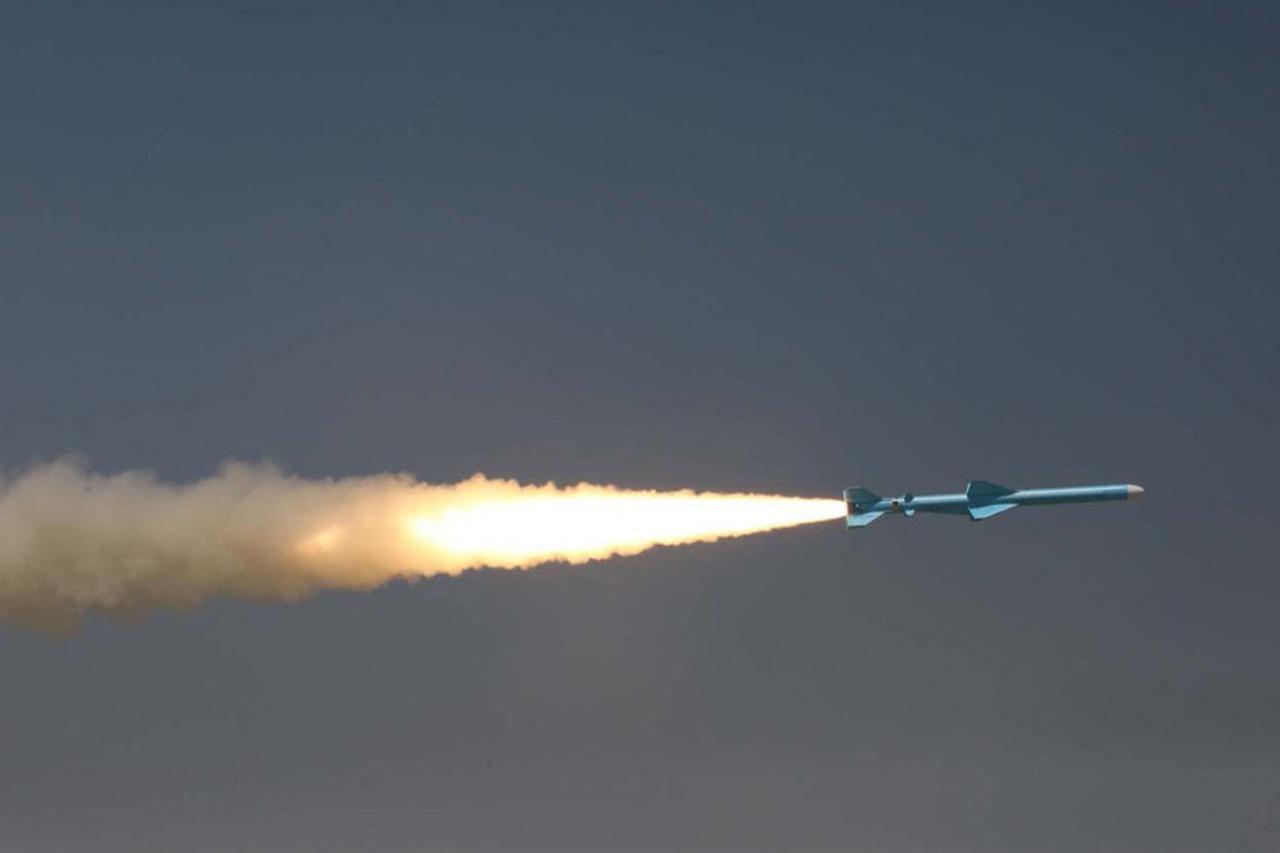
Iranian army's public relations office stated that following the warning shots using Qadir cruise missiles and new Shahid Dana offensive drones launched by the Islamic Republic of Iran Army Navy, U.S. destroyers DDG-103 and DDG-87 left the Oman Sea toward the Indian Ocean.
The statement said the two destroyers were part of the George W. Bush carrier strike group. It also claimed that the U.S.S. Tripoli, described as an amphibious assault ship, was similarly forced to leave the Oman Sea following these and previous days' operations.
Iran's Navy Operations Command and Control Center warned that if needed, longer-range missiles would also be deployed.
"Despite the expansion and distancing of the enemy's ships from the range of the missiles used, if necessary, this force's missiles with a greater range will be used," the statement said.
The statement, reported by Fars News Agency, framed the operation as a continuation of efforts to counter what it described as U.S. naval interference with commercial and oil tanker traffic in the region.

The naval confrontation came as Iranian Foreign Minister Abbas Araghchi said U.S. bases used for aggression against Iran were "legitimate targets," in comments carried by state-run Islamic Republic of Iran Broadcasting.
Araghchi said Tehran had warned regional states of this policy.
"Standing against the world's greatest power, equipped with nuclear weapons, for 40 days is no joke," Araghchi said, adding, "The world realized the true power of the Iranian nation."
Araghchi also said Iran was "committed to fostering sustainable, constructive ties with Saudi Arabia."
Earlier this week, Araghchi said Iranian strikes on U.S. bases were "self-defense."
Recent days have seen reciprocal strikes between the U.S. and Iran despite the ceasefire. Neither side has declared the ceasefire formally over, but both have accused the other of violations.
Regional tensions escalated after the U.S. and Israel launched airstrikes on Iran, triggering a cycle of retaliatory attacks that widened instability across the region.
Iran, in retaliation, subsequently launched strikes against Israel and targeted countries hosting U.S. military bases, while also disrupting shipping through the Strait of Hormuz, a critical route for global energy supplies.
A ceasefire later took effect, though diplomatic efforts to secure a broader agreement continue.


 Set as preferred source
 Set as preferred source


 1 min read



 1 min read