Newsletters


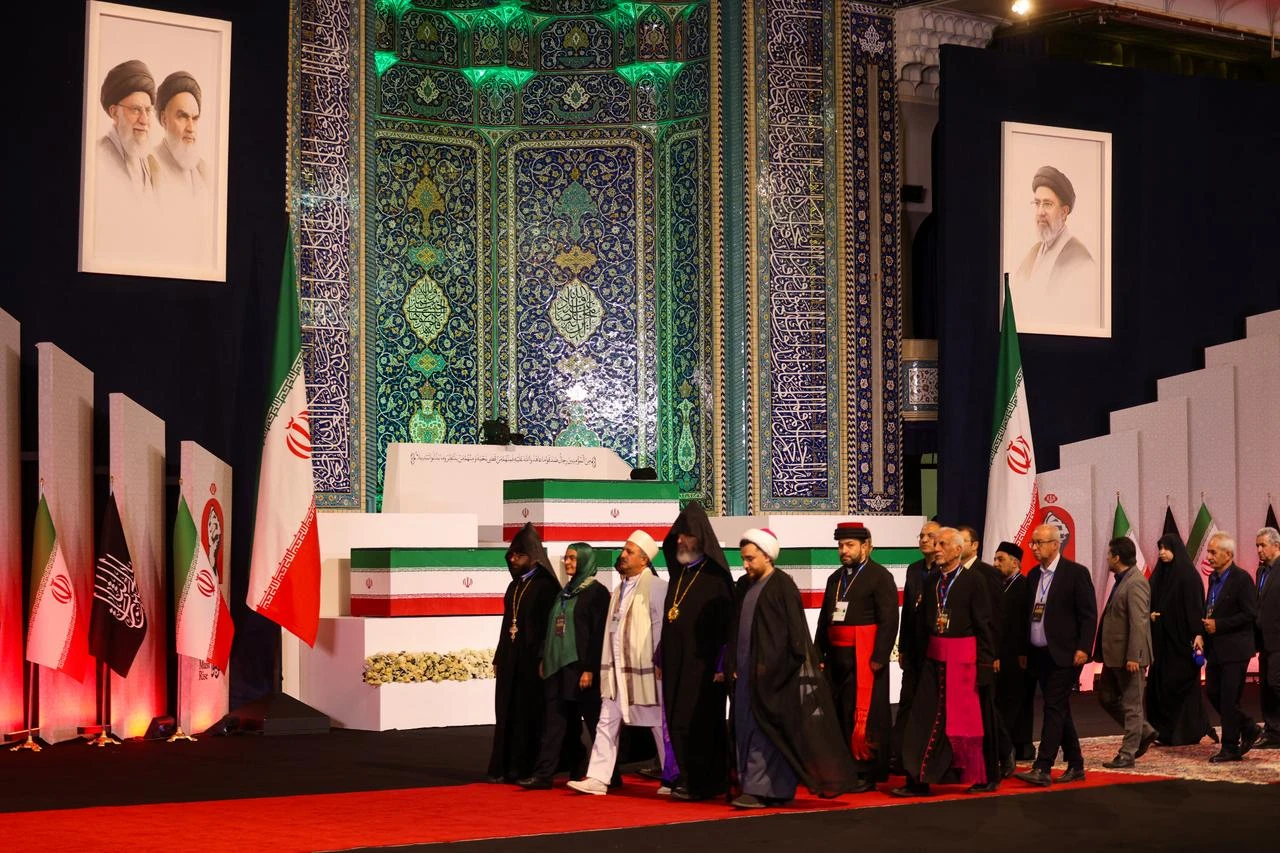


Top Iranian officials paid their final respects Friday to slain Supreme Leader Ali Khamenei as a week of funeral ceremonies began in Tehran, where mourners and foreign delegations gathered ahead of his burial next week.
Khamenei was killed at age 86 at his compound in the opening U.S.-Israeli salvo of the Middle East war four months ago. His body is lying in state at the Grand Mosalla religious complex in the Iranian capital.
Authorities expect public mourning and large funeral processions to draw millions before Khamenei is buried next week.
Agence France-Presse (AFP) images showed mourners carrying his coffin at the vast religious complex, with the casket draped in the colors of the Islamic republic he led for more than three decades.
State TV broadcast footage of Iranian President Masoud Pezeshkian paying his respects at Khamenei's coffin Friday afternoon, alongside parliament speaker and chief negotiator Mohammad Bagher Ghalibaf.
Ahmad Vahidi, head of the Revolutionary Guards, also made his first appearance since the start of the war in February.
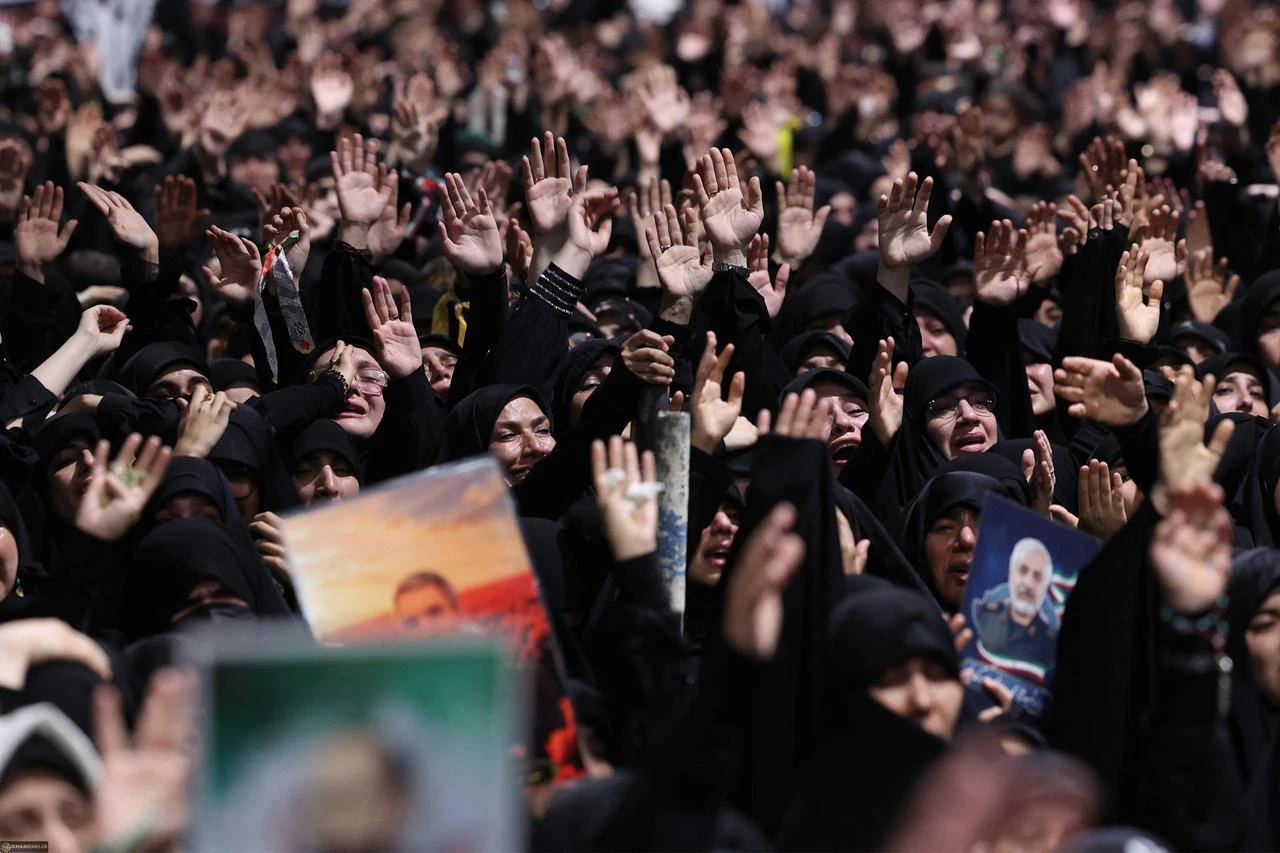

Pakistani Prime Minister Shehbaz Sharif, whose country has been mediating between Iran and the U.S. to end the Middle East war, also paid his respects.
Russian former President Dmitry Medvedev and the foreign minister of Afghanistan's Taliban government attended, while delegations from Palestinian militant group Hamas and Lebanese militant group Hezbollah also joined the mourning.
Representatives from around 30 countries are expected to attend the funeral. Other allies, including China and Iran's neighbors in the Caucasus region, said they would send representatives.
A public ceremony is set to begin Saturday.
The city was preparing to receive large numbers of visitors for the funeral ceremonies.
Ezzat Shoai, a 61-year-old teacher, told AFP that her neighborhood had "prepared our houses to welcome those who come from outside the capital."
"God willing... we will go together to say goodbye to our dear leader," she said.
Ghalibaf on Thursday called on "all the Iranian people" to take part in the ceremonies.
He urged people "to write a glorious page in the history of Islamic Iran through your presence."
"The nation's call for vengeance must ring in the ears of the whole world," Ghalibaf said in a statement.
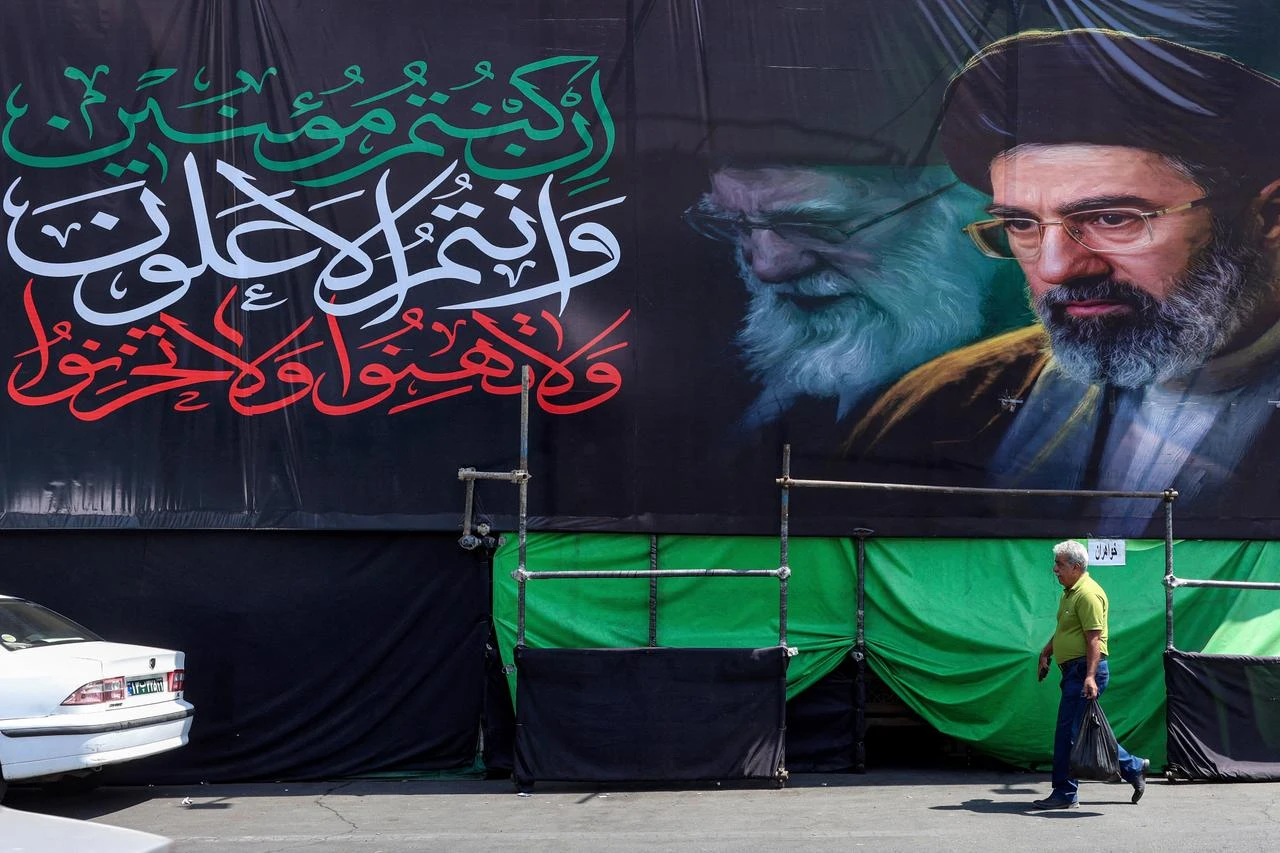
Security has been placed on high alert, while portraits and quotes of Khamenei have been displayed on the walls of the Grand Mosalla ahead of the funeral ceremonies.
Elsewhere in Tehran, a large park was turned into a camp, with hundreds of Red Crescent tents set up on the grounds.
Workers were also seen removing barriers from Azadi Avenue, a major route through which the funeral procession will pass Monday.
Tankers were stationed to spray water on roads to cool participants, while a model boat, a Shia symbol, draped in red flags, was also erected.
Khamenei will lie in state for three days, and the bodies of his slain relatives will also be present.
They will include his granddaughter, who was 14 months old according to official media. Her coffin was also covered with Iran's tricolour flag.
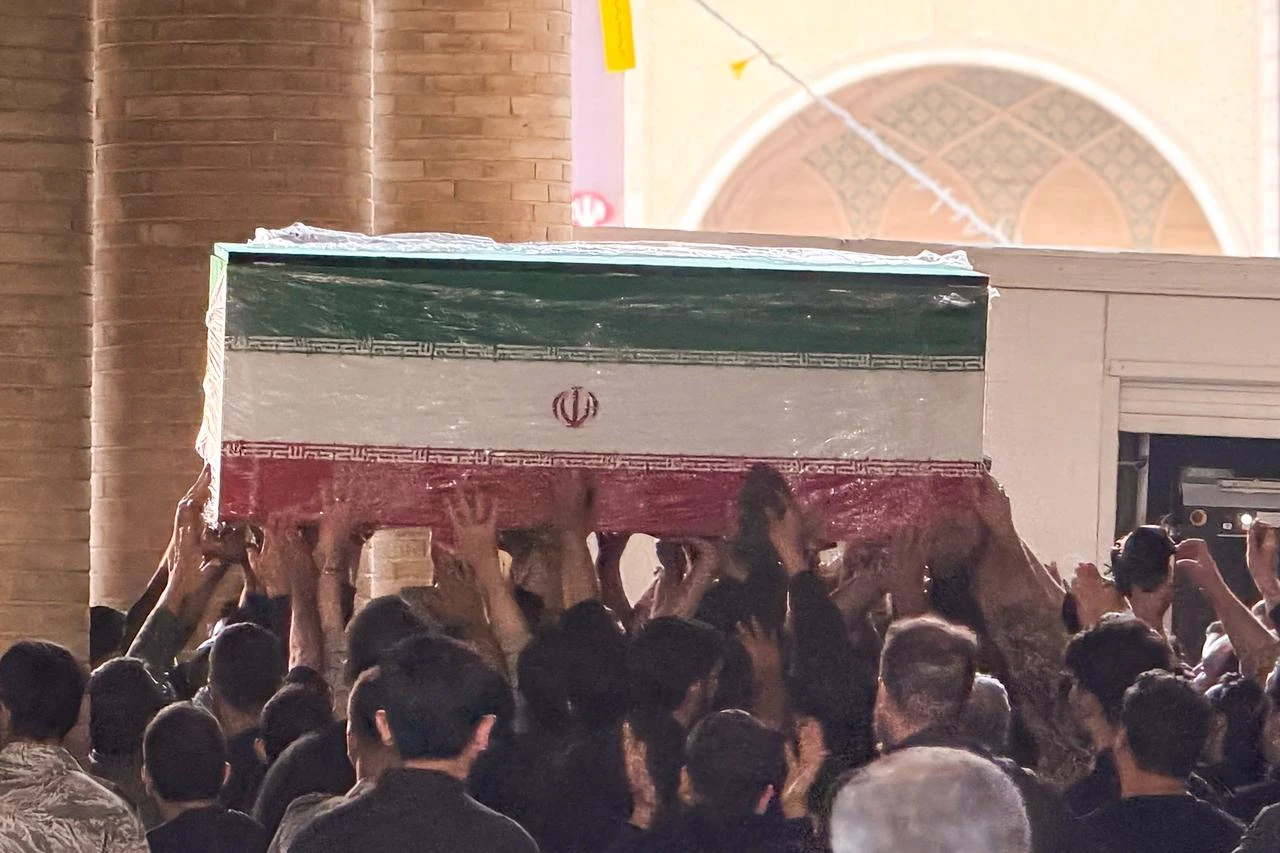
Tehran, along with the holy cities of Qom and Mashhad, will observe public holidays while the funeral and burial ceremonies take place.
Authorities ordered public and private offices in Tehran to close from Saturday through Monday. Traffic restrictions will also make much of the city center inaccessible to private vehicles.
The airspace over Tehran will be partially closed from Friday and fully closed Monday.
After the ceremonies in Tehran, Khamenei's body will be taken to the Iraqi holy cities of Najaf and Karbala.
He is set to be buried on July 9 at the shrine of Imam Reza in the northeastern Iranian city of Mashhad, his birthplace.
It remains unknown whether Khamenei's son and successor Mojtaba, who has not been seen in public since becoming supreme leader, will attend the main ceremony in Tehran.
Ahead of the ceremonies, AFP correspondents reported that Tehran was quieter than usual, with many normally busy streets free of the city's heavy traffic.
Some residents who spoke to AFP journalists based in Paris said they were leaving the city.
"The roads leading out of Tehran are packed," said Saeid, a 29-year-old tech worker.
"Many Tehran residents have already headed north, and I'm leaving too because staying in the city has become really difficult," he said.


 Set as preferred source
 Set as preferred source


 2 min read
 1 min read