Newsletters


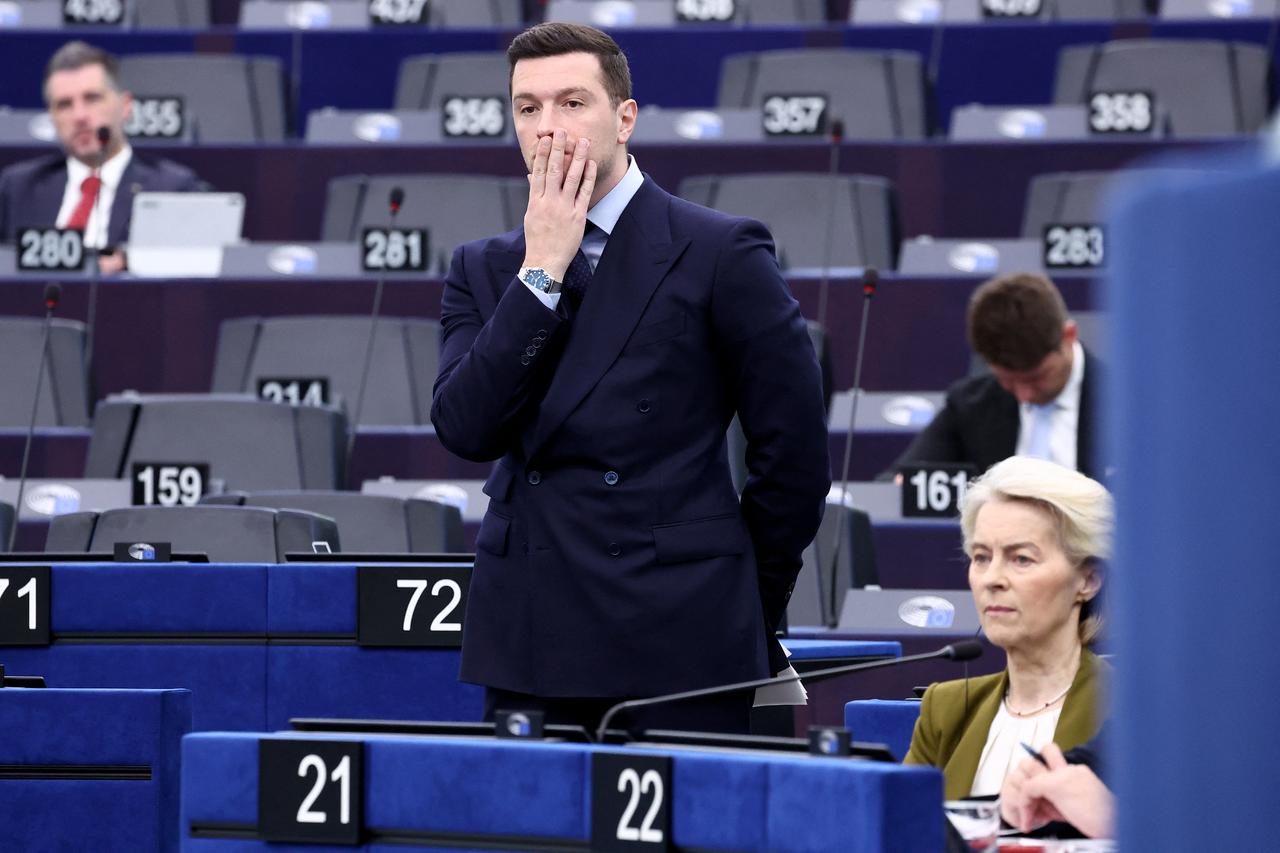


French far-right politician Jordan Bardella has a favorite story.
“I’m young; I grew up in the suburbs, in the Seine-Saint-Denis department. My mother lives in social housing in Saint-Denis. I represent modest origins and a strong social conscience,” Bardella repeats the line like a biblical verse.
Relatively unknown only a few years ago, Bardella has risen with remarkable speed to become one of the most prominent figures among French politicians.
At only 30, he is now the head of the French far-right political party National Rally, a position he reached less than 15 years after entering politics.
The young politician presents himself as an exception, having fought against social strings, proved himself to be at the top, and earned his spot through merit alone.
But how can one differentiate between a constructed narrative and the hidden truth
Bardella was born in 1995 in Seine-Saint-Denis.
He grew up with a single mother in an environment described by him as “violent” and plagued by drugs. But listening to his political speeches, the lack of information about his father hints at a rather different reality.
His childhood was, in fact, divided between his mother’s apartment and his dad's. The apartment was located in a well-off neighborhood in the city of Montmorency in the northern suburbs of Paris.
His father, who ran a drink distribution business, bought him a smart car at 19 and took him on a long trip to the United States when he was a teenager. The young boy also attended mostly Catholic private schools.
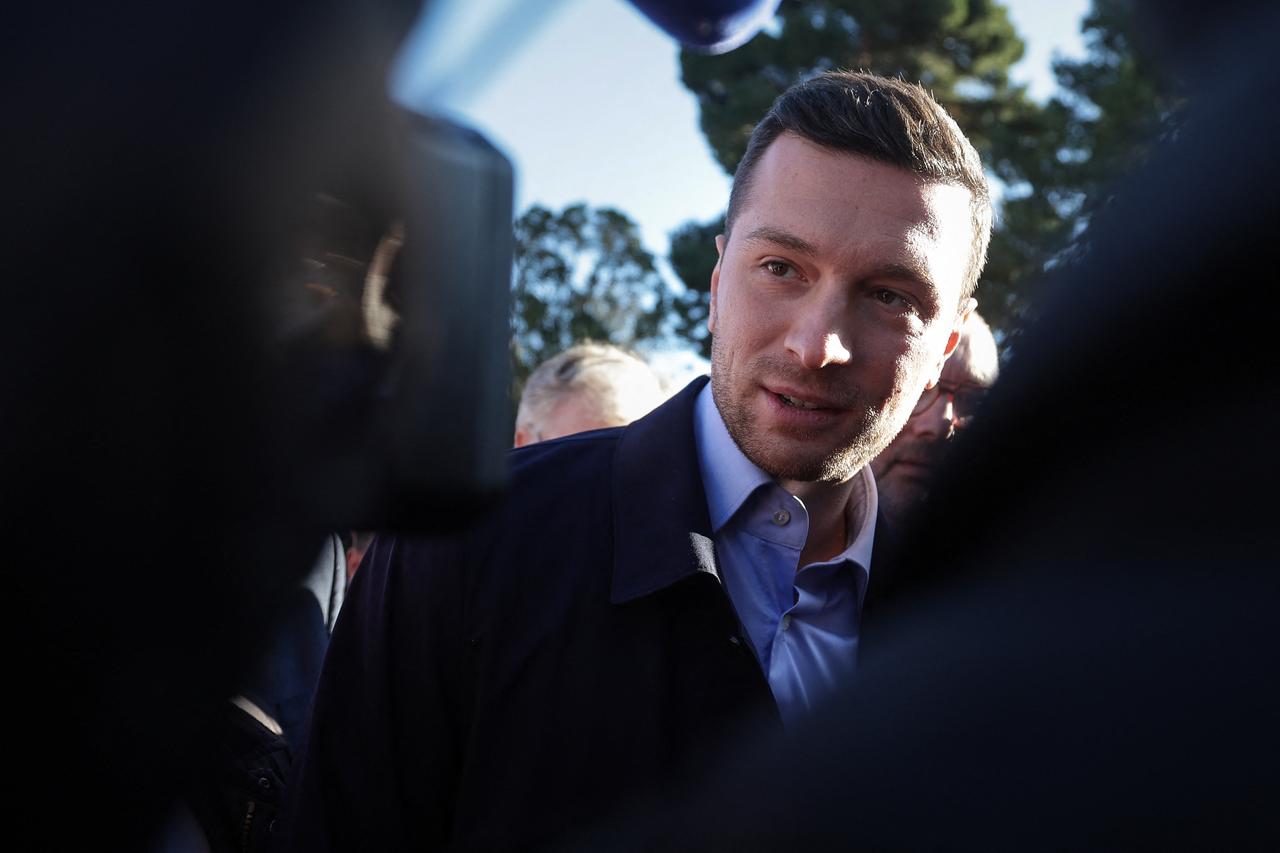

Bardella’s paternal grandmother, Rejane Mada, was the daughter of Mohand Seghir Mada, a man born in the Kabyle village of Guendouz in the early 20th century who migrated to France in the 1930s to work in construction.
This connection places part of Bardella’s background within North African history. The immigrant community is often targeted by the party as Islamic and struggling with integration and national identity.
This smooth, perfect image indeed serves the party. Bardella rapidly ascended through the ranks of the party; in 2017, he became the spokesperson; in 2018, he was nominated as director of the National Youth Front, and in 2022, he became the full head of the party.
Yet he did not finish his education, dropping out of his geography bachelor's at La Sorbonne to devote himself fully to political activism.
This rapid ascent showcases his usefulness as a symbol: young, media-savvy, and seemingly detached from the movement's controversial past.
In him, the Rassemblement National has found a figure capable of broadening its appeal, particularly among younger voters and sections of the popular classes.
While Marine Le Pen is undergoing a trial, her potential four-year election ban might put Bardella in the foreground for the next presidential election held in 2027.
His mastery of communication had already placed him at the top of the polls even before the trial.
Many on the left wing say that his youth and lack of experience are cause for concern. particularly given the prospect that he could one day seek the presidency.
However, the party is even using this as a political tool, arguing that much more than a negative aspect, it is an asset: “Try us out!” proclaims the party to convince the undecided.
Whether Bardella’s rise truly shows the perfect story of a self-made man, or instead a spoiled child whose destiny was already mapped out, is not the right question.
Perhaps the question is more about how political success depends on effective storytelling, media fluency, image management, and the selective shaping of personal history.
Yet dismissing youth or non-traditional trajectories as disqualifying would also carry a class bias of its own.
To suggest that only long institutional careers confer political legitimacy risks reinforcing the very hierarchies that populist movements claim to challenge.
Many political observers believe the upcoming presidential election isn't just about policy; it's about who tells the best story.
While Cécile Alduy, a Stanford professor who studies Bardella’s speeches, notes that his talking points closely mirror those of Marine Le Pen, the former leader of the National Rally party, and Jean-Marie Le Pen, she says the real shift is stylistic. It's not about new ideas; it's about delivery.
Alduy points to a calmer, more polished tone that helps him win over voters while keeping the core message on immigration and identity intact.
For many experts, this shows how political communication is evolving in this day and age. It’s no longer just what you say, but how you say it.


 Set as preferred source
 Set as preferred source


 1 min read