Newsletters


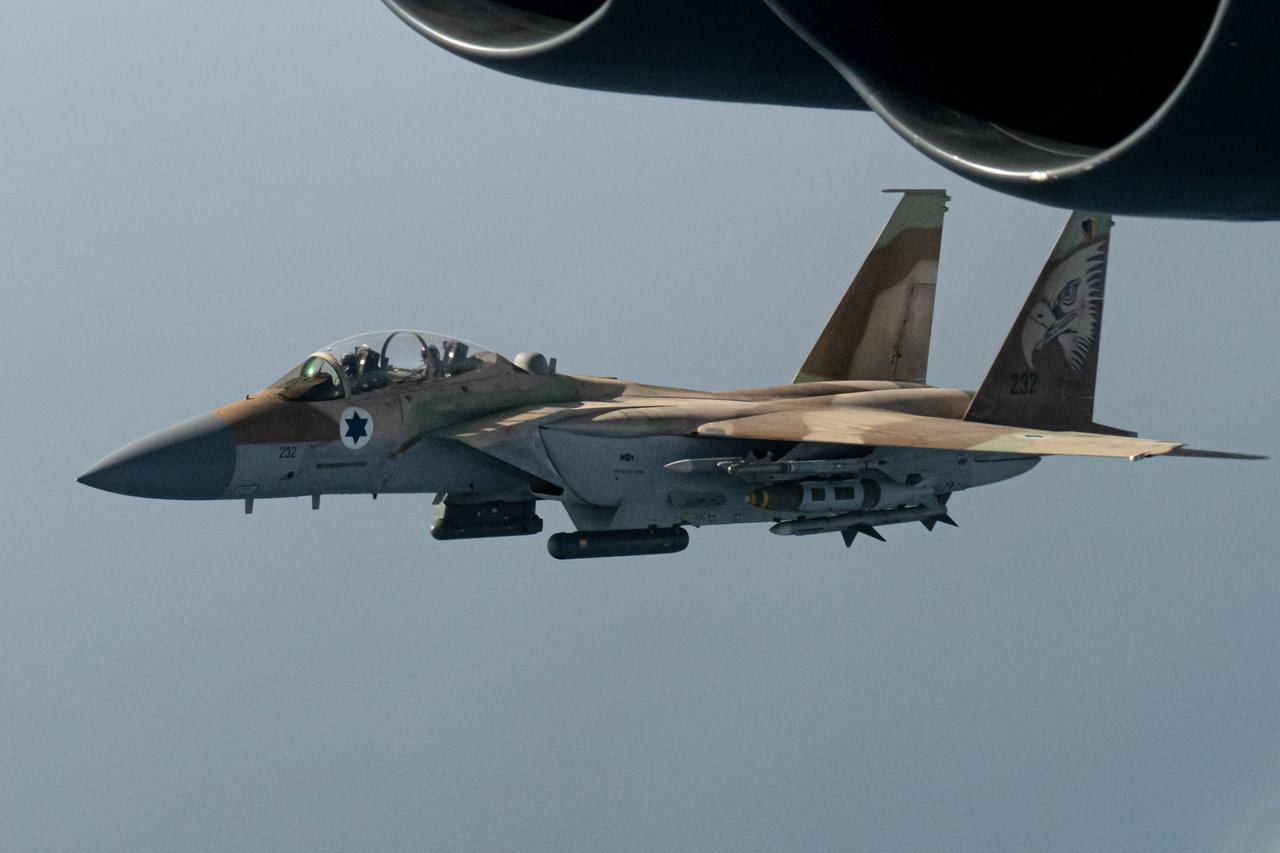


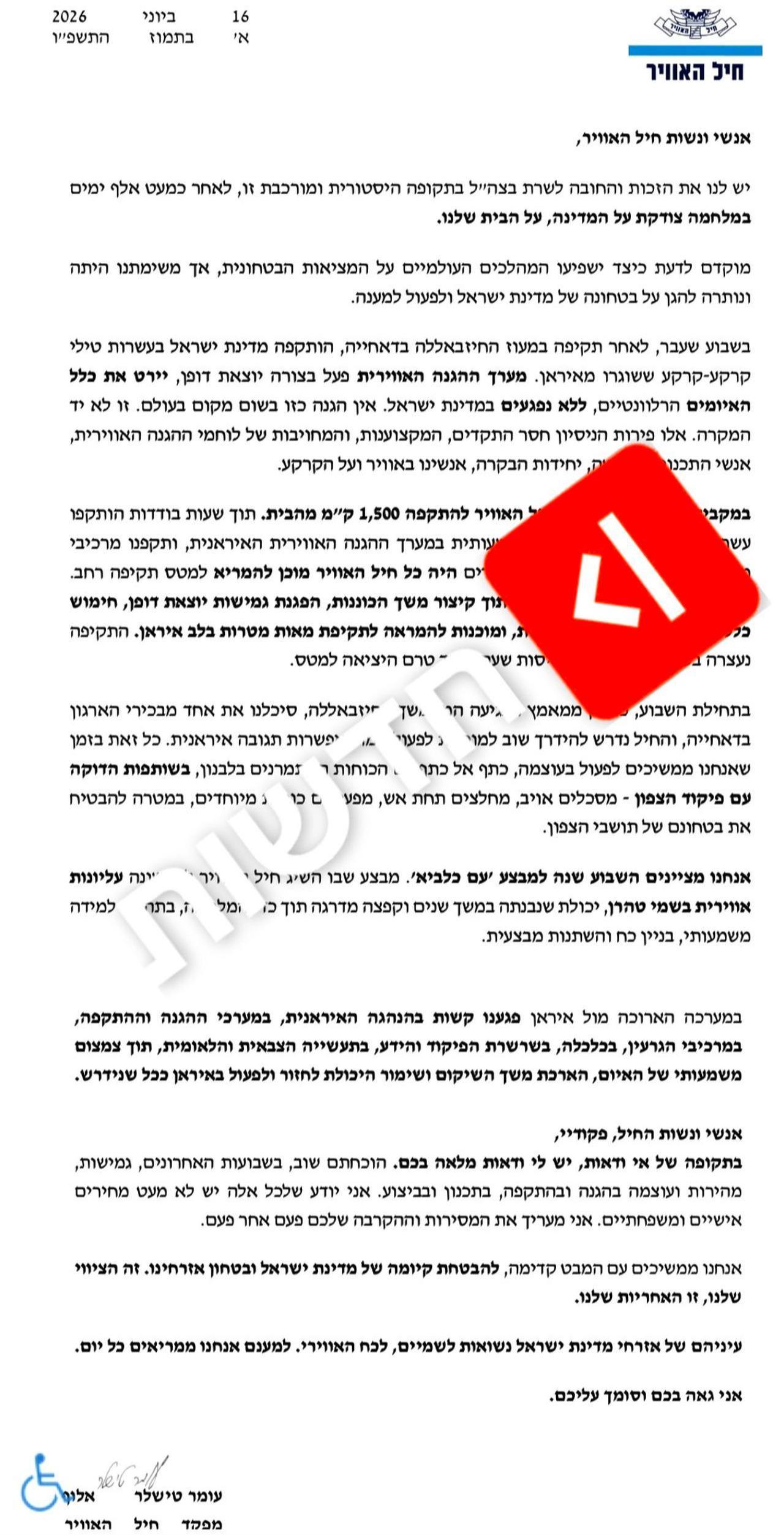
Israeli Air Force (IAF) Commander Major General Omer Tischler has confirmed in a letter to air force personnel and their families that a mass Israeli strike on Iran targeting hundreds of sites deep inside the country was halted on June 8.
The strike was called off just one hour before aircraft were due to depart, after U.S. President Donald Trump instructed Prime Minister Benjamin Netanyahu not to escalate Israel's conflict with Iran.
"The entire Air Force was ready to take off for a broad strike sortie," Tischler wrote in the letter, dated June 16 and published Tuesday.
"Just one hour before the departure for the sortie, while we were briefing the squadrons, the strike was halted," the Israeli official added.
Tischler confirmed the operation would have struck "hundreds of targets in the heart of Iran."
The letter, addressed to "men and women of the Air Force," represents the most authoritative Israeli confirmation to date of both the scale of the planned operation and the circumstances of its cancellation.

In the days before the cancellation, the IAF had already conducted limited strikes on Iran in response to Iranian missile fire on Israel.
Tischler described those operations in the letter.
"In parallel with the defensive battle, the IAF launched an offensive 1,500 kilometers from home. Within a few hours, dozens of targets in Iran were struck, significantly damaging the Iranian air defense system and hitting additional regime components," he wrote.
But the larger planned wave was a different order of magnitude.
Tischler described the June 8 preparation in striking detail:
A senior Israeli official confirmed to Israeli media that Netanyahu halted the strikes "at Trump's request."
A second source cited by the Israeli media said, "Israel wanted to strike Iran as early as Thursday, but Trump pressured that it not happen, and it was called off."
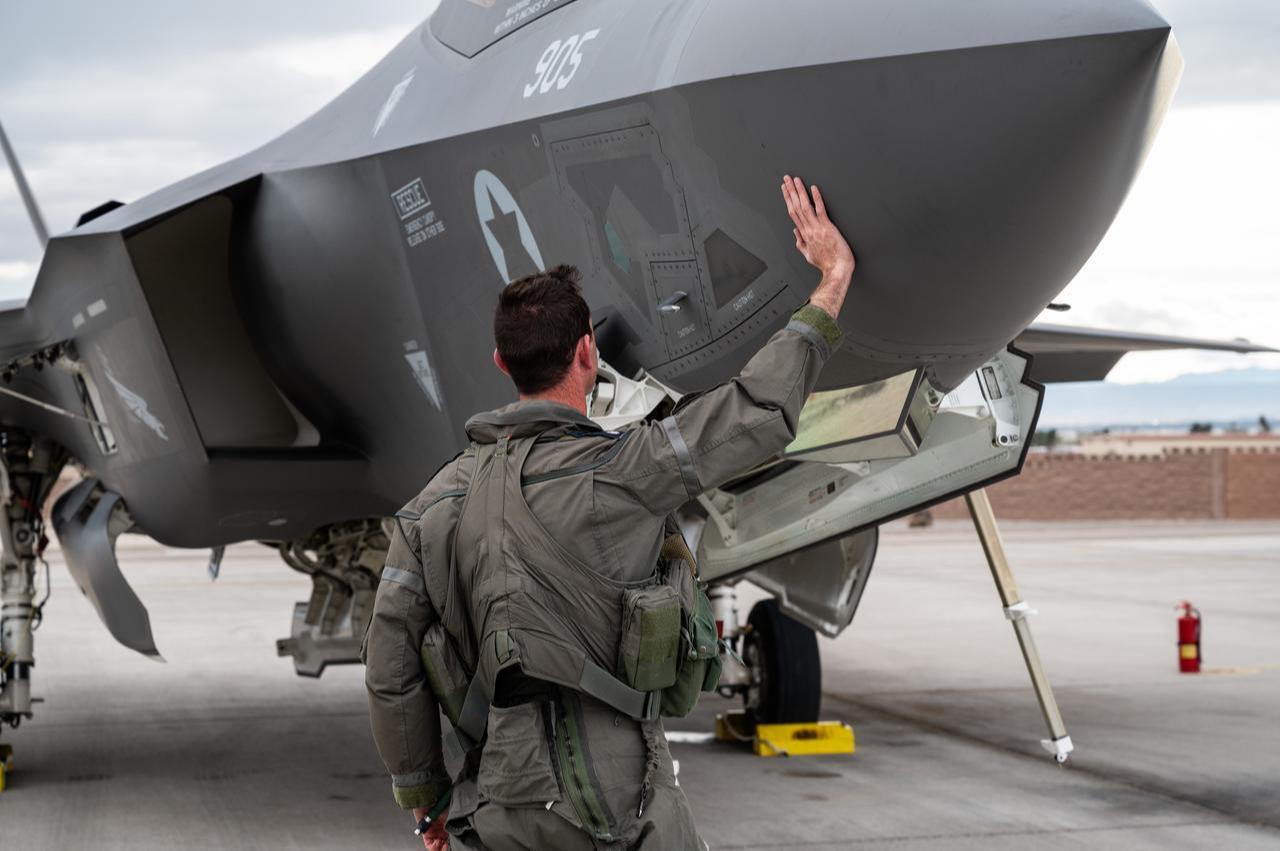
In his letter, Tischler framed the IAF's combined offensive and defensive performance during the recent exchange as historically significant.
He said the IAF had dealt a severe blow to Iranian leadership structures, defense and attack arrays, nuclear components, the chain of command and knowledge, military and national industry, while "significantly reducing the threat, extending the recovery period, and preserving the capability to return and operate in Iran as required."
On Israel's air defense performance against Iranian ballistic missile fire, Tischler was categorical: "The air defense system operated exceptionally, intercepting all relevant threats, with no casualties in the State of Israel. There is no such defense anywhere in the world."
Addressing the U.S.-Iran memorandum of understanding announced Sunday, Tischler acknowledged uncertainty about its strategic implications. "It is too early to know how the global moves will impact the security reality," he wrote, adding, "but our mission was and remains to defend the security of the State of Israel and to act on its behalf."


 Set as preferred source
 Set as preferred source


 4 min read