Sign in
 Newsletters





Talks between Israeli caretaker Prime Minister Benjamin Netanyahu and Prime Minister-designate Gadi Eisenkot ended without a breakthrough Sunday, with no further meetings planned between their parties as the deadline to form a new government approaches, Israeli media reported.
The two leaders met for approximately two hours at the Kirya military headquarters in Tel Aviv, where Eisenkot first received a security briefing before discussions turned to Netanyahu's proposal for a national unity government.
According to Israeli public broadcaster KAN, the meeting failed to produce an agreement on any of the major issues dividing Netanyahu's Likud party and Eisenkot's Yashar party.
In a joint statement following the meeting, the two parties acknowledged their differences but described the discussions as constructive.
"The discussion was businesslike, with both sides seeking to bridge the substantial differences between them," the statement said.
However, neither party announced a breakthrough or plans for another meeting.
Israeli Channel 12 reported that Eisenkot told Netanyahu he remained committed to his political allies and would not abandon efforts to form a government with the parties in his bloc.
"I'm committed to my partners in the bloc. You're welcome to join after the government is formed," Eisenkot reportedly told Netanyahu.
A spokesperson for Eisenkot confirmed the remarks, according to Reuters.
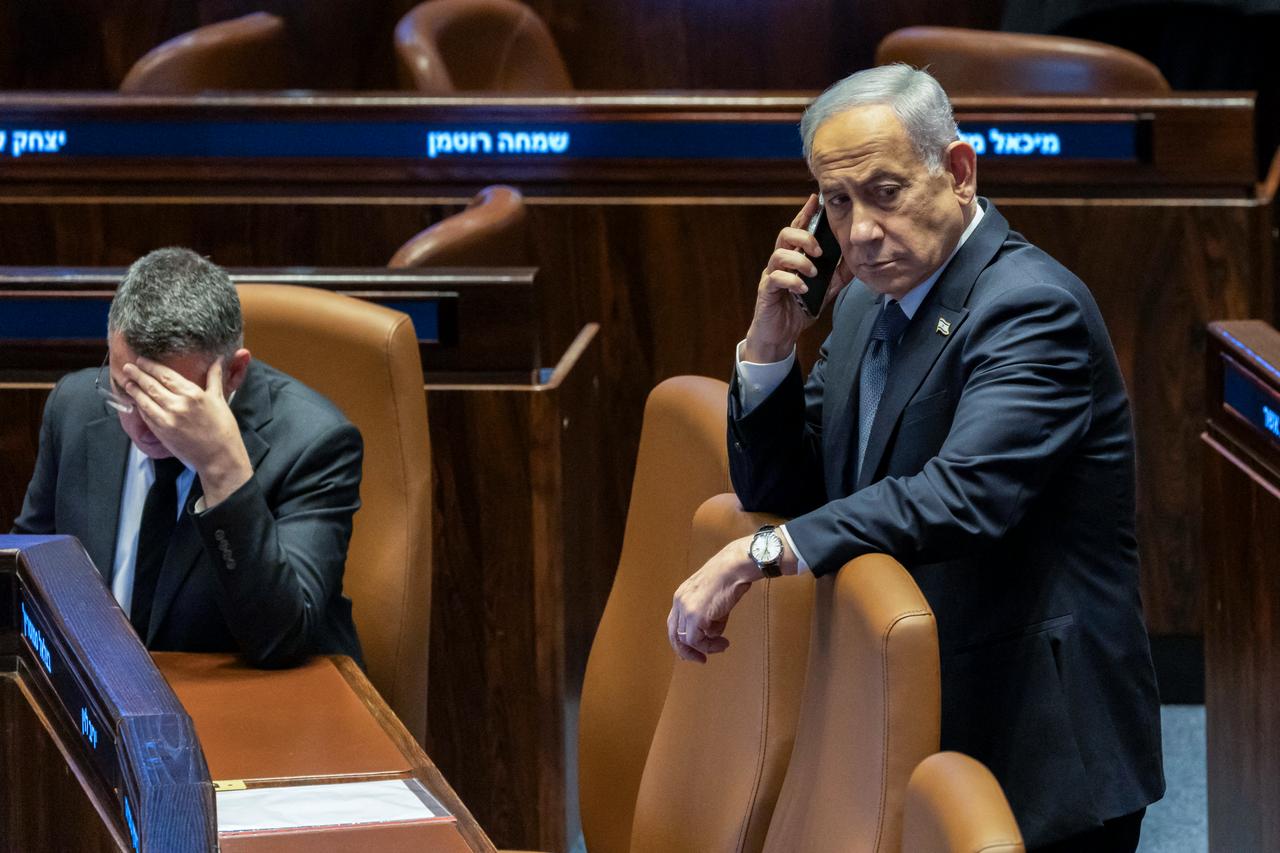

The meeting followed Netanyahu's announcement Saturday that he was willing to let Eisenkot serve first as prime minister under a proposed rotation agreement, with Netanyahu initially taking the position of alternate prime minister.
The offer marked an attempt to revive negotiations between Likud and Yashar after weeks of disagreements over the composition and policies of a potential unity government.
Eisenkot had challenged Netanyahu to demonstrate the seriousness of his proposal, saying Likud had failed to respond to a detailed framework he submitted through a private communication channel established at Netanyahu's request.
Despite Sunday's meeting, major differences remained unresolved.
Israeli media previously reported that Netanyahu wanted to remain in office temporarily before transferring power to Eisenkot, citing security concerns involving Iran.
Eisenkot was reportedly opposed to delaying the transfer of power.
According to Yedioth Ahronoth, Eisenkot has instead invited Likud and other parties to join a government after its formation, provided they accept its guiding principles.
With negotiations over a unity government stalled, Eisenkot is continuing parallel talks with parties seeking to replace Netanyahu's caretaker administration.
The Yashar leader was tasked with forming a government following Israel's inconclusive Oct. 27 parliamentary elections, which left neither major political bloc with a majority in the 120-member Knesset.
His broader bloc controls 48 seats, short of the 61 required for a majority.
Eisenkot has already reached coalition agreements with the Democrats, led by Yair Golan, and Avigdor Lieberman's Yisrael Beiteinu party.
Discussions are also continuing with former Prime Minister Naftali Bennett's Beyachad alliance and ultra-Orthodox parties.
Israeli Channel 12 reported progress in negotiations between Yashar and Bennett's alliance, although disagreements over military conscription legislation remain an obstacle to a final agreement.
Bennett has demanded a clear framework for ultra-Orthodox military service before signing a coalition deal.
Eisenkot could also seek parliamentary backing from Arab-majority parties, whose combined 19 seats could provide an alternative route to securing a majority.
However, his political partners remain divided over forming a government that depends on Arab-party support or entering a coalition with Netanyahu.
Eisenkot has until Dec. 6 to establish a government and may request a one-time 14-day extension from President Isaac Herzog.
He has previously pledged to form a government by the original deadline without seeking additional time.


 Set as preferred source
 Set as preferred source


 1 min read

 1 min read