Newsletters




U.S. President Donald Trump cast doubt Tuesday on the potential for a lasting agreement with Iran, saying any deal must address issues far beyond Tehran's nuclear program.
Meanwhile, Iran's top security official insisted talks would only succeed if they remained focused on nuclear matters.
Asked during a Fox Business interview if a new agreement with Iran "would ever really stick," Trump expressed uncertainty while maintaining that Iran is eager to negotiate.
"I don't know. I know one thing: they want to make a deal," Trump said, adding that "they wouldn't talk to anybody else, but they're talking to me."
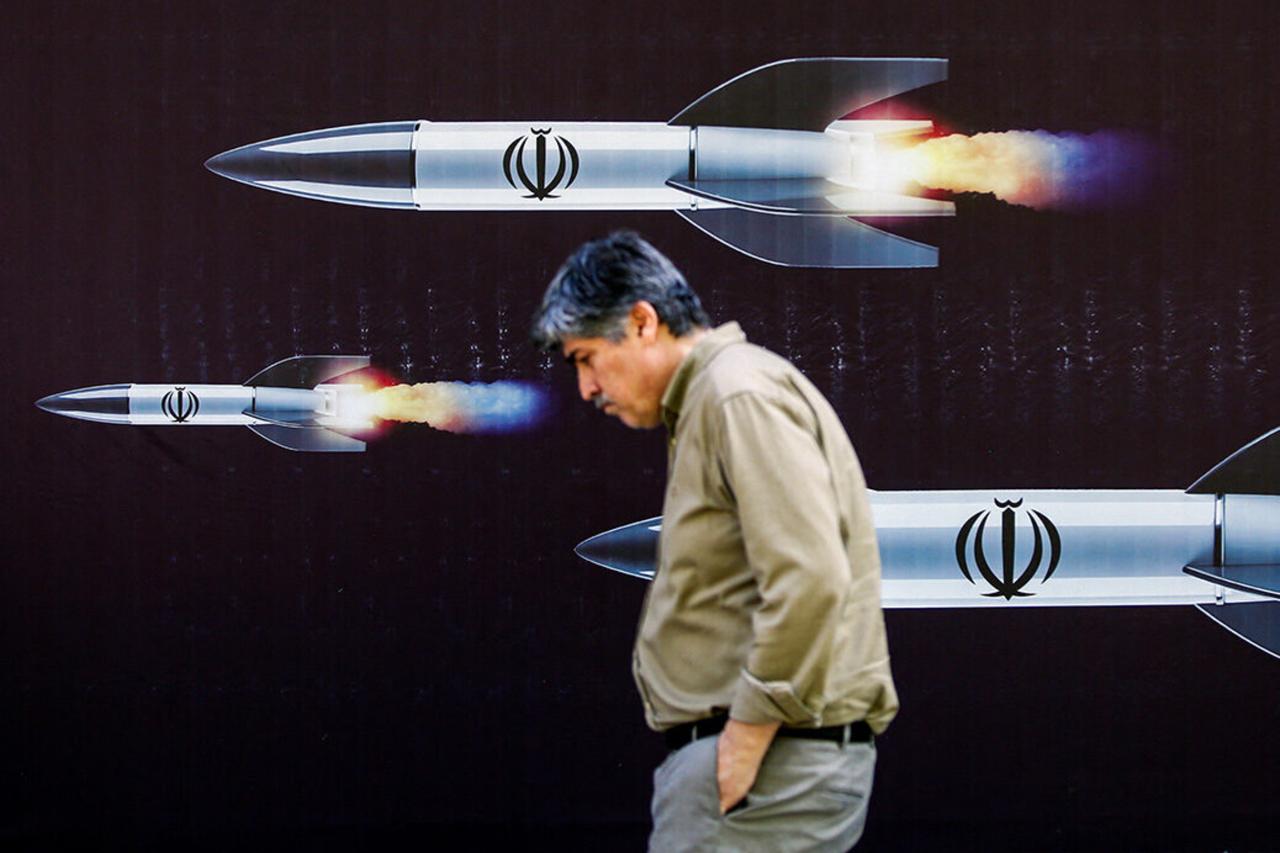
"It's got to be a good deal: no nuclear weapons, no missiles, no this, no that, all the different things that you want," the U.S. president said, signaling demands that extend well beyond nuclear issues to include Iran's ballistic missile program.
Trump criticized previous U.S. diplomacy with Tehran.
"Some people worry that they've been very dishonest with us over the years, right? Very dishonest. Obama and Biden—what they did in terms of creating a monster with Iran was terrible. That Iran nuclear deal was one of the dumbest deals I've ever seen," he said.

Iran's Supreme National Security Council Secretary Ali Larijani, speaking to Omani television during his visit to Muscat, said the American side has concluded that negotiations should focus solely on nuclear matters.
"The talks focus on the nuclear issue, and the American side has concluded that the talks should be conducted around the nuclear issue. We did not hold any talks on other issues. Therefore, the framework of the talks has focused on the nuclear issue," Larijani said.
He expressed optimism that an agreement could be reached under these conditions.
"In my opinion, this problem can be solved. If the Americans' concern is that Iran should not move toward acquiring nuclear weapons, this can be resolved. But if issues beyond this are included in the negotiations, the process will face difficulties," Larijani said.
He noted a shift in the U.S. approach: "Currently, the American side is thinking more realistically. In the past, they linked military and missile issues to the nuclear file, but now they are only talking about the nuclear issue, which is a rational approach. Military issues have nothing to do with the nuclear file."
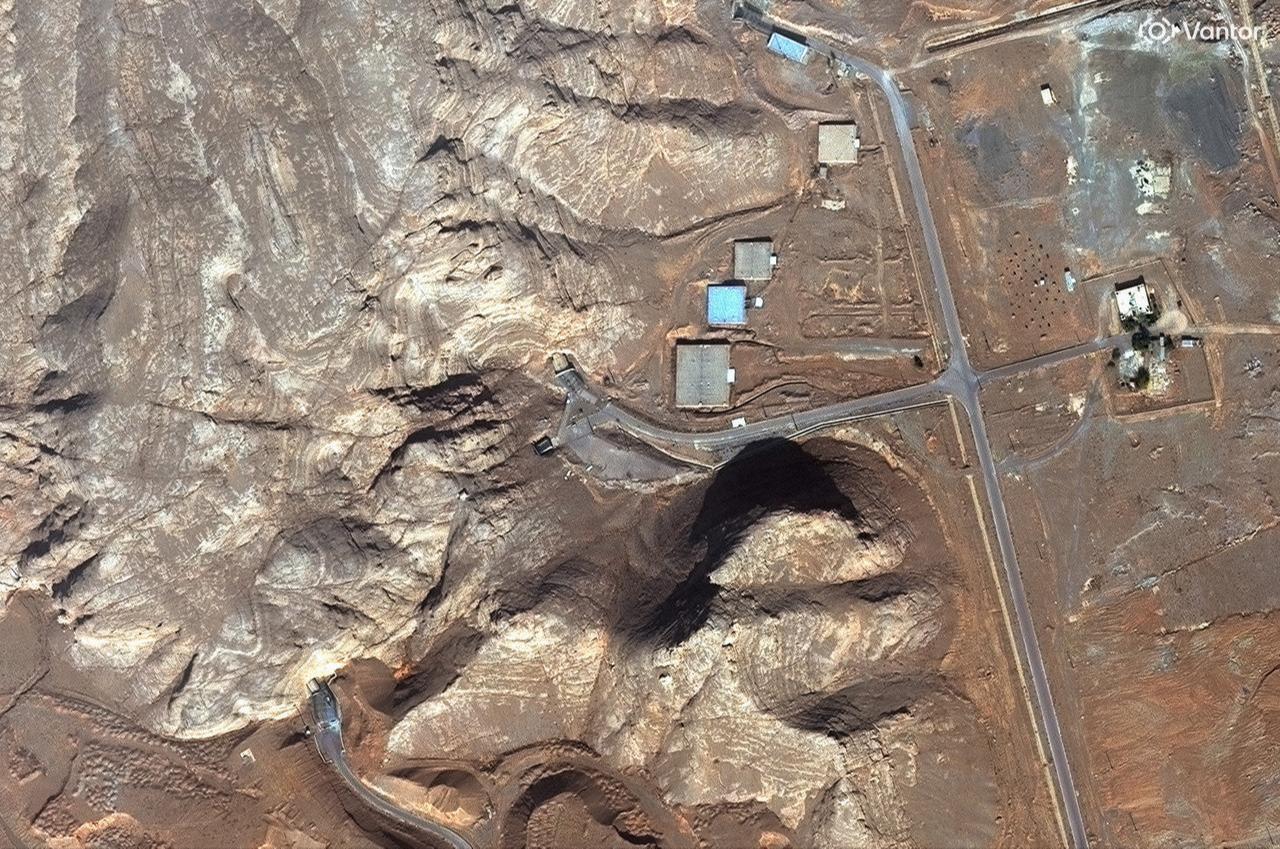
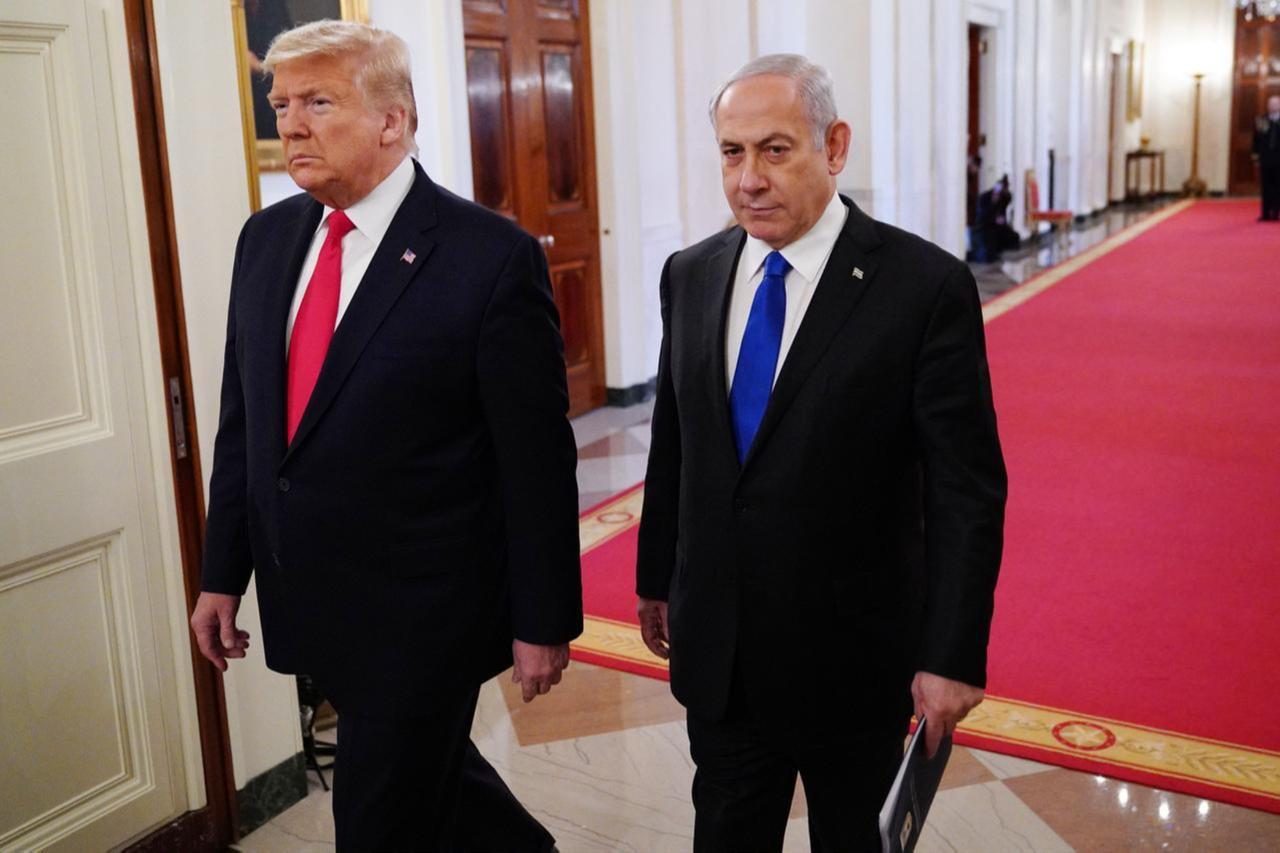
Israeli Prime Minister Benjamin Netanyahu met with Trump at the White House on Wednesday, pushing for a tougher stance in nuclear talks with Iran.
Trump said on the eve of the hastily arranged meeting that he was weighing sending a second U.S. "armada" to the Middle East to pressure Tehran to reach a deal.
Netanyahu, making his sixth visit to the United States since Trump took office, urged the president to take a harder line on Iran's ballistic missile program — precisely the issue Larijani said it should remain outside negotiations.
The Israeli leader had been expected to visit Washington on Feb. 19 for Trump's "Board of Peace" summit on Gaza, but reportedly brought forward his visit as U.S.-Iran talks proceeded.
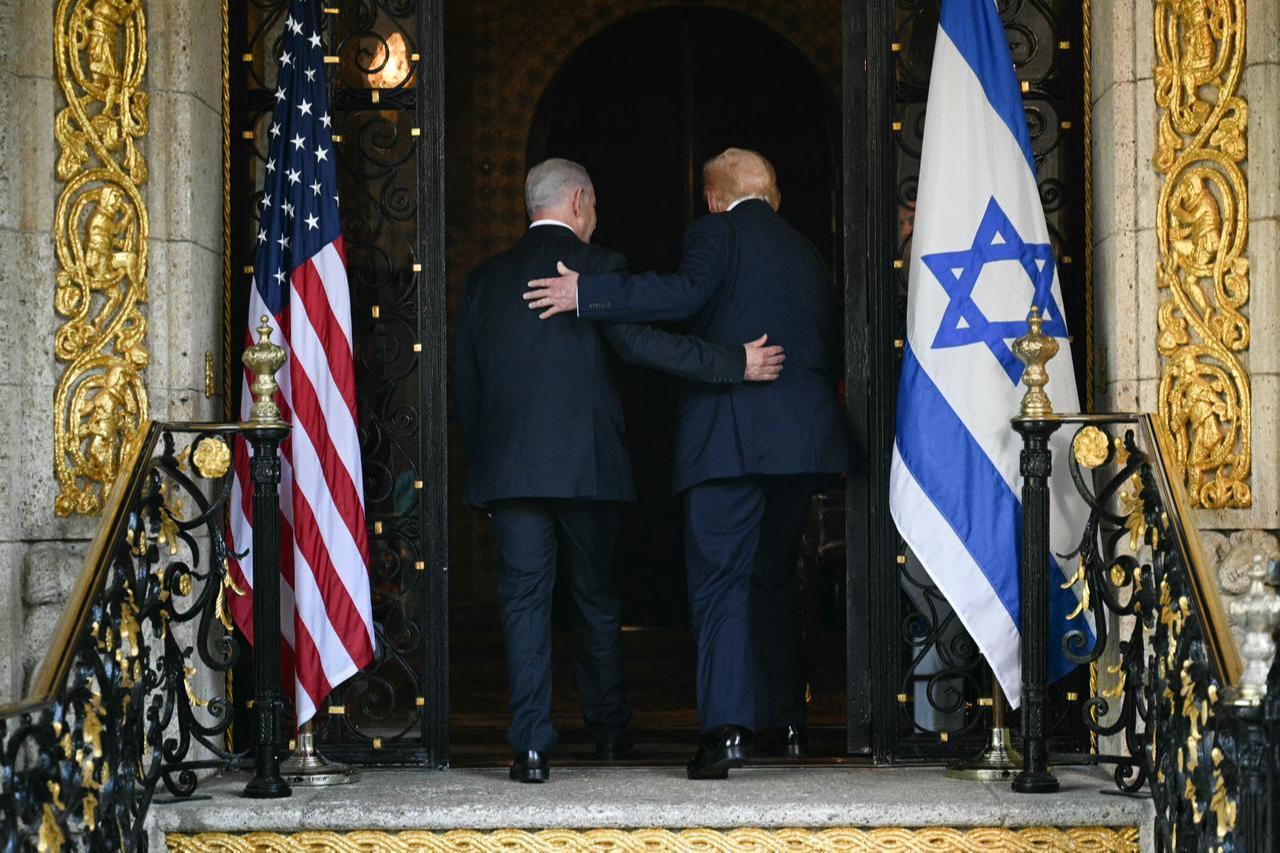
Tehran warned Monday of "destructive influences" on diplomacy ahead of Netanyahu's visit.
Larijani cautioned that the U.S. should not allow Israel's views to determine the path of negotiations, saying this would ultimately harm American interests.
He drew attention to Netanyahu's Washington visit and rhetoric, warning it "risks turning diplomacy into a crisis."
However, Larijani indicated openness to broader engagement: "If the negotiations are successful, we will be able to hold talks with the U.S. on different issues as well."
Meanwhile, the Israeli president, Isaac Herzog, said Wednesday he hoped the Trump-Netanyahu talks would help fight Iran's "empire of evil."
"Success in bringing peace and undermining that empire of evil emanating from Tehran," Herzog said, speaking beside Australian Prime Minister Anthony Albanese in Canberra.
Herzog added that the leaders would discuss "the next phase in Gaza, which is important to all of us."


 Set as preferred source
 Set as preferred source


 1 min read

 1 min read