Newsletters


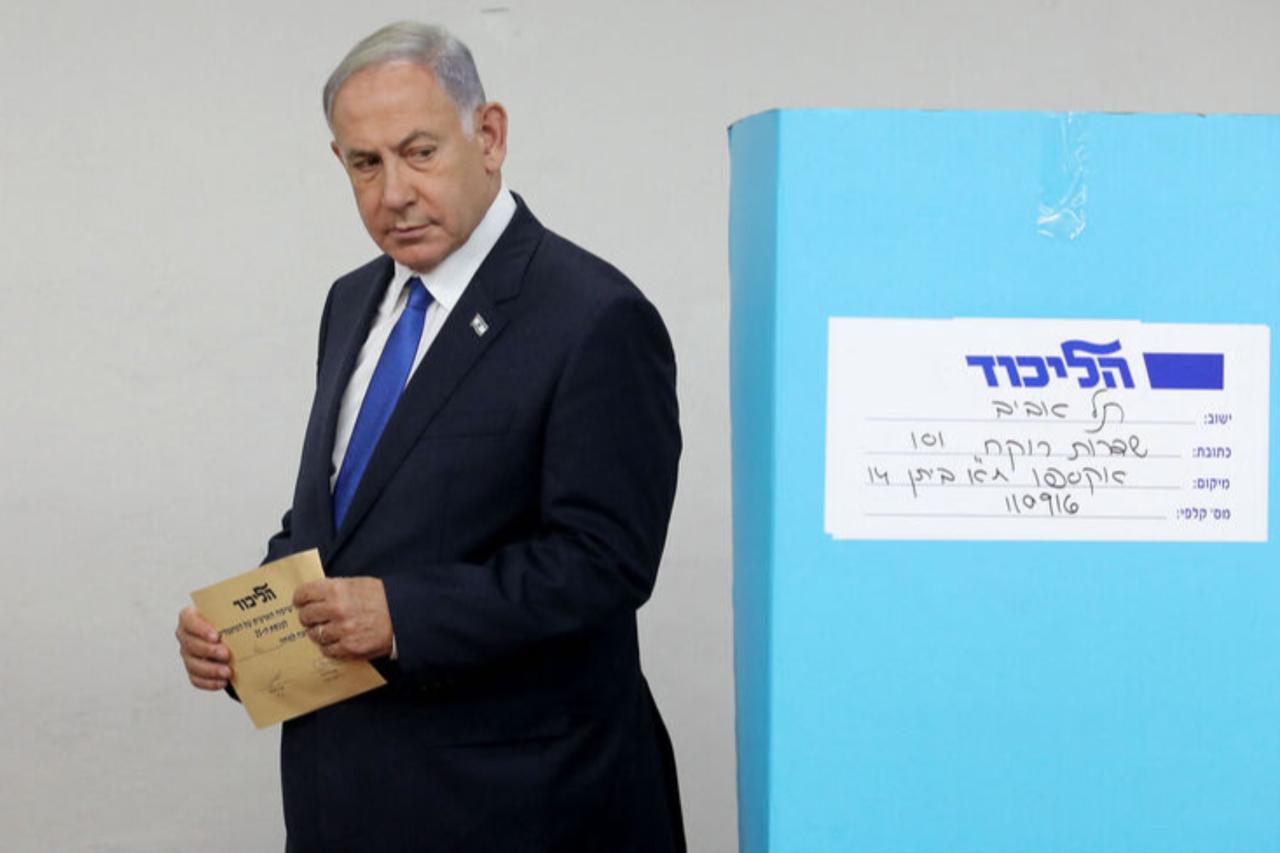


Prediction market bettors now give Gadi Eisenkot a greater chance of becoming Israel's next prime minister than incumbent Benjamin Netanyahu, with Polymarket showing the former military chief at 36.4% against Netanyahu's 32%, a striking reflection of a broader political realignment confirmed by Israeli polling data as the country heads toward elections due by late October 2026.
The figures place Netanyahu behind not one but two challengers: Naftali Bennett's Beyahad bloc sits at 24% on Polymarket, while Avigdor Lieberman trails at 3.6%.
The most recent Maariv poll, published Friday, illustrates how dramatically the landscape has shifted. Likud fell three seats to 22, its lowest figure in a Maariv survey since August 2025, sliding into a tight three-way contest with Bennett's Beyahad at 21 seats and Eisenkot's Yashar! at 20.
The drop extends a months-long decline: since the Iran war began Feb. 28, Likud has shed five seats.
In head-to-head matchups, Bennett leads Netanyahu 43% to 39%. Eisenkot's margin is wider still, 44% against 40% for the prime minister.
Maariv pollster Dr. Menachem Lazar attributed the erosion to Netanyahu's inability to consolidate the right-wing base despite external pressures.
"Precisely when Netanyahu is being attacked by U.S. President Donald Trump and from within, in light of the stagnation in Lebanon and the 'tied hands' on the Iranian front, he is failing to energize the base the way he did in the past year," Lazar said.
"Some are sitting on the fence and some are transferring their support to Religious Zionism," he added.
Lazar identified Eisenkot as the poll's clear winner.
"Since (Bennett and Lapid's) merger, Eisenkot has already jumped six mandates," he said, describing the Bennett-Lapid fusion as a political miscalculation for both leaders.
"Before the merger, Bennett had 24 seats and Yesh Atid had seven more. Now, together they are less than Bennett was before the merger," Lazar said.
The bloc arithmetic remains unfavorable for Netanyahu.
The Maariv poll placed the coalition at 50 seats, the Zionist opposition at 60 and Arab parties at 10, leaving the governing bloc well short of the 61 seats required to form a government.


As Eisenkot's numbers climbed, Netanyahu's Likud launched a campaign video mocking the Yashar! leader's English-speaking skills, a move that has drawn accusations of racism and amplified attention on the very candidate it sought to diminish.
The ad, posted on social media by Netanyahu aide Yonatan Urich with the caption "Mr. Hasbara," used footage of Eisenkot from a 2019 Washington Institute appearance to parody an English-language learning program.
The post came the same day Urich was indicted on allegations of leaking a classified Israeli army document to a German tabloid.
Eisenkot, a former Israeli army chief of staff born to parents who made aliyah from Morocco, rejected the framing sharply. "I despise that criminal, that person who damaged state security," he said of Urich in a Ynet podcast.
He agreed with the suggestion that the ad carried racial overtones.
In response to the underlying attack, Eisenkot turned the question back on Netanyahu's record. "I ask myself, where was Netanyahu's excellent English on October 7? Did it help us with anything? It didn't," he said, adding, "How does his excellent English help strengthen Israel-U.S. relations, which are at a low point?"
He added: "I've been in dozens of meetings in English with Netanyahu, and I don't remember him commenting on my present perfect."
Journalist Avi Issacharoff, writing for Ynet, drew a direct line to the treatment of former Likud head David Levy, who was similarly mocked for his English in the 1980s.
"And here again, racism rears its ugly head in the most expected of places: Benjamin Netanyahu's advisers," Issacharoff wrote.
Eisenkot himself cited Likud's reaction as confirmation of his momentum, saying, "They're scared, I see their fear," and pointing to increased negative coverage on pro-Netanyahu Channel 14.
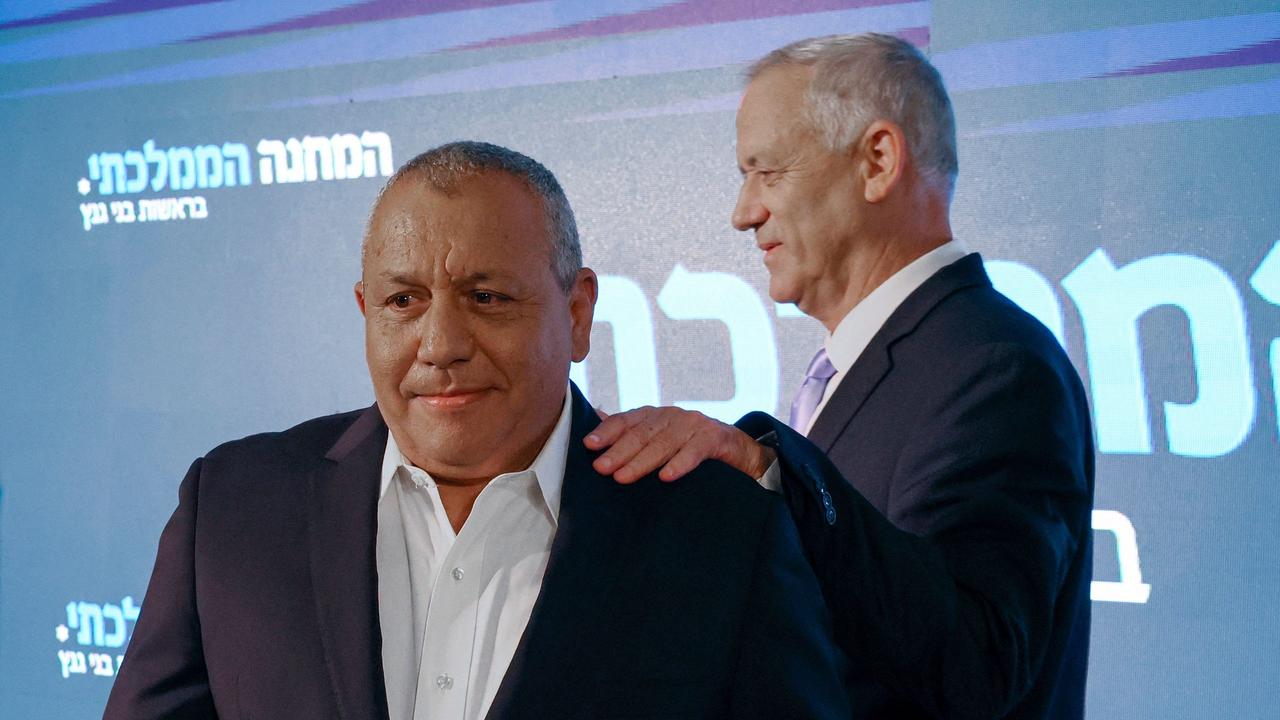
The contest is unfolding against warnings from senior opposition figures that Netanyahu may attempt to contest or undermine the election outcome if he loses.
Former Prime Minister Ehud Olmert delivered the sharpest public accusation Thursday, one day after the Knesset elected Michael Rabello, Netanyahu's family lawyer, as Israel's new state comptroller in a vote the opposition says was marred by coercion and unlawful pressure on lawmakers.
"What happened yesterday is a preview of what will happen in the next Knesset elections," Olmert told Israel's 103FM radio.
"They are trying to rig the elections and steal them. They will try to do at polling stations what they did yesterday at the Knesset voting station, in front of television cameras and the entire world," he said.
"What happened yesterday involved blackmail through threats, vote theft, and the use of organized-crime methods to elect the candidate the prime minister wanted," Olmert said, adding, "The prime minister and the gang of thugs governing the country with him will try to steal the elections."
Likud has confirmed that Netanyahu will run, dismissing Trump's public doubt.
"Prime Minister Netanyahu will run in the next elections and, God Willing, he will win," the party said on Wednesday on Telegram.
The Knesset's current term expires in October.
Legislation to dissolve parliament and potentially bring elections forward has been proposed, though no dissolution date has been set.


 Set as preferred source
 Set as preferred source



 4 min read