Newsletters


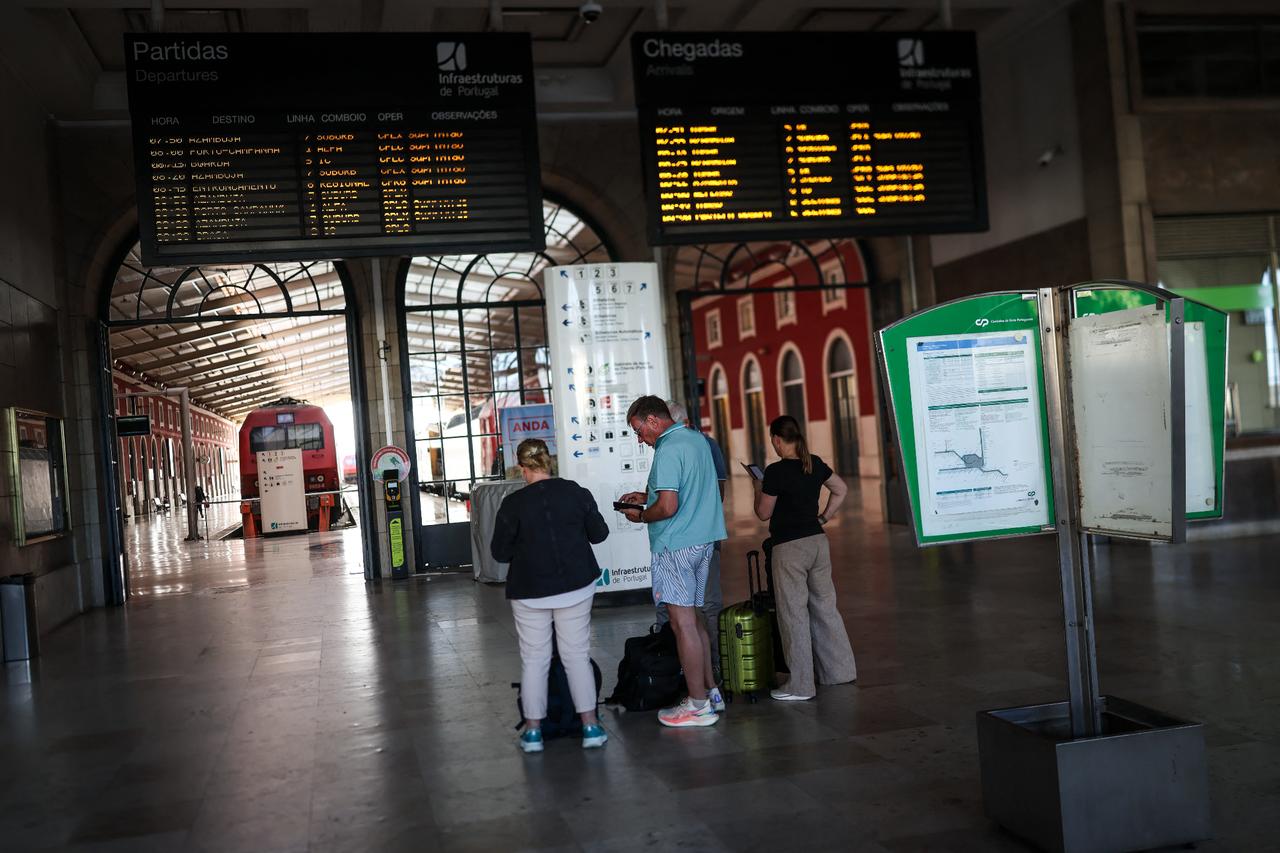


A 24-hour general strike called by Portugal's largest union confederation grounded nearly half of all scheduled flights, shut every metro station in Lisbon and closed more than a third of the country's schools on Wednesday, as organised labour mounted its most visible disruption yet in a months-long battle against sweeping labour code reforms.
Airport operator ANA reported that roughly 45 percent of the approximately 1,500 flights scheduled at Portuguese airports were cancelled. In central Lisbon, all metro stations were shuttered.
At Santa Apolonia railway station, departure boards showed a long list of cancelled trains, while only limited bus services continued to run. Hospitals maintained legally required minimum staffing throughout the day.
The disruption extended well beyond transport. Labour Minister Maria do Rosario Palma Ramalho acknowledged that between 38 and 45 percent of schools were closed, though she moved quickly to play down the overall impact of the stoppage.
"The vast majority of Portuguese workers are at work," she said, insisting that private-sector participation was "absolutely marginal."
The General Confederation of Portuguese Workers, known by its acronym CGTP, disputed that assessment, describing turnout as massive.
The confederation called the strike to protest against reforms proposed by Prime Minister Luis Montenegro's centre-right minority government, which unions say would deepen job insecurity and loosen protections that workers have held for decades.
Hundreds of demonstrators gathered in Lisbon, where 30-year-old protester Rafael Medeiros said the strike was "the signal the government and parliament need to slow down the reform." CGTP secretary general Tiago Oliveira had set the tone a day earlier: "The time has come to bring down the labour code reform. What's on the table is very bad for workers."
Oliveira identified three proposals as particularly damaging, citing plans to simplify firing procedures, extend permissible fixed-term contracts and broaden the definition of minimum services required during future strikes. He warned the package amounted to the "deregulation of working hours" and a systematic expansion of "job insecurity."
Montenegro's government argues the overhaul, which would amend more than 100 articles of the labour code, is necessary to raise productivity and modernise an economy increasingly shaped by digitalisation.
After months of negotiations with employers' groups and the moderate General Union of Workers, UGT, those talks collapsed. The cabinet subsequently submitted a slightly revised version of the bill to parliament and must now secure support from either the Socialist opposition or the far-right Chega party, both of which have already expressed strong reluctance.
Wednesday's stoppage was the second general strike in Portugal in under six months. A December walkout, the country's first in 12 years, drew both the CGTP and the UGT.
The more moderate UGT did not join Wednesday's action, a sign of the tactical divisions that persist within the labour movement even as opposition to the reform remains broadly held.
General strikes in Portugal are rare, with fewer than a dozen called since the country's return to democracy following the 1974 Carnation Revolution, making back-to-back stoppages within a single legislative battle a significant escalation.


 Set as preferred source
 Set as preferred source


 3 min read