Newsletters


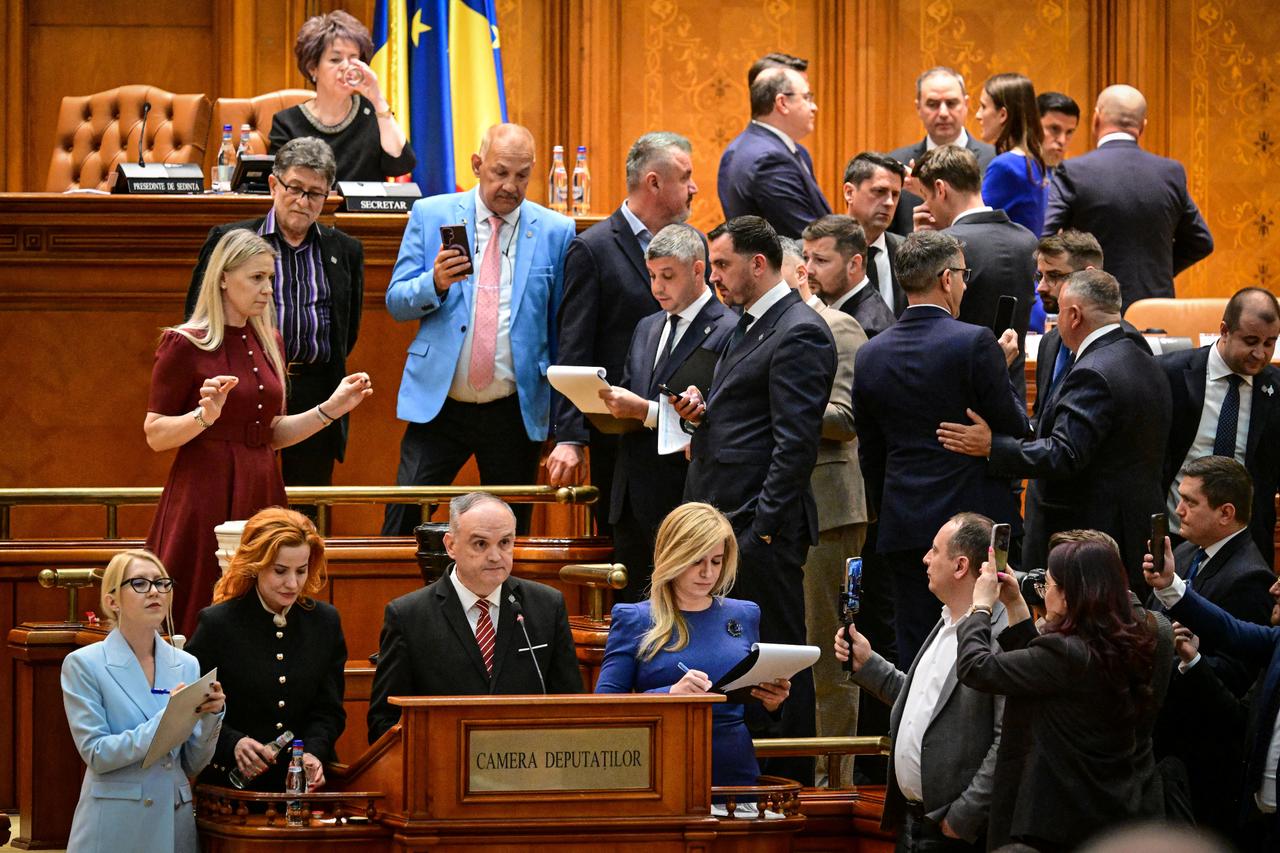


Romania’s parliament voted Tuesday to remove liberal Prime Minister Ilie Bolojan, pushing the E.U. and NATO member state into a fresh political crisis.
The no-confidence motion, initiated by the left-wing Social Democrats (PSD) and the far-right Alliance for the Union of Romanians (AUR), received 281 votes in the 464-seat parliament. Bolojan’s National Liberal Party (PNL) and its USR allies attended the session but did not vote.
The vote came after the PSD quit the government last month and teamed up with AUR, Romania’s main far-right party, to bring down Bolojan’s administration.
The PSD’s decision to work with AUR drew criticism from observers who said it helped bring the far right further into the political mainstream.
Political scientist Costin Ciobanu said the PSD had turned AUR “into a significant political player, from a party that was isolated, ostracised and kept on the margins of the political system.”
AUR leader George Simion welcomed the result on X, saying “the voice of the people was heard today” and calling for “national reconciliation.”
Tensions had built up as Bolojan pushed ahead with unpopular austerity measures aimed at cutting Romania’s budget deficit, the largest in the European Union.
Before the vote, Bolojan defended his reform agenda and described the motion as “deceitful, cynical, and contrived.”
“I chose to do what was urgent and necessary for our country,” he said.
PSD leader Sorin Grindeanu said after the vote that Bolojan should step down, adding that responsible parties now had a duty to “find a solution.”
President Nicusor Dan has said Romania, a country of 19 million people bordering Ukraine, will maintain its pro-Western direction and ruled out a far-right government.
“Political discussions will be difficult, but it is my responsibility as president -- and that of the political parties -- to steer Romania in the right direction,” he said Monday.
The collapse of Bolojan’s government threatens to revive instability after last year’s elections, when pro-E.U. parties formed a government following a strong far-right showing and earlier turmoil linked to the annulment of presidential elections over alleged Russian interference.
Romania now faces weeks of political negotiations, with one possible outcome being a new government made up of the same pro-E.U. parties but led by a different prime minister.
The political crisis has also weighed on the economy. Romania’s borrowing costs have risen, while the leu weakened against the euro, which reached an all-time high of 5.21 Romanian lei on Tuesday.
Romania has been under an E.U. excessive deficit procedure since 2020, a process used by the bloc when a member state’s budget deficit is considered too high.


 Set as preferred source
 Set as preferred source


 1 min read