Sign in
 Newsletters





Spain will hold a snap general election on Sunday, Nov. 29, with Socialist Prime Minister Pedro Sanchez seeking another term after eight years in office and conservative and far-right parties aiming to end left-wing rule.
Most electoral projections suggest that Alberto Nunez Feijoo's conservative People's Party (PP) could secure a parliamentary majority with Santiago Abascal's far-right Vox, potentially bringing the far right into national government for the first time since Spain's return to democracy.
Housing, immigration, corruption and the cost of living have dominated the campaign, alongside disagreements over defense spending, the Middle East and relations with Washington.
According to Spain's National Statistics Institute (INE), 38.7 million people are eligible to vote, including nearly 2.8 million living abroad. Voting will take place between 9 a.m. and 8 p.m. local time, with provisional results expected an hour later.


Sanchez called the election on Oct. 5, eight months ahead of schedule, after parliament rejected emergency housing measures amid nationwide protests over rising rents and property prices.
His minority government lost the support of Junts, a center-right Catalan separatist party whose parliamentary backing had helped Sanchez secure another term in 2023 but which opposed the housing reforms over property owners' rights.
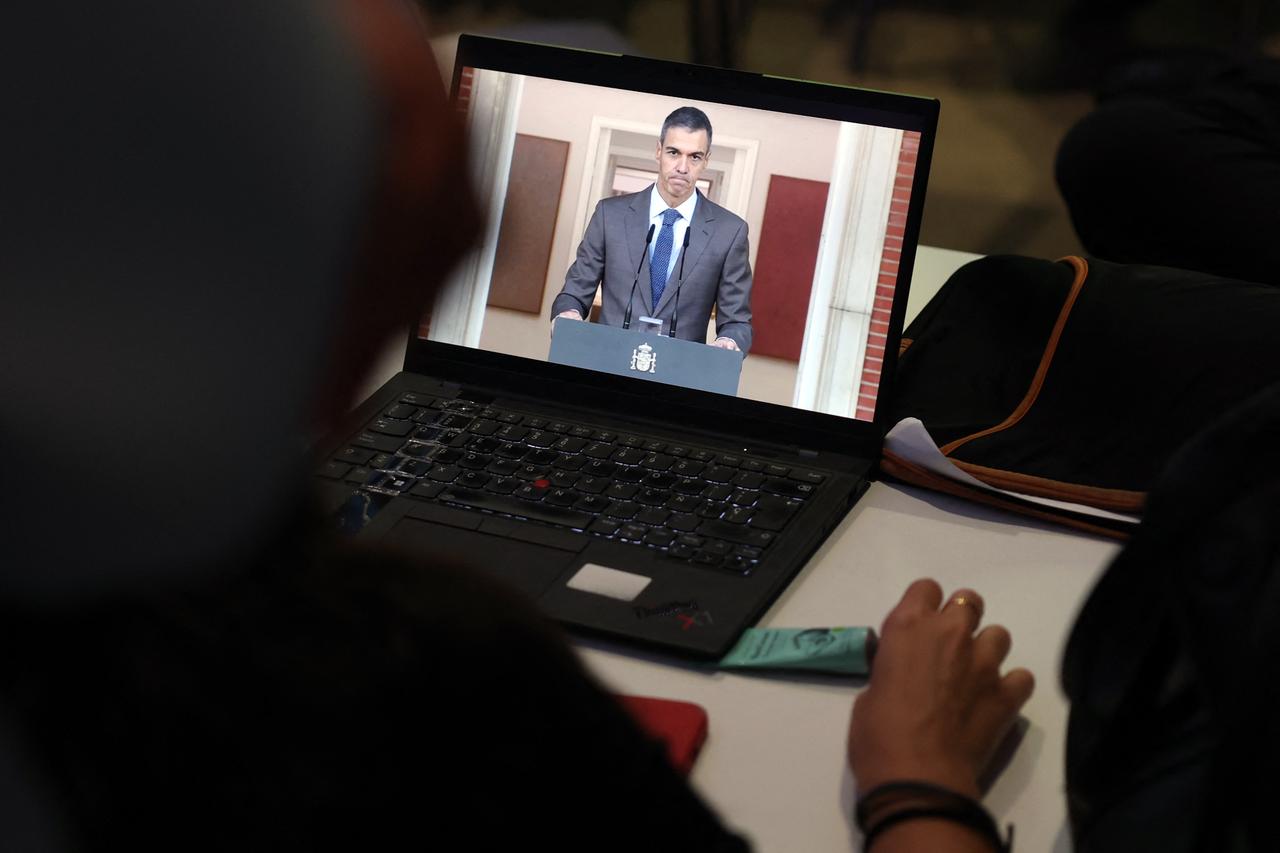
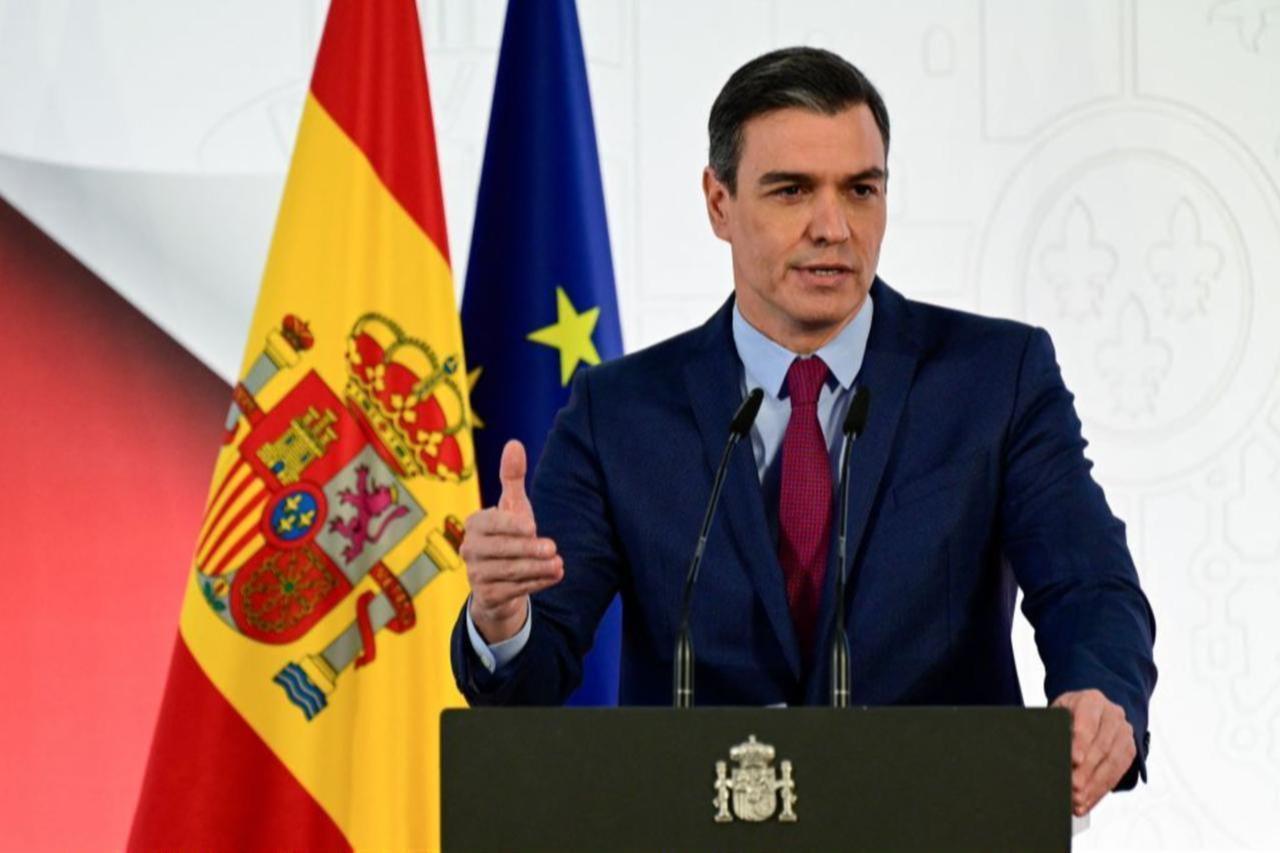
Sanchez, leader of the Spanish Socialist Workers' Party (PSOE), is campaigning on economic growth, stronger public services and workers' rights. His government, however, has faced corruption cases involving former senior officials and legal proceedings involving members of his family.
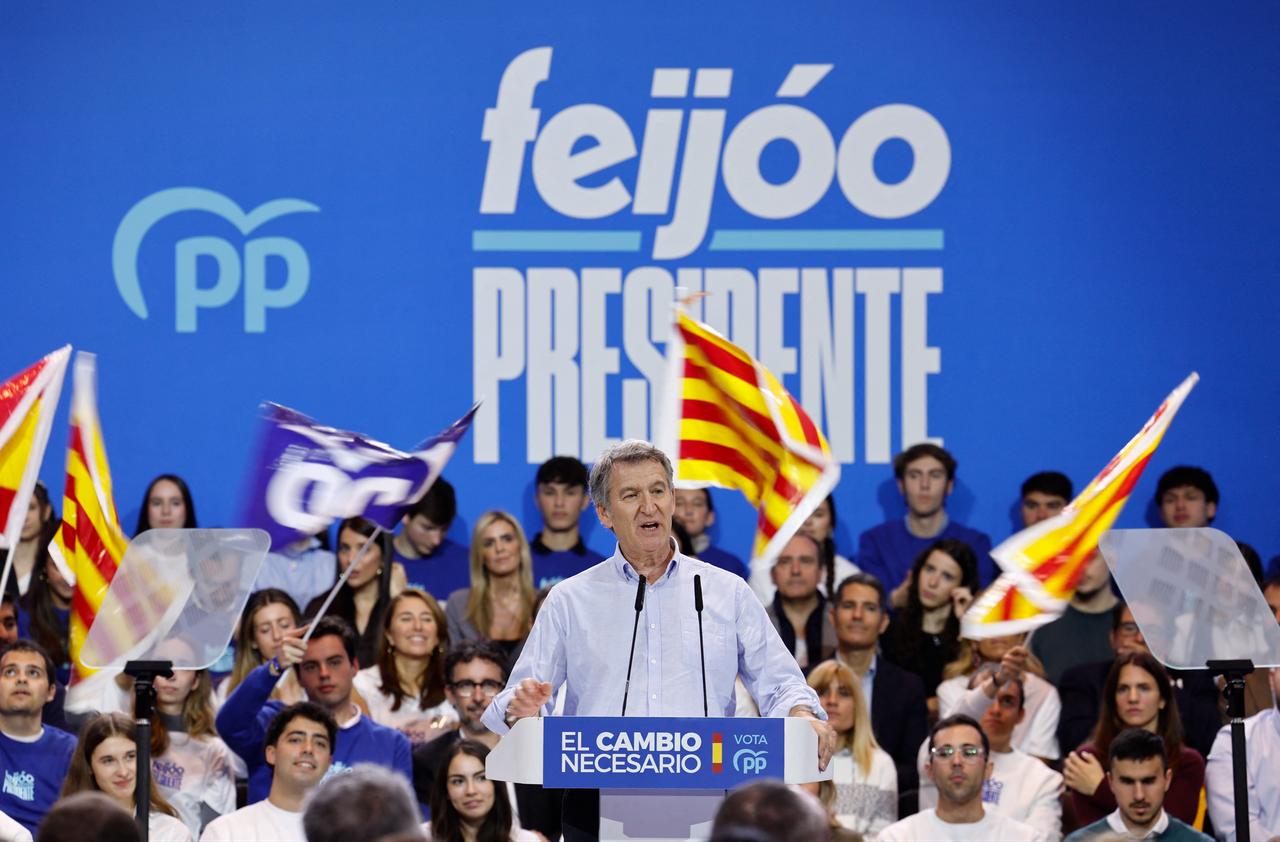
Feijoo, who previously governed Galicia and has led the PP since 2022, advocates lower taxes, business deregulation and tighter immigration controls. His party finished first in 2023 but failed to secure sufficient parliamentary support to form a government.
Abascal has centered Vox's campaign on national identity, deportations and preferential access to public services for Spanish citizens. Meanwhile, former Barcelona Mayor Ada Colau represents the left-wing Broad Front (Frente Amplio), whose support could be crucial to another Socialist-led government.

Spain's Congress of Deputies has 350 seats distributed across 52 constituencies, with 176 required for an absolute majority.
The final electoral projection by Spanish public broadcaster RTVE, updated on Nov. 23, puts the PP and its electoral ally, the Navarrese People's Union (UPN), at 128 seats, Vox at 61 and the Socialists at 116.
The final survey average published by Spanish newspaper El Pais on Nov. 24 puts the PP at 31.4%, the PSOE at 29.1% and Vox at around 18%. A separate survey conducted by 40dB for El Pais and Spanish radio network Cadena SER estimates their support at 31.8%, 30.9% and 17.3%, respectively, projecting a combined 187 seats for the PP, UPN and Vox.
However, Spain's state-run Center for Sociological Research (CIS) presents a different outlook. Its Nov. 23 survey, based on 8,034 interviews, places the Socialists at 34.4%, the PP at 24.7% and Vox at 15.6%.
The CIS findings contrast with most independent surveys. Spain's electoral law prohibits publishing new election surveys during the five days preceding the vote.
Housing affordability remains a leading concern among voters. In its November survey, the CIS found that 59.5% of respondents identified housing as one of Spain's three main problems. The Bank of Spain estimates that approximately 700,000 additional homes are needed to alleviate the shortage.
The Socialists propose stronger tenant protections, restrictions on property speculation and expanded public housing, while Feijoo favors easing planning regulations to facilitate the construction of 1 million homes over four years.
During their Nov. 19 televised debate, Sanchez cited Spain's projected economic growth of 2.6% this year to defend his government's policies. Feijoo questioned whether that growth had improved household purchasing power, responding: "You can't eat GDP."
The PP proposes income tax cuts and temporarily removing value-added tax on basic food products. Sanchez advocates taxing fortunes exceeding 100 million euros ($109 million) to finance public services.
Immigration has also divided the candidates, particularly after the government's initiative to regularize undocumented migrants attracted nearly 1.2 million applications this year.
Sanchez maintains that foreign workers help sustain economic growth and pensions, while Feijoo proposes points-based visas, annual labor quotas and an end to mass regularization programs.
Vox advocates mass deportations and priority for Spanish citizens in welfare and housing programs. Feijoo has warned that the latter proposal would conflict with Spain's constitution and European Union treaties.
The campaign's final four-way televised debate on Nov. 26 also featured disagreements over Gaza and gender-based violence, with Sanchez and Colau criticizing Abascal's position on the latter.
Under Sanchez, Spain recognized Palestinian statehood in 2024, imposed an arms embargo on Israel and opposed NATO's 5% spending target. His government also refused to allow U.S. forces to use Spanish military bases to strike Iran.
Juan Luis Manfredi Sanchez, a professor at the University of Castilla-La Mancha, told Turkish state-run Anadolu Agency that Feijoo would likely avoid confrontation with Washington while maintaining cooperation with European allies over Ukraine.
Domestically, Feijoo has pledged to repeal the Catalan separatist amnesty law and extend the operation of nuclear power plants. Vox seeks wider changes to environmental regulations and opposes abortion and assisted dying.
However, cooperation between the PP and Vox is not guaranteed. Vox withdrew from five regional coalition governments in 2024 following disagreements over the relocation of unaccompanied migrant children.
Feijoo has expressed a preference for parliamentary agreements with Vox without ruling out a formal coalition. Sanchez, meanwhile, would need renewed support from left-wing and regional parties.
Under Spain's constitution, a candidate who fails to secure an absolute majority in the first parliamentary investiture vote faces a second vote 48 hours later, requiring a simple majority.
If no candidate secures parliamentary approval within two months of the first investiture vote, another election must be called.


 Set as preferred source
 Set as preferred source


 1 min read
 1 min read