Newsletters


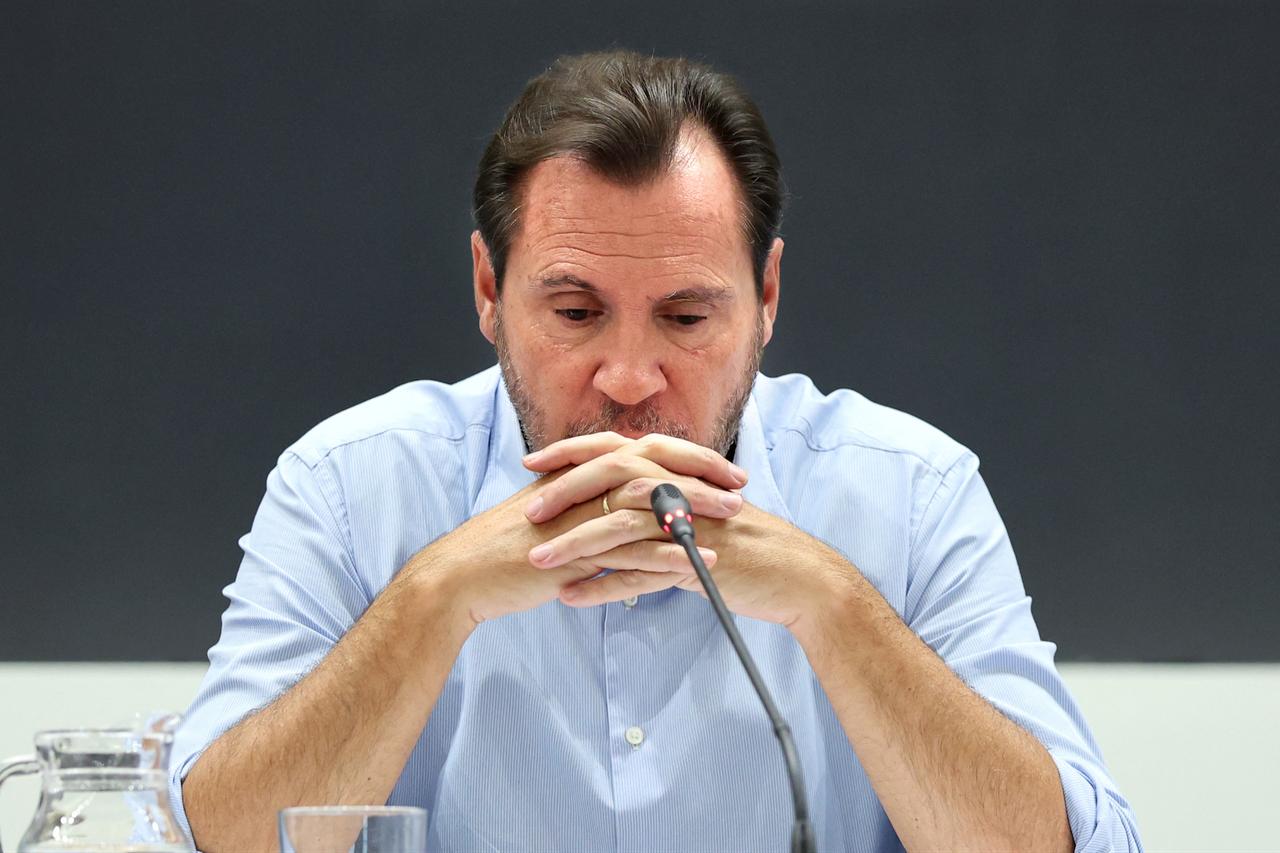


Spain’s transport minister, Oscar Puente, resigned Tuesday evening, days after a rear-end collision between two high-speed trains killed 69 people. It was one of the worst railway disasters in Europe this century.
Puente also withdrew his name from the candidate lists for the early general election on 29 November. The announcement came at the end of a long hearing before lawmakers, after days in which he had resisted calls to step down.
“A transport minister cannot remain in office after two accidents of such severity in less than a year,” he told parliament. He framed the decision as “a matter of political dignity, consistency,” and “empathy for the victims.”
Puente had ruled out resigning several times since the crash. Hours before announcing his departure, he told a press conference that the government would “work tirelessly to achieve and regain the public’s trust in high-speed rail,” which is the world’s second-largest network.
His hearing began at 5 p.m. and drew criticism from across the political spectrum. Ester Muñoz, spokeswoman for the main opposition Popular Party, said he was “so good at explaining why people die on trains, and so bad at preventing them from dying on trains.” She called it “incomprehensible” that two deadly accidents had occurred on the same line, and said the problem was “not an isolated failure; it is a systemic failure.”
Pepa Millán of the far-right Vox party asked whether Puente could “sleep soundly.” Even partners in the left-wing governing coalition asked him to go, and recent polls showed a majority of Spaniards thought he should resign.
Prime Minister Pedro Sánchez, a Socialist who had stood by his minister, said on social media that Puente “has faced up to his responsibilities, offered solutions and then stepped aside.” He added that “politicians like him bring dignity to our country.”
The collision occurred last Wednesday outside the village of Urda, about 80 miles south of Madrid, near Toledo in central Spain. A train run by the state-owned company Renfe ran into the back of a stationary train operated by the private company Iryo.
According to the account Puente gave lawmakers, an automatic safety system had failed and halted all trains on a 39-mile stretch of track. A control centre in Madrid nonetheless authorized the Renfe service to resume its journey, even though another train was stalled ahead of it. Puente blamed errors by the rail traffic controllers. The opposition and unions criticised him for appearing to pin the blame on a single control centre operator.
The crash came after another collision in January in the southern region of Andalusia, which killed 46 people. That accident happened on the same line connecting Madrid with Seville, Spain’s first high-speed route, which opened in 1992.
Before resigning, Puente announced a package of safety measures. They include software for control centres that would issue automatic alerts and make traffic anomalies easier to spot. He said an AI agent would oversee the system to “minimise the possibility of human error,” and described the proposal as unprecedented.
Under the new rules, if an operator makes a decision while the automatic safety system is down, a second operator would have to confirm it. Puente also said the working conditions of control centre operators would be reformed, including their breaks and the monitoring of their fatigue levels.
He announced an aid package of €30 million (£25 million) for the families of the dead and the scores of people injured.
The train drivers’ union Semaf has called strikes at Renfe for 10 and 12 November. It has denounced worsening working conditions and the use of “degraded systems.” Critics say investment in maintenance has not kept pace with growing passenger numbers since the 2021 liberalisation of Spain’s rail network, which let private companies break Renfe’s decades-long monopoly.
The two accidents have shaken Spaniards’ confidence in a high-speed system long seen as a symbol of a modernizing country. Analysts said many Spaniards increasingly feel the country’s infrastructure is unsafe, a perception that could hurt Sánchez, whose party already trails in the polls.
Puente’s reputation as a combative defender of the government, known for lashing out at rivals on social media, had added to the calls for his resignation. His departure suggested he had become a liability to the prime minister ahead of the 29 November vote.


 Set as preferred source
 Set as preferred source



 2 min read