Newsletters


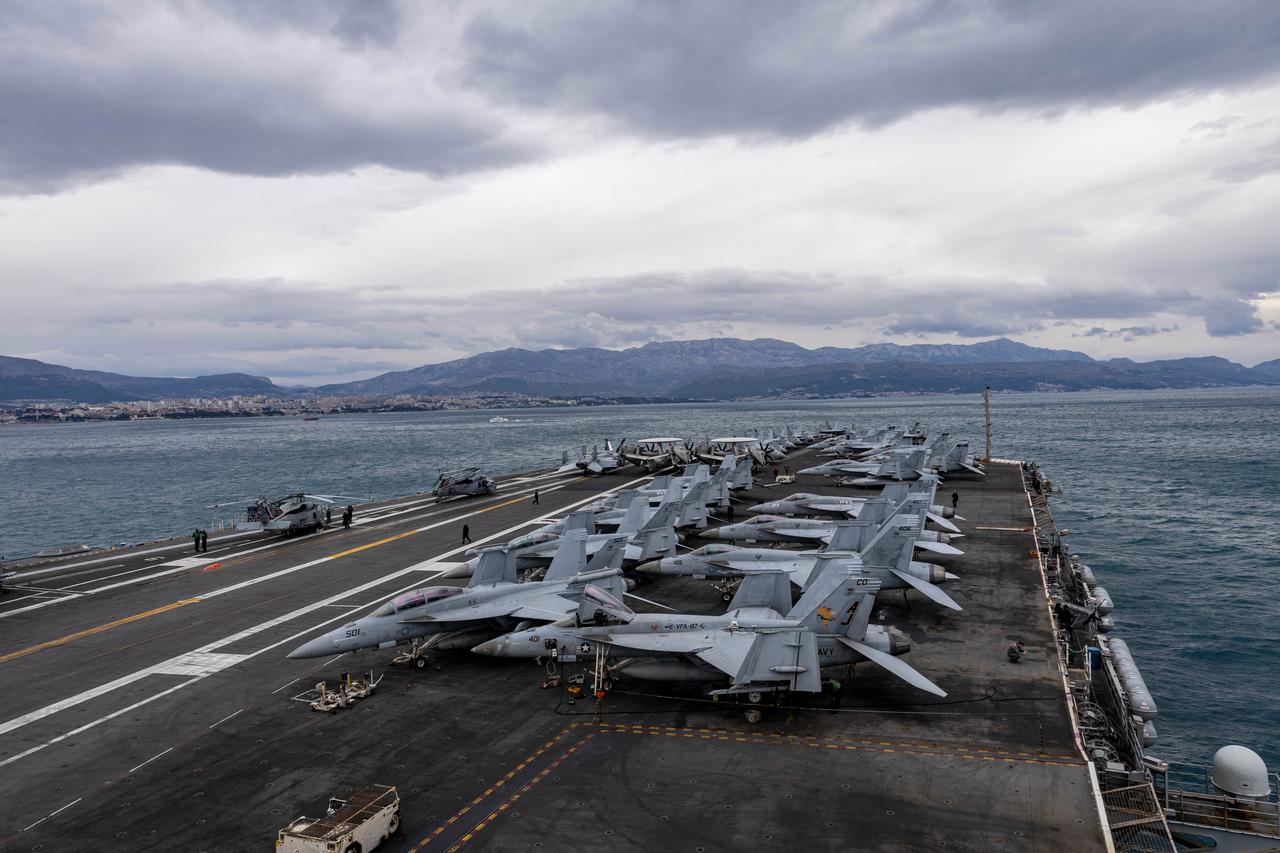
U.S. Central Command (CENTCOM) announced Sunday that American forces will begin a blockade of all maritime traffic entering and exiting Iranian ports Monday at 10 a.m. ET.
Following the collapse of peace talks in Islamabad, oil prices jumped approximately 8% with both WTI and Brent contracts topping $100 a barrel and Iran's parliament speaker vowed Tehran would "not bow to any threats."
CENTCOM issued a formal statement outlining the blockade's scope.
"U.S. Central Command forces will begin implementing a blockade of all maritime traffic entering and exiting Iranian ports on April 13 at 10 a.m. ET, in accordance with the President's proclamation. The blockade will be enforced impartially against vessels of all nations entering or departing Iranian ports and coastal areas, including all Iranian ports on the Arabian Gulf and Gulf of Oman," CENTCOM said in a statement on X.
The statement clarified that CENTCOM forces "will not impede freedom of navigation for vessels transiting the Strait of Hormuz to and from non-Iranian ports."
All mariners were advised to monitor Notice to Mariners broadcasts and contact U.S. naval forces on bridge-to-bridge channel 16 when operating in the Gulf of Oman and Strait of Hormuz approaches.
The blockade scope is more limited than Trump's initial Truth Social post, which suggested blocking all ships trying to enter or leave the strait.

Trump posted the announcement on Truth Social in the early hours of Monday.
"The United States to Blockade Ships Entering or Exiting Iranian Ports on April 13 at 10:00 A.M. ET. Thank you for your attention to this matter! President DJT," he wrote.
In his earlier and broader post Sunday, Trump said: "Effective immediately, the United States Navy, the Finest in the World, will begin the process of BLOCKADING any and all Ships trying to enter, or leave, the Strait of Hormuz. Any Iranian who fires at us, or at peaceful vessels, will be BLOWN TO HELL!"
He added that the U.S. was "FULLY LOCKED AND LOADED" and that the military "will finish up the little that is left of Iran." He also said the U.S. Navy had been instructed to "seek and interdict every vessel in International Waters that has paid a toll to Iran."
Trump told reporters Sunday he was ambivalent about the prospect of talks resuming. "I don't care if they come back or not. If they don't come back, I'm fine," he said.
Iran's parliament speaker Mohammad Bagher Ghalibaf, who led Tehran's delegation in Islamabad, said Tehran would "not bow to any threats" from Washington. Iranian navy chief Shahram Irani called Trump's blockade threat "ridiculous."
Iran's Revolutionary Guards had warned before the U.S. announcement that they had "full control" of traffic through the Strait of Hormuz and would trap any challenger "in a deadly vortex."
Iranian Foreign Minister Abbas Araghchi blamed the breakdown of talks on "maximalism, shifting goalposts, and a blockade," saying an agreement had been "just inches away."
Iran's Fars News Agency reported that two Pakistan-flagged oil tankers bound for the strait had already turned back.
Oil prices jumped approximately 8% Monday, with both WTI and Brent crude contracts breaking above $100 a barrel following the blockade announcement.
Nicole Grajewski, an assistant professor at Sciences Po's Center for International Research, said a U.S. blockade was "not a minor coercive signal" but could rather be considered an effective resumption of the war.


 Set as preferred source
 Set as preferred source


 1 min read
 1 min read