Newsletters




Iranian President Masoud Pezeshkian said Sunday that Iran was ready to reassure the world it was not pursuing nuclear weapons.
Meanwhile, an informed source told Tasnim News Agency that disagreements over one or two clauses of the potential MoU were still preventing finalization.
The source said the main sticking point remained the release of Iranian frozen assets and blamed U.S. obstruction.
Pezeshkian, speaking during a visit to Iranian state television, said: "We are ready to reassure the world that we are not seeking nuclear weapons."
He said Iran did not want instability or unrest, accused Israel of pursuing expansionist ambitions under a "Greater Israel" vision, and said, "Iran's negotiating team would never step back when the country's honor and dignity were at stake."'One or two clauses still unresolved
A well-informed source told Tasnim that disagreements between Iran and the U.S. over one or two clauses of the potential MoU remained unresolved and that, due to U.S. obstructionism, the matter had not yet been finalized.
The source said Iran had communicated through the Pakistani intermediary that if U.S. obstruction continued, finalizing the MoU would not be possible.
A separate source told Tasnim that Iran had made clear to the Pakistani mediator and some regional countries involved in mediation that, without the release of a specified portion of its blocked overseas assets in the first step and a clear, guaranteed mechanism for releasing all remaining frozen assets, there would be no agreement.
"Iran, based on its experience of repeated U.S. violations and obstructions, will not allow the issue of asset release to be handed over to vague and illusory promises," the source said.
The same source said there was no clause in the MoU text authorizing the U.S. to inspect or control Iranian vessels after the naval blockade is lifted, calling such reports false.
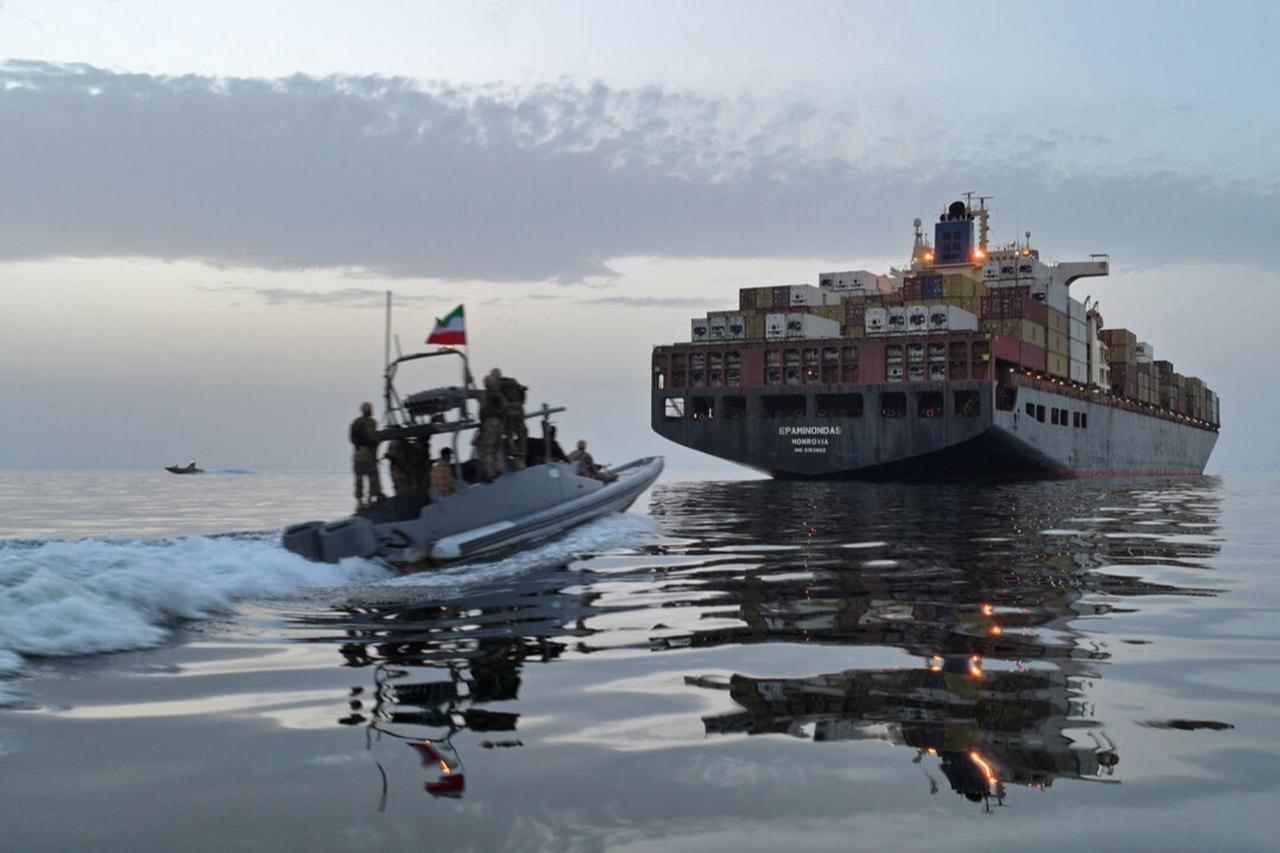
The source also reiterated that Hormuz would not return to pre-war status but that Iran would allow ship transit volumes to return to pre-war numbers within 30 days, in exchange for the U.S. fully lifting its naval blockade within the same period.
The commander of Iran's Khatam al-Anbiya Central Headquarters issued a stark warning at a ceremony honoring fallen commanders, saying Iran was "ready to deliver a crushing and hellish response to any aggression."
He said the "strategy of a strong Iran" would guarantee the future regional order and that foreigners had no place in it.
"We warn enemies that the plans and strategies for managing the Persian Gulf and the Strait of Hormuz guarantee the future of the region and the new regional and global order, in which foreigners have no place," the commander said.

A regional official with direct knowledge of the negotiations told The Associated Press (AP) that the potential deal includes Iran's commitment not to pursue a nuclear weapon and that Tehran had agreed to give up its stockpile of highly enriched uranium, though how it would do so remains subject to 60-day negotiations.
The official said it was highly likely that part of the stockpile would be diluted while the rest would be transferred to a third country, potentially Russia.
Iran holds approximately 440.9 kilograms of uranium enriched to 60% purity, a short technical step from the 90 percent weapons-grade threshold, according to the International Atomic Energy Agency.
"The Strait of Hormuz would be gradually opened in parallel with the U.S. ending its blockade," the official said.
A second official briefed on the negotiations told AP that the U.S. would allow Iran to sell oil through sanctions waivers, with sanctions relief and release of frozen funds to be negotiated during the 60 days.
Both officials said the draft deal includes an end to the war between Israel and Hezbollah and a commitment by regional parties not to interfere in each other's domestic affairs.


 Set as preferred source
 Set as preferred source


 1 min read
 1 min read