Newsletters





Artificial intelligence is increasingly being applied across football, from on-pitch performance analysis to transfer processes, referee decisions and player health monitoring, with the technology expected to have its greatest impact on how clubs make decisions, according to an academic.
Agah Tugrul Korucu, a faculty member in the Department of Mechanical Engineering at Istanbul Commerce University, a private university in Istanbul, Türkiye's largest city, said artificial intelligence is not replacing humans in football but instead serves as a decision-support tool that reveals patterns in data too vast for people to detect on their own.
Korucu said artificial intelligence is currently used heavily in on-pitch performance analysis, but its greatest economic impact will be seen in transfer processes and player management.
"Artificial intelligence does not ask a club 'who is the best player?' It asks, "Who is the right player for our team?'" Korucu said.
A player's success depends not only on individual talent but also on a team's playing system, league structure and a manager's expectations, Korucu said.
He added that scouting observation, performance data, artificial intelligence models, economic analysis and manager evaluation will all be used together in the future.
"The ultimate impact of artificial intelligence in football will not appear on the pitch, but in the overall quality of a club's decision-making," Korucu said.


Korucu said there is no fixed, uniform technology gap between clubs in Türkiye and those in Europe, noting that professional clubs in Türkiye already use GPS tracking, video analysis and performance monitoring systems.
He said the real difference lies in integration, institutionalization and decision-making culture rather than budget alone.
"Institutional decisions must be stronger than individual intuition. This does not mean eliminating human intuition, but making that intuition testable with data," Korucu said.
Artificial intelligence-supported scouting systems could give Anatolian clubs with limited budgets a significant advantage, Korucu said. Traditional scouting methods make it impossible to track thousands of players across different leagues worldwide, he said, while artificial intelligence allows players to be screened by criteria such as age, cost, physical attributes and suitability to a team's playing system.
"Artificial intelligence will not replace a scout's eye. It will expand the range a scout can see," Korucu said.
Identifying undervalued players outside major leagues early could give clubs a competitive advantage, Korucu said, adding that clubs should not leave final transfer decisions to algorithms alone.
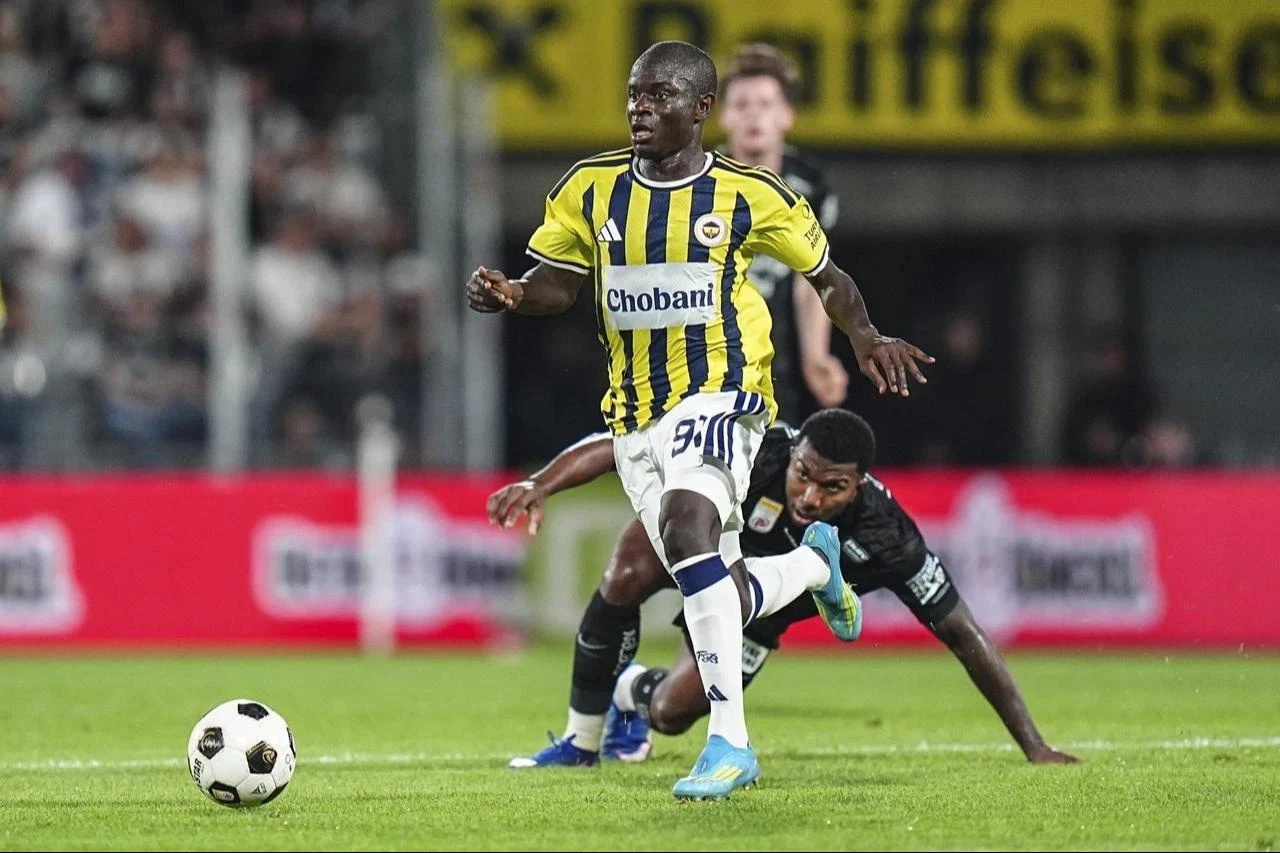
Korucu said artificial intelligence will increasingly be used in refereeing, but said measurable decisions should be separated from those requiring interpretation. He said the technology can provide high precision on matters such as whether the ball has crossed the goal line or where an offside line falls, while decisions involving judgment, such as fouls or penalties, will continue to rely on human officials.
"I see the future of refereeing not as an 'AI referee' but as an 'AI-assisted referee.' The machine should measure, the human should interpret. The machine should suggest, and the human should carry the responsibility," Korucu said.

Korucu said clubs now collect extensive player data, including GPS tracking, health records, sleep patterns, injury history, and biometric information, raising questions about data ownership, consent, data security, and algorithmic discrimination.
He said he does not expect artificial intelligence to replace managers, but rather to support the development of a strong "digital assistant coach" model. "Sometimes a manager looks into a player's eyes and sees something the data system cannot," Korucu said.
Korucu said future competition among clubs will be shaped not only by player quality but also by the capacity to use data effectively. He said successful clubs will combine human intelligence, football intelligence, and artificial intelligence within the same decision-making system.


 Set as preferred source
 Set as preferred source


 2 min read