Newsletters




EuroLeague is not planning to rewrite its strategy even if the NBA launches a new pan-European league in the coming years. Speaking to Turkish outlet NTV’s digital platform ntv.com.tr, EuroLeague’s marketing and communications director Alex Ferrer Kristjansson said the organization prefers to focus on growing its existing competition rather than working through scenarios about clubs leaving for a potential NBA-backed project.
Kristjansson said he respects both the NBA and FIBA and underlined that his information about the proposed new league remains limited. He noted that the only formal details communicated so far are that the competition would be built around a core group of clubs, with some places changing from season to season, and remarked that this structure looks “very similar” to the current EuroLeague format.
He also found it striking that FIBA, which oversees national team windows, has strongly criticized EuroLeague for years while appearing to prioritize cooperation with the NBA. NBA commissioner Adam Silver has previously indicated that the new league could start operating in 2027 or 2028, and NBA COO Mark Tatum has mentioned that teams from the United Kingdom, Spain, Italy, France and Germany would form the backbone of the project, with clubs from Türkiye and Greece expected to be regular participants.
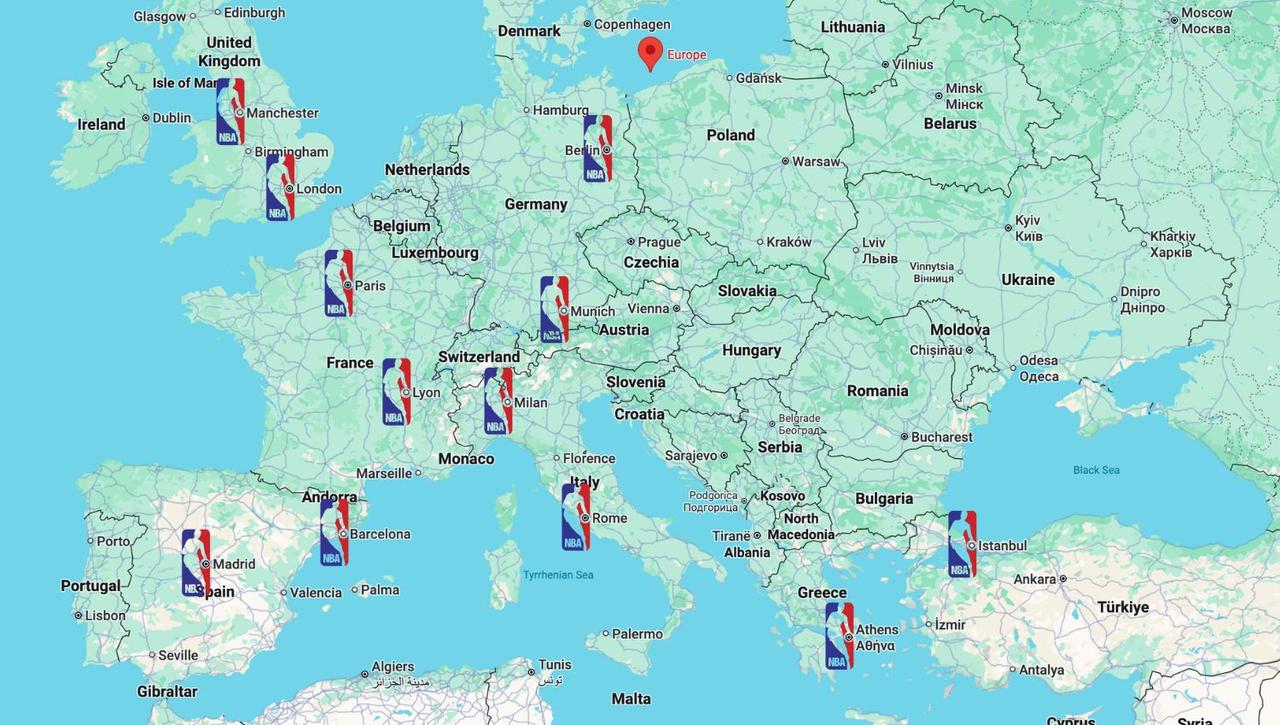

Asked what EuroLeague would do if clubs such as Barcelona, Real Madrid or Fenerbahce moved to an NBA-operated league, Kristjansson said the organization does not want to build its work around hypotheticals. He explained that these teams are currently competing in EuroLeague and are also shareholders in the organization, and that management is focused on making the existing league bigger and more valuable so that those clubs have a strong reason to stay.
According to Kristjansson, concentrating too much on speculative scenarios would only distract EuroLeague from its main task, which is to improve the product it already runs.
National team windows and EuroLeague schedules have often overlapped, drawing criticism from FIBA and several national federations, including the Turkish Basketball Federation. Kristjansson argued that it is not fair to put all the blame on EuroLeague and stated that calendar clashes between clubs and national teams have existed for a long time.
He said EuroLeague has spent the last three years adjusting its fixture list, pausing games and making changes to its schedule in an attempt to ease tensions. He stressed that the league is still trying to resolve the remaining issues and insisted that it has already “done its part” more than any other competition he is aware of. Kristjansson added that EuroLeague remains open to talks with FIBA but does not believe the current accusations are justified.
In the debate over financial strength, EuroLeague is often compared with the NBA, especially as reports circulate that the American league may offer European clubs a more attractive economic package. Kristjansson said he has no detailed information about the NBA’s economic plan and suggested that any serious comparison will only be possible once their system is fully presented.
He drew a clear line between the two approaches, saying that the NBA seems to build a business model first and then place basketball around it, while EuroLeague tries to build its business structure around the sport itself. He described EuroLeague’s strategy as a plan to keep growing the league step by step with realistic targets, pointing out that the competition has been increasing its value every year.
According to Kristjansson, EuroLeague has recently doubled its television revenues compared with the previous season and tripled its social media engagement, while sponsorship income and other key metrics have also gone up. He said the league has set financial and prize-money targets for the next three to five years and believes it is on the right path to reaching them. He also underlined that, after the NBA, EuroLeague is already the largest basketball league in the world in economic terms.
EuroLeague’s new spending rules have sparked debate among fans and clubs, with some observers arguing that budget limits might work against smaller teams and make it harder for them to compete. Kristjansson rejected this concern and said the system has been designed precisely to protect and increase competitive balance inside the league.
He explained that the regulations aim to narrow the gap between high-budget and low-budget clubs by encouraging smaller teams to spend more while pushing richer teams to manage their spending more carefully. Clubs are allowed to go beyond the limit, but any money spent above the threshold will be distributed to other teams to boost their own budgets. Kristjansson believes this redistribution mechanism will help lower-budget clubs become more competitive over time.
At the same time, he cautioned that it is too early to judge the outcome, as the season has only just started and any serious evaluation will need at least two or three years of data. He reminded that all stakeholders share responsibility for the financial health of the league, stressing that when the league earns more, clubs and players ultimately earn more as well.
Another sensitive topic is the dense game calendar and its impact on player health. Kristjansson said EuroLeague is closely monitoring injury statistics and working with club medical staff through its health office. He noted that injuries had shown a downward trend in the previous two seasons, but the current campaign has already produced an increase.
He pointed out that EuroLeague has added two new teams this year, which also means more players in the competition, and mentioned that the season started shortly after EuroBasket, adding pressure on many athletes. The league intends to keep collecting data during the season in order to understand the reasons behind the recent rise in injuries and to explore possible solutions together with the clubs.
Looking beyond the immediate business and scheduling issues, Kristjansson also reflected on basketball culture in Europe. He said it would be arrogant for EuroLeague to present itself as the sole creator of that culture, since the game and its traditions in Europe long predate the current competition and have been shaped primarily by fans.
He described EuroLeague’s role as one of supporting and amplifying that culture rather than owning it. Classic domestic derbies in Serbia, Spain or Türkiye have long been some of the most followed fixtures on the continent, and Kristjansson said the league now wants to build more “international derbies” that cross national borders. In his view, such cross-border rivalries could further strengthen the existing culture and help show the wider world how “cool” European basketball already is.


 Set as preferred source
 Set as preferred source


 3 min read