

 Newsletters


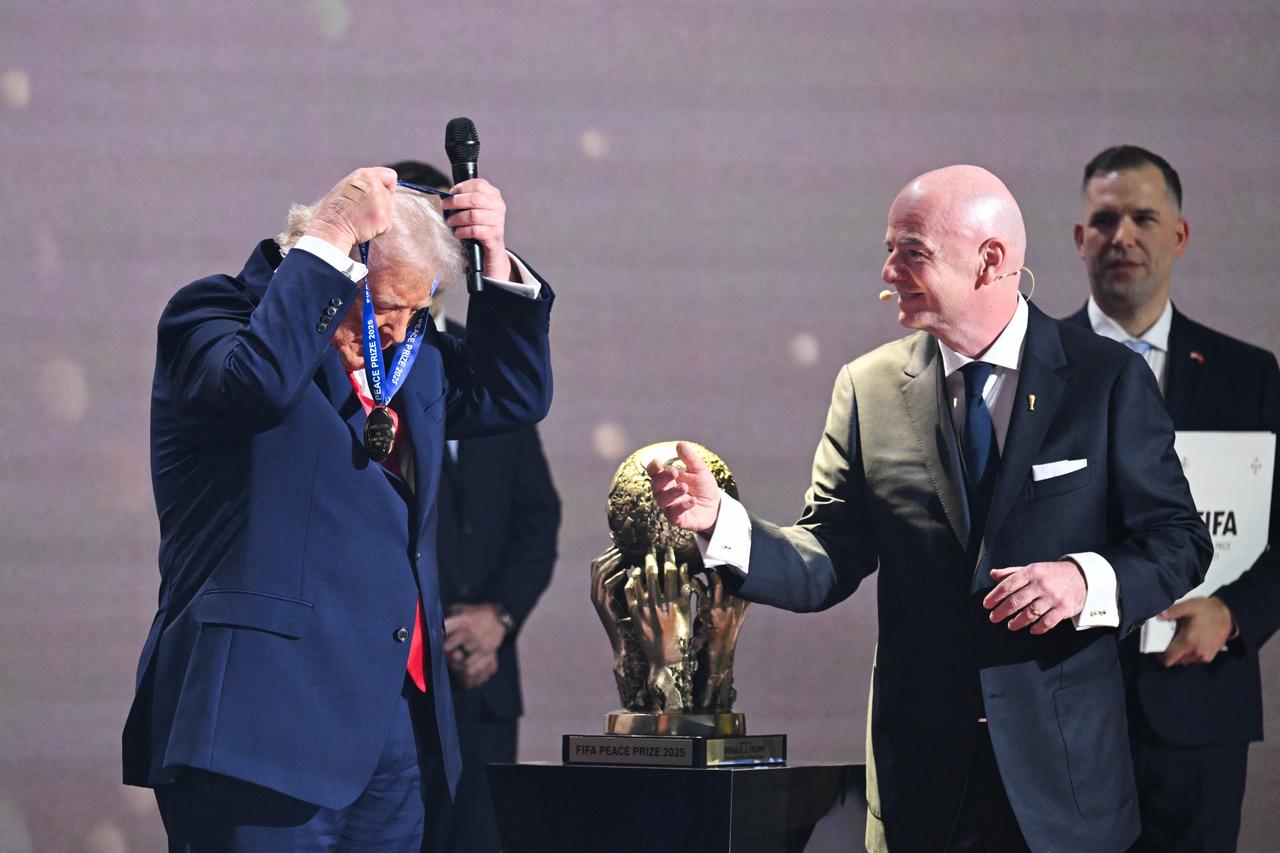


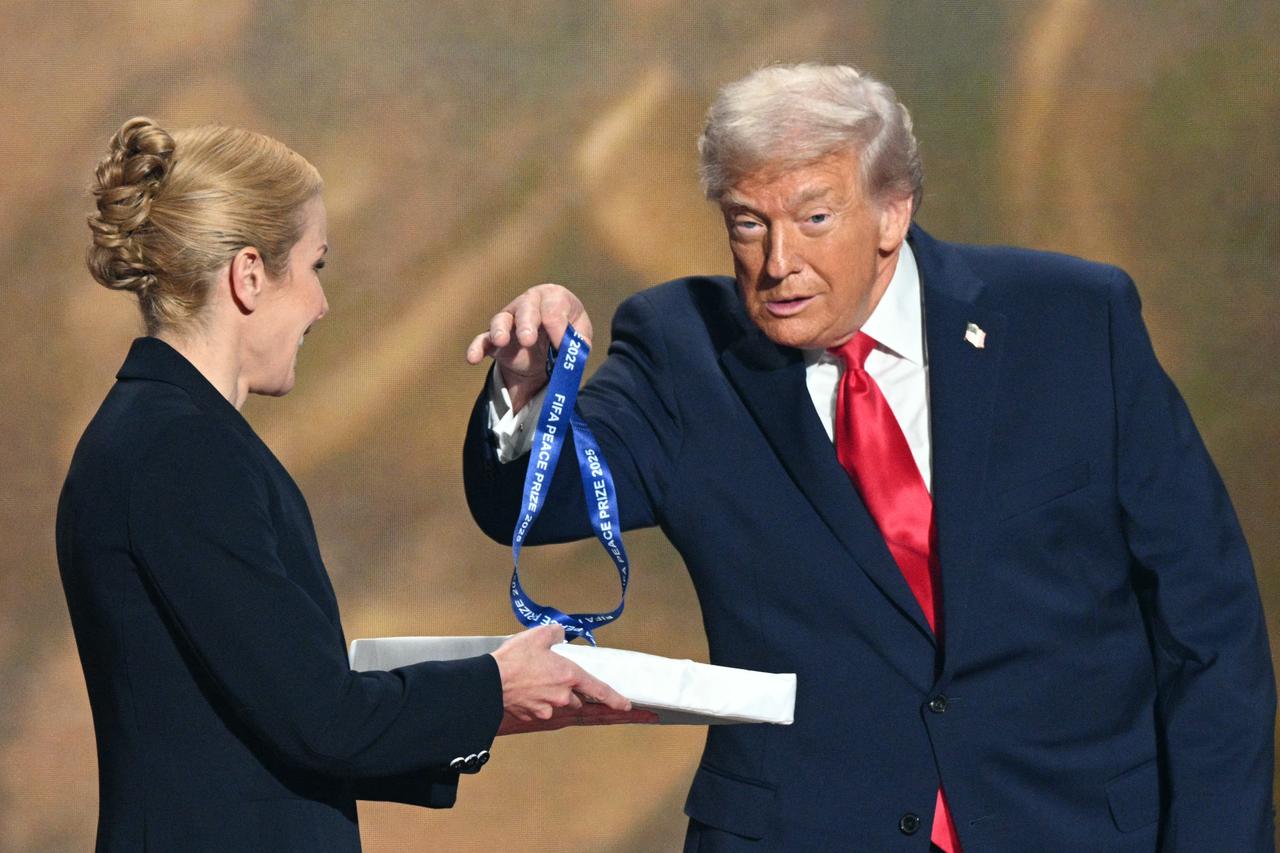
US President Donald Trump received FIFA's inaugural peace prize Friday during a ceremony in Washington that determines the matchups for the 2026 World Cup, marking the first time the global football tournament will feature 48 teams across three host nations.
FIFA President Gianni Infantino presented Trump with the newly created award at the Kennedy Center, describing it as recognition for "the enormous efforts of those individuals who unite people, bringing hope for future generations." The presentation came as part of an elaborate draw ceremony that mapped out the path to glory for the expanded World Cup, scheduled to run from June 11 to July 19, 2026, across the United States, Mexico and Canada.
Trump said receiving the award was "one of the great honors" of his life. The ceremony brought together entertainment and sports royalty, with supermodel Heidi Klum and comedian Kevin Hart co-hosting the proceedings. Musical performances came from the Village People, Robbie Williams and Andrea Bocelli, while NFL legend Tom Brady, ice hockey icon Wayne Gretzky and former NBA star Shaquille O'Neal participated in conducting the draw itself.
Infantino has developed a close relationship with Trump, visiting the White House multiple times since the president's return to office. Trump has positioned the World Cup as a centerpiece event of both his second presidency and the United States' 250th independence anniversary celebration in 2026.

The draw ceremony reflected broader geopolitical strains, with Canadian Prime Minister Mark Carney and Mexican President Claudia Sheinbaum in attendance despite Trump's tense relations with both neighboring countries in recent months.
Iran initially vowed to boycott the ceremony after the United States refused to grant visas to several members of its delegation, though the country's head coach Amir Ghalenoei ultimately attended. The visa dispute highlighted the diplomatic complications that can arise when major sporting events intersect with international politics.
Trump himself has injected domestic political considerations into World Cup planning, threatening to relocate matches away from Democratic-controlled cities if he considers conditions "unsafe." In recent remarks, the president said he would contact Infantino directly about such moves, adding that the FIFA chief "would do that."
 1 min read

The 2026 tournament represents the most logistically complex World Cup in history, expanding from the 32-team format used in Qatar in 2022 to accommodate 48 nations. The expansion has enabled several countries to qualify for their first World Cup, including Cape Verde, Jordan and Curacao.
Teams will be divided into 12 groups of four, with the top two from each group advancing alongside the eight best third-placed teams to create a 32-team knockout stage. A new seeding system will keep the four highest-ranked nations—Spain, Argentina, France and England—separated until the semifinals, provided all four win their groups.
FIFA's head of global football development Arsene Wenger defended the expansion this week as a "natural evolution," calling 48 teams "the right number." However, the tournament's scale has drawn criticism from some quarters, with concerns about maintaining competitive quality and managing the sprawling logistics.
Of the 16 total venues, 11 are located in the United States, with three in Mexico and two in Canada. The Azteca Stadium in Mexico City will host the opening match, while the MetLife Stadium outside New York City will stage the final. Because of scheduling complexities, participating teams will not learn their complete match venues and kickoff times until Saturday.
Reigning champions Argentina will attempt to defend the title Lionel Messi secured for them in Qatar, though the legendary forward will turn 39 during the tournament. Speaking to ESPN this week, Messi acknowledged the uncertainty surrounding his participation, saying he hopes to be there while noting he had previously expressed his desire to play.
Argentina enters as a top seed alongside Spain, Brazil, France, Germany, England, Portugal, the Netherlands and Belgium, with the three host nations also receiving first-pot seeding status. Six World Cup berths remain undecided, with playoff matches still to come. Among the nations awaiting their fate is Italy, which won the tournament in 2006 but failed to qualify for the past two editions.
The draw's completion sets the stage for 18 months of preparation before the world's most-watched sporting event arrives in North America, bringing together football tradition with the political and cultural complexities of its host nations.


 Set as preferred source
 Set as preferred source



 1 min read


