Newsletters


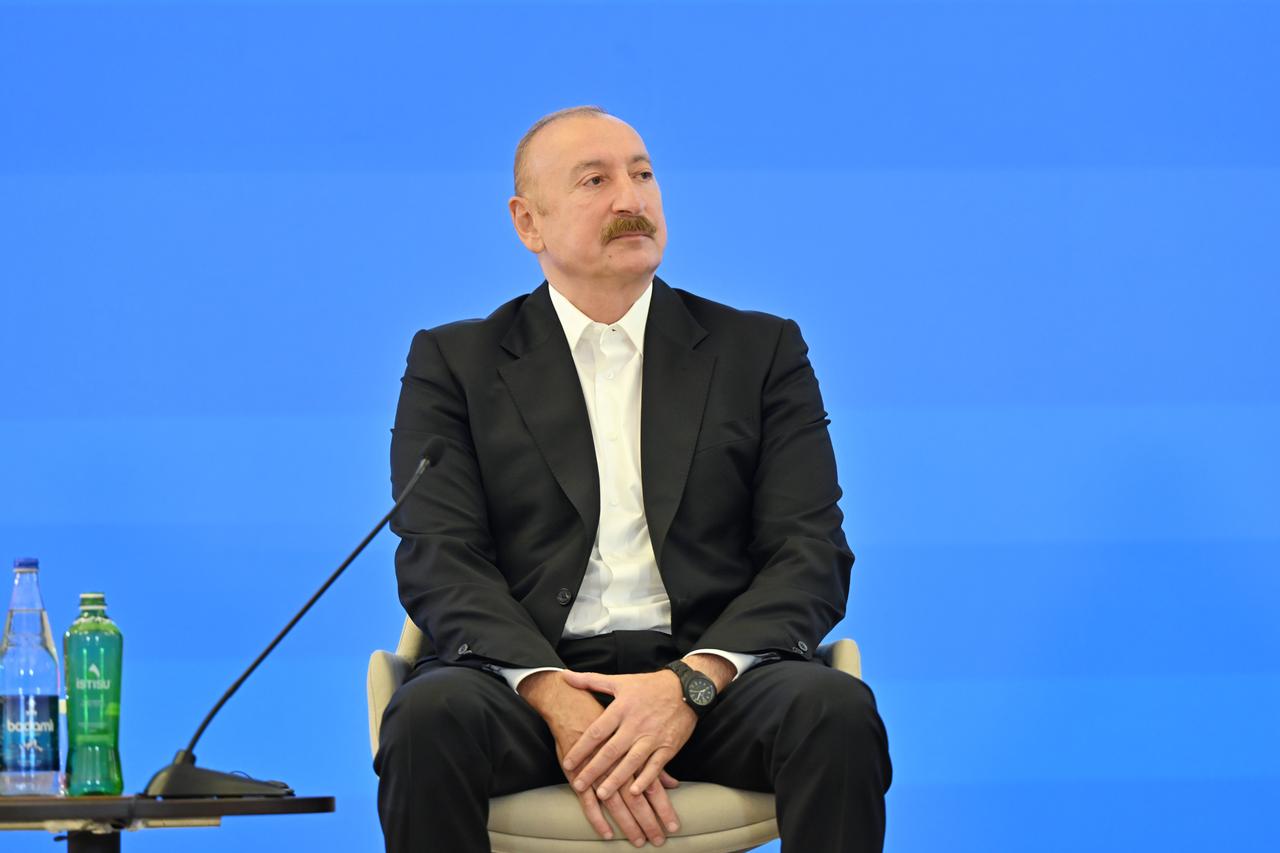


Azerbaijani President Ilham Aliyev said the Russia-Ukraine war must be stopped “immediately,” while also calling for peace in conflicts beyond Azerbaijan’s borders, including between the U.S. and Iran.
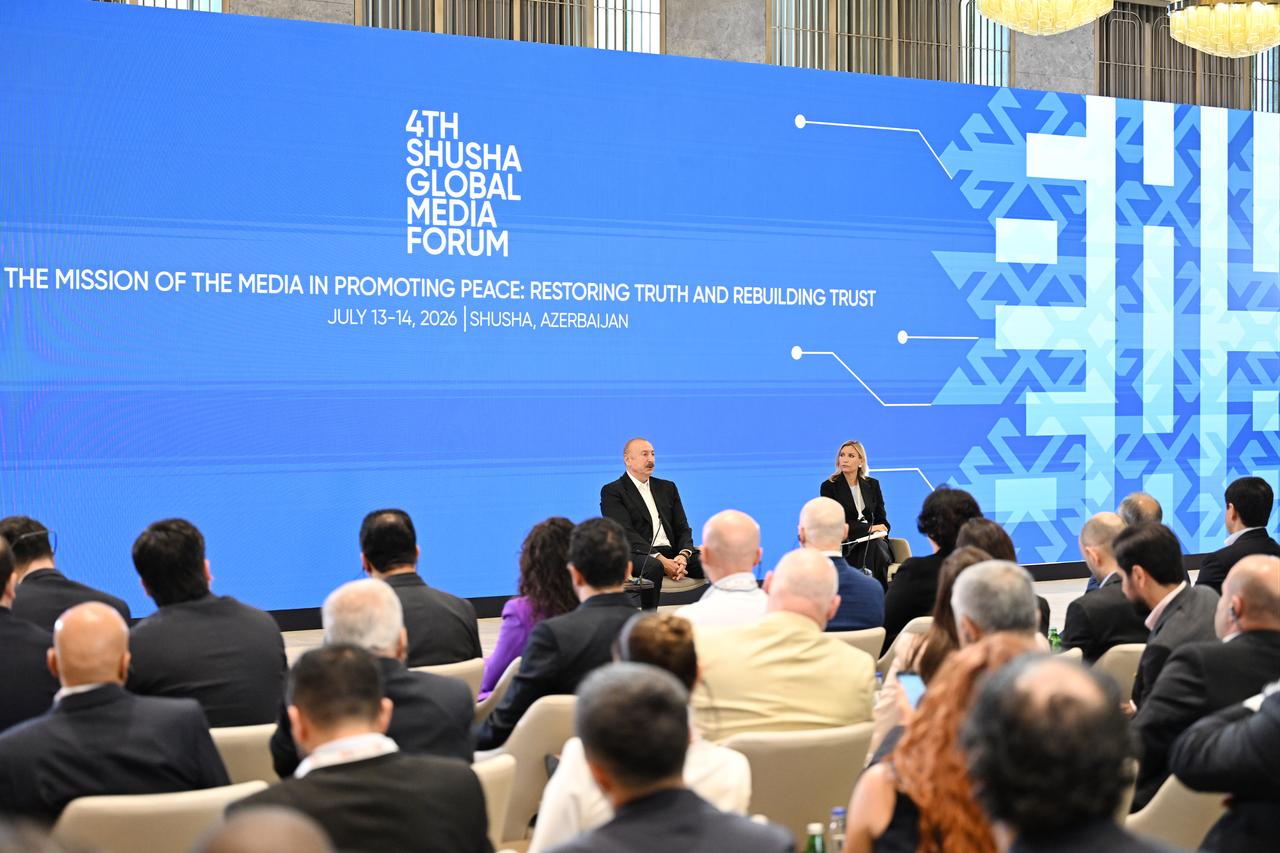
Speaking at the 4th Shusha Global Media Forum, Aliyev evaluated regional and global developments and said Azerbaijan wants peace outside its borders because conflicts around the country create security concerns.
“We want peace beyond our borders,” Aliyev said. “Because even if you have peace inside, if there are conflicts around your borders, you can never feel safe.”
Asked by a Ukrainian journalist what advice he would give to the Ukrainian people and Russian President Vladimir Putin, Aliyev said he would advise Ukraine not to accept occupation.
“I advise Ukraine not to accept occupation. That is what Ukraine is doing. It does not accept occupation,” Aliyev said.
Aliyev said it would not be appropriate to advise on the other side in the framework of the question unless he was asked directly.
But he said his view on the future of military operations was clear.
“As for my assessment of the situation and my opinion on the future continuation of military operations, I think it should have been understood long ago that this war must be stopped. Moreover, it must be stopped immediately,” he said.
Aliyev said Azerbaijan’s position on Ukraine remains unchanged.
“We have always supported, we support and we will continue to support Ukraine’s territorial integrity, sovereignty and the inviolability of its borders,” he said.
“No state’s borders can be changed by force or without the consent of that country’s people. Our position on this issue is extremely consistent and firm,” he added.

Aliyev said Azerbaijan values its relations with Russia and referred to statements by Russian officials, including President Vladimir Putin, that relations between the two countries had gained positive momentum.
“We value our relations with Russia,” Aliyev said.
“There were also difficulties, but the important thing is that this process is now behind us. I can even say that relations have fully normalized. I think everything is going well, and we are pleased with that,” he added.
Aliyev also said the South Caucasus had changed fundamentally, with the Second Karabakh War serving as the driving force behind that change.
He said the war led to major changes in balances that had been considered settled and unchangeable.
Aliyev said later developments in the South Caucasus, including Azerbaijan’s full restoration of sovereignty and Armenia’s European orientation, required both analysts and statesmen to reassess the region.
Aliyev also addressed the U.S.-Iran conflict, saying Azerbaijan believes peace between Washington and Tehran is possible.
He said Azerbaijan appreciates Pakistan’s mediation efforts.
“I am sure that peace is possible. It is very difficult to live when you do not believe in this,” Aliyev said.
He said the important question is what the region would look like after peace is achieved, adding that there are different scenarios and options and that many countries follow their own strategic views.
Aliyev referred to Azerbaijan’s experience with Armenian occupation and the Second Karabakh War, saying Azerbaijan stopped where it needed to stop.
“We stopped at the point where we had to stop. We stopped so as not to continue the war forever,” he said.
Aliyev said Azerbaijan could have had other options, but responsibility and wisdom required stopping.
“If we had not stopped, the war with Armenia would have continued. Maybe it would have continued at low intensity, then escalated again, then slowed down again, and people would have continued to die,” he said.
He said the same should be done in the Middle East.
“When the period of hot conflict ends, Gulf countries and Iran should stop. They should try to normalize relations and should not turn this process into a global conflict,” he said.
Aliyev said the Parliamentary Assembly of the Council of Europe and the European Parliament are biased against Azerbaijan.
He said both bodies had taken steps against Azerbaijan and recalled that Azerbaijan suspended its participation in PACE.
Aliyev said Azerbaijan is also considering fully leaving the Council of Europe.
He said Council of Europe Secretary-General Alain Berset had asked him not to take such a step, and that he had put the decision on hold after the request.
“However, there has been no development since then,” Aliyev said.
He said PACE had raised “very strange and ultimatum-like demands” toward Azerbaijan and described them as unacceptable.
“We were not the ones who damaged relations; they were,” he said. “They deprived us of the right to vote without any legitimate reason.”
Aliyev said Azerbaijan’s voting rights in PACE should be restored.
“If Azerbaijan completely leaves the Council of Europe, no one in the country would notice it,” Aliyev said.
“Being inside or outside that institution does not change much. Maybe it is better not to be inside. But we are not seeking confrontation,” he added.
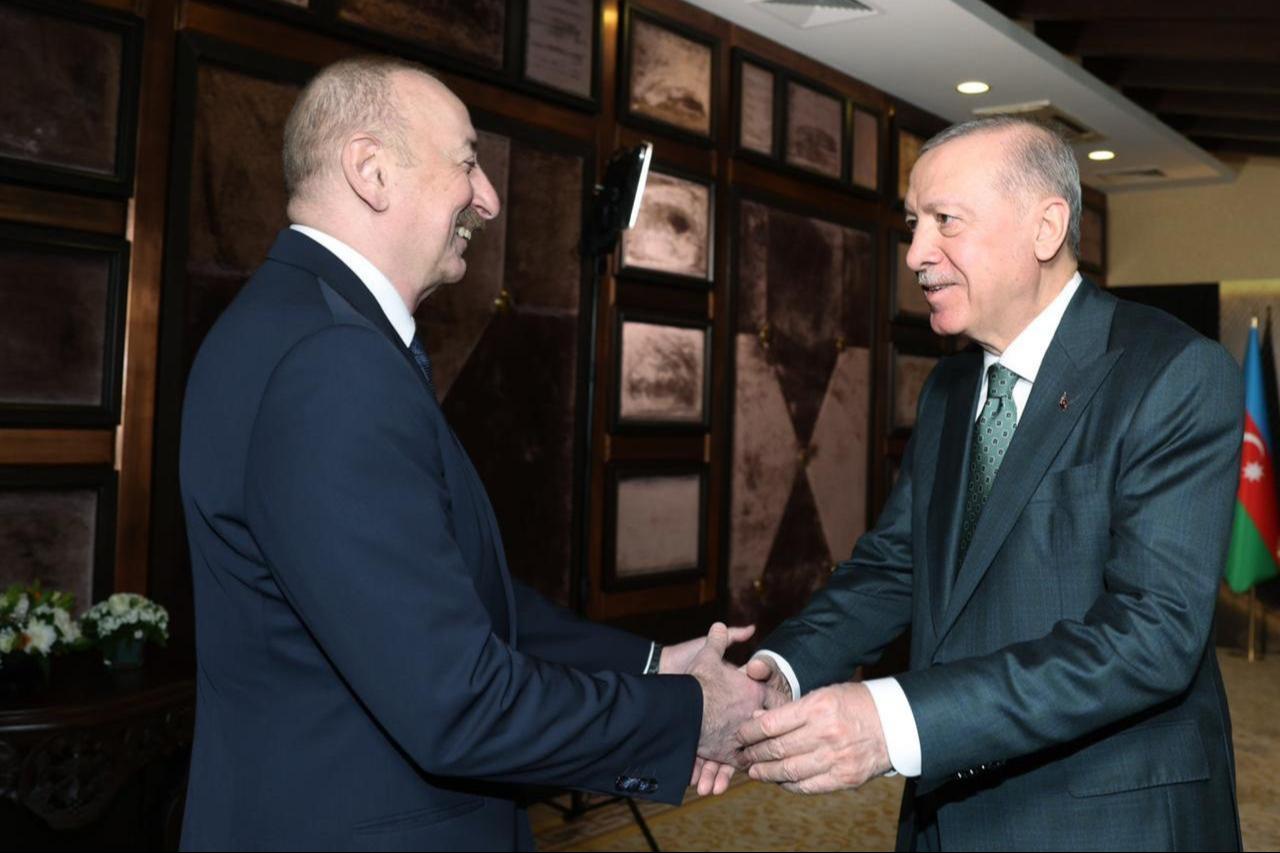
Aliyev also commented on relations between Türkiye and Azerbaijan in response to a question from Anadolu Deputy Director-General and Editor-in-Chief Yusuf Ozhan.
He said Türkiye and Azerbaijan are the two closest countries in the world.
Aliyev said no other two countries support each other and maintain such close friendship across political, economic, energy, connectivity and people-to-people relations.
“This is a great achievement for our peoples and countries. We are much stronger when we are together,” he said.
Aliyev said Türkiye-Azerbaijan relations are also important for regional stability and cooperation.
He said they are also a major security factor, referring to the Shusha Declaration signed with the Turkish president in Shusha five years ago.
“This document actually raised our relations to the level of an alliance. Therefore, we are not only brothers and friends, but we are also allies,” Aliyev said.
“If something unfortunate or bad happens to one of us, the other will stand by his brother with all the means it has, including its military capacity,” he added.
Aliyev said having similar origins or belonging to the same language family does not always create such a foundation.
He said there are cases in which people who speak almost the same language fight each other, and people who share the same religion kill one another.
“For this reason, the relationship between Türkiye and Azerbaijan is a model that should be studied and taken as an example by neighboring countries. Neighbors should act just like Türkiye and Azerbaijan,” he said.
Aliyev said transit through Azerbaijan has increased because of the current situation in the Middle East.
He said Azerbaijan’s importance in transit transportation is growing day by day and that the country was ready to meet the increased cargo volume.
“Now we are further expanding our capacity,” he said.
Aliyev said Azerbaijan’s port, already the largest commercial port on the Caspian Sea with a capacity of 15 million tons, would be expanded to 25 million tons.
He said Azerbaijan is also building 10 ships at its shipyard to carry cargo from and to Europe.
Aliyev said close relations with Central Asian countries and the European Commission, as well as Azerbaijan’s location between the two destinations, give the country a major advantage.
He said Azerbaijan’s policy of cooperation and readiness to address neighbors’ concerns also strengthens that advantage.
Aliyev also said interest in Azerbaijani gas has increased after the Russia-Ukraine war.
“We are exporting gas to markets we did not even think of in previous years, for example, Syria,” Aliyev said.
“We can also reach neighboring countries through Syria. There is also a great need for natural gas there,” he added.
Aliyev said Azerbaijan tells its European partners that long-term contracts are needed.
He also said joint efforts are needed to expand the natural gas transportation system.
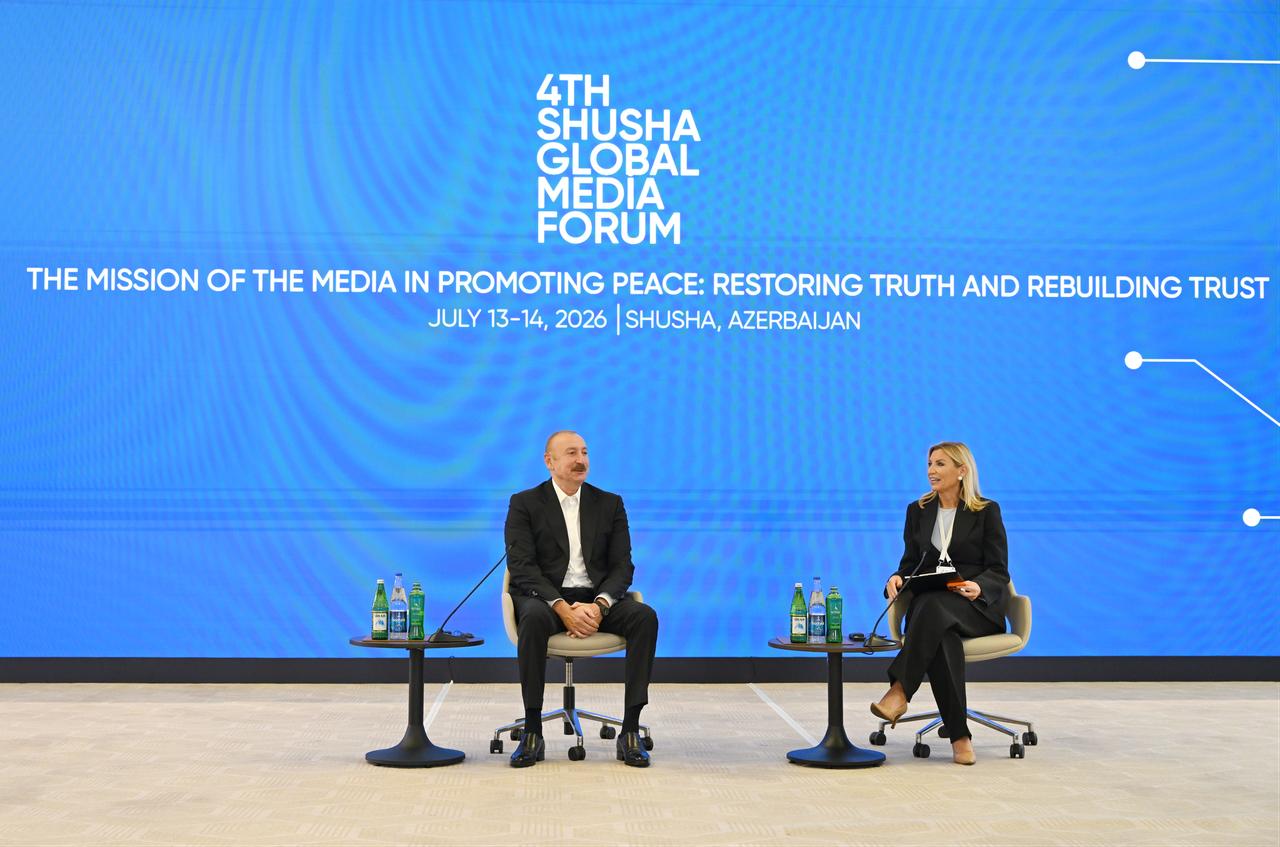
The 4th Shusha Global Media Forum is being held under the theme “The Mission of Media in Promoting Peace: Restoring Truth and Rebuilding Trust.”
The forum includes about 160 participants from 53 countries, more than 30 news agencies, 10 international organizations, and about 60 media outlets.
The event will last two days.


 Set as preferred source
 Set as preferred source


 1 min read
 1 min read