Newsletters


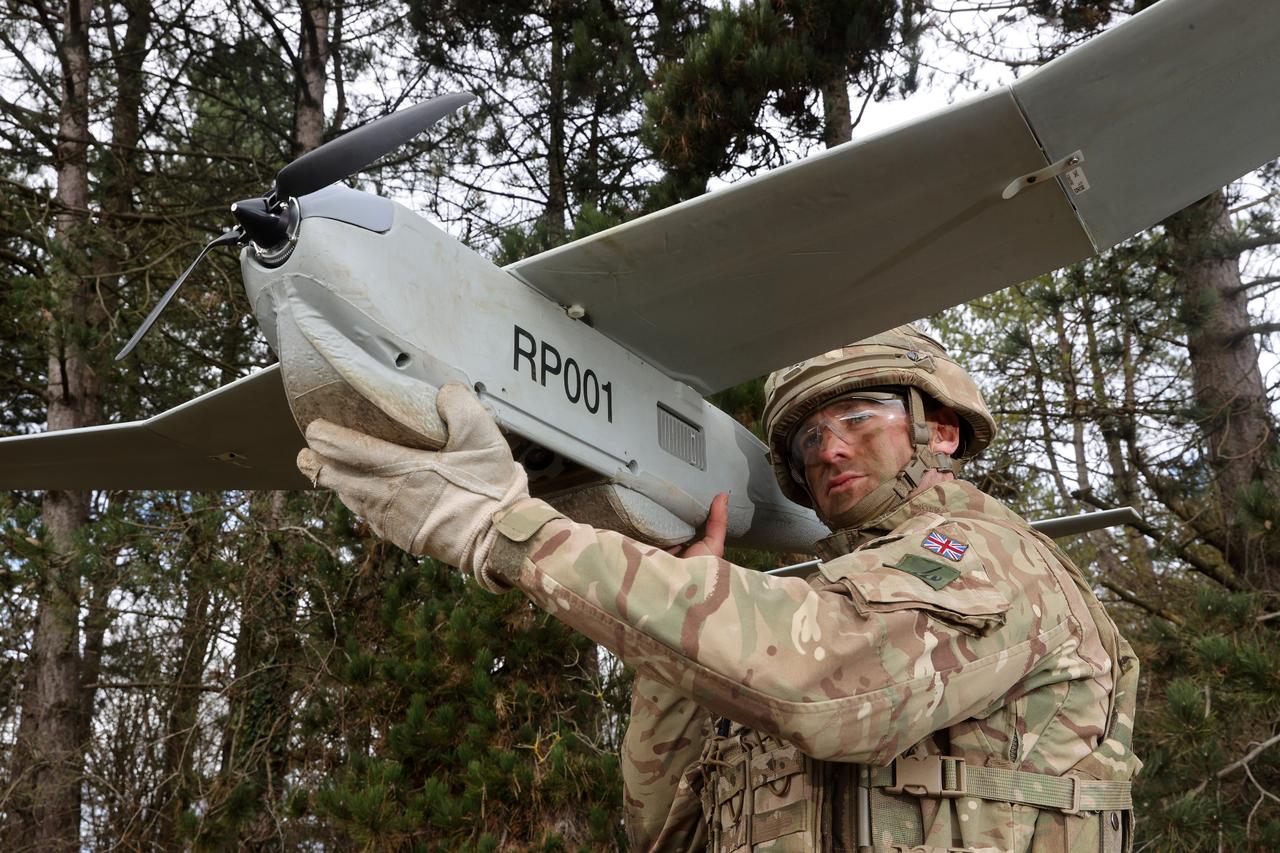


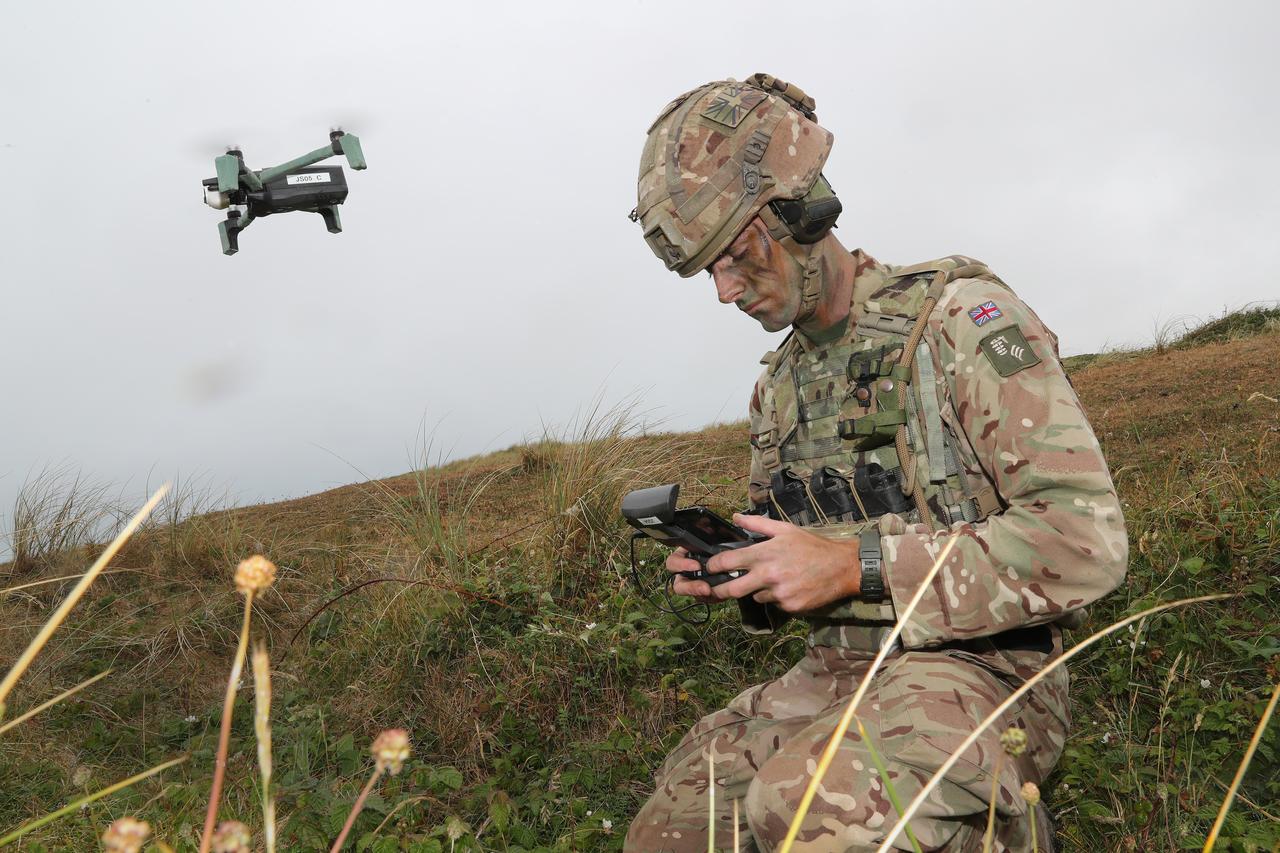
If a full-scale war broke out in Eastern Europe tomorrow, the British military would exhaust its drone stockpile in less than a week, able to launch only a few hundred per day, leaving it between 80% and 90% short of what it would need.
Britain's army has around 6,000 drones in its total stockpile, a figure senior military officials and defense sources say would be wiped out within days of a war with Russia, the Telegraph and Guardian reported.
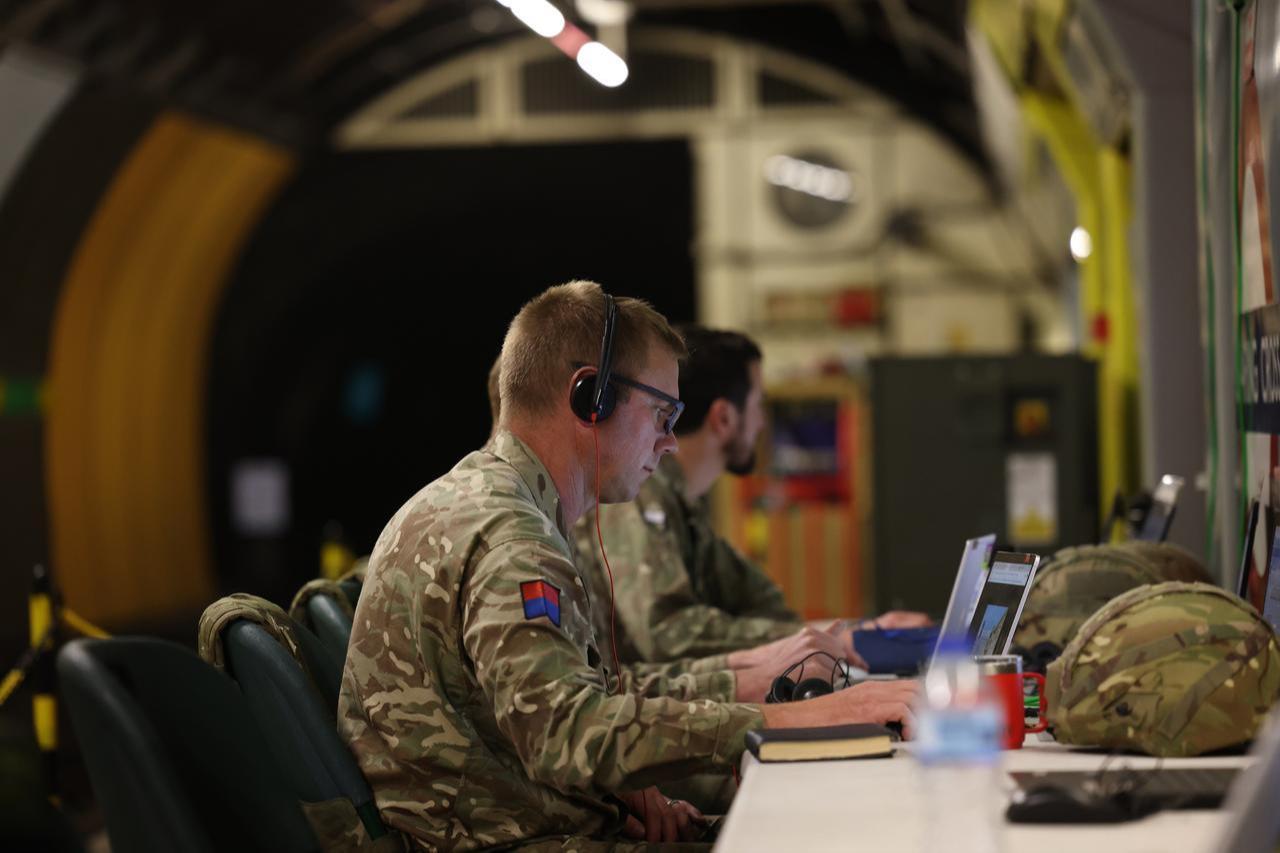
The reports came as NATO conducted a classified command exercise deep beneath Charing Cross station, war-gaming a 2030 Russian attack on the Baltics.
In a full-scale conflict, estimates suggest Britain would need to deploy 1,600 one-way kamikaze drones per day to hit troops, air defenses, and armor, and around 3,000 surveillance drones per day to monitor enemy movements and identify targets.
Against those numbers, the current stockpile would last less than a week.
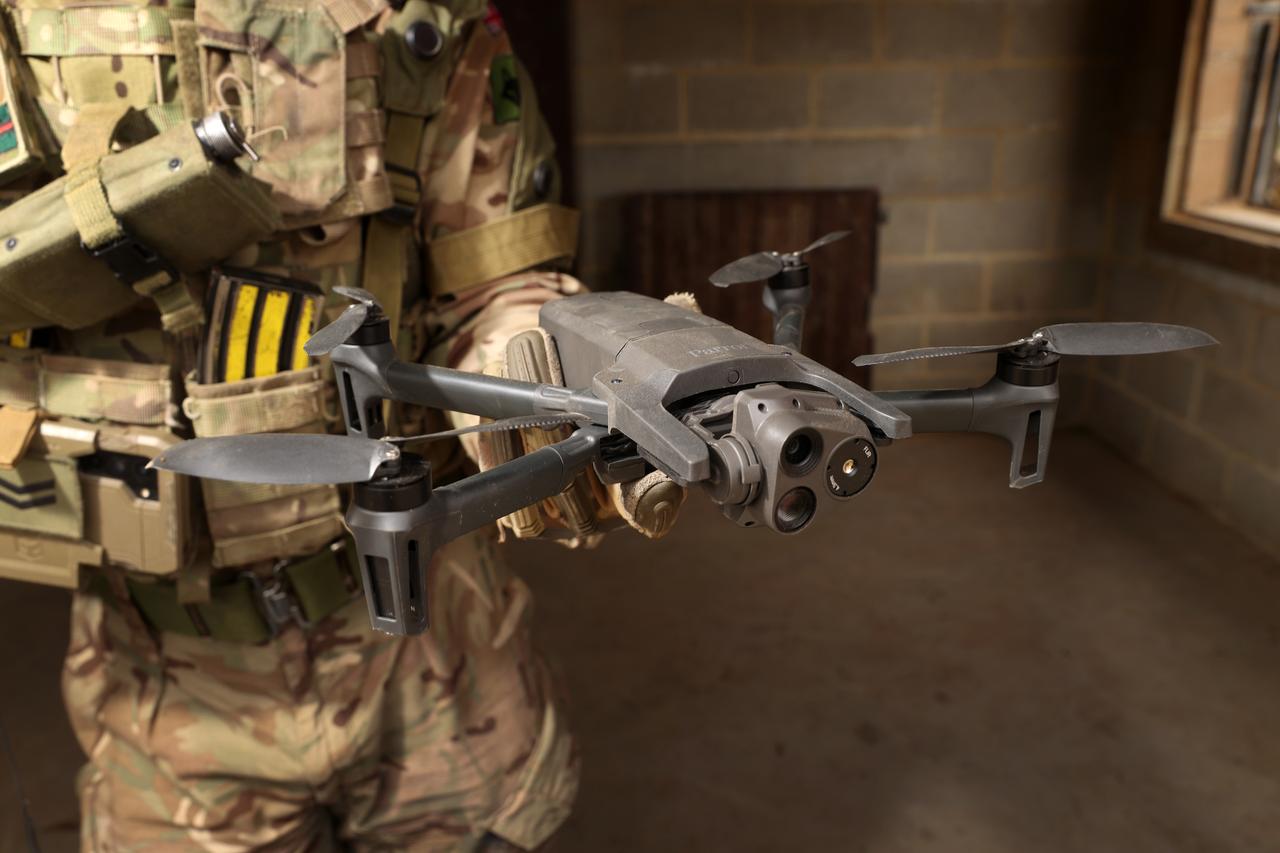
"The British army is between 80 and 90% short of the drones it thinks it needs, for reconnaissance, air defense or attack," the Guardian reported.

Exercise Arrcade Strike was conducted this week in the disused Jubilee Line terminus beneath Charing Cross station, with dozens of mostly British soldiers directing a simulated war game defending NATO's Baltic member, Estonia, from a Russian invasion in 2030, unknown to commuters above. Personnel from Britain, France, Italy and the U.S. participated.
NATO's Supreme Allied Commander Europe Gen. Alexus Grynkewich and the U.K.'s Allied Rapid Reaction Corps (ARRC) Commander Lt. Gen. Mike Elviss were involved.
"The scenario you are about to see is very deliberately set in 2030 because that is where we see the threat from Russia to be at its most acute," Elviss said.
Defense Secretary John Healey visited Estonia, where the bulk of the U.K.'s 4th Light Brigade is deployed as part of a related exercise, rather than the underground bunker.
The underground facility, previously featured in the James Bond film "Spectre," can house 500 people and transmit 10 terabytes of data per day. It was chosen to model how a military headquarters would need to operate deep underground in any future European conflict, given the threat of long-range drone and missile strikes that have characterized the war in Ukraine.
The exercise also tested Project ASGARD, a British AI digital communications system that uses artificial intelligence from U.S. firm Shield AI to link surveillance nodes to weapons and compress target acquisition decision-making from 72 hours to two hours, a model influenced by Israeli and U.S. AI targeting systems used in Iran.
Journalists attending were invited to use virtual reality headsets from U.S. technology company Anduril to view a 3D model of the battle plan in which thousands of NATO drones lead a counterattack, knocking out Russian air defenses and positions from the Estonian border to St. Petersburg, with fighter jets and artillery in support.
The Labour government has committed £4 billion ($5.38 billion) on drones across the armed forces in this Parliament. But a senior defense source told the Telegraph this is insufficient.
Rebuilding drone capacity would require an additional £550 million per year just to meet the army's targets.
The Guardian estimated it would cost £50 million per year to build the volumes of simple one-way attack drones and £500 million per year to develop more sophisticated models such as armed autonomous vehicles.
The ARRC is responsible for commanding up to 100,000 NATO troops in the event of war and comprises Britain's premier warfighting units.
Gen. Chris Donahue, head of NATO Land Command and U.S. Army Europe and Africa, said the need for NATO to be ready by 2030 was "not a slogan, it is what we must do. We must scale our industry and innovation in a way we haven't needed since the end of the Cold War."
The drone shortfall sits alongside wider readiness concerns exposed by the Iran war.
U.K. Prime Minister Keir Starmer faced criticism for taking three weeks to deploy HMS Dragon, a Type 45 destroyer, to the Eastern Mediterranean after a drone attack on RAF Akrotiri in Greek Cyprus in March.
Four of Britain's other destroyers are in port undergoing maintenance or long-term upgrades, and the frigate fleet has been reduced to five operational warships.
Trump recently mocked Britain's two aircraft carriers, HMS Queen Elizabeth and HMS Prince of Wales. Lord George Robertson, a former NATO secretary-general and former defense secretary, accused the government of "corrosive complacency" and paying "lip service to the risks, the threats, and the bright red signals of danger."
The British Army currently has around 70,000 full-time, fully trained, deployable troops, its smallest size in more than 200 years.
Starmer is expected to order Chancellor Rachel Reeves to approve an £18 billion increase in defense spending to close a funding gap, with publication of a long-delayed defense investment plan also anticipated.
Early indications suggest several billion more in defense budget increases will be announced next month, the Guardian reported.


 Set as preferred source
 Set as preferred source



 4 min read