Newsletters


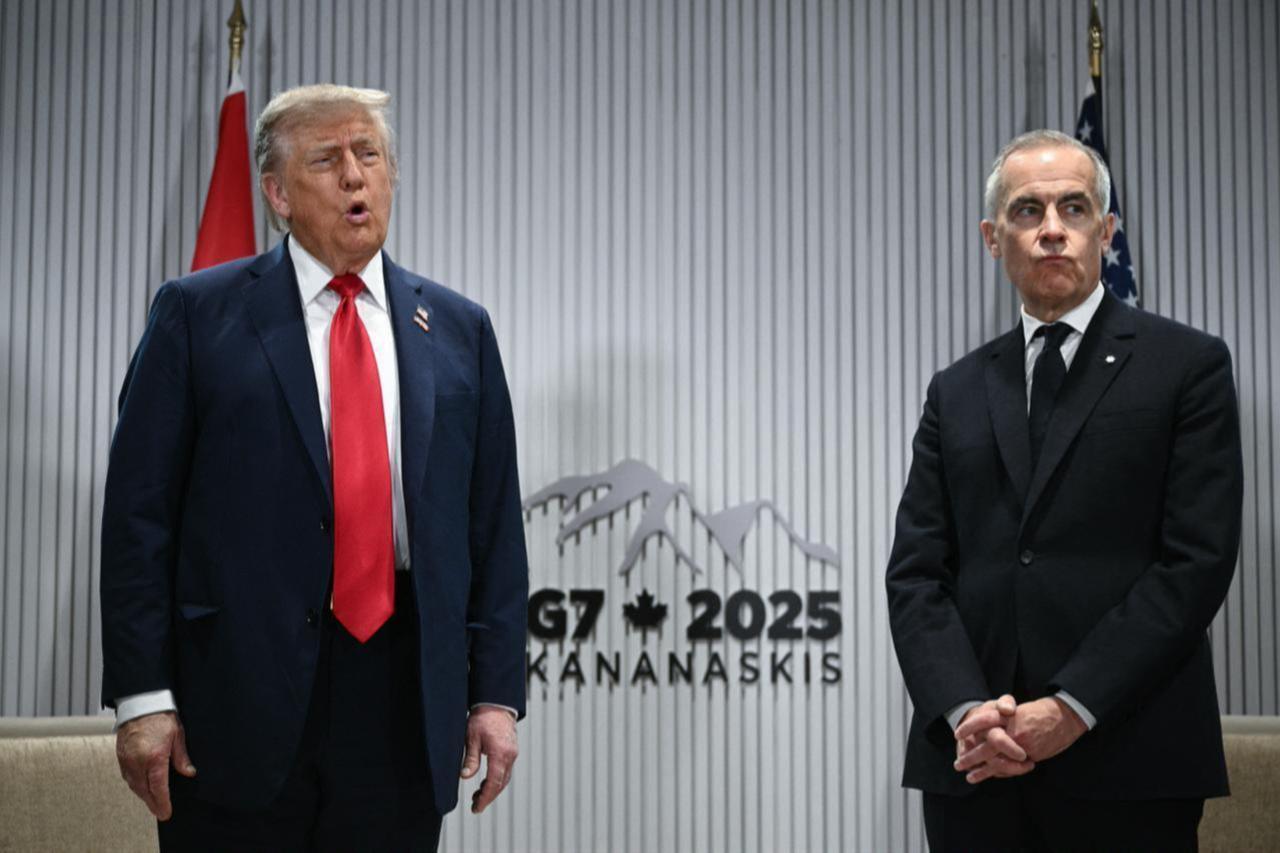


Canada's Prime Minister Mark Carney rejected American characterizations of Canada's economic vulnerability on Thursday, challenging a widely held "misimpression" about the depth of the country's reliance on the United States while trade negotiations between the two neighbors grew increasingly contentious.
The remarks came as Ottawa and Washington brace for difficult talks over the future of their North American trade arrangement, with senior US officials sharpening their rhetoric ahead of negotiations expected to intensify in the coming weeks.
Testifying before Congress on Wednesday, Commerce Secretary Howard Lutnick argued that Canada's economy relies on the American market, citing the size and strength of the US economy. Carney, speaking to reporters the following day, pushed back directly.
"There is a misimpression, by some, of the degree to which we are reliant on the United States," the prime minister said, acknowledging that the US remains Canada's largest trading partner by a significant margin before pointing out that Canada holds the same status for the United States. "There is a symbiosis between the two," he said.
Carney added that Canada's future was "first and foremost going to be determined by what we do here," a framing that implicitly rejects the leverage Washington has sought to project in advance of formal negotiations.
President Donald Trump has repeatedly insisted the US economy needs nothing Canada produces. Trump made similar remarks at the World Economic Forum in January, claiming Canada's economic survival depends entirely on American goodwill, a position Carney's government has consistently disputed.
The negotiations center on the future of the United States-Mexico-Canada Agreement, or USMCA, a pact Trump signed and celebrated during his first term but has since dismissed as "irrelevant." The deal, which replaced the North American Free Trade Agreement in 2020 after years of renegotiation, governs roughly $1.3 trillion in annual cross-border trade across North America.
US Trade Representative Jamieson Greer offered a more measured assessment this month, saying that core "pillars" of the agreement were functioning reasonably well and would likely survive any renegotiation, while emphasizing that significant portions of the deal require revision.
Both Greer and Lutnick, however, were sharply critical of a recent decision by Ontario, Canada's most populous and industrially vital province, to ban the sale of American liquor and wine in retaliation for US tariffs on Canadian steel and automobiles. Lutnick called the measure "insulting and disrespectful to America." Greer told US lawmakers that enforcement action under USMCA dispute mechanisms may be warranted.
Asked about Ontario's decision on Thursday, Carney declined to distance his government from the provincial move, noting that the United States had itself violated the existing trade agreement. "The tariffs on steel, the tariffs on aluminum, the tariffs on automobiles, those are violations of our trade deal," he said.
The statement signals that Ottawa intends to approach the coming talks not as a supplicant but as a party with its own grievances, having absorbed months of tariff pressure that economists warn is inflicting serious harm on Ontario's automotive-dependent economy.
Canada supplies the United States with significant volumes of energy, lumber, automobiles, and metals, and the two economies are deeply integrated through supply chains that took decades to construct. Analysts have noted that any major restructuring of USMCA would carry substantial costs on both sides of the border, a dynamic that Carney appeared to be underscoring with his "symbiosis" framing.


 Set as preferred source
 Set as preferred source


 1 min read

 1 min read