Newsletters


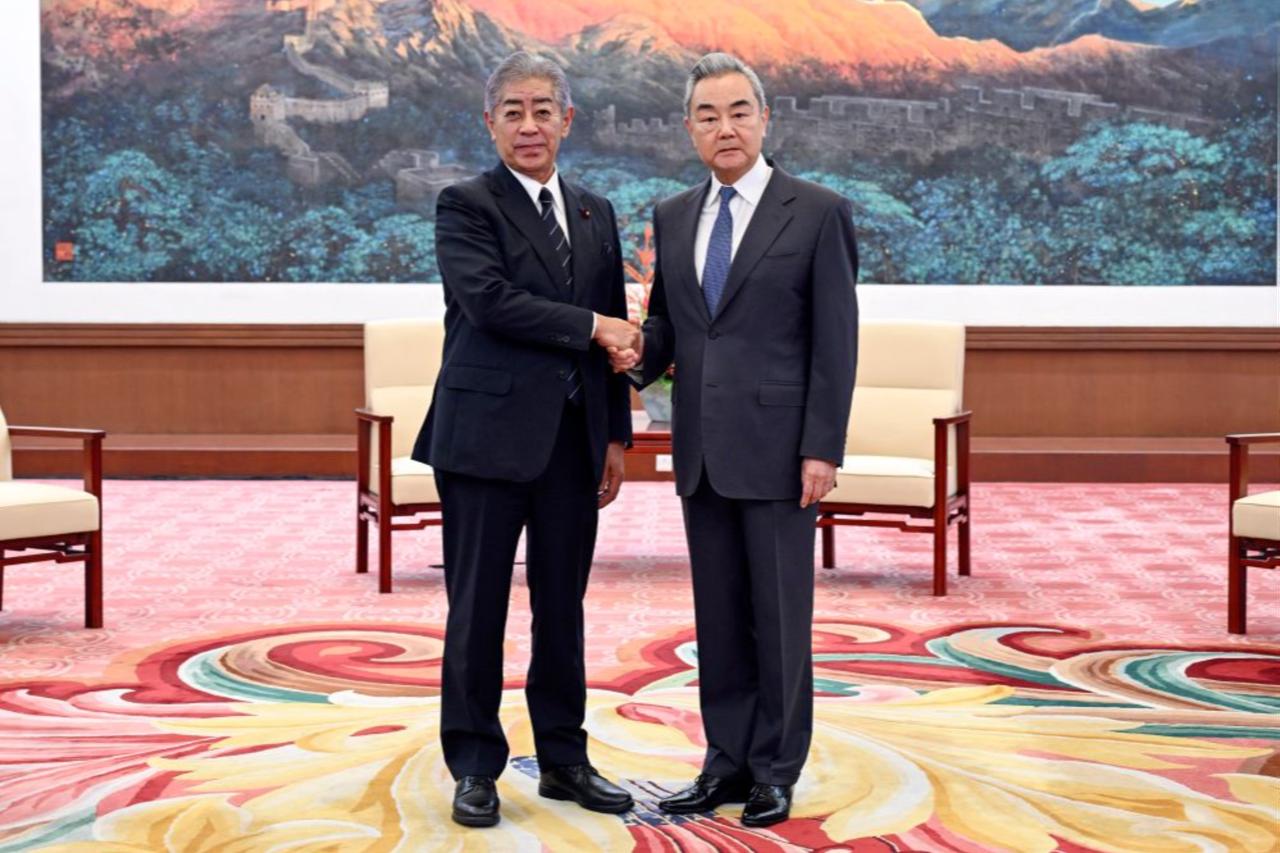


Chinese Foreign Minister Wang Yi warned Japan that it would have "no future" if it failed to learn from its World War II history, challenged the postwar order or returned to militarism, according to a statement from China's Foreign Ministry.
Wang made the remarks in Beijing during a meeting with Takeshi Iwaya, chairman of the Japan Association for the Promotion of International Trade.
Noting that this year marks the 80th anniversary of the Tokyo Trials, where Japanese war criminals were prosecuted after World War II, Wang said Japan must confront its wartime past.
"If Japan does not learn lessons from history and challenges the postwar 'Peace Constitution,' tries to revive its history of aggression and resurrect war criminals, it will not even be able to face the world, let alone move toward the future, and it will have no future," Wang said.

Wang said Japan's immediate task was to correct what he described as the erroneous words and actions of its leaders on Taiwan, adopt what he called the correct attitude toward historical issues and develop a rational and objective understanding of China.
His comments came amid continuing diplomatic tensions between Beijing and Tokyo following remarks by Japanese Prime Minister Sanae Takaichi about the possibility of military involvement in a conflict over Taiwan.
On Nov. 7, 2025, Takaichi told Japan's parliament, the Diet, that a crisis in the Taiwan Strait could constitute a situation threatening Japan's survival and could lead to the use of military force.
The remarks marked the first time a Japanese prime minister had explicitly stated that Japan could become militarily involved if Taiwan were invaded, departing from Tokyo's previous policy of strategic ambiguity.
Takaichi later said her remarks were hypothetical and that she would avoid making similar comments in the future, but she refused to withdraw them.
China, which regards Taiwan as part of its territory, issued a formal protest over Takaichi's comments.
The dispute later expanded to travel warnings, flight cancellations, blocked concerts, import restrictions, political exchanges and military frictions.
China has also repeatedly criticized visits and offerings by leaders and politicians from Japan's ruling Liberal Democratic Party to the controversial Yasukuni Shrine, where senior Japanese military figures convicted of World War II war crimes are among those honored.


 Set as preferred source
 Set as preferred source


 1 min read
 1 min read