Newsletters


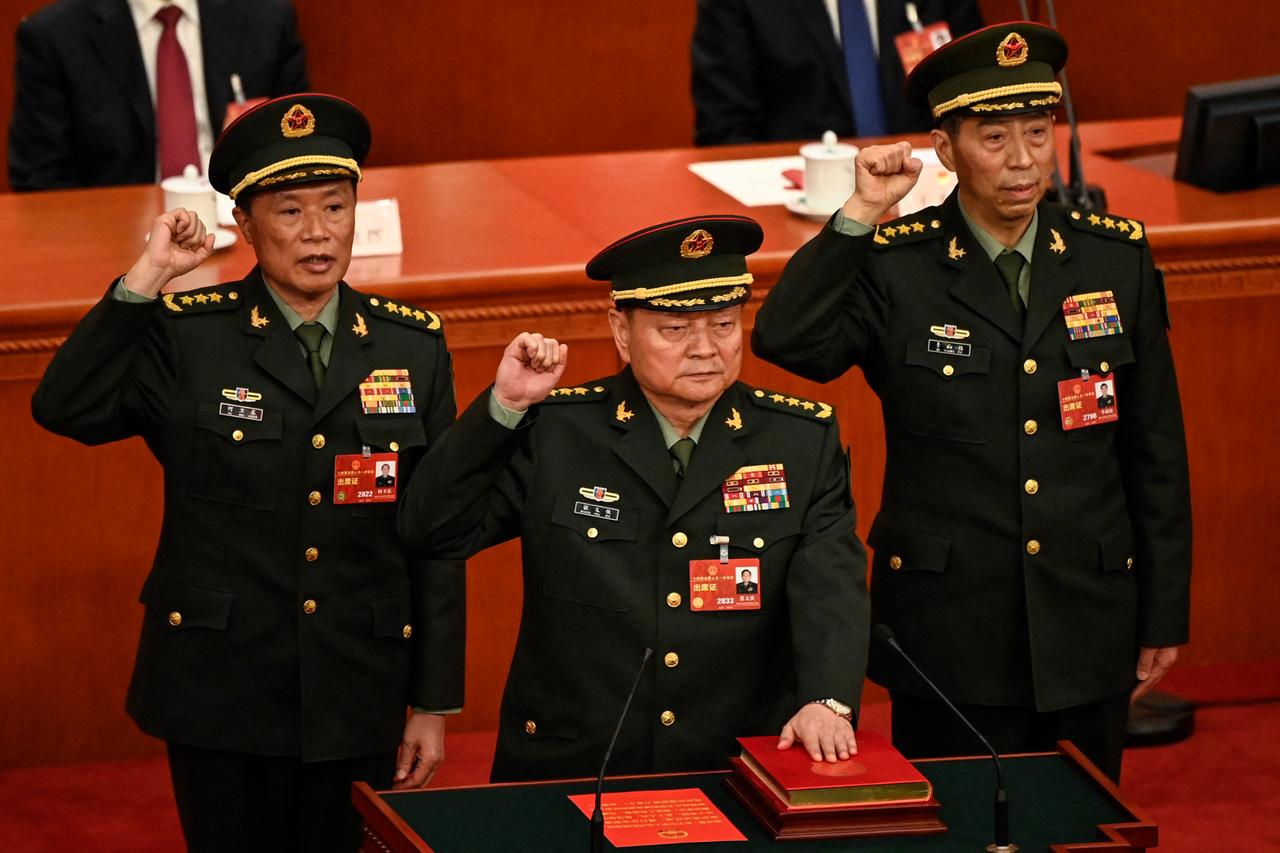


China’s leadership has defended sweeping investigations and removals within its armed forces, saying the probes are intended to eliminate weakened combat capability and reinforce loyalty to the ruling Communist Party. This comes after a series of high-level military and civilian officials faced disciplinary action, the New York Times reported on Tuesday.
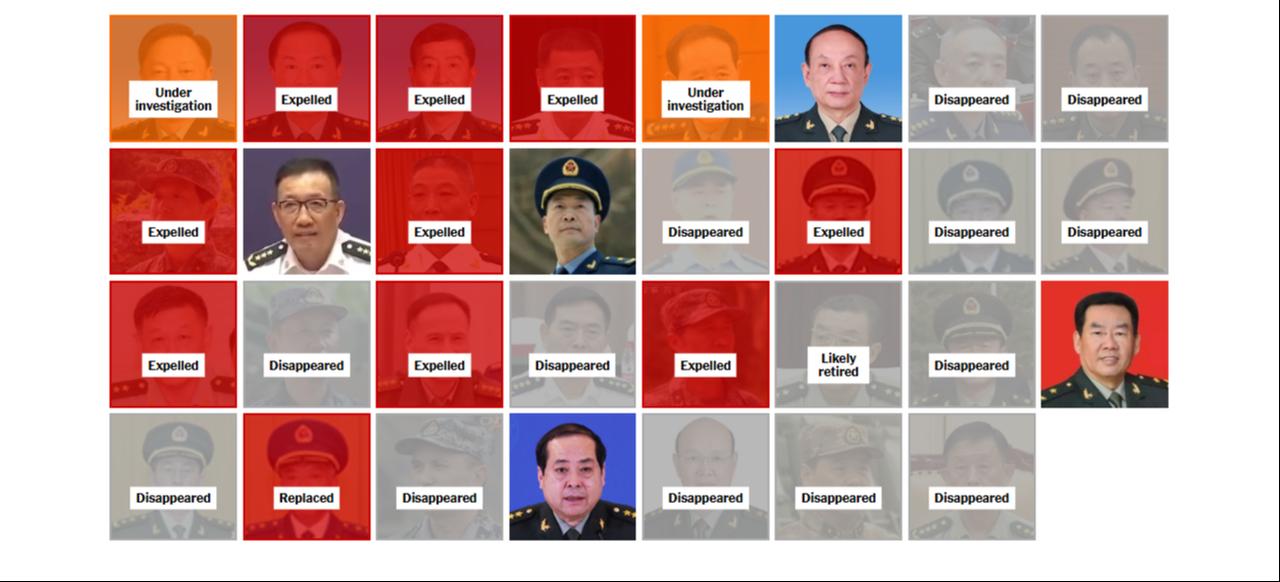
The campaign has dramatically reshaped China’s military leadership and left its top command body with only two active members.
China’s official military newspaper, the People’s Liberation Army Daily, said investigations into senior generals would eliminate “watered-down” combat capability within the armed forces.
A front-page editorial said the “resolute investigation and punishment” of Gen. Zhang Youxia and Gen. Liu Zhenli would remove obstacles hindering the development of the military and inject momentum into building a first-class fighting force.
The paper accused the two generals of undermining President Xi Jinping’s authority, abetting corruption and weakening Communist Party control over the military.
It called on officers and soldiers to pledge loyalty to the Chinese Communist Party and devote all efforts to preparing for future wars, while acknowledging that the dismissals have caused short-term hardship.

Zhang, 75, is the first vice chairman of the seven-member Central Military Commission, which oversees the People’s Liberation Army’s overall capability and operational preparedness. Liu serves as chief of staff of the CMC Joint Staff Department.
With Zhang and Liu under investigation, and after the earlier removal of He Weidong, Li Shangfu and Miao Hua, the commission is now left with only two active members: Xi and Gen. Zhang Shengmin, who oversees discipline inspections.
Zhang Shengmin previously served in political and anti-graft roles within the Rocket Force, which controls China’s nuclear and conventional missile programs.
Beijing-based analyst Einar Tangen said the campaign is part of a long-running effort to rebuild a disciplined military under party control rather than a sudden political purge.
He said Xi inherited a fragmented and corruption-prone military structure, describing pre-2012 conditions in which service branches operated as semi-autonomous “small kingdoms.”
Since 2013, over 100 senior officers have been investigated, and sweeping reforms replaced seven military regions with five theater commands in 2016 to break entrenched power bases.
Chinese authorities have said Zhang and Liu are under investigation for “suspected serious violations of discipline and law,” a phrase commonly associated with graft.
The Wall Street Journal reported that Zhang was accused of leaking information about China’s nuclear weapons program to the United States and accepting bribes, claims Chinese officials have not confirmed.
Foreign Ministry spokesperson Guo Jiakun said he was not familiar with the allegations, while analysts questioned how such leaks could occur given Zhang’s closely monitored communications.
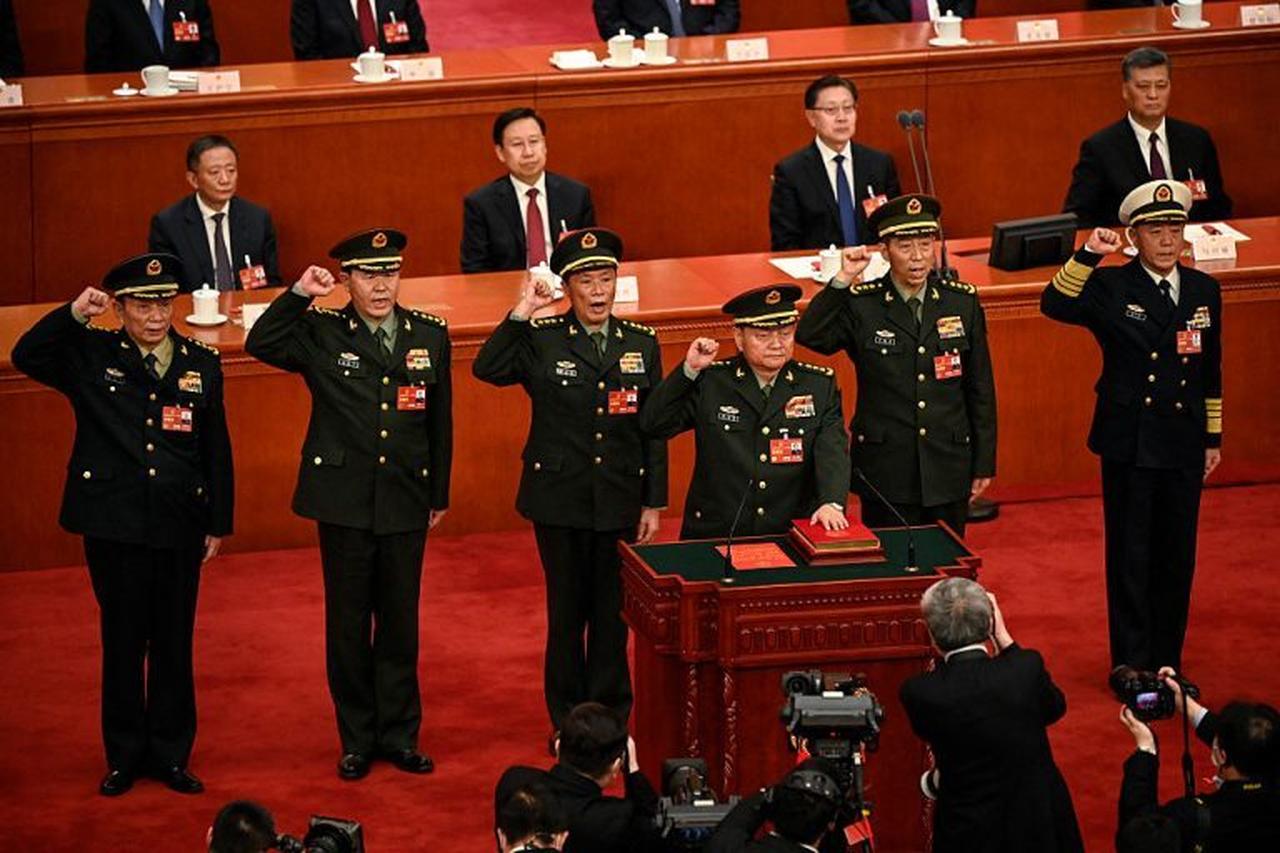
The crackdown has affected nearly all branches of the military, including the Rocket Force and the navy.
China’s five theater commands, created in 2016, have also been hit, including the Eastern Theater Command, responsible for operations around Taiwan. A new commander was appointed last year.
The scale of dismissals has been described as unmatched in modern Chinese history and has created what analysts describe as a leadership vacuum within the armed forces.
The anti-corruption drive has extended beyond the military.
China is also investigating Emergency Management Minister Wang Xiangxi over alleged serious disciplinary and legal violations, according to state media.
Wang, 63, previously held senior posts in the coal industry and provincial government. Earlier this week, Sun Shaocheng, a vice director at the National People’s Congress, was also reported to be under investigation.
As Xi, now 72, prepares for what is widely expected to be a fourth term as Communist Party secretary-general beginning in 2027, the leadership faces the challenge of rebuilding senior military ranks with commanders deemed both capable and loyal.
State media has said that despite current disruptions, the reforms are expected to result in a stronger and more disciplined military.


 Set as preferred source
 Set as preferred source


 4 min read