Newsletters




Even the briefest visit to the labyrinth of fascism is a perilous journey.
Trying to describe the belligerence of sights and sounds is like attempting to explain in words the taste of gasoline: inflammatory, maddening— guaranteed to agitate.
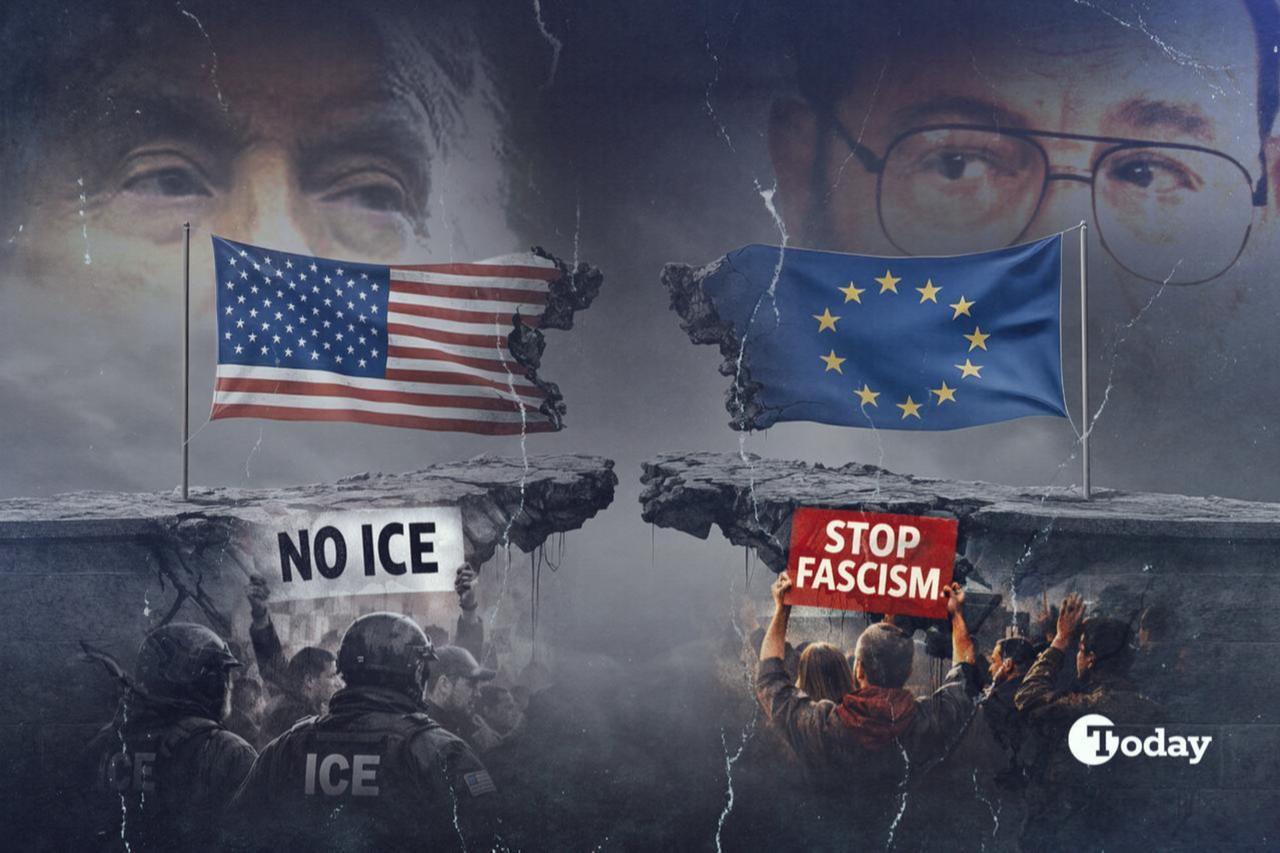
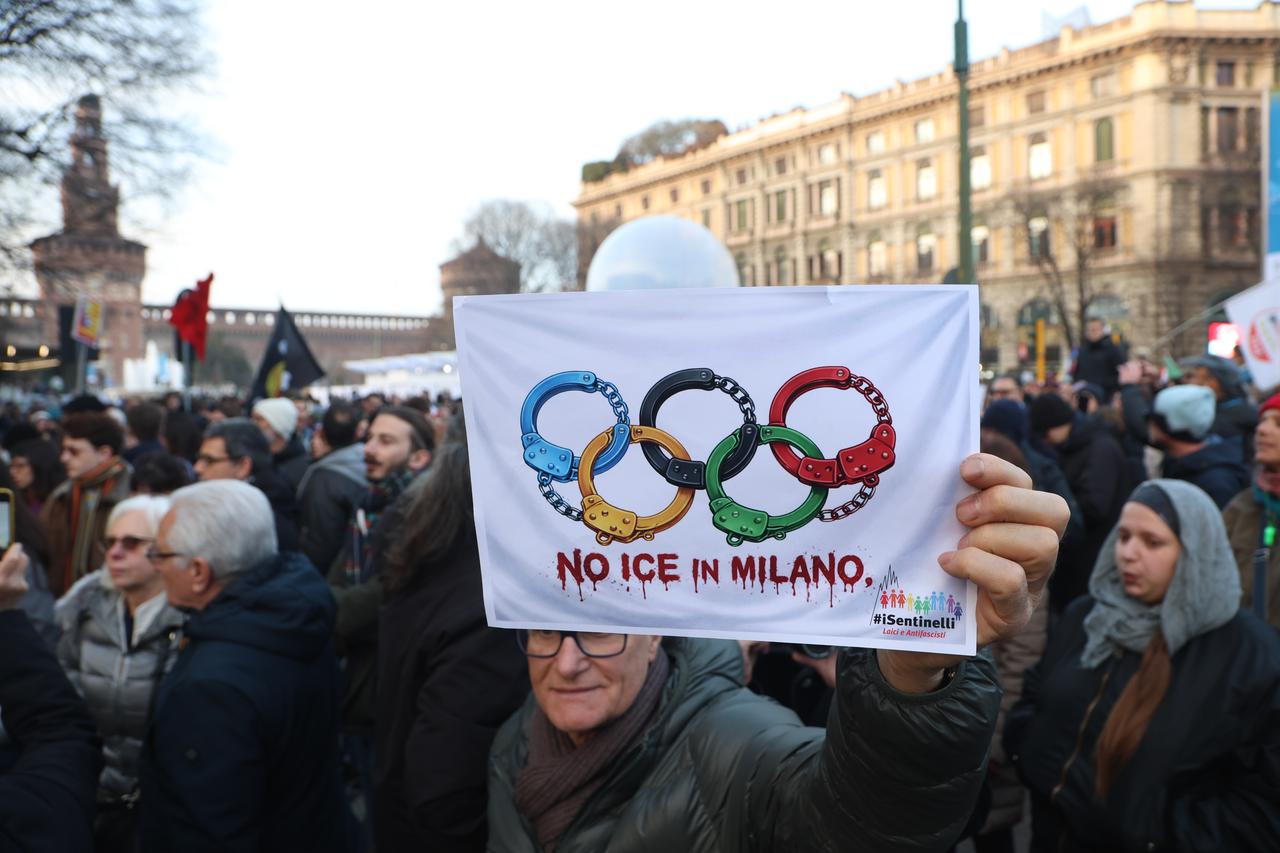
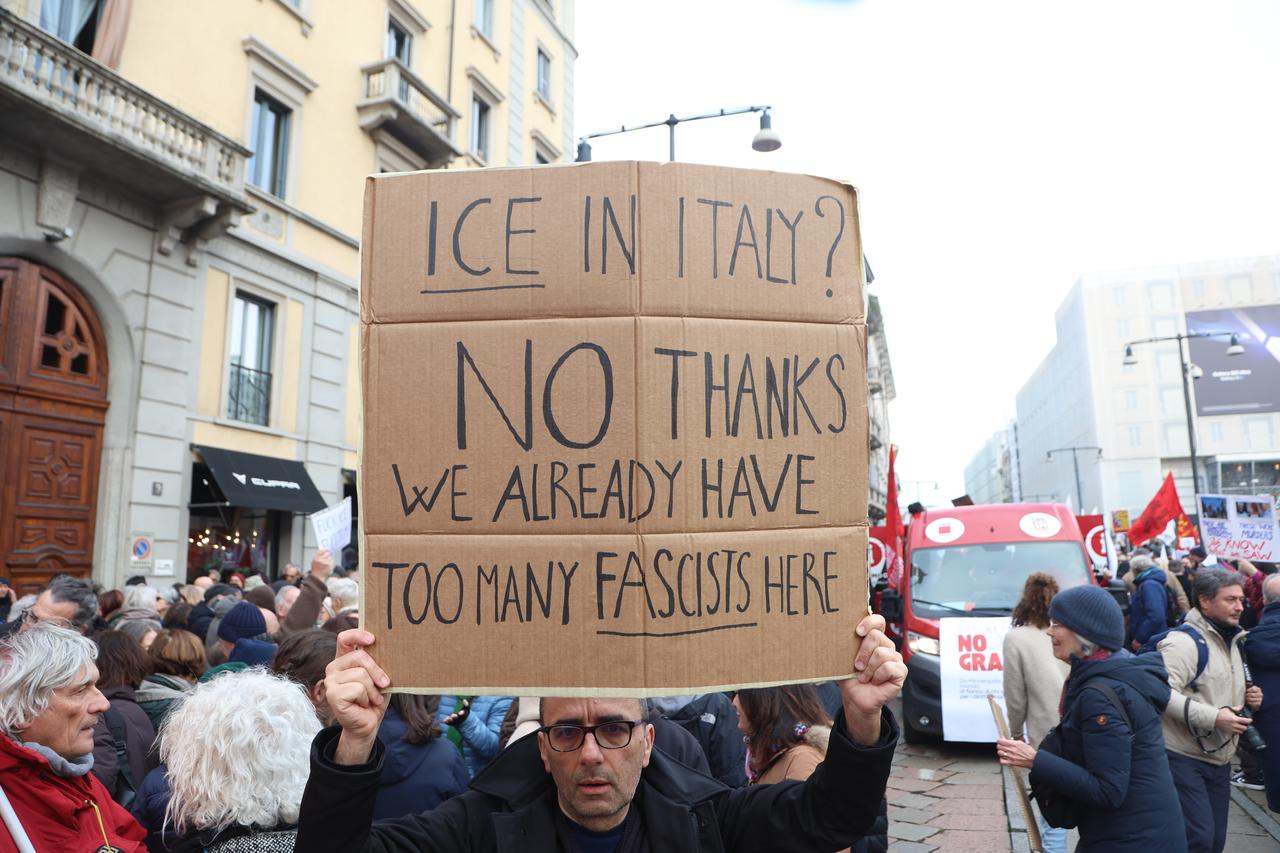
And now, in the days before the world’s finest athletes brave the ice of the 2026 Winter Olympic Games in Milano Cortina, hundreds of demonstrators continue to gather in a city square named for the date of Italy’s liberation from Nazi fascism in 1945 to protest the deployment of U.S. Immigration and Customs Enforcement agents to help protect the American delegation.
“We don’t want them in our country,” demonstrator Paolo Bortoletto told reporters. “We are a peaceful country. We don’t want fascists. It’s their ideas that bother us.”
Indeed, many Italian government officials share the sentiment. Milan Mayor Giuseppe Sala said ICE isn’t welcome. Interior Minister Matteo Piantedosi has been summoned to Parliament to testify about the arrangement this week.

For the past year, European Union leaders and cultural tastemakers have been trying to clarify the fallout of Italian despot Benito Mussolini’s political movement of exaggerated masculinity on America, where red-white-and-blue superstar Kanye West is cashing in on $20 t-shirts embroidered with Nazi swastikas that would land a European behind bars for committing a crime against humanity.
“Many historians have overcome their reluctance to seriously consider the existence of a fascist tradition in the U.S.,” Olivier Burton, a professor of U.S. civilization at the University of Picardie Jules-Verne, said during a debate sponsored by the French daily Le Monde, one of many similarly themed events taking place across the EU.
“The emergence of the MAGA phenomenon has legitimately rekindled this question in a context of increasing political distrust and the rise of populism in most Western democracies,” Burton said during the roundtable entitled “Is Trumpism a Form of Fascism.”
Calmly stated, the jeremiad of theories, arguments and nonsense that President Donald Trump is a fascist is no longer a fringe topic in Europe. It’s become a matter of grim fascination.
“In the 2010s, a nebulous group of Holocaust deniers, podcasters and far-right militias gathered around an ideology that openly flirted with fascism,” is how Le Monde, one of the widest-read and most respected newspapers in France, founded at the request of French President Charles de Gaulle in 1944, framed the pan-European debate.
“While it does not represent the entire American far right,” the newspaper reasoned, “the fascist tradition has undeniably influenced the country’s political life, creating themes and slogans that resonate far beyond its circles.”
In English, the word “fascism” derives from the Latin noun “fasces,” which refers to the “bundle of sticks” that hangs as a symbol of authority behind the rostrum of the U.S. House of Representatives. For De Gaulle, fascism occurred when nationalism trumped patriotism. A French Résistance fighter, code-named Vecors, quoted a captured Nazi officer’s definition of fascism as “a replay of ‘Beauty and the Beast.’”
Yet there’s nothing fictive about fascism.
The reason, of course, is Hitler, who further bloodied Mussolini’s beguiling buffoonery dressed in pageantry and purpose. Americans at first watched the Fuhrer’s goose-stepping legions and the glint of Krupp steel in the torchlight as if it were a theater from afar. When the curtain finally lifted at Pearl Harbor, America met and destroyed the evil head-on.
The bad guys were gone. The Americans went home to cure polio, cultivate Silicon Valley, and create the global reality television game show industry.
Fascism as an American political system was always foreign, a specter from beyond the seas, crushed and buried at Normandy and Okinawa.
Europe, however, was not so easily healed. Europeans remember because they must remember. And in that remembering, a kind of national immune system formed—a hypersensitivity to the creep of authoritarianism, the siren song of uniformity, and the lie that order is peace and silence is virtue.
Back in 2014, for instance, a French court ruled that extreme-right demagogue and would-be 2027 presidential candidate Marine Le Pen can be branded a fascist without legal recrimination.
“If the term ‘fascist’ can have insulting connotations when used outside of any political context or if accompanied by other demeaning terms,” the judgement read, “it has no insulting character when employed on a political subject.”
The Italian medievalist and philosopher Umberto Eco, who grew up in Piedmont dodging Mussolini’s bullets and later wrote the historical mysteries “The Name of the Rose” and “Foucault’s Pendulum.” He characterized fascism as a “ghost wandering through Europe, a way of thinking and feeling, a series of cultural habits, a nebula of obscure instincts and unfathomable drives.”
For those unfamiliar with Eco and his heirs, European democracies are fussy and overcautious, their politics fractured and loud.
But look closer: that mess is vigilance. It’s history refusing to repeat itself, an understanding that fascism comes in many shapes, sizes, colors and aromas that cannot be precisely paired with Hitler, Mussolini, or Joseph Stalin and his descendant, Russian President Vladimir Putin.
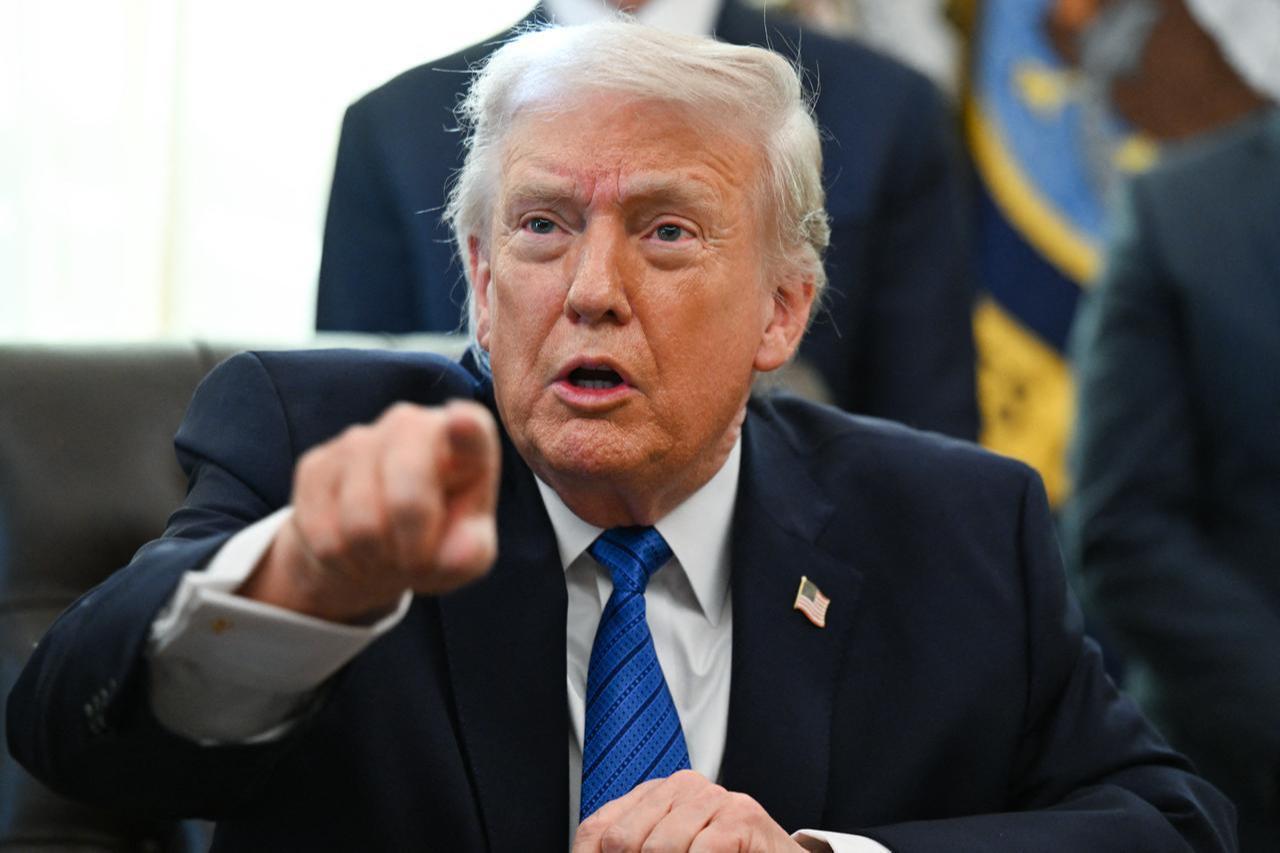
Trump has a different tale to tell. As he recounts the story, American freedom was forged in revolution, not crushed by jackboots. He views liberty through a lens of rugged individualism—fascism, Trump has said, is what the other guy does.
Tyranny speaks with a foreign accent.
Marc Lazar, former dean of the Doctoral School at the distinguished Paris Institute of Political Studies and a specialist on Mussolini’s original recipe for fascism, described Trump as an illiberal democrat in the mold of Hungarian Prime Minister Viktor Orban, both of whom play the election game by reducing freedoms through diktat and imposing a form of societal control.
“But is Trump a fascist?” Lazar rhetorically asked the audience during a debate last November. “We’re not there yet.”
The professor nonetheless sees the old shadows stirring again on both sides of the Atlantic, not with a salute but with a smile, cloaked in patriotism, disguised as strength. And so, Americans, lacking the generational scars, too often squint at fascism and fail to name it.
Europeans do not squint.
They wince.
“And we cringe because we’re more attuned to fascist sentiments than Americans; our families lived with fascism for decades and continue to die fighting it,” said Ukrainian Anastasiya Shapochkina, founding partner of the Eastern Circles political and economic consultancy group in Paris and a professor at Sciences Po. “For the majority of young Americans, fascism is a word they might be asked to spell on a test.”
Nobel Prize author Ernest Hemingway in 1940 reckoned there’s only one way to discover if an individual possessed the amoral agility to make the leap from patriot to nationalist and fall under the spell of fascism.
“There are many who do not know they are fascists but will find it out when the time comes,” Papa wrote in “For Whom the Bell Tolls,” the story of Robert Jordan, a young American volunteer attached to a Republican guerrilla unit during the Spanish Civil War.
“We cannot destroy them,” Jordan reckoned, auguring the debate now sweeping across Europe. “But we can educate the people so that they will fear fascism and recognize it as it appears and combat it.”


 Set as preferred source
 Set as preferred source


 4 min read