Newsletters




The domestic security agencies of the United States, the United Kingdom, Canada, Australia, and New Zealand have issued an unprecedented joint bulletin warning that Chinese military intelligence services are using professional networking sites, including LinkedIn, Indeed, and Upwork, to systematically recruit government and military personnel with access to classified or privileged information.
Beijing called the warning ironic, accusing the Five Eyes of being the world's "largest intelligence cooperation network."
"China's military intelligence services are using an increasingly wide array of professional networking sites and online job platforms to target Five Eyes government and military personnel, and anyone with access to classified or privileged information," the bulletin stated.
"Chinese military intelligence services ultimately seek to acquire privileged military, political and economic intelligence that can provide China with a strategic and tactical advantage over the Five Eyes," the joint bulletin noted.

The bulletin detailed a structured five-stage recruitment process.
In the first stage, Chinese intelligence officers or their affiliates pose as employees of private consultancies, think tanks, or HR firms, posting job advertisements for foreign policy and defense analysts on LinkedIn, Indeed, and Upwork. Resumes are ranked based on the likelihood of access to sensitive information.
In the second stage, interviews are conducted virtually, with recruiters concealing their identity and probing candidates about access to government contacts, military roles, unit activities, home base, or naval vessel.
In the third stage, candidates are asked to write a trial report on a topic such as China's bilateral relations, the Indo-Pacific region, or international trade.
In the fourth stage, recruits are informed that further reports require increasingly privileged information, and conversations are moved to encrypted messaging platforms.
In the fifth stage, payment of several hundred to several thousand dollars per report is made through PayPal, Payoneer, Zelle, Skrill, Wise, Western Union, bank transfer, or cryptocurrency, often through third-party accounts the recruit has never encountered in the recruitment process.
The bulletin identifies three categories of high-risk individuals: security-clearance holders specializing in defense, foreign affairs, and intelligence, military personnel, including those stationed in the Indo-Pacific with knowledge of regional capabilities, and individuals with indirect access to government information, explicitly including academics, journalists, freelance writers, think tank employees, and anyone with links to defense, security, policy, or economic sectors.
Even unclassified information, the bulletin notes, can be "collected and combined with more sensitive reporting to form a comprehensive operational picture."
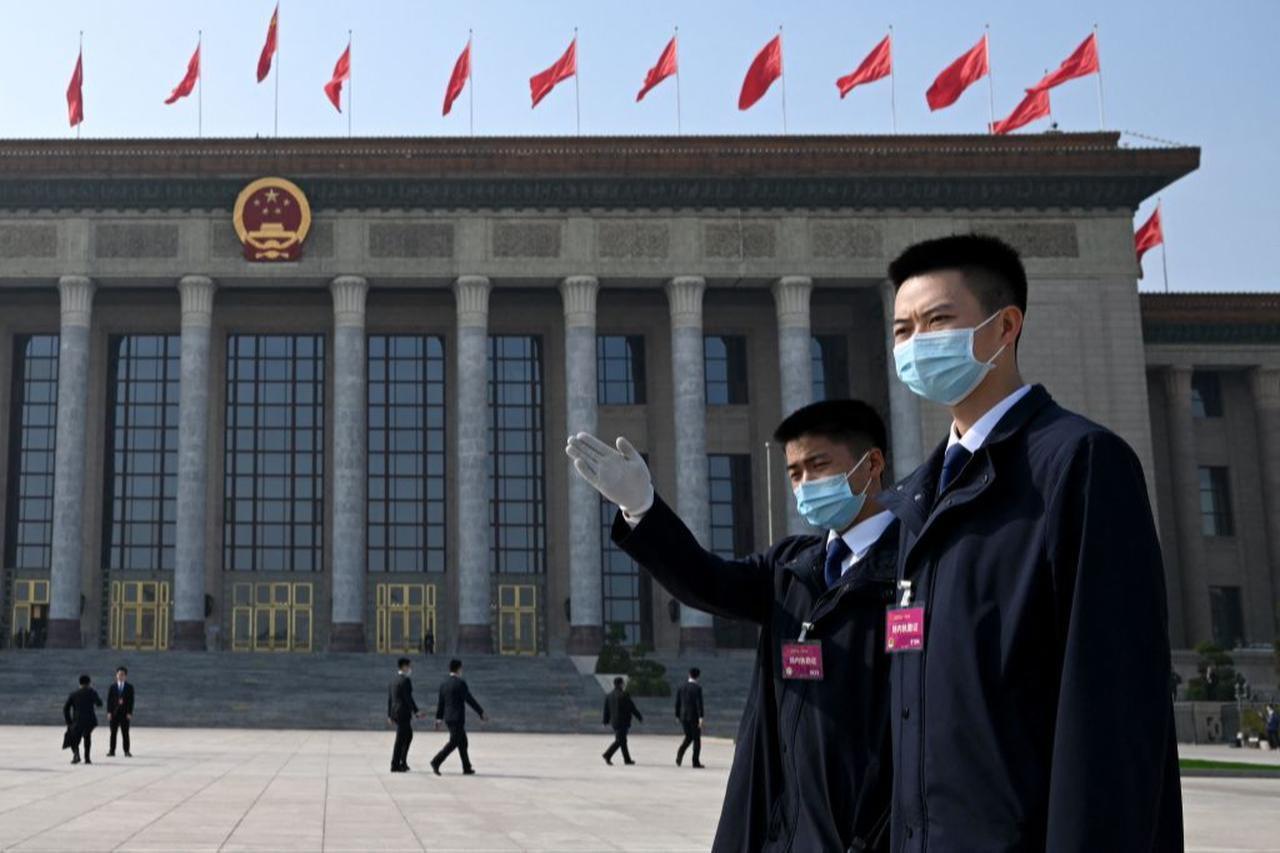
Chinese Foreign Ministry spokesperson Mao Ning rejected the allegations on Thursday.
Describing Five Eyes as the world's "largest intelligence cooperation network" that has long conducted "large-scale systematic espionage activities globally," she told reporters, "For such an organization to accuse China of a spy threat is, in itself, ironic."
A Chinese embassy spokesperson in London cited by BBC described the accusations as "purely false and malicious slander," adding: "The Five Eyes alliance is the world's largest intelligence organization, and its members brazenly conduct espionage activities around the world. They are the real threat to peace-loving countries."
U.K. Security Minister Dan Jarvis said: "I urge all government and military personnel to follow the National Protective Security Authority's advice to spot signs of online targeting and avoid inadvertently compromising our security.
"A number of recent cases show the strength of the powers we have to bring to justice those who undertake acts on behalf of a foreign state," he added.
In November 2025, MI5 publicly named two LinkedIn profiles, Amanda Qiu and Shirly Shen, as being operated on behalf of China's Ministry of State Security, one of which had already contacted a researcher for a British MP.


 Set as preferred source
 Set as preferred source



 4 min read