Sign in
 Newsletters


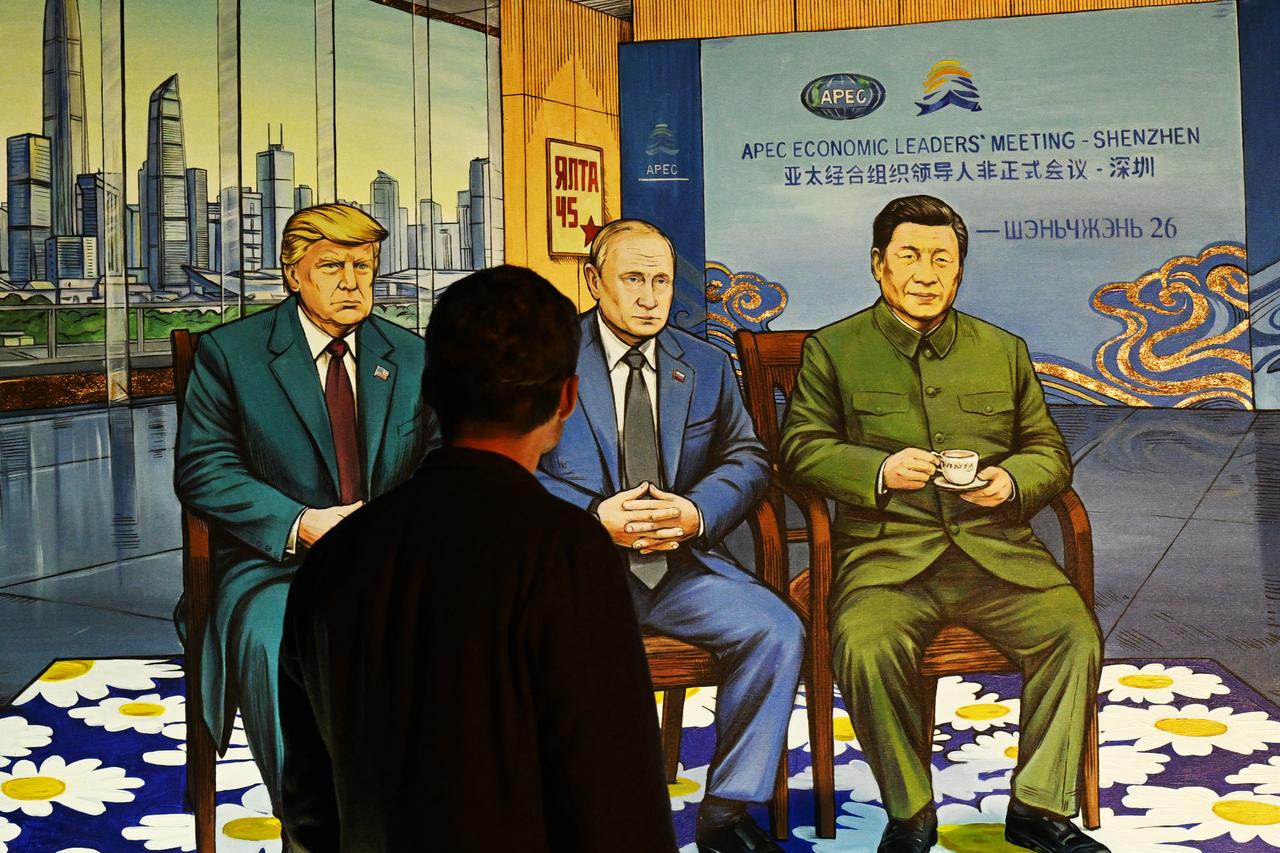


On Nov. 12 in St. Petersburg, the Russian artist Alexey Sergienko unveiled a pop-art canvas titled "Shenzhen, 26." It shows Donald Trump, Vladimir Putin and Xi Jinping together in one frame.
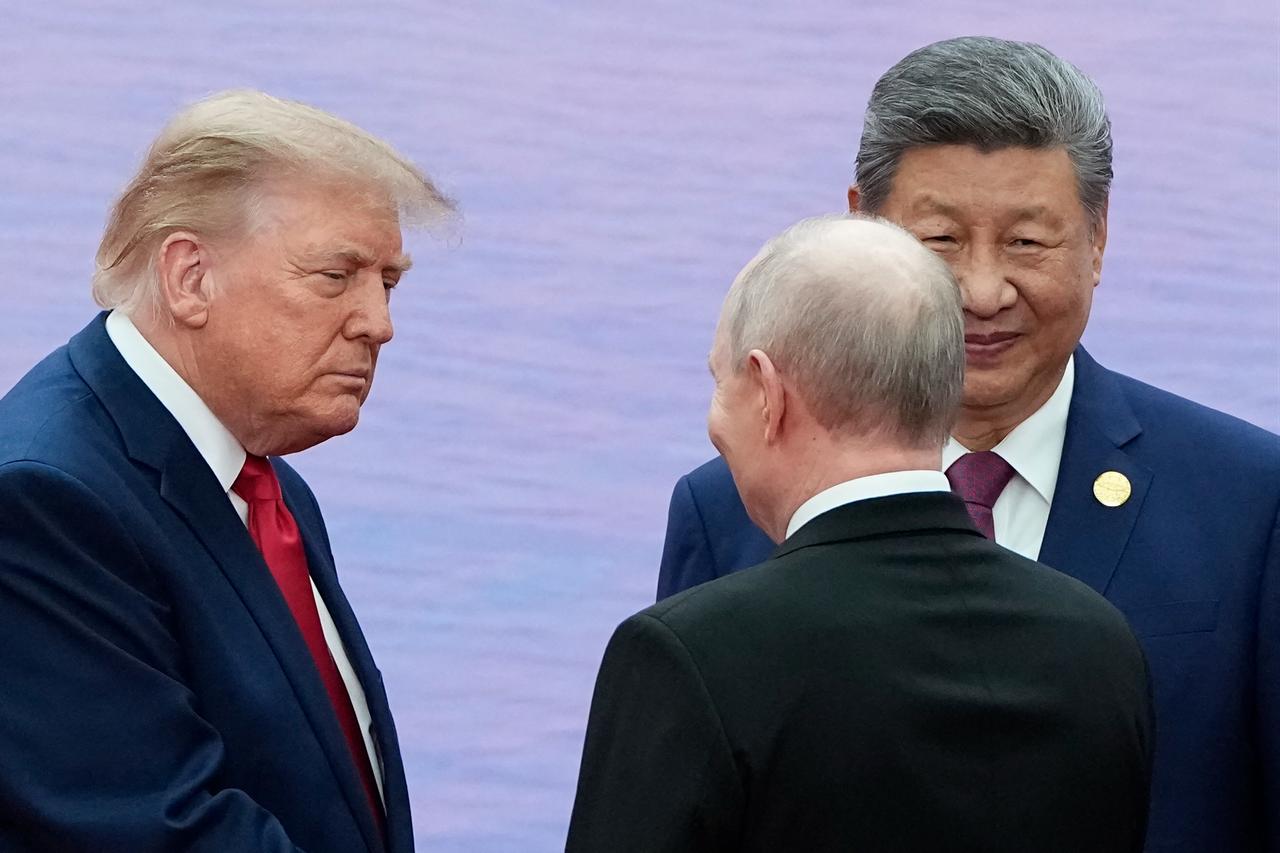
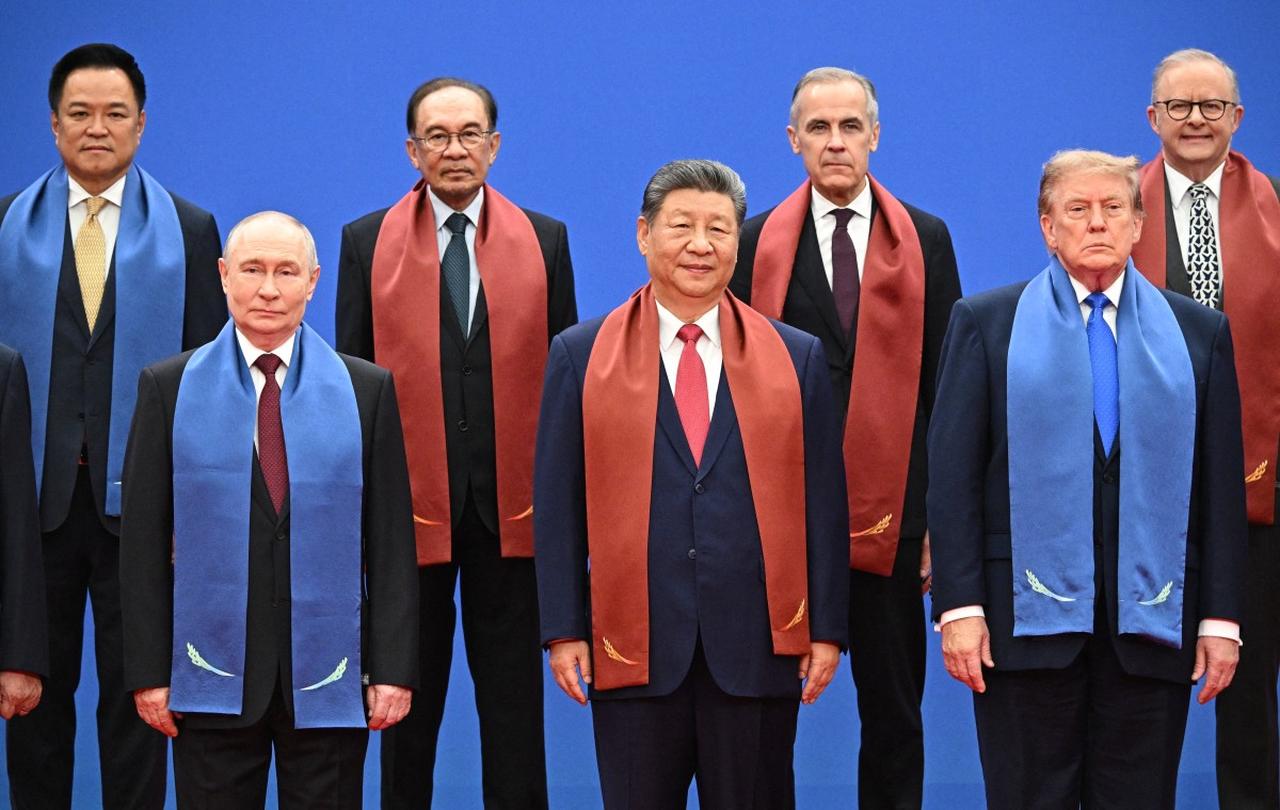
On Thursday, on the sidelines of the APEC summit in China's tech capital, the world is set to get the real thing: the first time the leaders of the United States, China and Russia have sat down as three. Between them, their countries hold about nine of every 10 nuclear warheads on Earth.
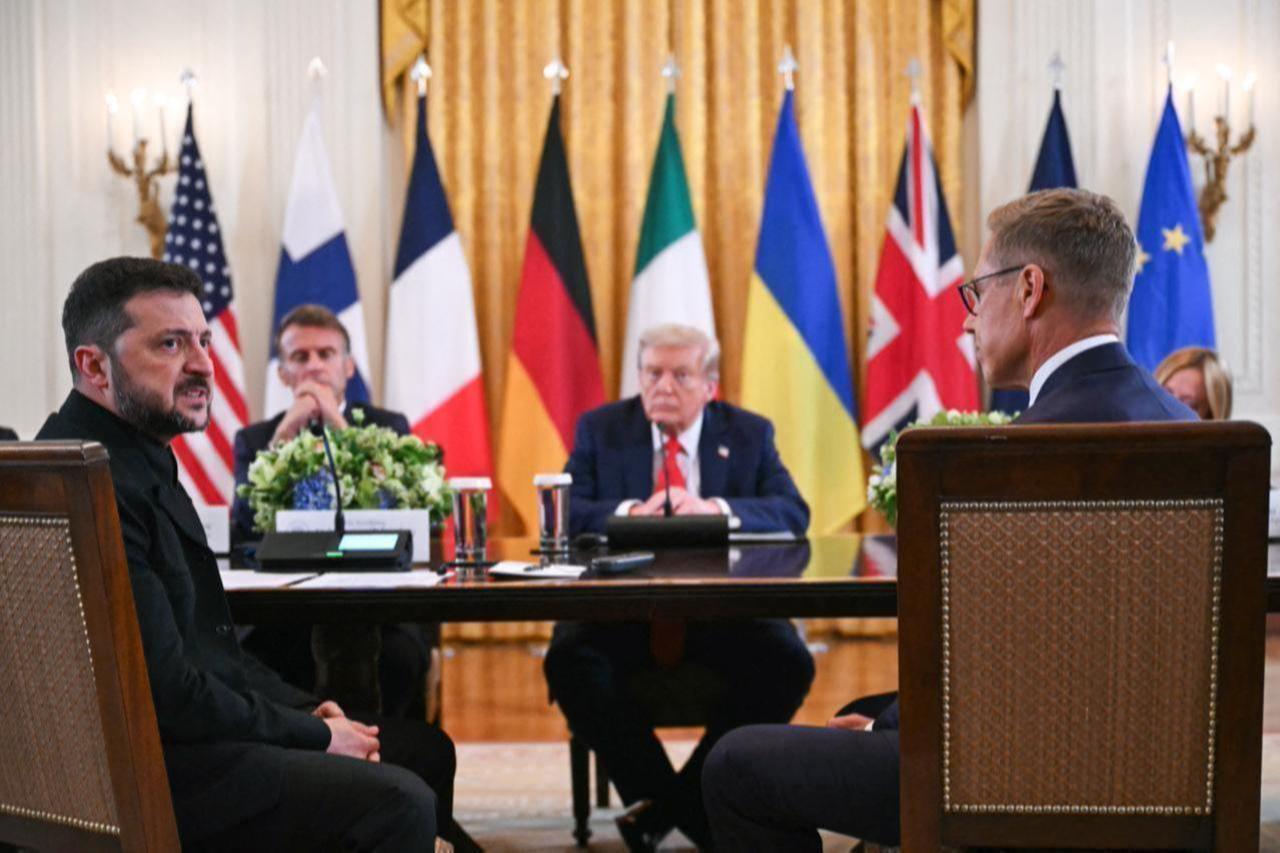
In Europe, the image summons an older photograph, the 1945 shot of Roosevelt, Churchill and Stalin seated outside the Livadia Palace near Yalta. "It is dangerous for all of us. We all live in Europe," Ukrainian President Volodymyr Zelenskyy said two weeks before the summit.
"We don't want to have Yalta 2.0. We are not ready for such a format. We don't want to be divided by Russia." Moscow waves the comparison off. "No one is trying to impose any particular view of the global order," Kremlin spokesman Dmitry Peskov said.
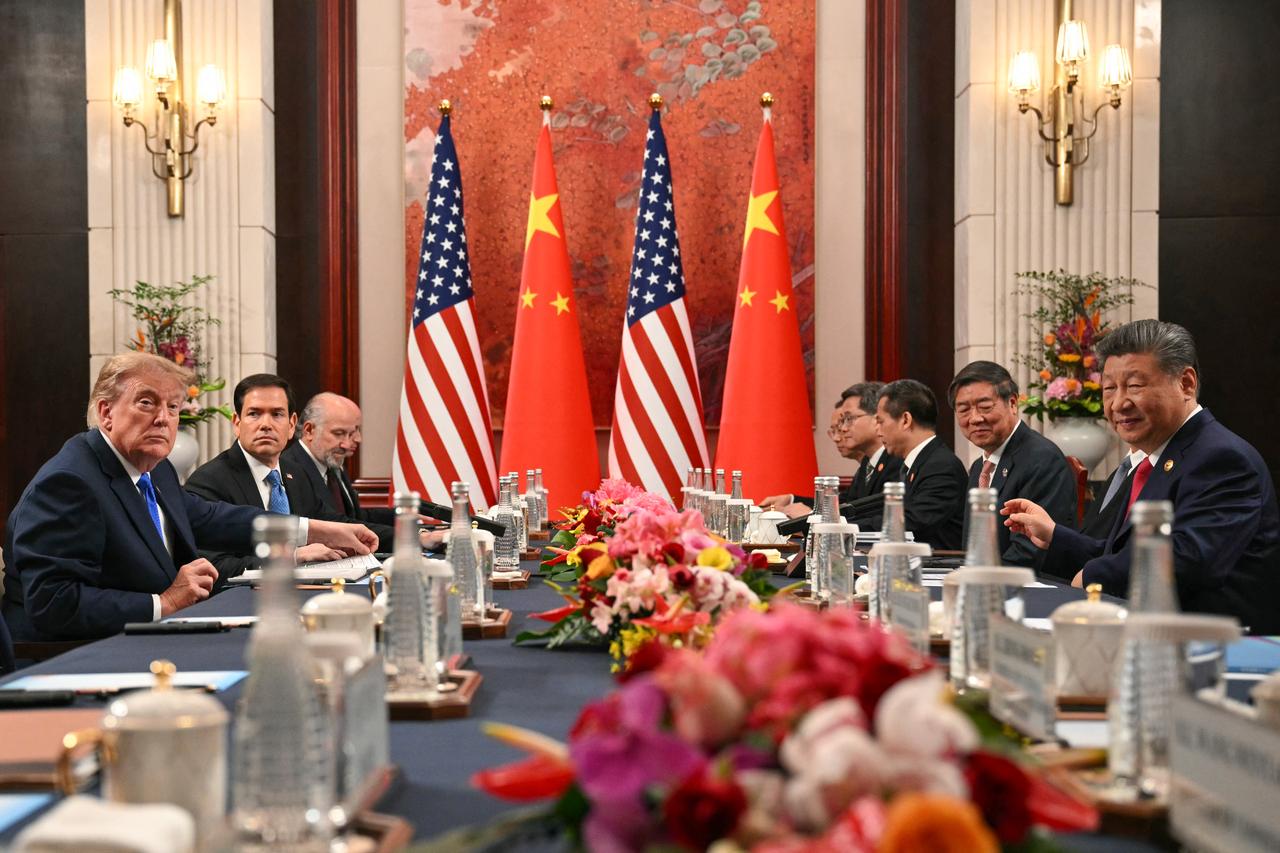
The host offered his own framing in September, standing at the White House. "While cooperation between China and the United States won't solve every problem in the world, without it, many global issues will be very difficult to resolve," Xi said.
Europe's fear is not paranoia, and outside Europe, much of the world is watching a different meeting altogether.

For the past week, commentators from Ankara to Washington and from Brussels to the Gulf have been arguing over a single question: Is Shenzhen a Yalta remake, or just a photo op with a famous backdrop?
Yalta worked, in the coldest sense, because armies backed it. Stalin's troops already stood across Eastern Europe when the three leaders split Germany into occupation zones, sketched the United Nations and promised free elections that most of the region never got. "Putin is now trying to take by guile with the White House what Stalin took with many divisions of the Red Army," said John Herbst of the Atlantic Council.
The guile comes with a paper trail. On Nov. 13, Germany's Bild reported on a list of Russian proposals shared around the Abu Dhabi talks with Trump's envoys Steve Witkoff and Jared Kushner. Russia would keep the land it occupies and take all of the Donbas.
Odesa and Mykolaiv would be demilitarized, NATO would keep no bases in the Baltic states, and Finland, which joined the alliance in 2023, would return to its old status. The Kremlin denied putting such conditions forward. Finnish Defense Minister Antti Hakkanen called the idea "absolutely outrageous." Ukraine was only one item on the list.
Still, the 1945 cast shared an enemy and a coming victory. This cast shares neither, and it arrives limping. Italian Senator Carlo Calenda said that Shenzhen is "really a summit of the three weaknesses." Trump comes as a lame duck, after the midterms handed Democrats both chambers of Congress. Putin's war is in its fifth year, and Xi's economy is grinding through a property crisis, at least according to this view.
The agendas barely overlap. Trump wants nuclear arms talks. New START, the last treaty capping the American and Russian arsenals, expired on Feb. 5, and Trump turned down Moscow's offer to observe its limits for another year because he wants China in a new deal.
The United States and Russia each hold more than 5,000 warheads; China has about 600, though its number is growing fastest. Sun Chenghao of Tsinghua University put Beijing's objection plainly: joining the same framework risks "turning unequal capabilities into nominally equal responsibilities."
Putin wants Ukraine on the table. Trump's officials say China is not part of that track, and Beijing has kept it off the agenda. The state-run Global Times dismissed the Yalta talk as "entrenched Cold War thinking."
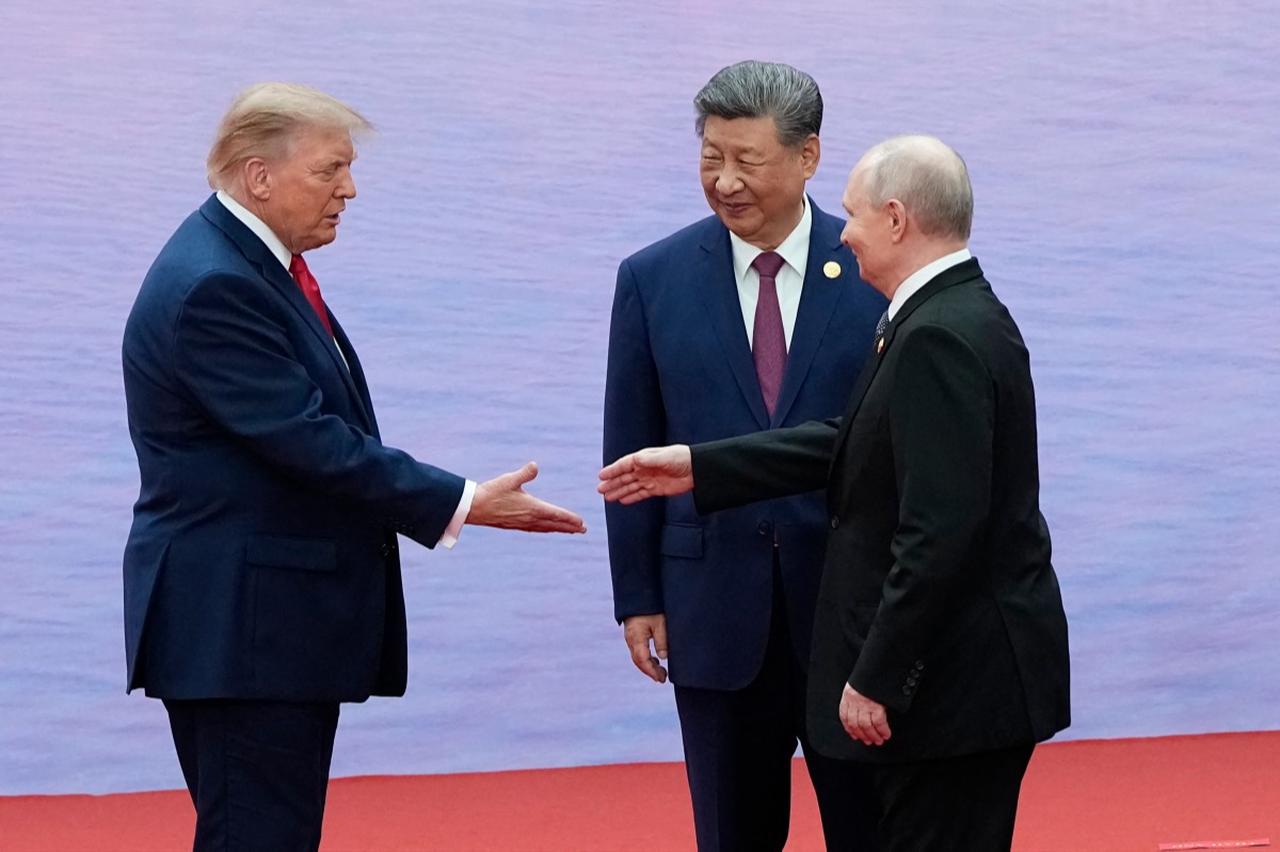
East of Brussels, Shenzhen reads less like 1945 and more like a negotiation over oil and chips. The question Arab commentators keep asking about Shenzhen is narrower and more pressing: Can these three men end the Iran war, and what will they trade away to do it?
Tehran, for its part, is counting on the host. Iran’s parliament speaker, Mohammad Bagher Ghalibaf, who doubles as Tehran’s special envoy for China, has said Beijing will help end the state of “neither war nor peace.” Gulf governments are hoping for something more concrete. Their best case out of Shenzhen is a deal to reopen Hormuz with China and Russia as co-guarantors, which would give the Gulf a second security partner alongside Washington. The tell will be whether China’s readout mentions the strait at all.
AI is the second file, and in the Gulf it is tied to the first. Saudi Arabia and the UAE are racing to become global compute hubs. They pay for their data centers with oil revenue and sovereign wealth that the war has dented, and they run them on chips designed or controlled by American companies. That makes last week’s news from California a Gulf story too. Jensen Huang, who resigned as Nvidia’s CEO, was one of the Gulf’s most important allies in Washington, the face of the region’s chip deals and a vocal opponent of export curbs.
Now he’s gone, congressional probes are looming and Washington has put new limits on overseas data centers. Gulf leaders and investors are asking whether their access to American chips is about to tighten just as their build-outs hit full speed. That is why any chip talk in Shenzhen is being followed closely in Riyadh and Abu Dhabi.
Türkiye watches Shenzhen from an unusual seat. A NATO member that borders Iran and shares the Black Sea with Russia and Ukraine, it sees the Ukraine file and the Iran file converge in its own backyard.
The Turkish press has used the summit to test new angles. One is the idea that the China-Russia axis, the so-called "DragonBear," may not be an alternative to the U.S.-led order after all, and that all three powers can work side by side. Others are more cautious, arguing that the real test is not the photo op but whether the leaders keep talking once it’s over.
Elsewhere, the hedging has already begun. At this week’s ASEAN summit in Manila, Canada announced the substantial conclusion of free-trade talks with the bloc, and Southeast Asian governments signed a digital economy framework. While the big three debate how to manage the world order, the middle powers are “acquiring the means to shape it themselves.”
Putin will get his picture on Thursday. He had it painted already. What Europe will study is who is missing from the frame. In 1945, the empty chair was China’s. In Shenzhen, it belongs to Kyiv and Brussels.


 Set as preferred source
 Set as preferred source


 4 min read