Newsletters


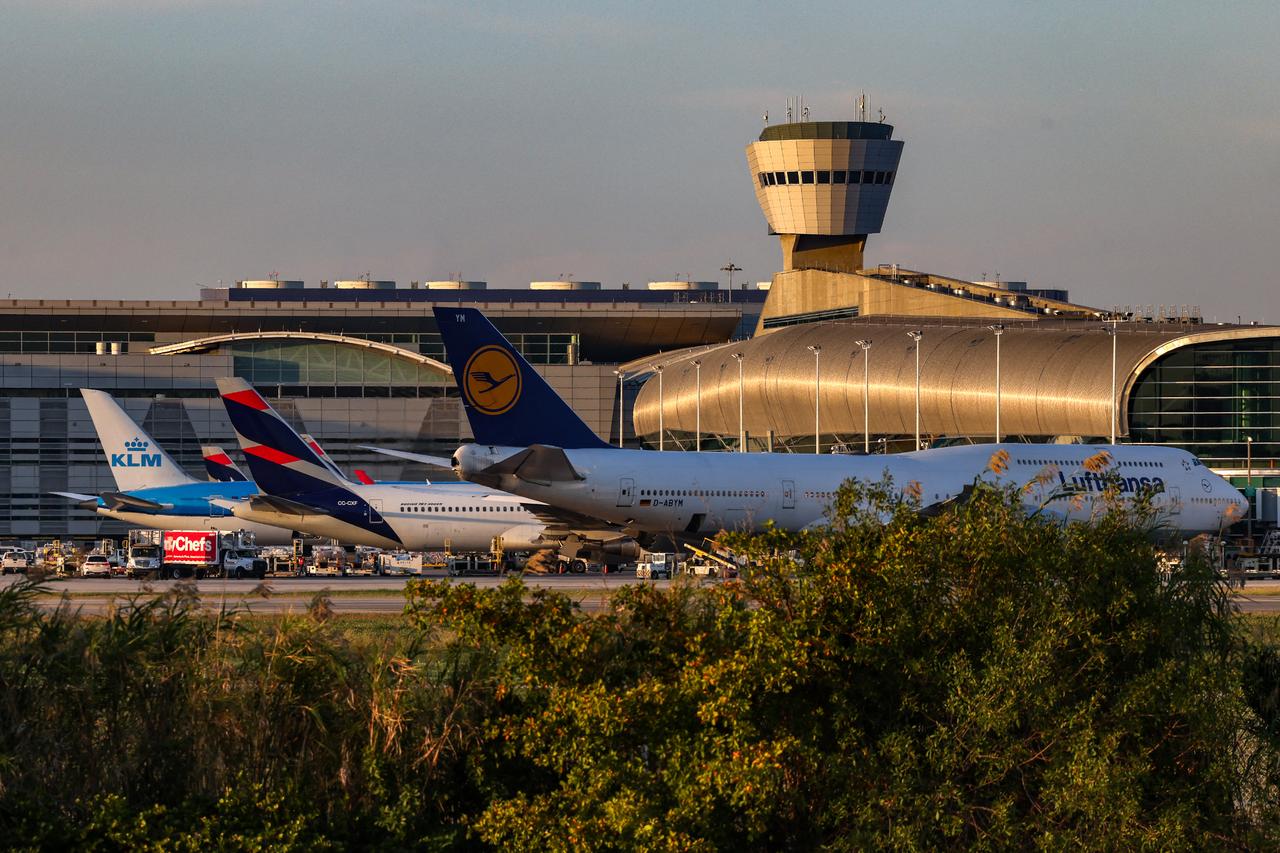


The Federal Aviation Administration (FAA) halted all departing U.S. flights on Friday after a nationwide communications outage disrupted air traffic control centers, as authorities sought to rule out security concerns surrounding 9/11.
The order caused confusion at airports, as passengers struggled to obtain reliable information and some departure boards continued to display flights as operating normally despite boarding restrictions.
The FAA attributed the disruption to a communications problem affecting all Air Route Traffic Control Centers, adding that technicians were working to resolve it.
In a subsequent message on X, the agency described the problem as a "temporary telecommunications outage" and stressed that it was acting "out of an abundance of caution."
Homeland Security Secretary Markwayne Mullin said there was no immediate indication that the outage resulted from a deliberate attack against the United States.
"There was no indication, as of yet, that this was a nefarious attack against us, it's just a telecommunication outage, as of right now," Mullin said, adding that officials were "not ruling out anything at this point."
He also sought to dismiss comparisons with the Sept. 11 attacks, when al-Qaeda hijackers seized four passenger planes and carried out coordinated strikes in the United States. "This isn't another 9/11," he said.
Nationwide ground stops are rare, with previous FAA restrictions in recent years generally affecting individual airlines rather than the entire U.S. aviation system.
The last comparable shutdown came in January 2023, when a malfunction in the Notice to Air Missions (NOTAM) system forced the agency to suspend domestic departures. The system provides pilots with information about hazards and other conditions that could affect flights.
That disruption lasted just under two hours and was believed at the time to be the first nationwide grounding since the Sept. 11 attacks.


The disruption came a day after U.S. Transportation Secretary Sean Duffy formally asked Congress for $30.1 billion to upgrade and modernize the country's air traffic control system.
In a letter to lawmakers, Duffy and Office of Management and Budget Director Russell Vought described the funding as essential to improving the country's aviation infrastructure.
"This investment is critical to complete the modernization of our national airspace, delivering a resilient telecommunications backbone for air traffic controllers, modern hardware and software, state-of-the-art control towers, and world-class airport infrastructure," they wrote.
The proposed investment aims to upgrade telecommunications networks, replace outdated hardware and software, and improve control towers and airport infrastructure.


 Set as preferred source
 Set as preferred source


 1 min read

 1 min read